소개
캐나다 전화번호는 언뜻 보기에 미국 전화번호와 거의 동일해 보이지만 이는 우연이 아닙니다. 두 국가 모두 동일한 기본 번호 체계를 공유합니다. 그러나 "거의 동일하다"는 것은 정확히 혼란이 일어나는 곳입니다. 특히 해외에서 캐나다에 전화를 걸거나 번호가 실제로 어느 지역에 속하는지 알아내려는 사람에게는 더욱 그렇습니다.
이 가이드는 캐나다 전화번호 형식을 하나씩 안내합니다. 각 번호가 따르는 10자리 구조, 미국과 공유되는 이유, 지역 번호를 도시와 일치시키는 방법, 유선 전화, 휴대폰 및 무료 형식의 차이점, 세계 어디에서나 올바르게 전화를 거는 방법을 안내합니다. 또한 완벽하게 유효해 보이는 번호가 여전히 연결에 실패할 수 있는 이유와 캐나다에 거주하지 않고도 자신의 캐나다 번호를 얻는 방법에 대해 설명합니다.
모든 캐나다 숫자가 따르는 10자리 공식
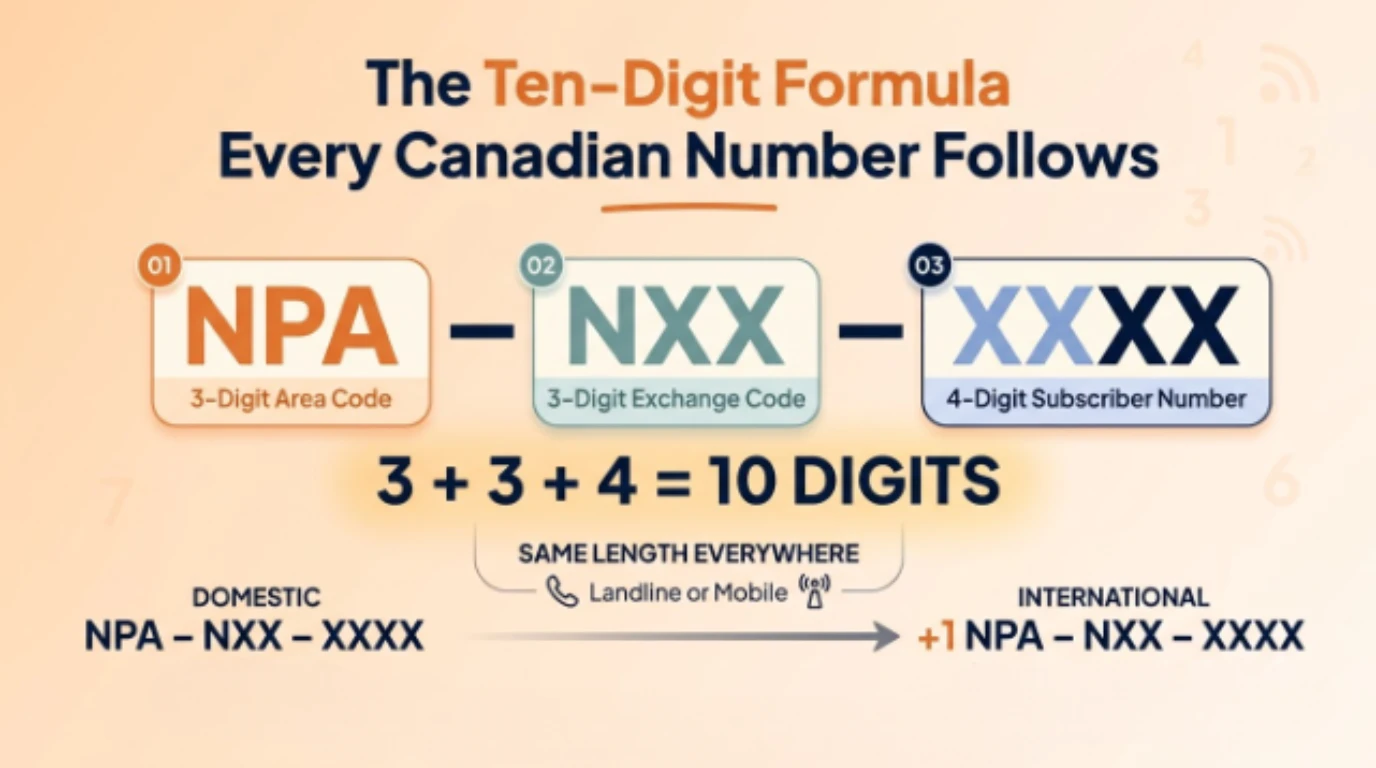
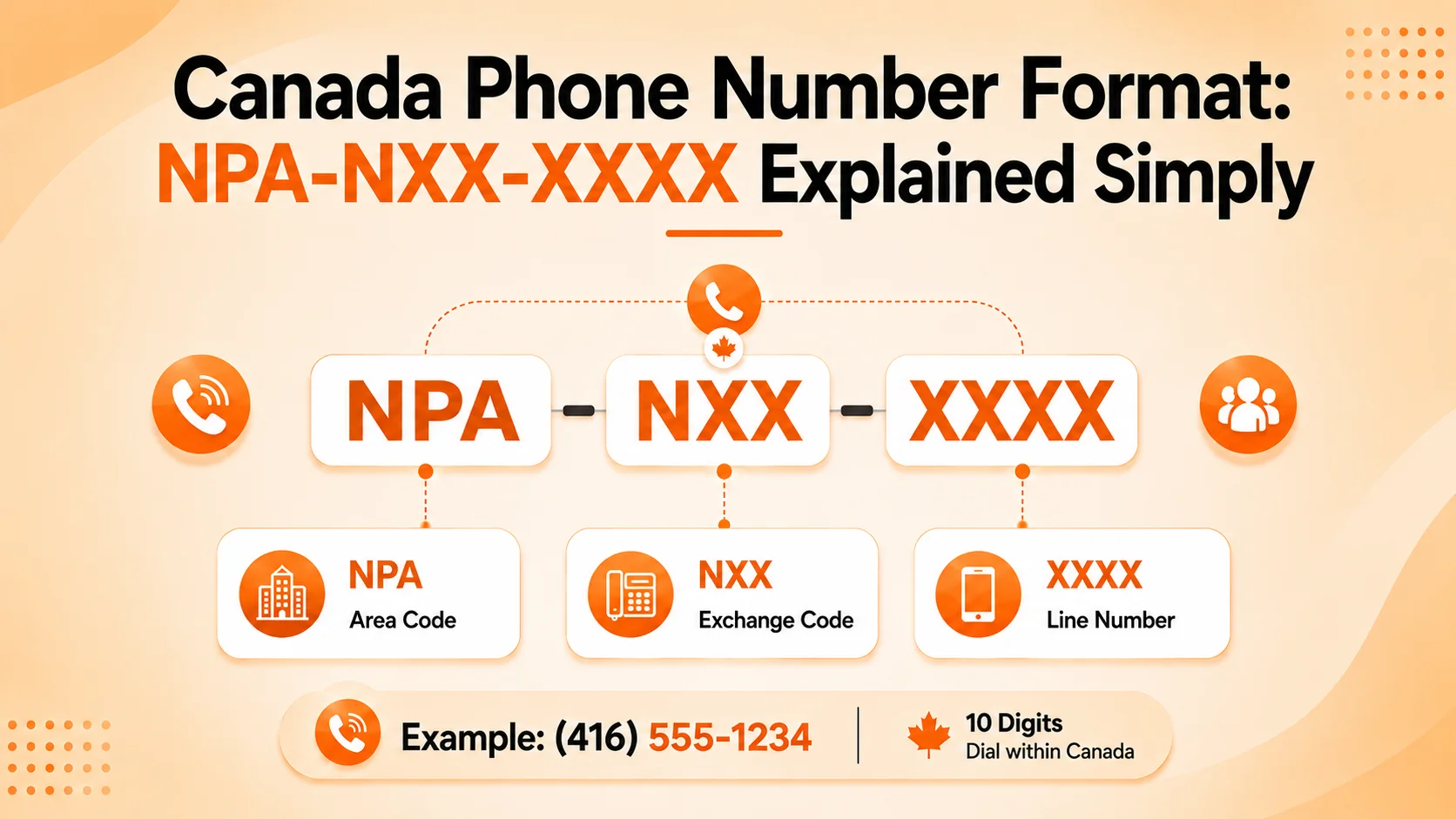
모든 캐나다 전화번호는 NPA-NXX-XXXX와 같은 동일한 구조를 따릅니다. 여기서 NPA는 3자리 지역 코드, NXX는 3자리 중앙 사무실 코드, XXXX는 4자리 가입자 번호입니다. 서면으로 보면, 유선전화, 휴대전화 번호, 무료 전화 중 무엇을 보든 항상 총 10자리입니다.
이 캐나다 전화번호 형식은 일부 국가의 번호 체계처럼 길이가 다양하지 않습니다. 토론토의 전화번호와 서스캐처원주의 작은 마을의 전화번호는 모두 정확히 동일한 10자리 패턴을 따릅니다. 변경되는 유일한 것은 특정 지역 코드와 중앙 사무실 코드가 할당된다는 것입니다. 이러한 일관성으로 인해 캐나다 전화번호 형식은 기본 세 부분으로 구성된 구조를 클릭하면 학습할 수 있는 예측 가능한 형식 중 하나가 됩니다.
국제적으로는 동일한 번호 앞에 +1 접두사가 붙습니다. +1 뒤에 지역 번호가 붙고 나머지 7자리가 붙습니다. 캐나다 국내에서는 일반적으로 국가 코드를 추가할 필요 없이 지역 번호와 지역 번호를 직접 누르기만 하면 됩니다. 연락처가 전체 국제 형식으로 저장되면 휴대 전화는 자동으로 변환을 처리합니다.
캐나다와 미국이 하나의 번호 체계를 공유하는 이유
캐나다의 전화번호는 캐나다 전화번호 형식을 따릅니다. 두 국가 모두 미국과 여러 카리브해 국가에도 적용되는 공유 시스템인 북미 번호 매기기 계획에 참여하고 있기 때문입니다. 그렇기 때문에 캐나다는 별개의 국가가 아닌 미국과 동일한 +1 국가 코드를 사용합니다. 번호 매기기 관점에서 볼 때 두 국가는 완전히 별도의 네트워크가 아닌 하나의 대규모 연결된 시스템으로 기능합니다. LetsDial 캐나다 국가 코드 페이지에서는 캐나다로 향하는 모든 통화의 정확한 형식을 다룹니다.
이 공유 계획으로 인해 캐나다 전화번호가 한눈에 미국 전화번호와 구별되지 않는 것처럼 보입니다. 둘 다 동일한 NPA-NXX-XXXX 구조와 동일한 +1 접두사를 사용합니다. 번호가 어느 국가에 속해 있는지 알 수 있는 유일한 방법은 특정 지역 코드를 인식하는 것입니다. 각 3자리 코드는 두 국가 내의 정의된 지리적 지역에 할당되며 두 국가 간에 공유되지 않기 때문입니다.
기업과 발신자에게 이 공유 시스템은 실용적인 장점이 있습니다. 즉, 캐나다와 미국 간 전화를 걸 때 대부분의 다른 국가에 전화하는 것처럼 별도의 국제 형식을 배울 필요가 없습니다. 뉴욕에서 토론토로의 전화는 뉴욕에서 시카고로의 전화와 정확히 동일한 다이얼링 논리를 사용합니다. 즉, 동일한 전체 번호 지정 계획 내에서 지역 번호만 다를 뿐입니다.
토론토, 밴쿠버, 몬트리올: 지역번호와 장소 일치
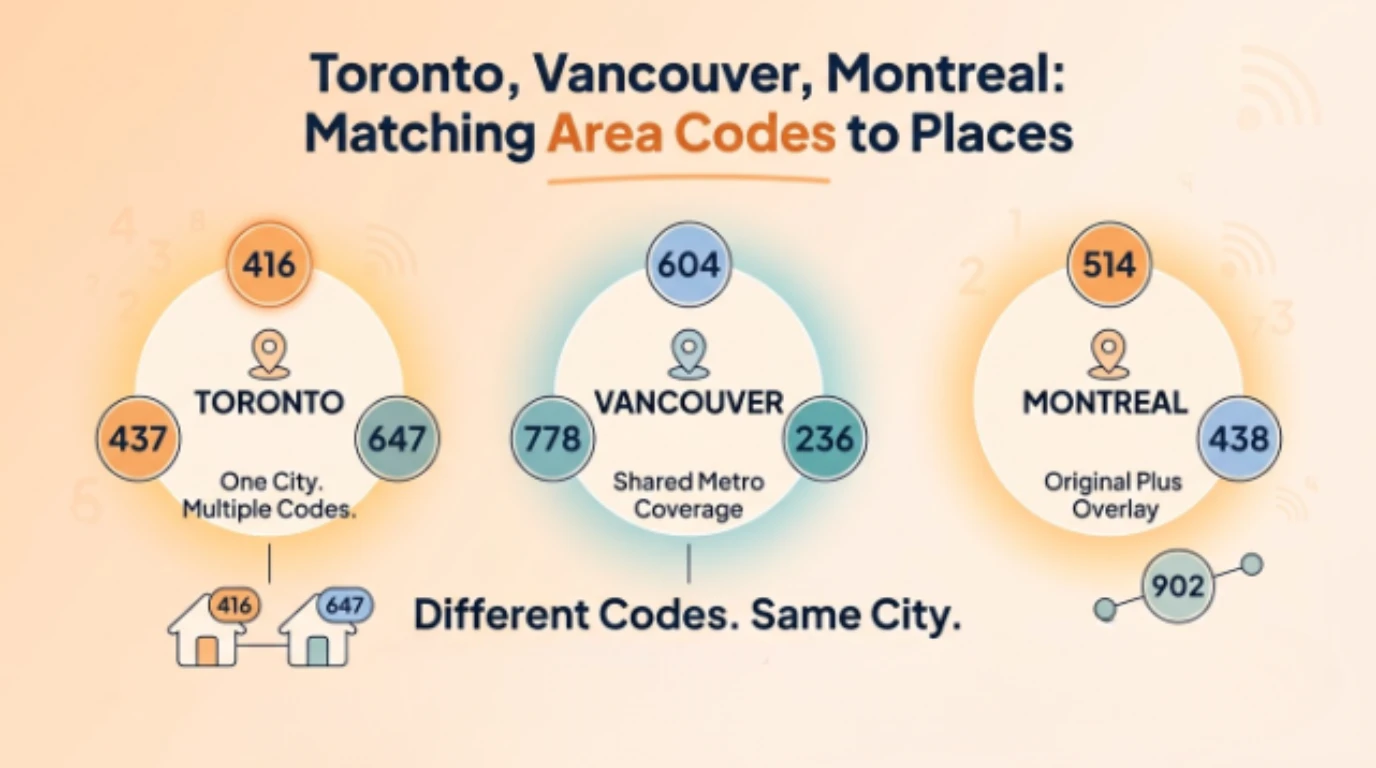
캐나다에는 현재 40개 이상의 활성 지역 코드가 있으며 각 지역 코드는 특정 주 또는 대도시 지역에 할당되어 있습니다. 토론토는 416과 최신 오버레이 코드 437 및 647을 사용합니다. 밴쿠버는 604, 778, 236을 사용합니다. 몬트리올은 514와 438을 사용합니다. 도시가 성장하고 숫자가 부족해지면 원본을 대체하는 대신 동일한 지역에 추가 오버레이 코드가 도입됩니다.
이 오버레이 시스템은 같은 도시에 있는 두 이웃이 거주 블록이 떨어져 있음에도 불구하고 서로 다른 지역 코드를 가질 수 있다는 것을 의미하기 때문에 이해할 가치가 있습니다. 코드는 반드시 별도의 하위 지역이 아니라 번호가 할당된 시기를 반영합니다. 이는 고성장 도시에서 사용되는 캐나다 전화번호 형식의 일반적인 부분이며 두 번호 모두 특이한 점을 나타내지 않습니다.
소규모 지역에서는 일반적으로 전체 지역을 포괄하는 단일 지역 코드를 사용합니다. 예를 들어 노바스코샤와 프린스 에드워드 아일랜드는 902를 공유합니다. 캐나다 도시와 마찬가지로 인구 밀도가 낮은 지역에서도 성장으로 인해 오버레이 코드가 도입되는 경우가 있으므로 최근 몇 년간 변경되지 않았다고 가정하기보다는 지역 코드의 현재 할당을 확인하는 것이 좋습니다.
유선전화, 휴대전화, 무료 — 한눈에 차이점 확인
일부 국가와 달리 캐나다 전화 번호 형식은 유선 전화 번호와 휴대폰 번호를 구분하기 위해 고유한 접두사를 사용하지 않습니다. 둘 다 동일한 NPA-NXX-XXXX 구조를 따르며 숫자만으로는 휴대폰에서 울리는 전화인지 일반 전화에서 울리는 것인지 구분할 방법이 없습니다. 이는 휴대폰 번호 앞에 04 또는 06과 같은 명백한 접두사가 붙는 국가와 의미 있는 차이입니다.
무료 전화번호는 지리적 지역에 할당되지 않는 작은 예약 지역 코드(800, 833, 844, 855, 866, 877 및 888)를 사용하는 확실한 예외입니다. 이들 중 하나로 시작하는 번호는 누가 전화를 걸든 항상 무료이므로 광범위한 캐나다 전화번호 형식 내에서 가장 쉽게 찾을 수 있습니다.
전화 키패드의 문자 매핑을 사용하여 단어를 철자하는 보조 숫자는 여전히 문자 아래에 동일한 기본 10자리 구조를 따릅니다. 이는 별도의 형식이 아닌 표준 숫자 위에 표시되는 레이어입니다. 허영 번호를 광고하는 기업은 실제로 기억에 남는 것으로 번역된 표준 NPA-NXX-XXXX 번호를 광고하는 것입니다.
해외에서 캐나다 번호로 전화 걸기
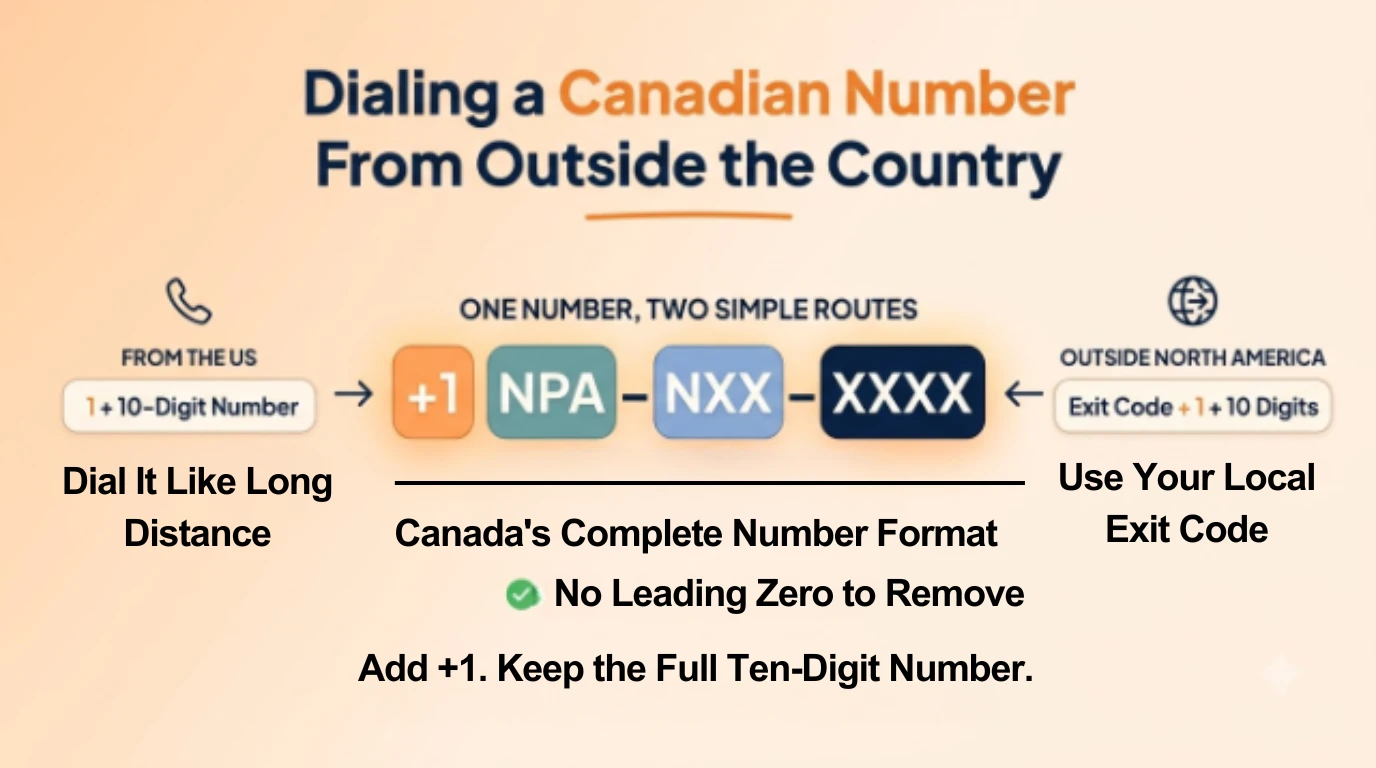
북미 이외의 대부분의 국가에서 캐나다 번호로 전화하려면 현지 국제 접속 코드를 누른 다음 1(미국과 공유되는 캐나다의 국가 코드)을 누른 다음 숫자가 누락되지 않은 전체 10자리 번호를 누르십시오. 일부 국제 형식과 달리 캐나다 지역 코드에서 제거할 앞에 0이 없습니다. 10자리 숫자는 국내에서 표시되는 것과 동일하게 유지됩니다.
미국 내에서 캐나다에 전화할 때 특별한 국제 전화 걸기 순서가 전혀 필요하지 않습니다. 국내 장거리 전화의 경우와 마찬가지로 1을 누른 다음 10자리 숫자를 누르면 됩니다. 이는 공유된 북미 번호 매기기 계획의 직접적인 결과이며, 두 국가 간에 정기적으로 전화하는 모든 사람에게 캐나다 전화 번호 형식의 보다 편리한 측면 중 하나입니다.
북미 이외의 전화기에 캐나다 연락처를 저장하는 경우 처음부터 전체 +1 형식으로 번호를 저장하면 나중에 어떤 액세스 코드나 접두사가 적용되는지에 대한 혼란을 피할 수 있습니다. 전화기는 전화를 거는 위치에 따라 자동으로 로컬 변환을 처리합니다.
"유효해 보이는" 캐나다 번호가 여전히 연결에 실패하는 이유
올바른 형식의 번호가 연결되지 않는 가장 일반적인 이유는 해당 번호가 마지막으로 업데이트된 이후 지역 번호 자체가 변경되었거나 분할되었기 때문입니다. 즉, 동일한 지역에 대한 오버레이 코드로 보완된 지역 번호가 나열된 오래된 명함 또는 오래된 디렉토리입니다.
두 번째 일반적인 문제는 7개 지역 숫자 내의 단순한 전치 오류입니다. 캐나다 전화번호 형식에는 다른 번호 매기기 시스템과 달리 내장된 체크섬이나 확인 숫자가 없기 때문에 단일 숫자를 바꾸면 완전히 다른 사람에게 속한 것처럼 보이는 기술적으로 유효한 것처럼 보이는 또 다른 번호가 생성됩니다.
세 번째 문제는 캐나다 지역 코드와 비슷한 번호의 미국 지역 코드를 혼동하는 것입니다. 둘 다 공유 번호 지정 계획에 따라 동일한 3자리 숫자 풀에서 가져오기 때문입니다. 서로 관련이 없어 보이는 두 지역 코드가 국경 반대편에 있을 수 있으므로 전화를 걸기 전에 익숙하지 않은 코드가 어느 국가에 속하는지 다시 확인하면 잘못된 지역에 완전히 연결되는 것을 방지할 수 있습니다.
캐나다에 거주하지 않고도 나만의 캐나다 번호 받기
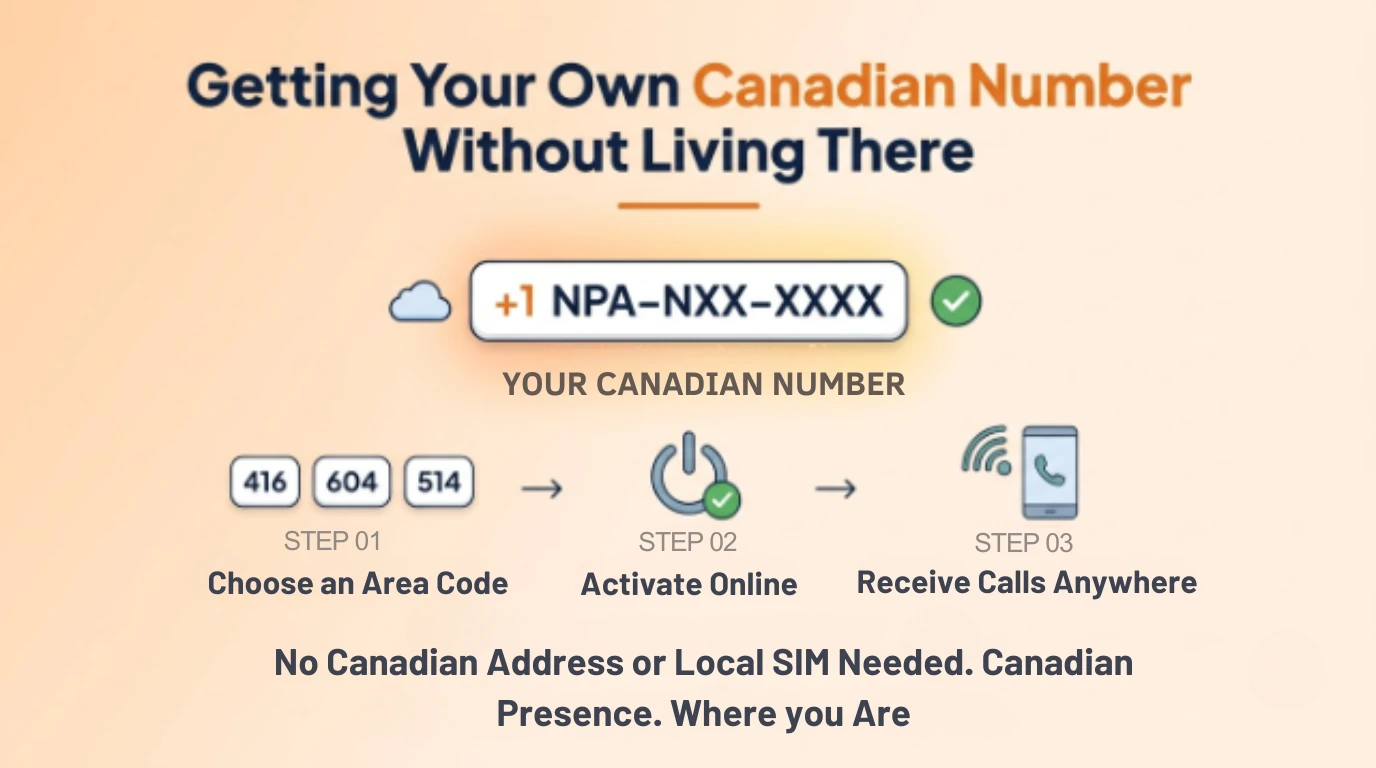
캐나다 전화번호 형식과 일치하고 실제 지역 코드를 전달하는 번호를 갖기 위해 캐나다 주소나 현지 SIM 카드가 필요하지 않습니다. LetsDial를 포함한 가상 번호 제공업체를 사용하면 특정 주나 도시에 연결된 캐나다 번호를 활성화한 다음 전 세계 어디에서나 이미 사용하고 있는 모든 장치로 전화와 문자를 전달할 수 있습니다.
이는 캐나다 시장으로 확장하는 기업, 캐나다 고객과 협력하는 원격 팀, 국제 요금을 지불하지 않고 캐나다에 있는 가족이나 연락처를 원하는 개인에게 특히 유용합니다. LetsDial의 설정은 단 몇 분 밖에 걸리지 않습니다. 새 SIM을 설치하거나 현지 이동통신사 계약에 서명하는 대신 캐나다 지역 번호를 선택하고 번호를 활성화한 다음 수신 전화를 앱을 통해 라우팅하세요. 더 폭넓게 찾아보세요 지역번호 북미 전역의 적용 범위에 대한 디렉토리입니다.
캐나다 가상 번호는 해당 국가의 다른 번호와 정확히 동일한 NPA-NXX-XXXX 구조를 따르기 때문에 표준 로컬 회선과 전화를 거는 사람이 구분할 수 없습니다. 차이점은 전적으로 수신 측에 있으며, 통화는 VoIP를 통해 실제로 사용 중인 장치로 라우팅됩니다.
결론
캐나다 전화 번호 형식은 하나의 일관된 패턴으로 요약됩니다. 즉, 3자리 지역 코드, 3자리 중앙 사무소 코드 및 4자리 가입자 번호는 모두 북미 번호 매기기 계획에 따라 미국과 동일한 +1 국가 코드를 공유합니다. 해당 구조가 익숙해지면 지역 번호를 지역과 일치시키거나 LetsDial와 같은 공급자를 통해 자체 설정하는 데 추측이 아닌 몇 초 만에 완료됩니다.
공유 번호 지정 시스템의 작동 방식에 대한 배경 정보는 다음을 참조하세요. GSMA. 실제 캐나다 전화번호를 받을 준비가 되셨나요? 지금 LetsDial로 설정해 보세요.
자주 묻는 질문
작성자: 아리안 칸 · 2026년 8월 6일
작성자에게 답장하기