Introduzione
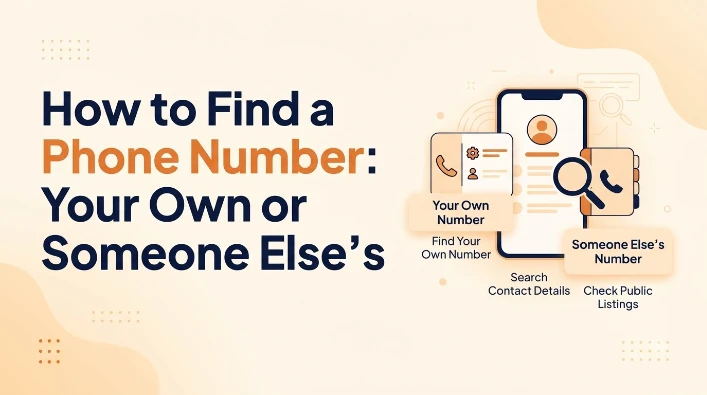
"Trova un numero di telefono" copre due ricerche completamente diverse che condividono le stesse tre parole. A volte significa scavare nelle impostazioni del telefono perché hai dimenticato il numero che ti è stato assegnato. Altre volte significa cercare di identificare a chi appartiene un numero che ha chiamato, o cercare un'attività, un vecchio contatto o un proprietario di cui hai solo un nome.
Questa guida copre entrambi. Spiega dove si trova effettivamente il tuo numero su un iPhone o dispositivo Android, i modi legittimi per cercare il numero di qualcun altro, come funzionano gli strumenti di ricerca inversa del telefono dietro le quinte e cosa è effettivamente legale prima di cercarne uno.
Come trovare il tuo numero di telefono
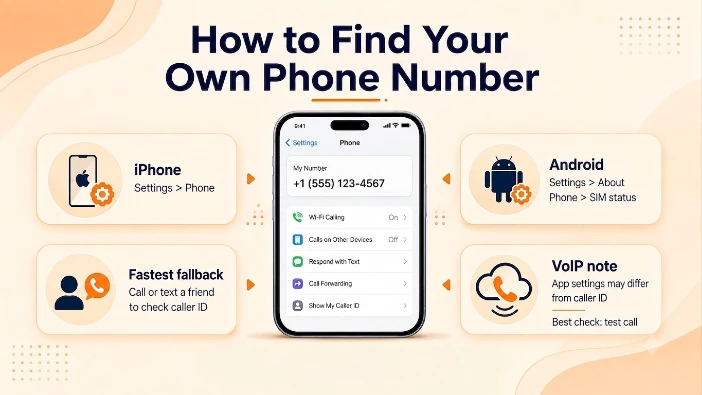
Sembra banale finché non guardi un nuovo telefono o una seconda SIM e ti rendi conto che davvero non conosci il numero. Su iPhone, è in Impostazioni > Telefono, nella parte superiore dello schermo, sopra le opzioni di blocco delle chiamate. Sulla maggior parte dei telefoni Android, si trova in Impostazioni > Informazioni sul telefono > Stato SIM, anche se il percorso esatto varia leggermente in base al produttore poiché Samsung, Google e altre skin Android organizzano i menu delle impostazioni in modo leggermente diverso.
Se nessuno di questi viene visualizzato, la composizione del codice di controllo del numero di un operatore funziona su quasi tutte le reti. Mandare un SMS o chiamare un amico e chiedergli di rileggere l'ID del chiamante visualizzato è il metodo più veloce di tutti e funziona indipendentemente dalla marca del telefono o dall'operatore.
I numeri aziendali e VoIP aggiungono una cosa che vale la pena conoscere: il numero che un'app per telefono cloud mostra nelle proprie impostazioni non è sempre lo stesso visualizzato sull'ID chiamante di qualcun altro, soprattutto se l'account instrada le chiamate attraverso una linea secondaria o gratuita. Quando questa discrepanza è importante, il controllo più sicuro è una vera chiamata di prova in uscita a un secondo dispositivo piuttosto che fidarsi solo della schermata delle impostazioni dell'app.
Come trovare il numero di telefono di qualcun altro online
La ricerca del numero di qualcun altro inizia con gli stessi strumenti che la maggior parte delle persone utilizza già per tutto il resto. Una semplice query del motore di ricerca con il nome completo della persona, la città e qualsiasi datore di lavoro o organizzazione a cui è associata emerge un numero sorprendentemente spesso, soprattutto per imprenditori, proprietari e professionisti pubblici le cui informazioni di contatto dovrebbero essere trovate.
Le pagine bianche online e gli elenchi di ricerca di persone aggregano documenti disponibili al pubblico, registrazioni degli elettori, documenti di proprietà, vecchi elenchi di directory, in un profilo ricercabile che spesso include un numero di telefono attuale o precedente. I risultati variano molto in termini di precisione, poiché questi siti attingono da documenti pubblici che possono essere obsoleti da anni, quindi un numero che appare è un indizio che vale la pena verificare, non una garanzia.
Per un professionista autorizzato o un'azienda registrata, le directory specifiche del settore spesso battono una ricerca generale. Gli enti statali per le licenze pubblicano i dettagli di contatto di medici, appaltatori e agenti immobiliari come parte della licenza stessa, i siti delle camere di commercio locali elencano le aziende associate con una linea diretta e la pagina "Contatti" o "Team" di un'azienda spesso ha un numero che una directory generica non ha mai raccolto. Queste fonti tendono a rimanere più aggiornate rispetto ai siti aggregatori, poiché il professionista o l'azienda ha un incentivo diretto a mantenere l'elenco accurato.
Utilizzo dei social media e dei contatti reciproci
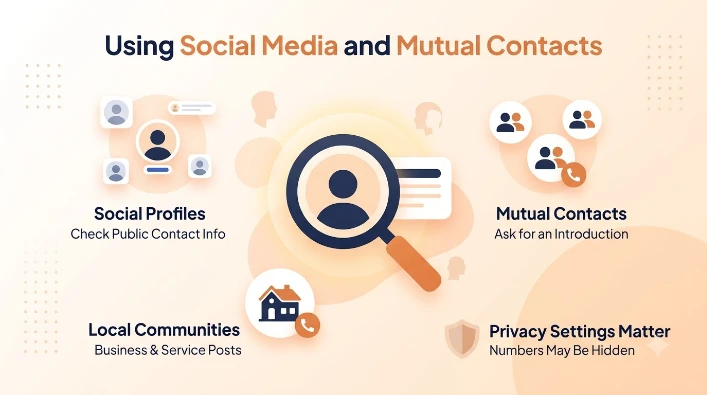
Per chiunque abbia qualche legame, i profili dei social media sono spesso la strada più veloce. Facebook, LinkedIn e persino alcuni profili aziendali Instagram consentono a un utente di elencare facoltativamente un numero di contatto, in particolare su account aziendali o creatori dove essere raggiungibili è il punto centrale. Un contatto reciproco è un percorso ancora più diretto: qualcuno in una chat di gruppo condivisa, un ex collega o un familiare può semplicemente avere già salvato il numero ed essere felice di comunicarlo o di presentarlo lui stesso.
Le app di quartiere come Nextdoor aggiungono un'opzione più ristretta che vale la pena conoscere: un'azienda locale o un vicino che ha pubblicato un post in un gruppo della comunità a volte elenca un numero direttamente nel post stesso, in particolare per servizi come tutoraggio, pet sitting o lavoro tuttofare in cui l'intero punto della pubblicazione deve essere chiamato. Nessuno di questi percorsi è garantito, poiché le impostazioni sulla privacy possono nascondere un numero a chiunque al di fuori dei contatti esistenti o dell'elenco degli amici di una persona, ma vale la pena controllarli prima di presumere che una ricerca nella directory sia l'unica opzione.
Quando un numero non viene visualizzato: cosa potrebbe significare
A volte una ricerca risulta completamente vuota e quell'assenza è di per sé informativa. Un numero che prima appariva in una directory o su un profilo e non appare più potrebbe appartenere a qualcuno che ha deliberatamente cancellato i propri elenchi pubblici, cambiato operatore o trasferito il numero su un account completamente diverso. È una situazione diversa da una chiamata o un messaggio che arriva ma non riceve mai risposta, il che è più spesso un segno di blocco piuttosto che il numero semplicemente irraggiungibile, poiché una chiamata bloccata si connette comunque a una rete, ma non alla persona che stai cercando di raggiungere.
Ricerca inversa del telefono: come funziona realmente
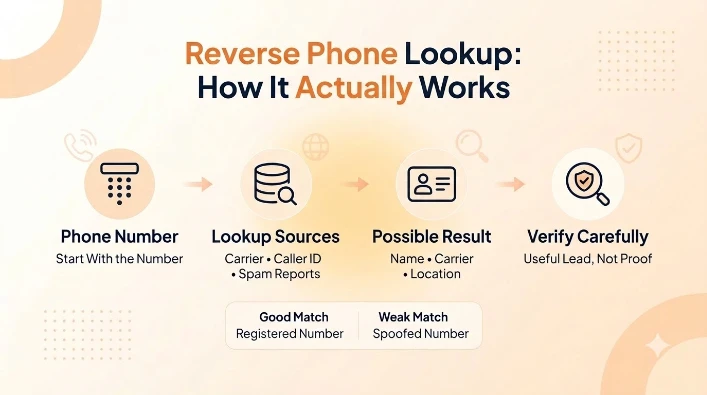
Una ricerca inversa del telefono porta il processo nella direzione opposta: inizi con un numero, di solito quello che ti ha chiamato o ti ha mandato un messaggio, e provi a scoprire a chi appartiene. Questi strumenti confrontano il numero con i dati di registrazione dell'operatore, i database degli ID chiamante e, per i numeri segnalati come spam, le segnalazioni di crowdsourcing di altri utenti che hanno registrato lo stesso numero.
La precisione dipende fortemente dal tipo di numero. Un cellulare o un telefono fisso registrato collegato a un account di un operatore reale tende a restituire un nome o almeno una posizione generale e un operatore. Un numero che è stato falsificato, il che significa che l'ID del chiamante è stato falsificato per visualizzare un numero diverso da quello che ha effettivamente effettuato la chiamata, non restituisce nulla di utile, poiché la ricerca è valida solo quanto i dati effettivamente dietro quella specifica stringa di cifre.
Un avvertimento che vale la pena segnalare: esistono molti siti di ricerca inversa "gratuiti" principalmente per vendere un rapporto a pagamento una volta effettuata una ricerca, mostrando un risultato teaser e quindi addebitando il costo per "sbloccare" il nome o l'indirizzo completo. Pagare non significa automaticamente nemmeno una migliore precisione, poiché i dati sottostanti sono spesso la stessa aggregazione di registri pubblici da cui ha già attinto una ricerca gratuita. Tratta qualsiasi risultato della ricerca inversa, a pagamento o gratuita, come punto di partenza per verificare piuttosto che come identità confermata.
Ottenere un numero che sia effettivamente facile da trovare
Vale la pena menzionare il rovescio della medaglia di tutto questo argomento: un'azienda o un professionista che cerca di essere trovato beneficia di un numero che viene visualizzato in modo chiaro nell'ID chiamante e non viene contrassegnato automaticamente come spam come fanno alcune linee di marketing con composizione automatica. Dal 2021, gli operatori telefonici statunitensi sono tenuti a implementare STIR/SHAKEN, uno standard di autenticazione dell'ID chiamante che verifica che una chiamata provenga effettivamente dal numero da cui dichiara di provenire; è molto più probabile che un numero che non è autenticato correttamente arrivi sul telefono di un destinatario contrassegnato come "Probabile spam" indipendentemente da chi sta effettivamente chiamando. UN numero di telefono aziendale dedicato con ID chiamante reale e analisi delle chiamate si assicura che quando qualcuno cerca l'attività o semplicemente vede il numero sul proprio telefono, venga letto come una linea legittima e identificabile anziché come una stringa di cifre sconosciuta.
È legale cercare il numero di telefono di qualcuno?
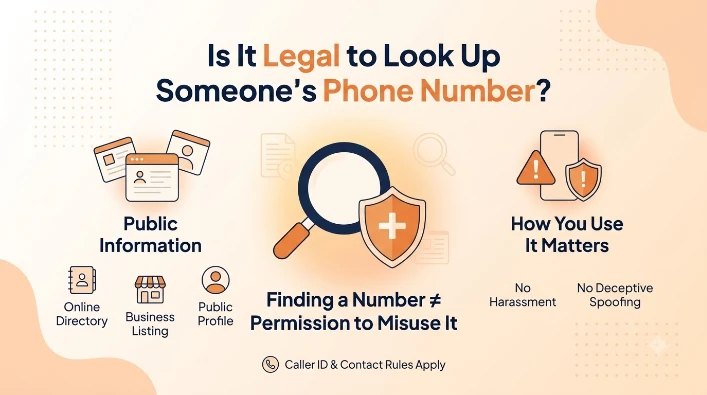
Negli Stati Uniti, cercare un numero di telefono legato a informazioni disponibili al pubblico, una directory online, un profilo di social media, una scheda di attività commerciale, è legale, poiché tali dati sono stati resi pubblici dalla persona o organizzazione a cui appartengono. Dove diventa più complicato è usare quel numero in seguito: the Regole FCC sull'ID chiamante e sullo spoofing chiarire che chiamare, mandare SMS o molestare ripetutamente qualcuno dopo aver trovato il suo numero, o falsificare un numero per mascherare chi sta chiamando, passa da una ricerca legittima a una condotta che la FCC e la FTC regolano attivamente.
Conclusione
Trovare un numero di telefono, che sia quello assegnato al proprio dispositivo o quello di qualcun altro, di solito si riduce a controllare prima il posto giusto: le impostazioni del telefono per il proprio, i motori di ricerca e le directory per quello di qualcun altro e uno strumento di ricerca inversa quando la ricerca viene eseguita nella direzione opposta partendo da un chiamante sconosciuto. Nessuno di questi metodi è perfetto, dal momento che le directory diventano obsolete e i numeri falsificati sconfiggono gli strumenti di ricerca in base alla progettazione, ma combinando due o tre approcci ci si avvicina a una risposta molto più spesso che fare affidamento su uno solo.
Per un'azienda che vuole essere il risultato facile nella ricerca di qualcun altro, piuttosto che in quella difficile, un numero Letsdial viene fornito con un ID chiamante verificato e analisi delle chiamate integrate fin dal primo giorno, in modo che i clienti possano effettivamente trovare e fidarsi del numero che li chiama. Imposta oggi stesso un numero Letsdial e assicurati che la tua attività sia facile da trovare.
Domande frequenti
Scritto da Ariano Khan · 12 agosto 2026
Rispondi all'autore