Perkenalan
Buka spreadsheet kontak pelanggan mana pun dan entri India akan langsung terlihat. Beberapa adalah sepuluh digit datar. Yang lain membawa kode kota di depannya, angka nol yang menyimpang, atau tanda plus tanpa pola yang jelas bagi orang luar. Tidak ada satupun yang acak. Setiap nomor telepon di India mengikuti rencana penomoran yang ketat dan diatur oleh pemerintah, dan begitu Anda mengetahui peraturannya, formatnya tidak lagi terlihat kacau dan mulai terlihat hampir mekanis.
Panduan ini menguraikan dengan tepat bagaimana nomor telepon India dibuat — awalan seluler, kode STD, kode negara +91, portabilitas, dan mengapa bisnis memperlakukan verifikasi nomor sebagai pos pemeriksaan yang serius dan bukan formalitas.
Blok Bangunan Nomor Telepon India
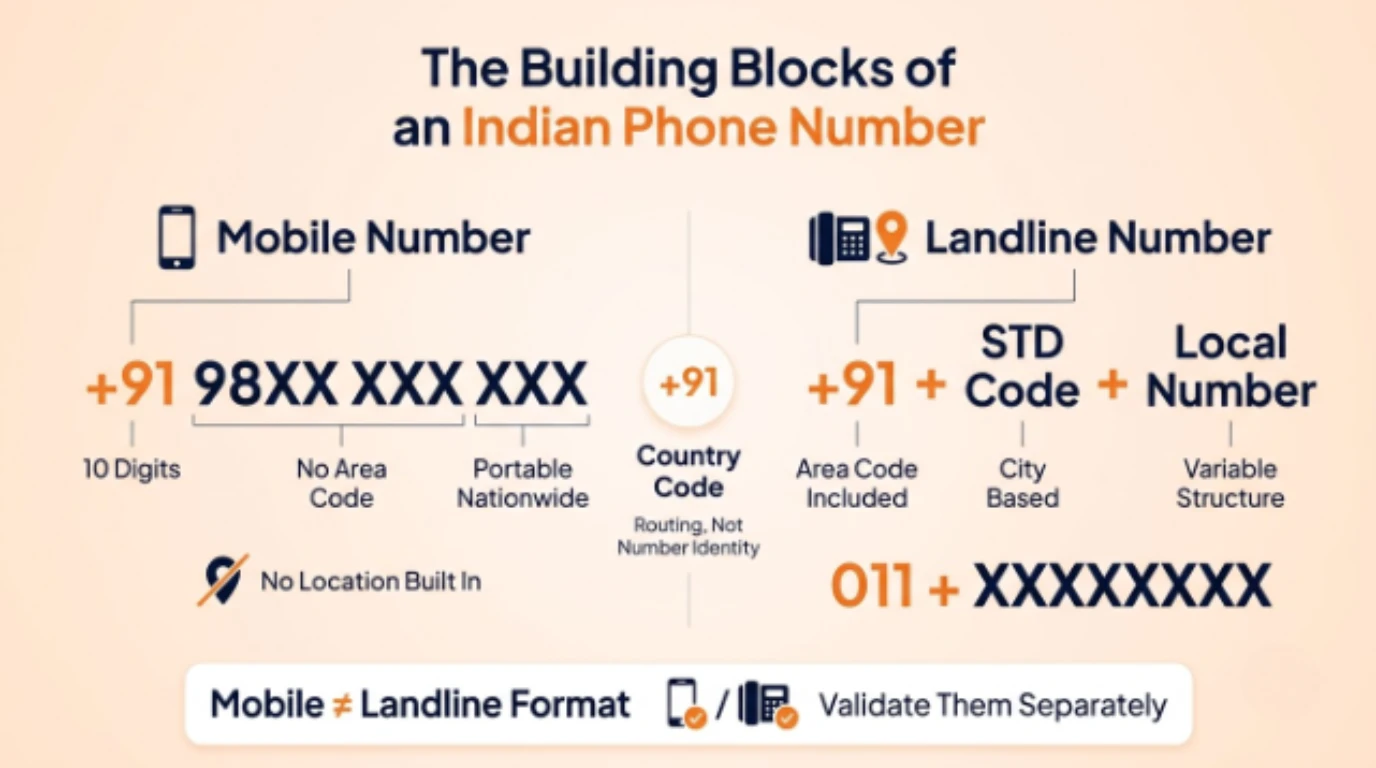
Setiap nomor telepon India berada dalam rencana penomoran yang dijalankan oleh Departemen Telekomunikasi, dan dibagi menjadi dua kelompok berbeda: nomor ponsel dan nomor telepon rumah. Sekilas keduanya terlihat mirip — keduanya biasanya muncul dalam sepuluh digit — tetapi logika internalnya sangat berbeda.
Nomor ponsel adalah string portabel dan datar tanpa data lokasi tertanam. Sebaliknya, nomor telepon rumah dibuat dari kode area tetap (disebut kode STD) ditambah nomor pelanggan lokal, dan panjang masing-masing nomor berubah bergantung pada kota. Pemisahan ini penting bagi siapa pun yang memvalidasi data kontak, karena regex yang berfungsi untuk satu jenis akan secara diam-diam merusak jenis lainnya.
Kode negara +91 berada di depan keduanya saat melakukan panggilan dari luar India, namun tidak pernah menjadi bagian dari nomor itu sendiri — ini adalah informasi perutean, bukan identitas. Membingungkan keduanya adalah kesalahan paling umum dalam logika validasi nomor telepon yang ditujukan untuk pengguna di India.
Struktur Nomor Ponsel: Aturan 10 Digit
Setiap nomor ponsel India terdiri dari 10 digit, tanpa kode area dan tidak ada variasi berdasarkan wilayah. Operator, lingkaran, dan riwayat pelanggan dapat berubah, namun jumlahnya tetap mempertahankan bentuknya. Yang berbeda-beda adalah digit pertama, dan digit pertama itu memberi tahu Anda sesuatu yang spesifik.
Nomor ponsel di India hanya dimulai dengan 6, 7, 8, atau 9. Ini bukan konvensi gaya — ini adalah aturan alokasi keras yang ditetapkan oleh otoritas penomoran untuk memisahkan nomor ponsel dari telepon rumah, bebas pulsa, dan nomor premium dengan rapi. String yang diawali dengan kata lain, atau kurang dari 10 digit, bukan nomor ponsel India yang valid, titik.
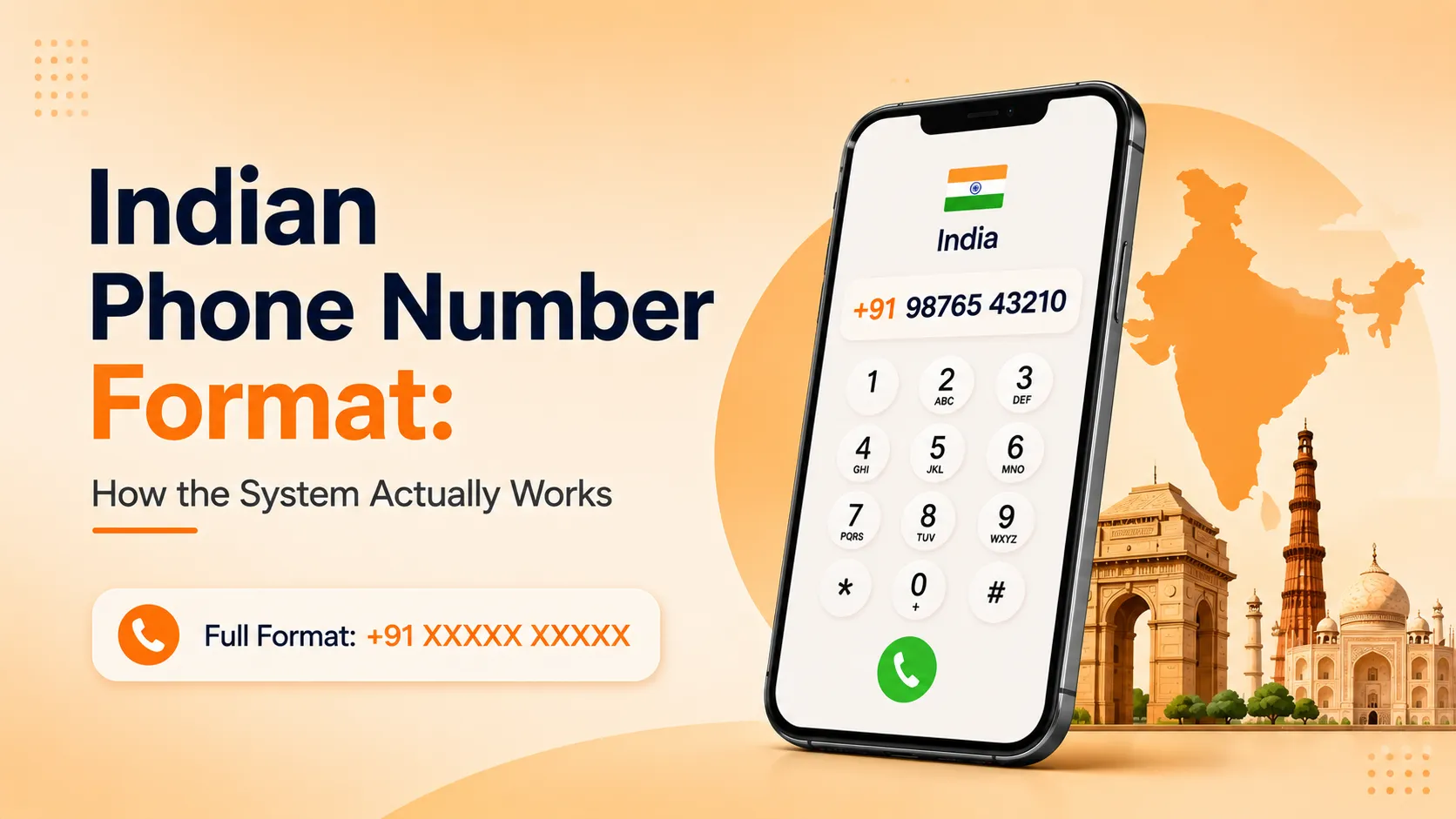
Secara tertulis, format nomor telepon India biasanya muncul dalam salah satu dari tiga cara: sebagai blok 10 digit biasa (9876543210), dibagi menjadi pola 5-dan-5 agar mudah dibaca (98765 43210), atau dalam bentuk internasional lengkap dengan kode negara (+91 98765 43210). Ketiganya mewakili angka yang sama. Format terpisah lebih merupakan kebiasaan tipografi di India daripada aturan teknis — sistem telekomunikasi mengabaikan spasi sepenuhnya.
Karena digit terdepan dibatasi pada empat kemungkinan nilai, alat pendeteksi spam dan validasi nomor dapat memfilter entri yang jelas-jelas palsu sebelum mencapai database. Pengajuan formulir yang mengklaim nomor ponsel India yang dimulai dengan 3 atau 5 telah gagal validasi sebelum ada yang memeriksa yang lain.
Kode STD: Bagaimana Nomor Telepon Rumah Dibangun
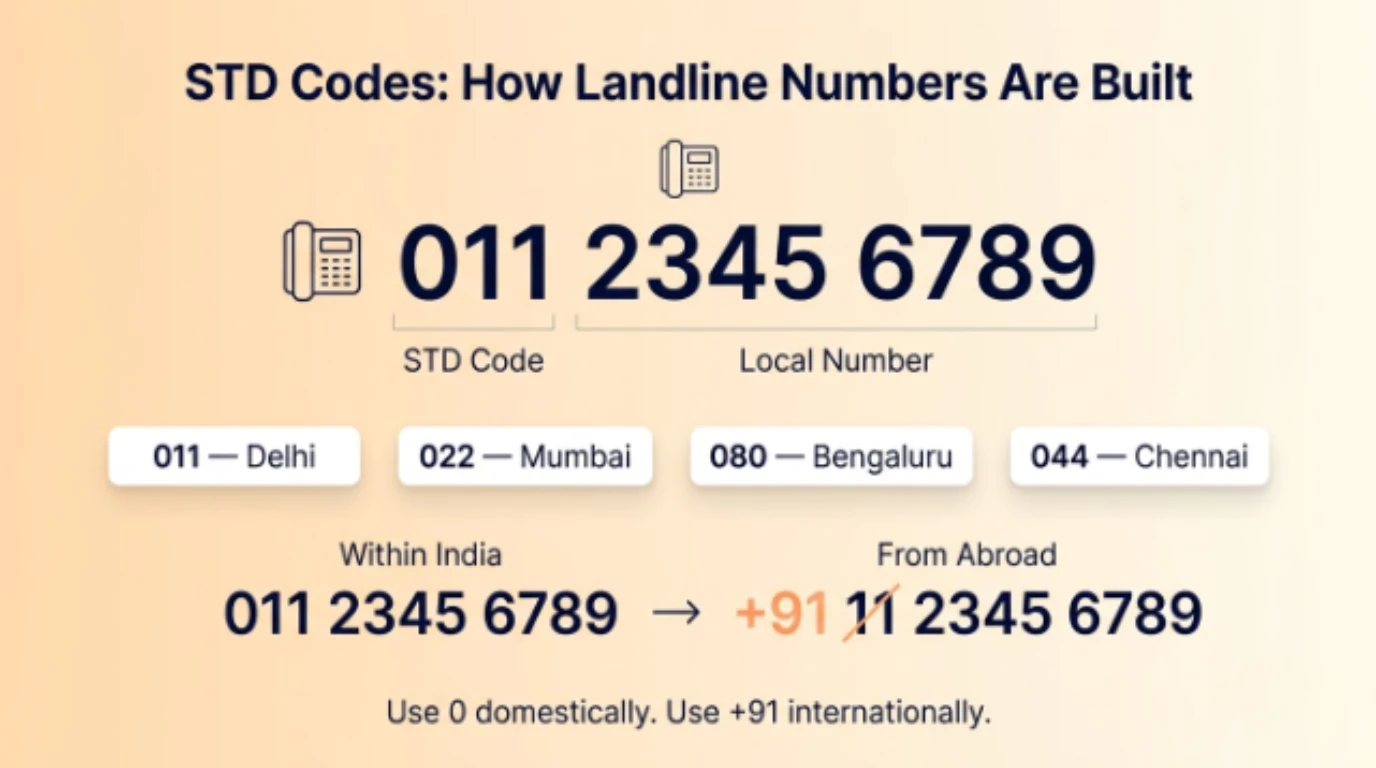
Nomor telepon rumah bekerja dengan logika yang sangat berbeda, yang diwarisi dari sistem Subscriber Trunk Dialing lama yang memungkinkan penelepon melakukan panggilan jarak jauh tanpa operator. Setiap kota di India diberi kode STD, dan panjang kode STD berbanding terbalik dengan seberapa luas area panggilannya.
Kota-kota metro mendapatkan kode STD yang pendek karena mereka menangani volume panggilan yang sangat besar dan memerlukan urutan panggilan yang lebih pendek: Delhi adalah 011, Mumbai adalah 022, Bengaluru adalah 080, dan Chennai adalah 044. Kota-kota kecil mendapatkan kode STD yang lebih panjang — terkadang empat atau lima digit — karena kota-kota tersebut memerlukan lebih sedikit kombinasi nomor pelanggan unik. Dalam setiap kasus, kode STD ditambah nomor pelanggan lokal berjumlah total panjang tetap untuk lingkaran tersebut, itulah sebabnya telepon rumah Delhi dan telepon rumah kota kecil bisa terlihat "benar" namun memiliki panjang kode yang berbeda.
Saat menelepon telepon rumah dari dalam India tetapi di luar wilayah lokalnya, penelepon mengawali kode STD dengan 0 (0-11 untuk Delhi, misalnya). Angka 0 di depan adalah digit akses utama domestik — angka ini dihilangkan seluruhnya saat melakukan panggilan internasional, dan digantikan dengan +91. Ini adalah detail yang membuat kebanyakan orang tersandung: 0 dan +91 adalah dua sistem berbeda yang melakukan pekerjaan yang sama untuk dua audiens berbeda, dan mencampurkannya menghasilkan angka yang salah format.
Pertumbuhan telepon rumah telah mendatar karena adopsi seluler telah mengambil alih komunikasi sehari-hari, namun kode STD masih penting untuk memverifikasi alamat bisnis, mengarahkan jalur layanan pelanggan, dan interaksi apa pun ketika perusahaan ingin menunjukkan kehadiran lokal yang dapat dikenali dan terkait dengan kota asli di India.
Kode Negara +91 dalam Konteks
+91 adalah kode panggilan negara India, yang ditetapkan berdasarkan paket penomoran internasional yang menjadi langganan setiap negara. Nomor tersebut tidak memiliki fungsi lain — nomor tersebut tidak menunjukkan operator, wilayah di India, atau apa pun tentang pemilik nomor tersebut. Satu-satunya tugas mereka adalah memberi tahu pertukaran internasional untuk “mengarahkan seruan ini ke jaringan India,” yang kemudian akan diambil alih oleh peraturan internal India sendiri.
Inilah sebabnya entri internasional yang diformat dengan benar selalu terlihat seperti +91 diikuti dengan 10 digit nomor ponsel atau kode STD ditambah nomor pelanggan, dengan angka 0 domestik dihilangkan. Perangkat lunak yang menyimpan nomor telepon India untuk penggunaan internasional tetapi tetap menggunakan angka 0 di depannya berarti menyimpan nomor yang tidak valid — secara teknis dua digit yang setara dengan kode negara berada di tempat yang seharusnya hanya berisi satu.
Untuk bisnis AS yang perlu menjangkau pelanggan seluler India secara langsung, panduan LetsDial tentang kode negara India menjelaskan hal yang tepat +91 kode negara urutan panggilan, pertimbangan zona waktu, dan aturan pemformatan secara lebih mendalam daripada yang kami bahas di sini.
Portabilitas Nomor Ponsel dan Perubahannya
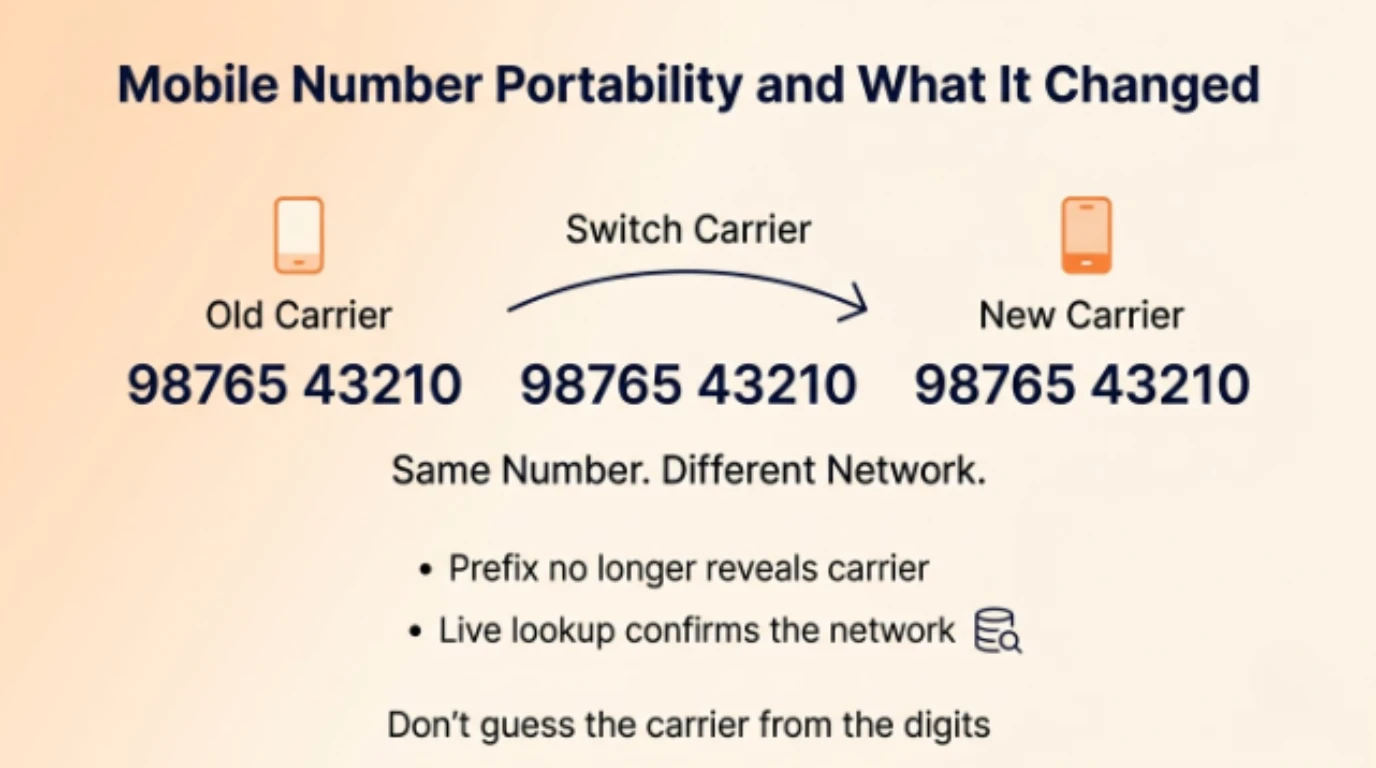
Sebelum tahun 2011, nomor ponsel India memiliki tag yang tidak terlihat: beberapa digit pertama setelah digit terdepan memberi tahu Anda operator mana yang mengeluarkannya, karena operator diberi blok nomornya sendiri. Portabilitas Nomor Ponsel memutuskan tautan itu. Pelanggan sekarang dapat berpindah operator — misalnya, dari satu operator ke operator lainnya — sambil tetap mempertahankan 10 digit nomor yang sama, dan jaringan menentukan operator sebenarnya melalui pencarian backend, bukan melalui struktur nomor.
Hal ini memiliki konsekuensi nyata bagi siapa pun yang membangun sistem kontak: Anda tidak dapat lagi menyimpulkan operator pelanggan dari digit nomor telepon India seperti dulu. Alat apa pun yang masih mencoba merutekan panggilan atau SMS berdasarkan asumsi blok operator dari awalan nomor berfungsi dengan logika yang sudah ketinggalan zaman. Alat verifikasi modern menanyakan database nomor langsung alih-alih mencocokkan pola angkanya.
Portabilitas juga berarti nomor telepon India lama yang tampaknya sudah ketinggalan zaman di database pelanggan mungkin masih aktif — mungkin hanya berpindah operator. Ini adalah satu lagi alasan mengapa pencocokan pola buta merupakan pengganti yang buruk untuk verifikasi aktual ketika nomor tersebut penting bagi bisnis.
Jangan Ganggu, Filter Spam, dan Nomor Percaya
India menjalankan salah satu sistem penyaringan spam dan panggilan yang tidak diminta yang paling agresif dibandingkan pasar mana pun – masalah skala yang timbul dari salah satu basis pelanggan seluler terbesar di dunia, di mana panggilan telemarketing yang tidak terdaftar menjadi gangguan kronis bagi konsumen. Setiap nomor ponsel India dapat didaftarkan pada daftar Jangan Ganggu nasional, dan operator menerapkan penilaian kemungkinan spam otomatis ke nomor-nomor yang menghasilkan volume panggilan tinggi tanpa registrasi yang sesuai.
Untuk bisnis apa pun yang menelepon ke India – saluran dukungan, pengingat janji temu, kode verifikasi – hal ini mengubah perhitungannya. Nomor yang terlihat berformat sempurna masih bisa ditandai atau diblokir secara diam-diam jika memicu heuristik spam di pihak operator penerima. Hal ini merupakan salah satu alasan mengapa perusahaan-perusahaan yang menelpon nomor ponsel India dalam skala besar semakin banyak melakukan rute melalui jalur bisnis yang terdaftar dibandingkan saluran VoIP mentah yang tidak memiliki riwayat reputasi, karena ID pengirim yang tidak terdaftar akan diperlakukan dengan lebih mencurigakan terlepas dari seberapa benar nomor telepon India diformat.
Bagaimana Bisnis Memverifikasi Nomor Telepon India
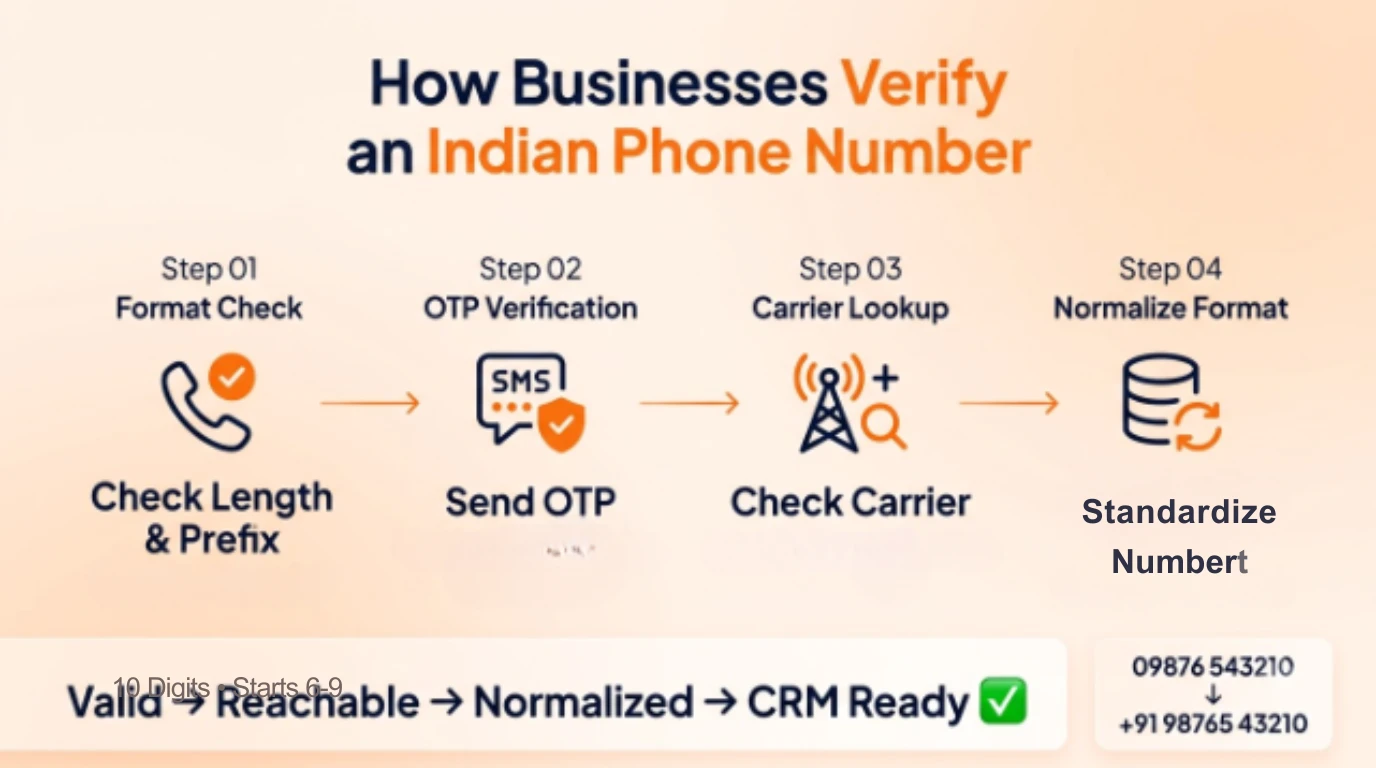
Mengumpulkan nomor telepon India itu mudah; mengonfirmasi bahwa formulir tersebut nyata, dapat dijangkau, dan diformat dengan benar adalah hal yang menyebabkan sebagian besar formulir pendaftaran dan impor CRM gagal. Beberapa pemeriksaan memisahkan entri yang dapat digunakan dari liabilitas:
Validasi panjang dan awalan mencakup dasar-dasarnya — tepat 10 digit untuk seluler, dimulai dengan 6 hingga 9, tanpa tanda baca yang disematkan di luar tambahan +91 di awalan opsional. Verifikasi OTP adalah standar praktis: mengirimkan kode satu kali melalui SMS mengonfirmasi bahwa nomor ponsel tersebut aktif dan benar-benar dapat dijangkau oleh orang yang mengirimkannya, bukan hanya valid secara struktural. API pencarian operator menyelesaikan pasca-portabilitas operator jaringan saat ini, berguna untuk keputusan perutean dan penilaian penipuan. Normalisasi format — menghilangkan spasi, mengonversi entri lokal yang diawali 0 ke format +91 — membuat database tetap dapat dikueri alih-alih penuh dengan entri yang hampir duplikat yang sebenarnya memiliki nomor yang sama yang ditulis dengan tiga cara berbeda.
Jika langkah-langkah ini diabaikan, bisnis akan berakhir dengan tiket dukungan yang tidak terkirim, kampanye SMS yang gagal secara diam-diam, dan dasbor analisis yang dipenuhi dengan angka-angka yang awalnya tidak nyata.
Mendapatkan Nomor Telepon Virtual India Tanpa Kantor Lokal
Tidak semua bisnis yang memerlukan nomor telepon India memiliki, atau menginginkan, kantor fisik di India. Nomor virtual mengatasi kesenjangan tersebut: nomor ini adalah nomor +91 nyata yang dapat dihubungi dan disediakan melalui infrastruktur cloud, bukan melalui SIM fisik atau jalur tembaga, dan panggilan ke rute tersebut ke mana pun bisnis sebenarnya beroperasi — tim dukungan di negara lain, staf penjualan terdistribusi, atau sistem telepon yang ada.
Bagi perusahaan AS yang menjual ke pasar India, ini berarti memberikan nomor telepon lokal India yang dapat dipercaya kepada pelanggan tanpa menyewa ruang kantor atau mengelola kontrak operator lokal. Penjelasan LetsDial yang lebih luas tentang nomor telepon maya mencakup cara kerja teknologi yang mendasarinya jika Anda menginginkan mekanisme di luar kasus penggunaan khusus India. LetsDial menyediakan nomor-nomor ini dengan format seluler atau gaya STD yang benar sejak awal, sehingga hasilnya sudah sesuai dengan apa yang diharapkan oleh penelepon dan operator di India — tidak perlu memformat ulang secara manual.
Kesimpulan
Format nomor telepon di India terlihat kacau pada awalnya, namun hal ini memiliki dua aturan yang jelas: nomor ponsel terdiri dari 10 digit datar yang dimulai dengan 6 hingga 9, dan nomor telepon rumah memasangkan kode STD dengan panjang variabel dengan nomor pelanggan, keduanya menggantikan angka domestik 0 dengan +91 untuk penggunaan internasional.
Skala tersebut adalah alasan mengapa India menjalankan salah satu dari hal tersebut basis pelanggan seluler terbesar di dunia, dan mengapa pemformatan dan verifikasi sangat penting bagi bisnis mana pun yang menelepon. Siap untuk mendapatkan nomor India asli? Siapkan satu dengan LetsDial hari ini.
Pertanyaan yang Sering Diajukan
Ditulis oleh Arya Khan · 7 Agustus 2026
Balas ke penulis