вступ
Кожен номер телефону, який починається з +33, говорить вам те саме, перш ніж ви прочитаєте іншу цифру: цей дзвінок спрямовується до телекомунікаційної мережі Франції. Це вся робота коду країни — інструкція фіксованого маршрутизації, яку розпізнає кожен оператор у всьому світі, — але цифри, які слідують за ним, є місцем, де насправді трапляється більшість помилок при наборі.
У цьому посібнику пояснюється, що означає код країни +33, як працюють зони нумерації у Франції, точна послідовність вхідного та вихідного набору та чому місцевий номер +33 змінює спосіб відповіді на виклик на іншому кінці. Незалежно від того, чи здійснюєте ви один дзвінок чи налаштовуєте постійну присутність у Франції, мета тут полягає в тому, щоб зробити +33 таким же однозначним, як набір номера на вулиці.
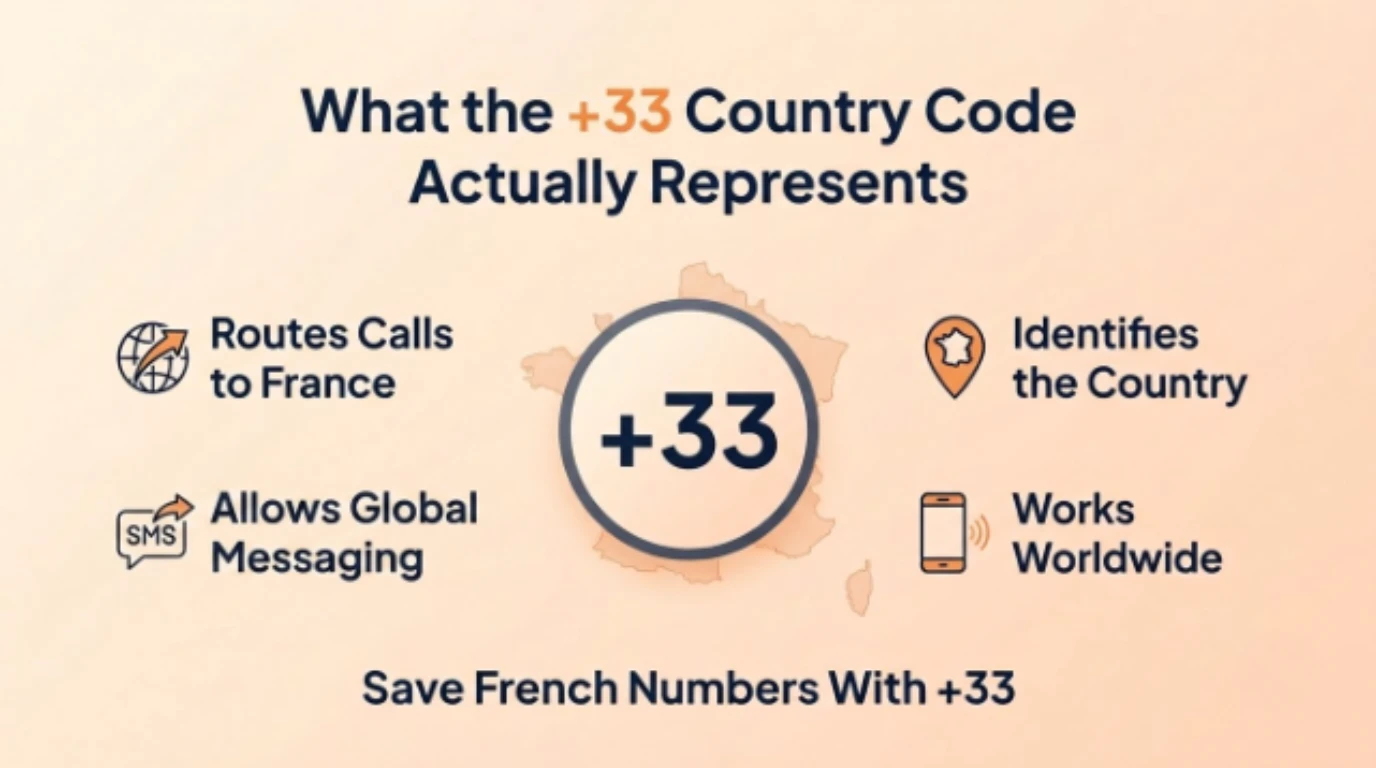
Що насправді означає код країни +33
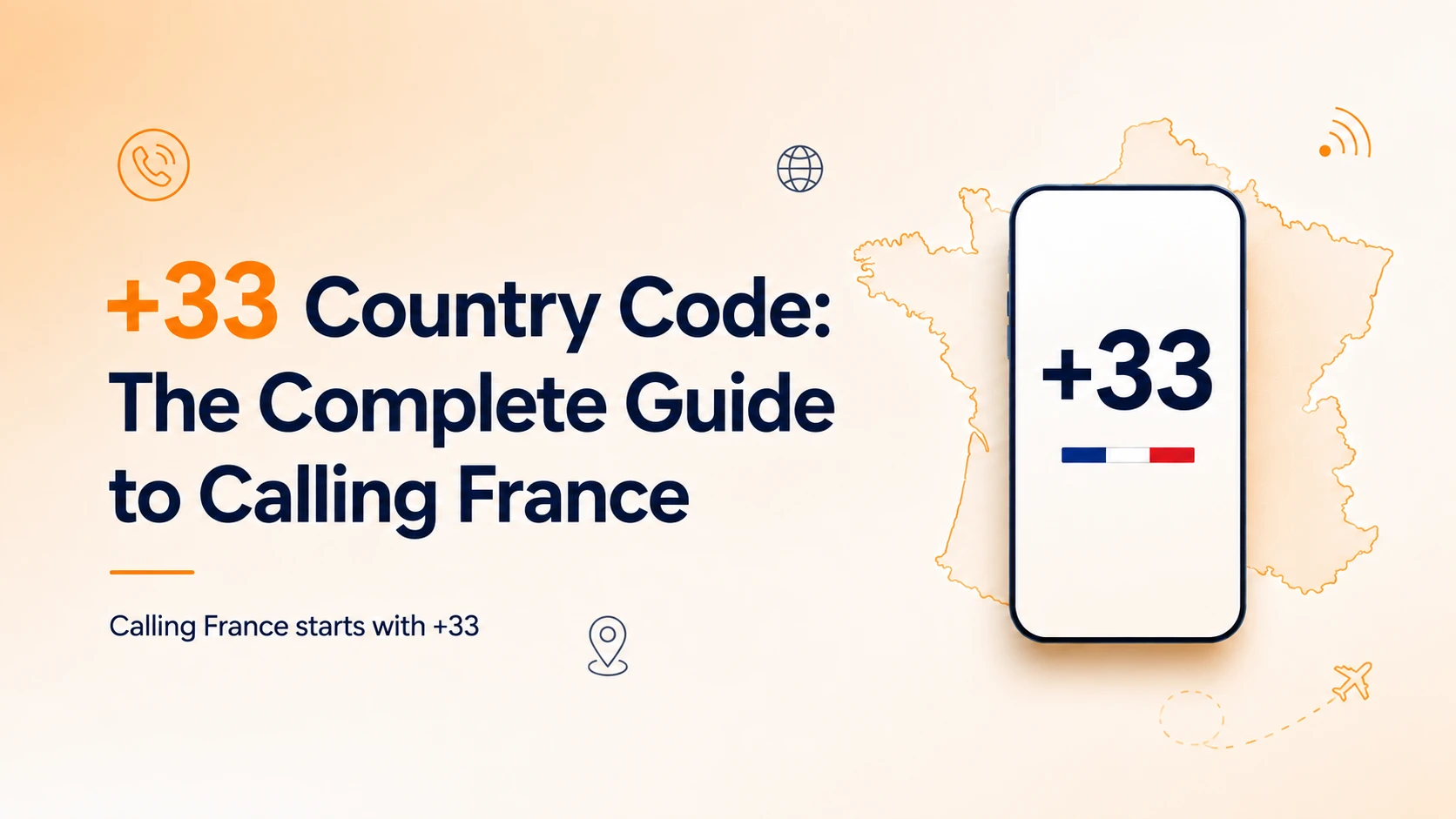
Код країни +33 є постійним ідентифікатором Франції в глобальній системі нумерації телефонів, який призначається міжнародними телекомунікаційними органами та розпізнається всіма мережами операторів у всьому світі. Коли дзвінок містить +33, мережі направляють його безпосередньо у внутрішню систему Франції, а не розглядають його як місцевий чи неоднозначний номер.
Це важливо, оскільки код країни — це не просто формальність, нанесена на передній частині номера — це механізм, який відокремлює французький номер від плану нумерації будь-якої іншої країни. Без +33 цифри, що залишилися у французькому телефонному номері, теоретично можуть збігатися з номером у зовсім іншій країні, оскільки національні плани нумерації самі по собі не є глобально унікальними.
Для тих, хто зберігає контакт французькою мовою за межами країни, збереження номера з повним кодом країни +33 з самого початку дозволить уникнути неоднозначності пізніше. Смартфон, який розпізнає префікс +33, автоматично застосує правильні правила місцевого набору незалежно від того, звідки ви телефонуєте наступного разу.
Метрополія Франції проти її заморських територій
Код країни +33 застосовується саме до метрополії Франції — материкової частини та Корсики — і не поширюється на заморські території Франції. Гваделупа, Мартініка, Французька Гвіана, Реюньйон і Майотта мають свої власні коди країн, незважаючи на те, що вони політично є частиною Франції.
Це загальна плутанина. Діловий контакт, який зазначає, що «телефонує з Франції», але насправді перебуває на Мартініці чи Реюньйоні, взагалі не буде доступним за кодом країни +33 — натомість вам знадобиться власний код певної території. Припущення, що +33 охоплює всі регіони, що знаходяться під управлінням Франції в будь-якій точці світу, є однією з найпоширеніших помилок при наборі номера.
Якщо ви не впевнені, який код застосовний, варто запитати безпосередньо, а не вгадувати лише за словом "Франція". Код країни +33 зарезервовано виключно для міського плану нумерації, і змішування його з кодом закордонної території призведе до неможливості повного з’єднання виклику.
П'ятизонна система: як Франція спростила свої телефонні коди
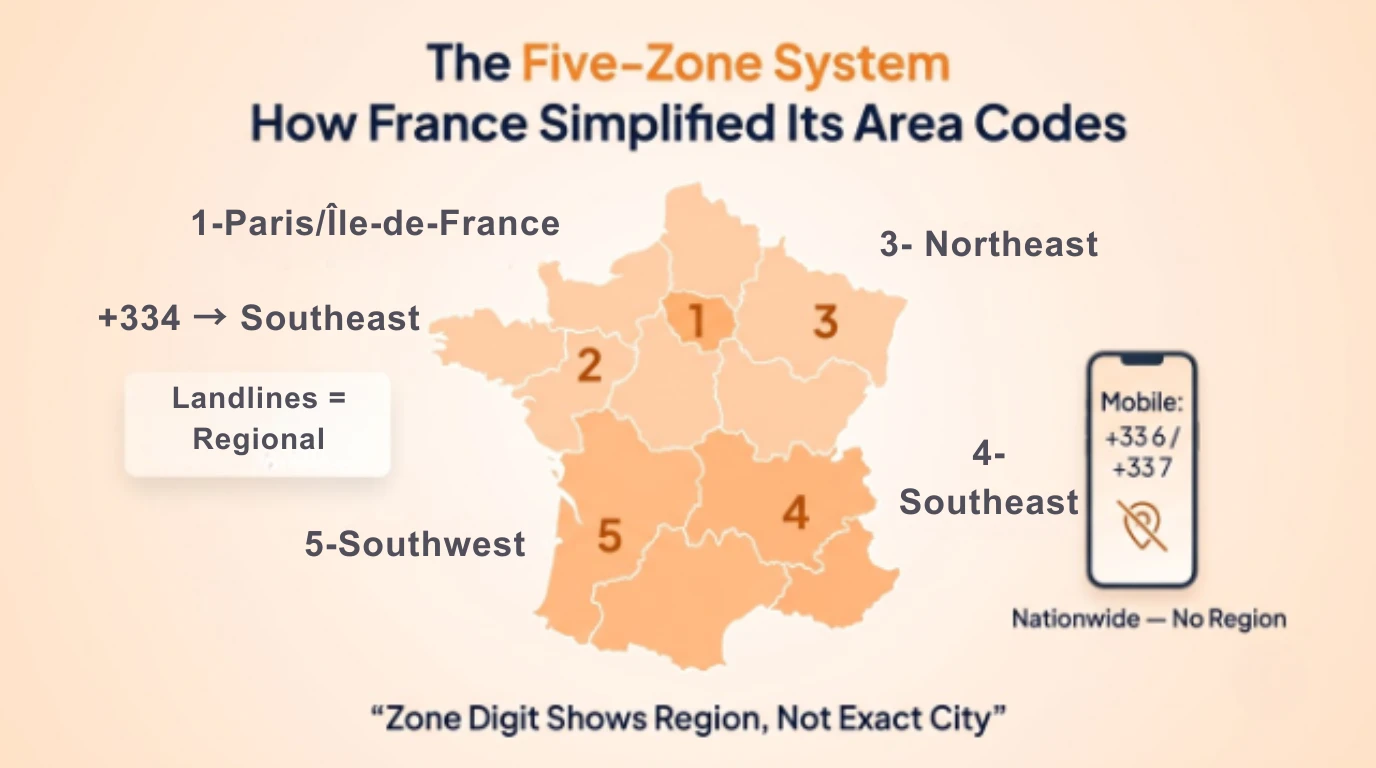
Замість того, щоб призначати коди міст містам, як це роблять деякі країни, Франція поділяє всю країну на п’ять пронумерованих зон, кожна з яких представлена однією цифрою після коду країни +33. Зона 1 охоплює Париж і прилеглий регіон Іль-де-Франс, зона 2 охоплює північний захід, зона 3 — північний схід, зона 4 — південний схід і зона 5 — південний захід.
Це означає, що число, що починається з +33 4, може належати Ліону, Марселю, Ніцці чи будь-якому меншому містечку в усьому південно-східному кварталі країни — зона звужує загальний регіон, а не конкретне місто. Це простіша система, ніж коди міста за містом, але це також означає, що лише цифра зони говорить вам менше про точне місцезнаходження абонента, ніж плани нумерації деяких інших країн.
Мобільні номери повністю знаходяться за межами цієї системи регіональних зон, використовуючи спеціальні префікси (06 і 07 усередині країни, стаючи +33 6 або +33 7 за кордоном), які застосовуються по всій країні незалежно від того, де фізично знаходиться власник телефону. Це важлива відмінність від стаціонарних телефонів, де цифра зони постійно прив’язана до регіону.
Телефонуйте до Франції з будь-якої точки світу
Щоб зателефонувати на французький номер за допомогою коду країни +33, послідовність така: ваш місцевий міжнародний код доступу, потім 33, а потім номер із нулем на початку. Зі США чи Канади це 011 33, а потім номер; з Великобританії та більшої частини Європи це 00 33; з мобільного телефону майже будь-де, символ + може замінити код доступу безпосередньо.
Перший нуль – це деталь, яка бентежить тих, хто телефонує вперше. Паризький номер, записаний усередині країни як 01 23 45 67 89, стає +33 1 23 45 67 89 за кордоном — нуль зникає, коли його замінює код країни, і збереження обох порушує послідовність.
Збереження французького контакту в повному форматі +33 із самого початку — замість того, щоб записувати лише національну версію — означає, що вам не потрібно буде пам’ятати це правило перетворення кожного разу, коли ви набираєте номер. Більшість смартфонів автоматично виконують переклад з місцевого на міжнародний, коли номер збережено правильно.
Телефонуйте з Франції куди завгодно
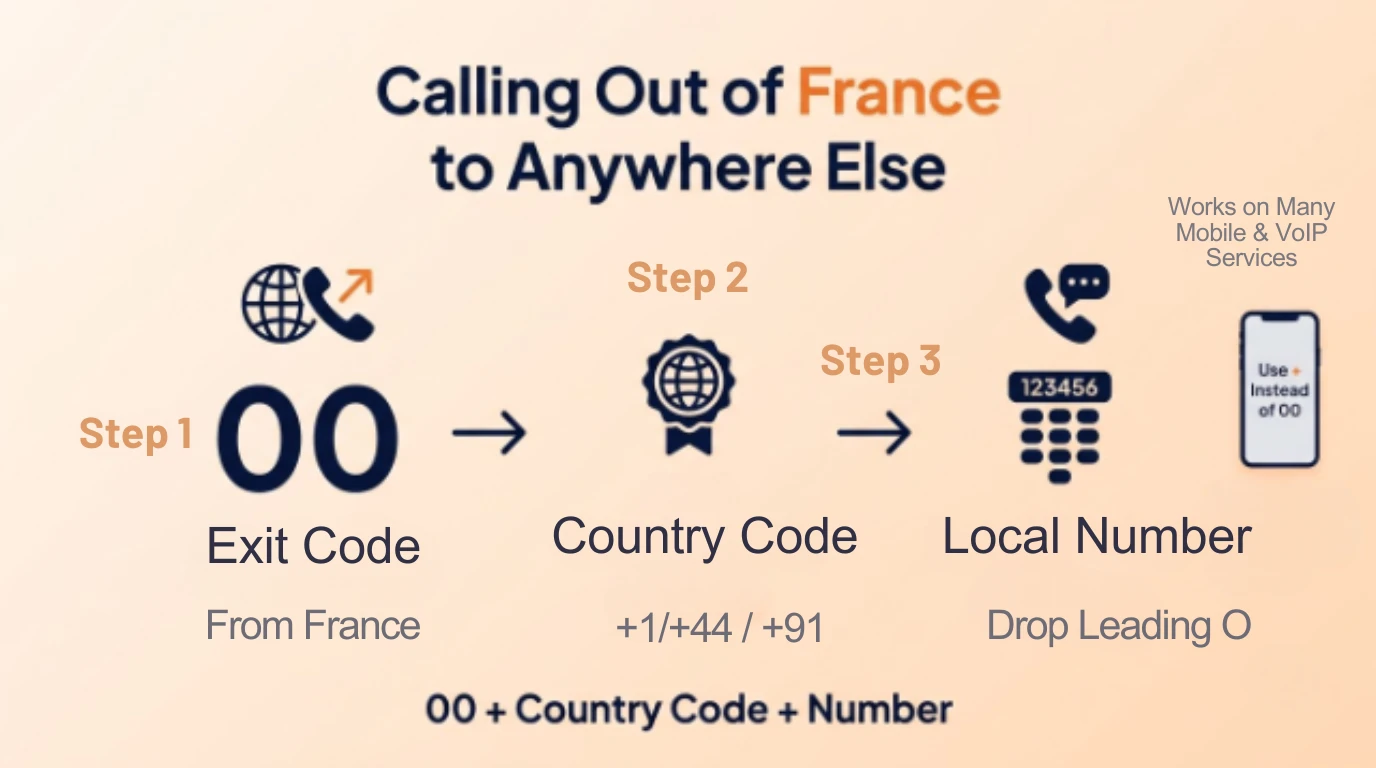
Здійснення дзвінка з Франції в іншу країну відбувається за дзеркальною процедурою: наберіть 00 (власний міжнародний код виходу Франції), потім код країни призначення, потім місцевий номер, опускаючи будь-який нуль на початку на приймальній стороні так само, як під час дзвінка у Францію.
Ця симетрія поширена в багатьох світових системах нумерації, тому, якщо ви раніше телефонували за кордон з інших країн, вихідний процес у Франції здасться вам знайомим. Одна деталь, яку варто подвійно перевірити, полягає в тому, що 00 — це спеціальний код виходу для Франції — деякі країни використовують різні цифри (011, 0011 та інші), тому він не є універсальним, навіть незважаючи на те, що логіка коду країни плюс місцевий номер є такою.
Для тих, хто часто дзвонить у Францію, багато тарифних планів мобільного зв’язку та послуг VoIP ще більше спрощують це, дозволяючи набирати номер у більш природному форматі (іноді приймаючи початковий + безпосередньо) без кожного разу вручну вводити код виходу.
Чому місцевий номер +33 змінює те, як відповідають французькі клієнти
Невідомі міжнародні дзвінки відхиляються набагато частіше, ніж дзвінки, на яких відображається впізнаваний місцевий номер, і Франція не є винятком із цієї моделі. Підприємство, яке дзвонить французьким контактам з номера без коду країни +33 — або з очевидно іноземного номера — часто бачить нижчу кількість відповідей, ніж телефонування з місцевої лінії +33.
Ось чому компанії, які виходять на французький ринок, часто надають перевагу отриманню місцевого номера на ранній стадії, навіть до відкриття фізичного офісу. Наприклад, паризький номер +33 1 сигналізує про справжню присутність у Франції таким чином, що створює достатньо знайомства для одержувача, щоб справді підняти трубку, замість того, щоб з обережності передавати список дзвінків голосовій пошті. Перевірте LetsDial ціноутворення щоб побачити вартість французької лінії в різних планах.
Ефект поєднується для будь-якої компанії, яка здійснює вихідні дзвінки у великій кількості — охоплення продажів, зворотні дзвінки служби підтримки клієнтів, нагадування про зустрічі — де навіть невелике підвищення частоти відповідей безпосередньо перетворюється на більш завершені розмови та менше втрачених спроб дзвінка.
Отримайте власний номер +33, не ступаючи у Францію
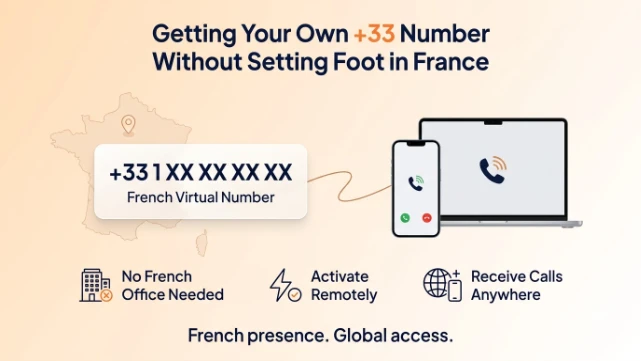
Вам не потрібна адреса у Франції, місцевий банківський рахунок або фізичний офіс, щоб мати номер із кодом країни +33. Постачальники віртуальних номерів, зокрема LetsDial, дозволяють активувати справжній французький номер, прив’язаний до певної зони, а потім переадресовувати дзвінки та текстові повідомлення на будь-який пристрій, який ви вже використовуєте, у будь-якій точці світу. LetsDial Франція віртуальний номер телефону сторінка охоплює точний формат для кожного дзвінка до Франції.
Це налаштування підходить компаніям, які тестують французький ринок перед тим, як приєднатися до повної місцевої організації, віддаленим командам, які підтримують французьких клієнтів, або окремим особам, які хочуть мати родину та контакти у Франції, щоб зв’язатися з ними, не сплачуючи з їх боку міжнародних ставок. Процес активації LetsDial зазвичай займає хвилини, а не тижні, які можуть знадобитися для фізичної локальної лінії.
Оскільки номер LetsDial +33 має правильний префікс зони, його неможливо відрізнити від стандартної французької лінії для всіх, хто на нього дзвонить — єдина відмінність полягає в приймальній стороні, куди виклики направляються через Інтернет туди, де ви фактично працюєте з того дня.
Висновок
Код країни +33 зводиться до одного послідовного правила: відпустіть внутрішній нуль, додайте замість нього +33 і зіставте наступну цифру з однією з п’яти регіональних зон Франції, якщо ви телефонуєте на стаціонарний телефон. Зрозумійте це правильно, і дозвонитися до Франції буде не складніше, ніж будь-який внутрішній дзвінок.
Щоб дізнатися, як коди країн, як-от +33, вписуються в глобальну систему нумерації, див GSMA. Готові до справжнього французького номера? Налаштуйте його за допомогою LetsDial сьогодні.
Часті запитання
Автор: Арійський хан · 7 серпня 2026 р
Відповідь автору