Invoering
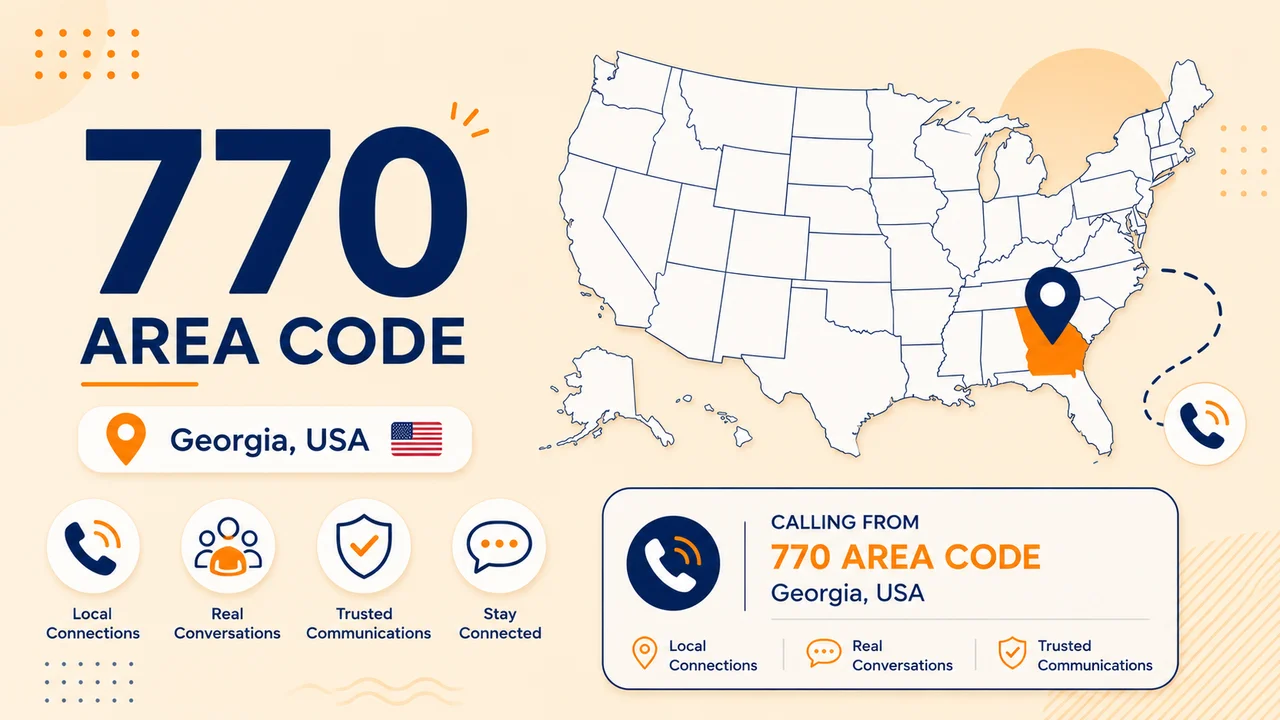
Netnummers vormen een essentieel onderdeel van ons telefoonsysteem, waardoor we verbinding kunnen maken met anderen in verschillende regio's en steden. In de Verenigde Staten worden netnummers gebruikt om specifieke geografische gebieden te identificeren, en elke code heeft zijn unieke geschiedenis en betekenis. In dit artikel gaan we dieper in op het netnummer 770 en onderzoeken we de locatie, geschiedenis, voordelen en gebruik ervan. Het netnummer 770 is een essentieel onderdeel van het Georgische telefoonnetwerk en bedient verschillende provincies en steden.
Belangrijkste afhaalrestaurants
- Netnummers zijn essentieel om mensen in verschillende regio's en steden met elkaar te verbinden
- Het netnummer bedient de noordelijke en centrale regio's van Georgia, VS
- Als u het netnummer 770 begrijpt, kunnen individuen en bedrijven weloverwogen beslissingen nemen over hun telefoonnummers en communicatiestrategieën
- Het netnummer 770 heeft zijn unieke geschiedenis, voordelen en gebruik, die in dit artikel zullen worden onderzocht
Wat is het netnummer 770?
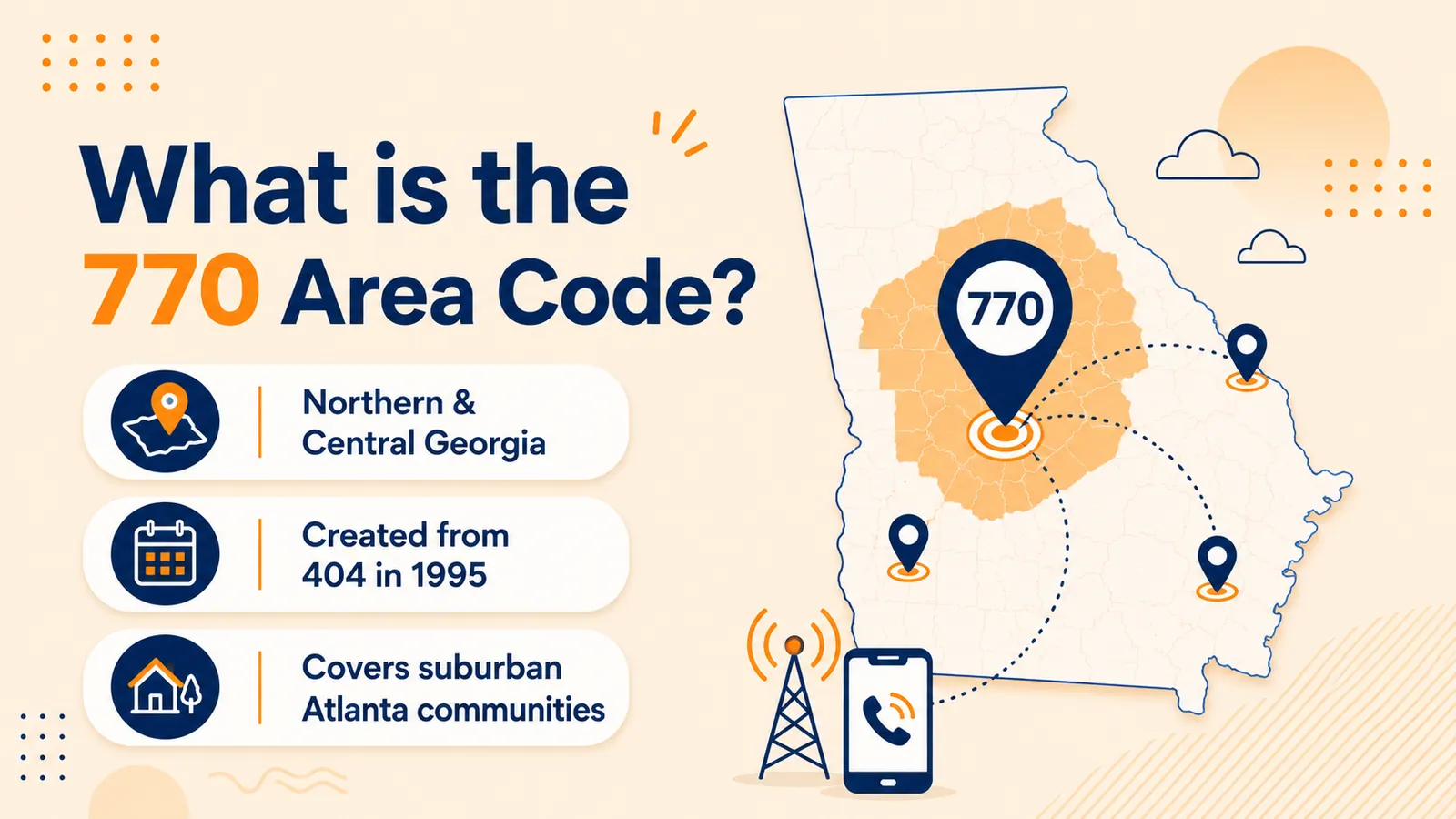
Het netnummer 770 is een driecijferig telefoonnetnummer in het North American Numbering Plan (NANP) dat de voorstedelijke ring rond Atlanta, Georgia bestrijkt – de steden en provincies buiten de I-285 Perimeter. Het werd opgericht op 1 augustus 1995, als een afsplitsing van het oorspronkelijke netnummer 404, dat sinds 1947 de hele metro bestreek en werd behouden voor de binnenstad van Atlanta. Omdat de buitenwijken bleven groeien, had de regio meer aantallen nodig dan alleen al 770 konden bevatten, dus werden er drie overlaycodes op dezelfde footprint gestapeld: 678 in januari 1998, 470 in februari 2010 en 943 in maart 2022.
Omdat 770 de eerste code was die voor de buitenwijken werd uitgevaardigd, lezen de lokale bewoners het nog steeds als een afkorting voor 'outside the Perimeter' (OTP) - Marietta, Roswell, Alpharetta en de rest van de zakencorridor van de metro - terwijl 404 aangeeft 'inside the Perimeter' (ITP), de stedelijke kern van Atlanta. Alle vijf de codes (404, 770, 678, 470 en 943) delen nu een identieke geografische dekking, dus een 770-nummer is net zo goed een Atlanta-nummer als alle andere; het verschil is puur wanneer het werd toegewezen, niet waar de lijn overgaat.
Dat ITP/OTP-framing gaat dieper dan alleen telefoonnummers. Het komt tot uiting in de manier waarop inwoners van Atlanta praten over verkeer, onroerend goed en zelfs de loyaliteit van sportteams. Een 770-nummer sluit rechtstreeks aan bij die voorstedelijke identiteit op een manier die een nieuwere overlay-code nog niet helemaal overdraagt, simpelweg omdat het drie extra decennia heeft geduurd voordat het onderdeel werd van het lokale vocabulaire. De 470 gids bestrijkt het aangrenzende terrein.
Locatie en dekking
Provincies
- Cherokee County
- Clayton County
- Cobb County
- De Kalb County
- Douglas provincie
- Forsyth County
- Fulton County
- Gwinnett County
- Hendrik Provincie
- Paulding County
- Rockdale County
Steden
- Roswell
- Alpharetta
- Marietta
- Smyrna
- Kennesaw
- Acworth
- Gainesville
- Lawrenceville
- Duluth
- Snellville
770 deelt zijn territorium met 404, 678, 470 en 943 in plaats van er exclusief eigenaar van te zijn: alle vijf de codes liggen over dezelfde provincies, dus voor elk lokaal gesprek is tiencijferig bellen vereist. De voetafdruk strekt zich uit van Cobb en Gwinnett in de metrokern tot aan Hall County nabij Lake Lanier, waardoor 770 een van de breedste geografische gebieden in Georgië is, ook al is het niet langer de nieuwste code die in omloop is.
De omvang van die voetafdruk is gemakkelijk te onderschatten: het overlay-complex 770/678/470/943 omvat in totaal in totaal 29 provincies van Georgië, en strekt zich uit tot ver buiten de kernmetrosteden die de meeste mensen associëren met de code. Die breedte is een van de redenen waarom de code drie overlays nodig had in plaats van een nieuwe geografische splitsing elke keer dat de vraag groeide. Het uithakken van weer een nieuw netnummer voor de buitenwijken zou hebben betekend dat werknummers opnieuw moesten worden toegewezen aan enkele van de snelstgroeiende provincies in de staat. Meer details vindt u op onze website gratis nummers pagina.
Geschiedenis van het netnummer 770
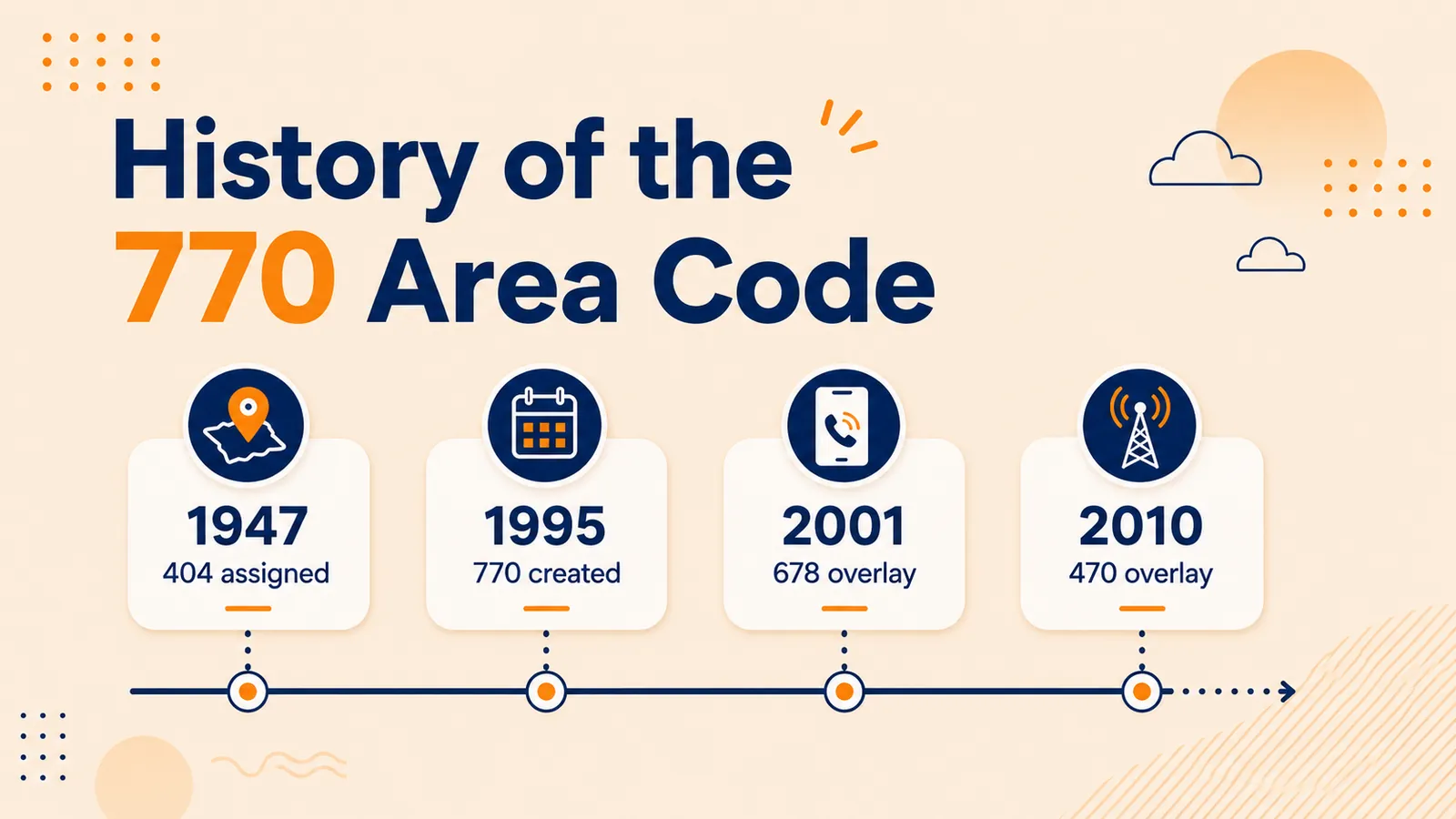
- 1947 - Het oorspronkelijke netnummer 404 werd toegewezen om de hele metropool Atlanta te bedienen
- 1995 - Het netnummer 770 werd op 1 augustus gecreëerd als een afsplitsing van 404, waarbij de buitenwijken buiten de perimeter werden overgenomen
- 1998 - Het netnummer 678 werd op 1 januari toegevoegd als de eerste overlay van de regio
- 2001 – Het netnummer 470 werd op 2 september wettelijk aan de regio toegewezen, hoewel er nog geen nummers waren toegewezen
- 2010 - Het netnummer 470 werd geactiveerd als een live tweede overlay op 26 februari, toen 678 bijna uitgeput was
- 2022 – Het netnummer 943 werd op 15 maart in gebruik genomen als vierde overlay op dezelfde voetafdruk
Elke overlay werd toegevoegd omdat de regio sneller bleef groeien dan de bestaande nummerpool kon ondersteunen. In plaats van de kaart opnieuw te splitsen en bewoners te dwingen nummers te veranderen, hebben toezichthouders een nieuwe code op dezelfde geografie gelaagd. Daarom delen vier verschillende netnummers nu dezelfde dekking met 770.
Voordelen van een 770 netnummer
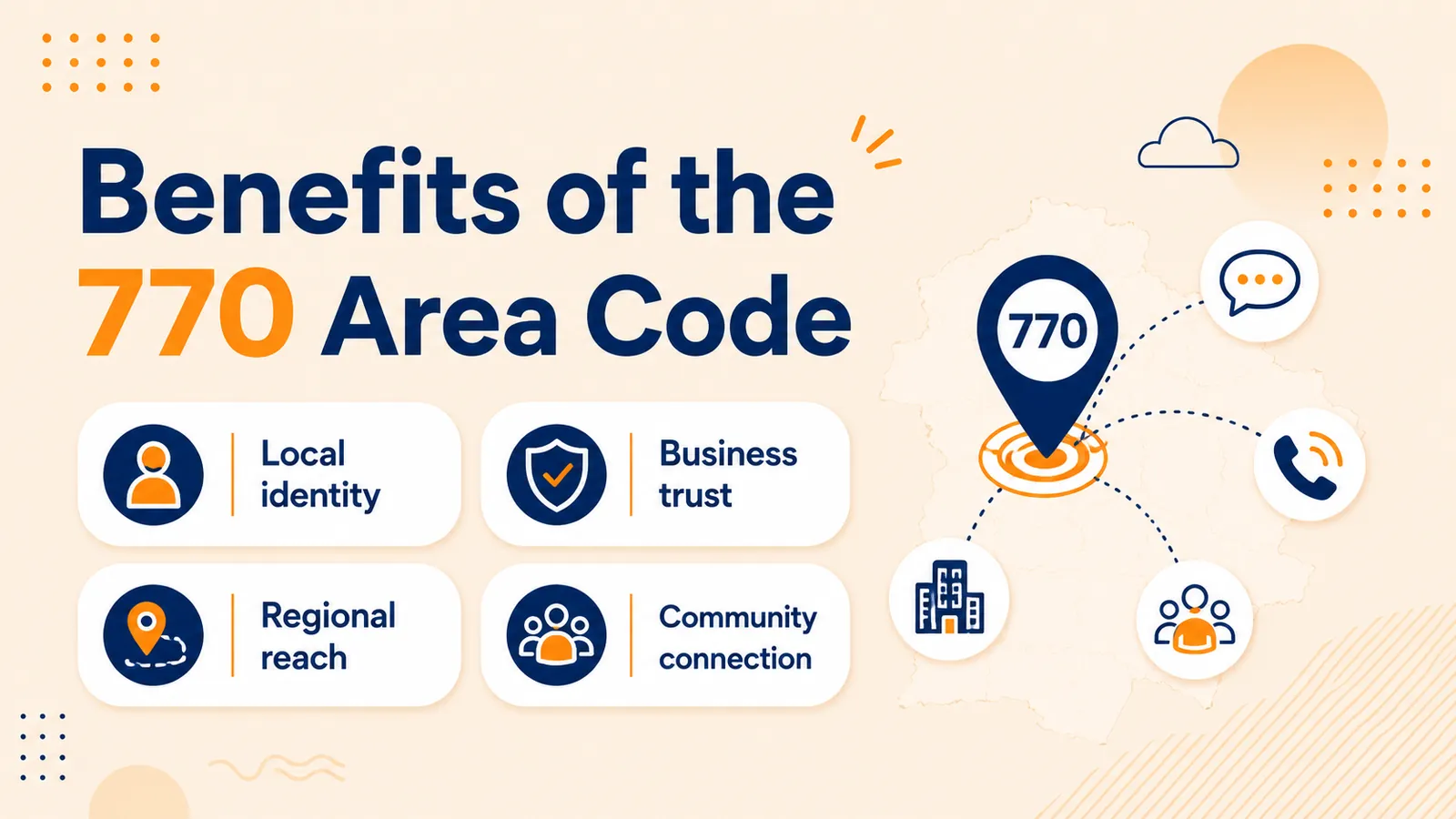
- Lokale identiteit: Een 770-nummer duidt op een echte verbinding met de buitenwijken van Atlanta, waardoor vertrouwen wordt opgebouwd bij klanten, opdrachtgevers en partners die liever met een lokaal geworteld bedrijf werken.
- Zakelijke kansen: Een 770-nummer maakt het gemakkelijker om klanten in Cobb, Gwinnett, Cherokee en de rest van de buitenwijk te bereiken en gevonden te worden, zonder dat er een kantoor in de regio nodig is.
- Gemak en bereik: met een 770-lijn die via een cloudtelefoonsysteem wordt gerouteerd, volgen oproepen u naar elk apparaat, zodat u een herkenbaar lokaal nummer behoudt terwijl u overal werkt.
- Regionale geloofwaardigheid: Voor bedrijven die specifiek rond de buitenwijken van Atlanta zijn gebouwd – thuisdiensten, onroerend goed, gezondheidszorgpraktijken – komt een 770-nummer als meer ingeburgerd over dan een nieuwere overlay-code voor bellers die het zich herinneren van jaren geleden.
Die geloofwaardigheid is niet alleen maar sentiment: de buitenwijken die onder 770 vallen, herbergen een echt bedrijfsbelang. Het hoofdkantoor van het Store Support Center van Home Depot bevindt zich in Cobb County, en UPS runt zijn wereldwijde hoofdkantoor vanuit Sandy Springs met een secundaire campus in Alpharetta. Alpharetta zelf heeft een echte fintech- en technologiecorridor gebouwd: er zijn nu meer dan 5.000 bedrijven en ongeveer 700 technologiebedrijven actief, verankerd door Fiserv, Equifax, ADP en LexisNexis. Gwinnett County heeft ook in dat verhaal zijn eigen geschiedenis: NCR Corporation leidde jarenlang zijn hoofdkantoor vanuit Gwinnett voordat het naar Midtown Atlanta verhuisde, een herinnering dat de ITP/OTP-lijn al eerder is verschoven en weer kan verschuiven.
Bellen, dagelijks gebruik en bewustzijn van oplichting
Kiesprocedures
- Voor alle lokale gesprekken is een nummer van 10 cijfers vereist (netnummer + nummer), zelfs tussen twee 770-nummers in dezelfde buurt, vanwege de overlay met 678, 470 en 943
- Voor langeafstandsgesprekken zijn 11 cijfers nodig: 1 + netnummer + nummer
- Internationale gesprekken bellen naar 011 + landcode + nummer, na de Amerikaanse exitcode
Het netnummer 770 wordt in de hele regio gebruikt voor particuliere lijnen, zakelijke nummers, mobiele telefoons, gratis nummers en VoIP-diensten, naast standaard toegang voor noodgevallen via 911.
Bedrijven die oudere telefoonapparatuur gebruiken die vóór het overlay-tijdperk is geïnstalleerd, zullen hier het meest waarschijnlijk in de problemen komen: een PBX, faxlijn of alarmpaneel dat nog steeds is geconfigureerd voor lokaal bellen met zeven cijfers, kan eenvoudigweg geen verbinding maken zodra het een nummer bereikt op een van de andere vier overlappende codes. Omdat 770, 404, 678, 470 en 943 nu allemaal dezelfde footprint delen, is het onmogelijk om aan de hand van het nummer alleen te zien welk voorvoegsel een bepaald gesprek gebruikt. Dit maakt het bevestigen dat elk apparaat de volledige 10 cijfers belt een eenmalige controle waard.
Let op vervalste 770-oproepen
Omdat 770 nog steeds als een vertrouwd lokaal nummer wordt gelezen door inwoners van Atlanta, is het een frequent doelwit voor spoofing van nummerherkenning. Oplichters tonen een vals 770-nummer om robocalls er lokaal en legitiem uit te laten zien. Inwoners in de regio melden elke maand een gestage stroom ongewenste oproepen, dus behandel onverwachte oproepen van onbekende 770-nummers met dezelfde voorzichtigheid als elke andere vervalste nummerherkenning en vermijd het terugbellen van nummers die zijn achtergelaten op verdachte voicemails.
Een 770-nummer verkrijgen voor uw bedrijf
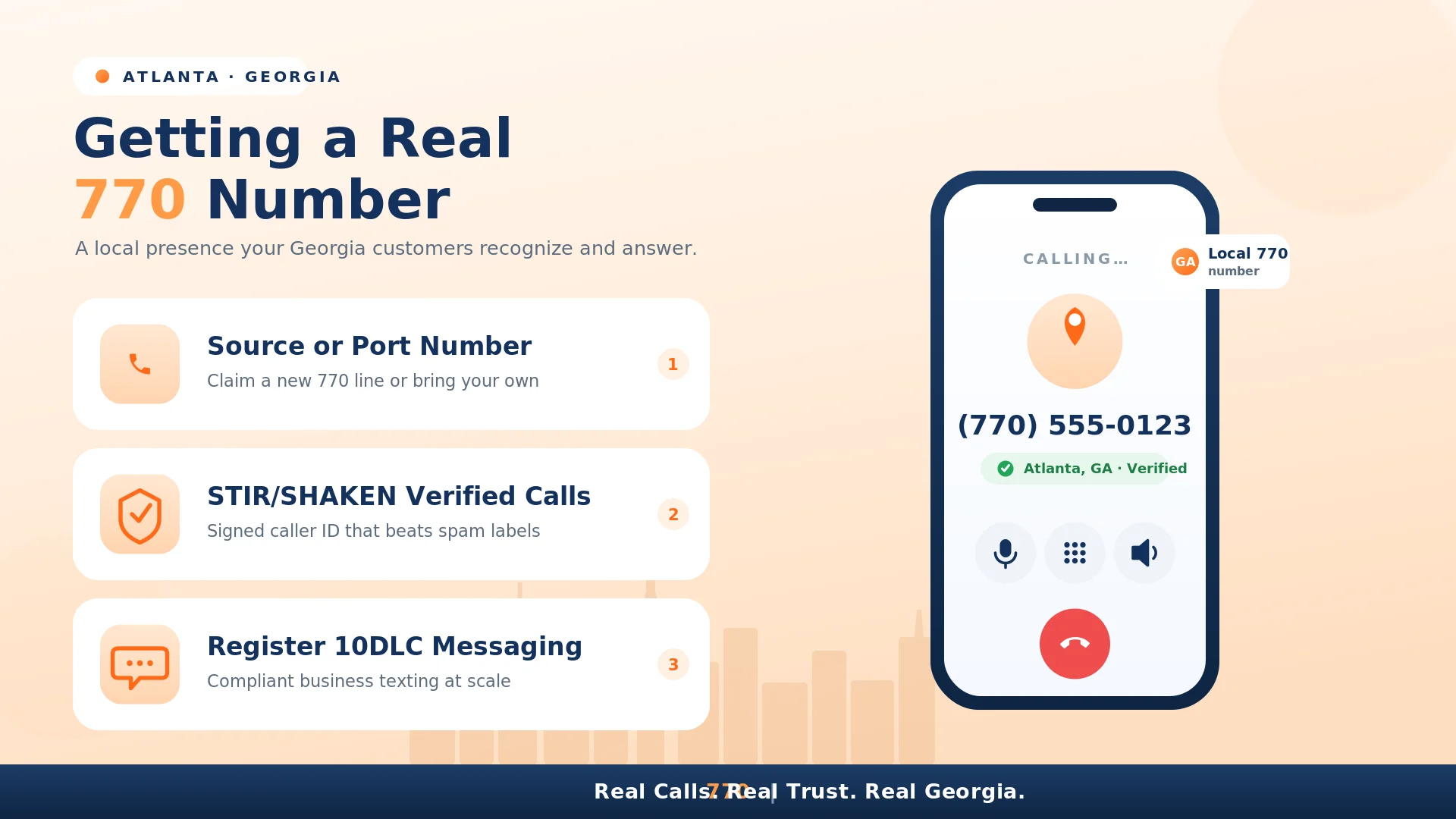
U hebt geen fysiek adres in Cobb, Gwinnett of een andere 770-provincie nodig om een nummer in de code te krijgen. Een cloudtelefoonprovider zoals Letsdial kan een 770-lijn toewijzen en zijn oproepen doorsturen naar de telefoons, laptops of een callcenter van uw team waar dan ook, waardoor een bedrijf buiten Georgië nog steeds een lokale aanwezigheid in de buitenwijk van Atlanta aan bellers kan bieden. Omdat 770-nummers in een spoof-heavy markt een echte belgeschiedenis kunnen bevatten, is het kiezen van een provider met een sterke STIR/SHAKEN-oproepattest van belang - het voorkomt dat uitgaande oproepen verkeerd worden gelabeld als 'Spam Likely' op de telefoons van de ontvangers, waardoor de antwoordpercentages worden beschermd voor legitiem bereik in de regio.
770 is officieel gedocumenteerd onder het North American Numbering Plan, dat de toewijzing van netnummers in de VS, Canada en het Caribisch gebied regelt. Dat record wordt volledig gepubliceerd als Noord-Amerikaans nummerplan.
Conclusie
Het netnummer 770 heeft de buitenwijken van Atlanta verankerd sinds de afsplitsing in 1995 van 404, en het blijft een van de vijf overlappende codes – naast 404, 678, 470 en 943 – die vandaag de dag dezelfde metrovoetafdruk bedienen. 770 beslaat Cobb, Gwinnett, Cherokee en tientallen andere provincies en steden, van Marietta tot Gainesville, en fungeert nog steeds als afkorting voor de regio 'buiten de perimeter'. Of u nu een zakenlijn opzet, begrijpt waarom voor oproepen tien cijfers nodig zijn, of een vervalste nummerherkenning leert herkennen: als u weet hoe 770 in de nummergeschiedenis van Atlanta past, kunt u deze met vertrouwen gebruiken.
Veelgestelde vragen
Geschreven door Arische Khan · 20 augustus 2024
Reageer op de auteur