Einführung
Wenn Sie schon einmal auf eine deutsche Visitenkarte geschaut haben und sich gefragt haben, warum die Ziffern zwischen sieben und elf Zeichen lang sind, dann bilden Sie sich das nicht ein. Eine deutsche Telefonnummer folgt nicht einem festen Muster, wie es bei einer US-amerikanischen oder britischen Nummer in etwa der Fall ist. Die lokalen Linien in Berlin sind lang, die Vorwahl einer kleinen bayerischen Stadt dagegen lang und für Mobilfunkverbindungen gelten völlig andere Regeln. Sobald Sie die zugrunde liegende Logik verstanden haben, ist nichts davon verwirrend – es handelt sich um ein System, das über Jahrzehnte Stadt für Stadt aufgebaut wurde und nicht auf einer sauberen Vorlage basiert.
Dieser Leitfaden geht Schritt für Schritt durch das Format: die Landesvorwahl +49, die unterschiedlichen Längen der Ortsvorwahlen, Mobilfunk- und Festnetznummern und genau, was Sie anrufen, anrufen oder eine eigene Nummer erhalten müssen.
Warum sich die Zahlen nie zweimal auf die gleiche Weise summieren
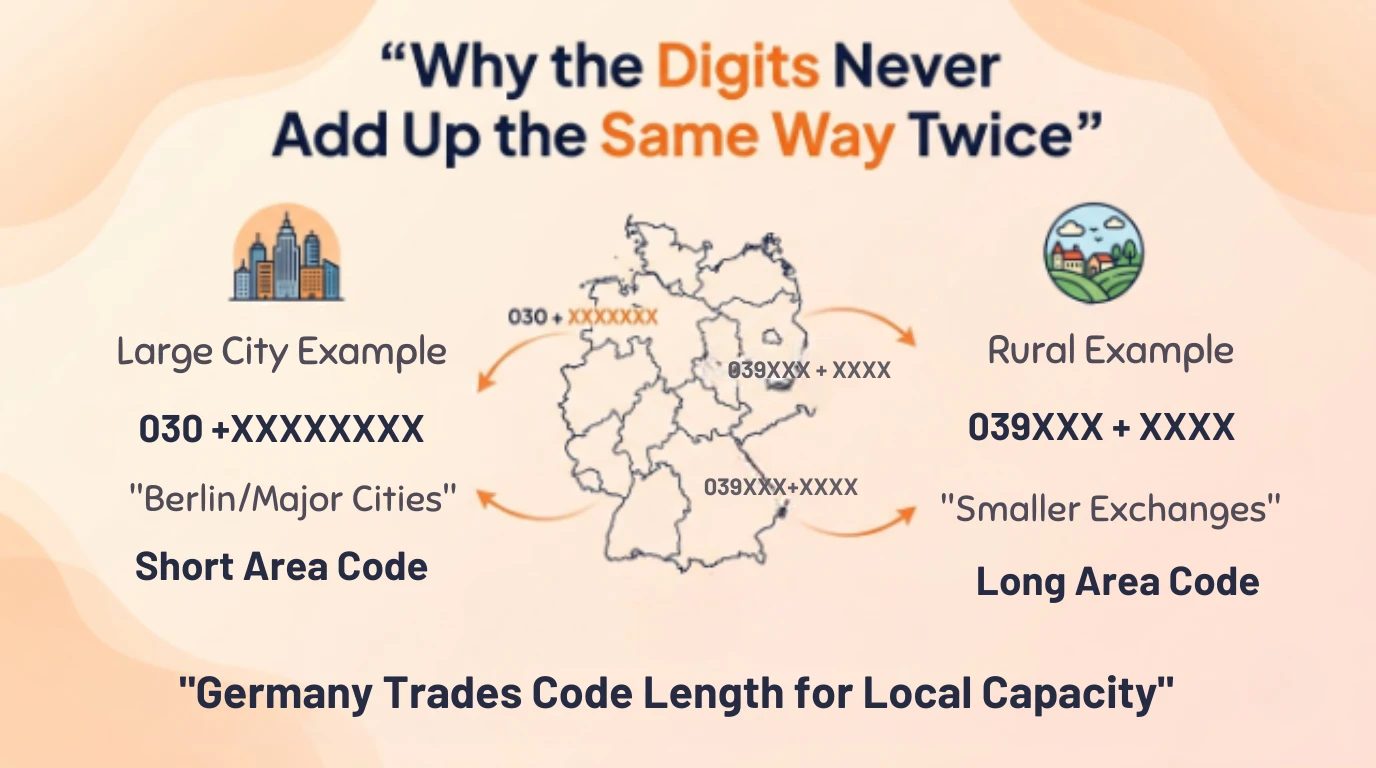
Den meisten Anrufern fällt die Unregelmäßigkeit erst dann auf, wenn sie zwei Nummern aneinanderreihen und feststellen, dass die eine acht Ziffern hinter der Ortsvorwahl hat und die andere elf. Das ist kein Tippfehler – es ist die Art und Weise, wie der Nummerierungsplan in Deutschland Region für Region aufgebaut wurde, da die lokalen Vermittlungsstellen unabhängig voneinander installiert wurden und nicht nach einem nationalen Plan eingeführt wurden. Große Städte wie Berlin, Hamburg und München erhielten kurze Vorwahlen, weil sie Millionen möglicher Teilnehmeranschlüsse hinter sich haben mussten. Kleine ländliche Vermittlungsstellen erhielten längere Vorwahlen, da sie nie viele Leitungen benötigten.
Das Ergebnis ist eine deutsche Vorwahl und die Ortsrufnummer, die Längen miteinander tauschen: eine kurze Vorwahl paart sich mit einer langen Rufnummer und eine lange Vorwahl paart sich mit einer kurzen. Sobald Sie wissen, dass es einen Kompromiss gibt, sehen die unterschiedlichen Ziffernzahlen nicht mehr zufällig aus, sondern sehen genau so aus, wie sie sind – eine effiziente, wenn auch visuell inkonsistente Möglichkeit, begrenzten Nummerierungsraum über ein Land mit Tausenden von Städten aufzuteilen. Das ist für jeden wichtig, der Geschäfte mit deutschen Kontakten macht, denn eine Zahl, die für ein ausländisches Auge „falsch“ aussieht, ist oft vollkommen gültig.
Dekodierung der Landesvorwahl +49 und des Trunk-Prefix Null
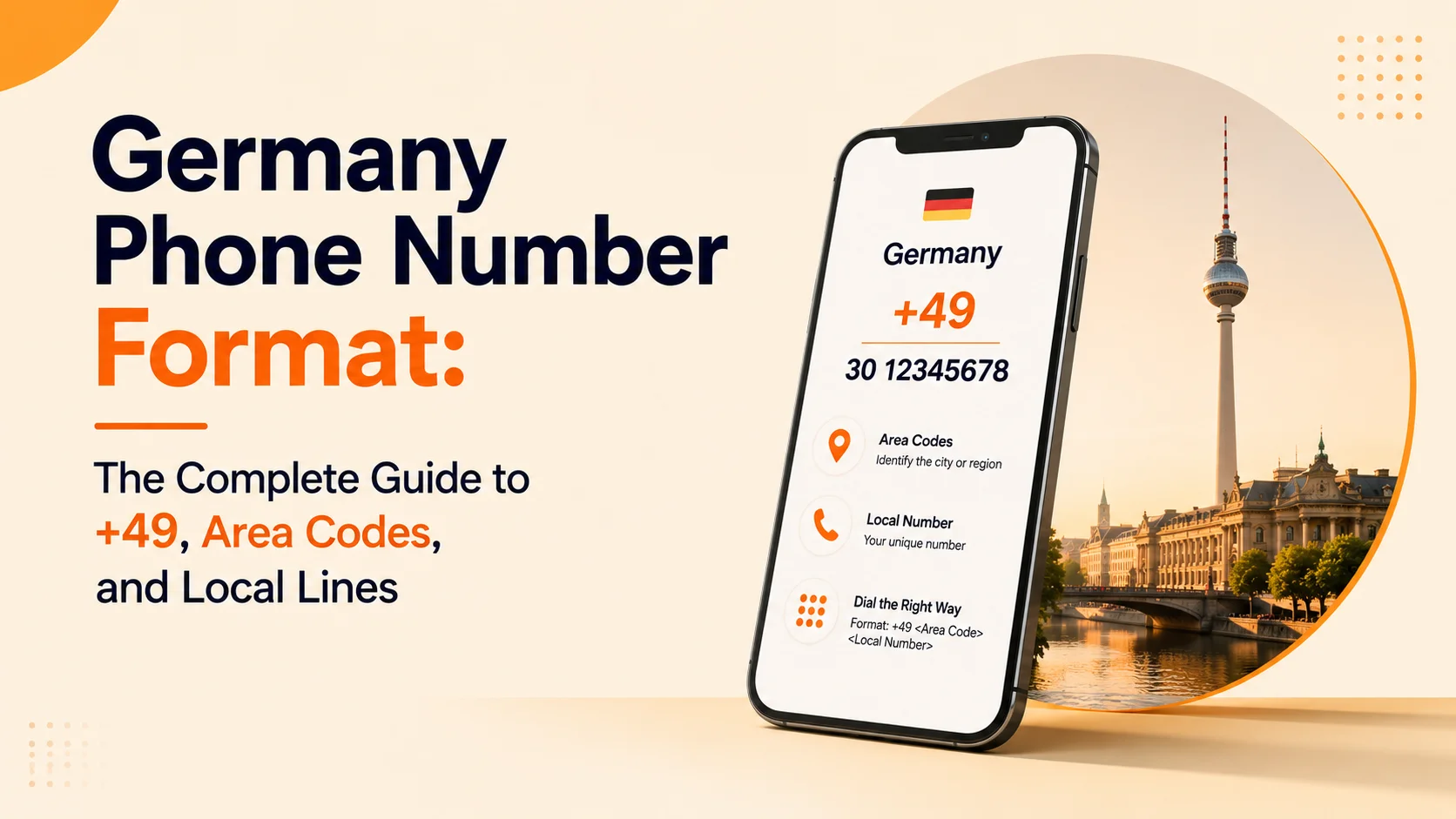
Hinter jeder deutschen Telefonnummer steht die gleiche internationale Vorwahl: +49. Sie ersetzt immer die inländische „0“, mit der eine Nummer beginnt, wenn sie lokal gewählt wird. Diese führende Null wird Amtspräfix genannt, ein rein inländisches Signal, das dem Netzwerk mitteilt, dass dieser Anruf die Ortsvermittlung verlässt. Es hat keinen Platz bei einer von außerhalb des Landes gewählten Nummer, weshalb die goldene Regel der Landesvorwahl +49 einfach ist: Lassen Sie die 0 weg und fügen Sie +49 hinzu.
Eine im Inland mit 030 12345678 geschriebene Berliner Festnetznummer wird aus dem Ausland zu +49 30 12345678. Eine Münchner Leitung mit der Schreibweise 089 987654 wird zu +49 89 987654. Diese ersten beiden Ziffern ändern sich nie, unabhängig davon, welche Stadt, welcher Mobilfunkanbieter oder welche Geschäftsverbindung Sie erreichen – nur die darauffolgenden Ziffern ändern sich.
Dieser Code befindet sich in einer breiteren europäischen Nummerierungslandschaft, in der ähnliche Amtspräfixregeln gelten, obwohl die genauen Ziffernlängen je nach Land unterschiedlich sind.
Vorwahlen von den zwei Ziffern Berlins bis zu den fünf einer Kleinstadt
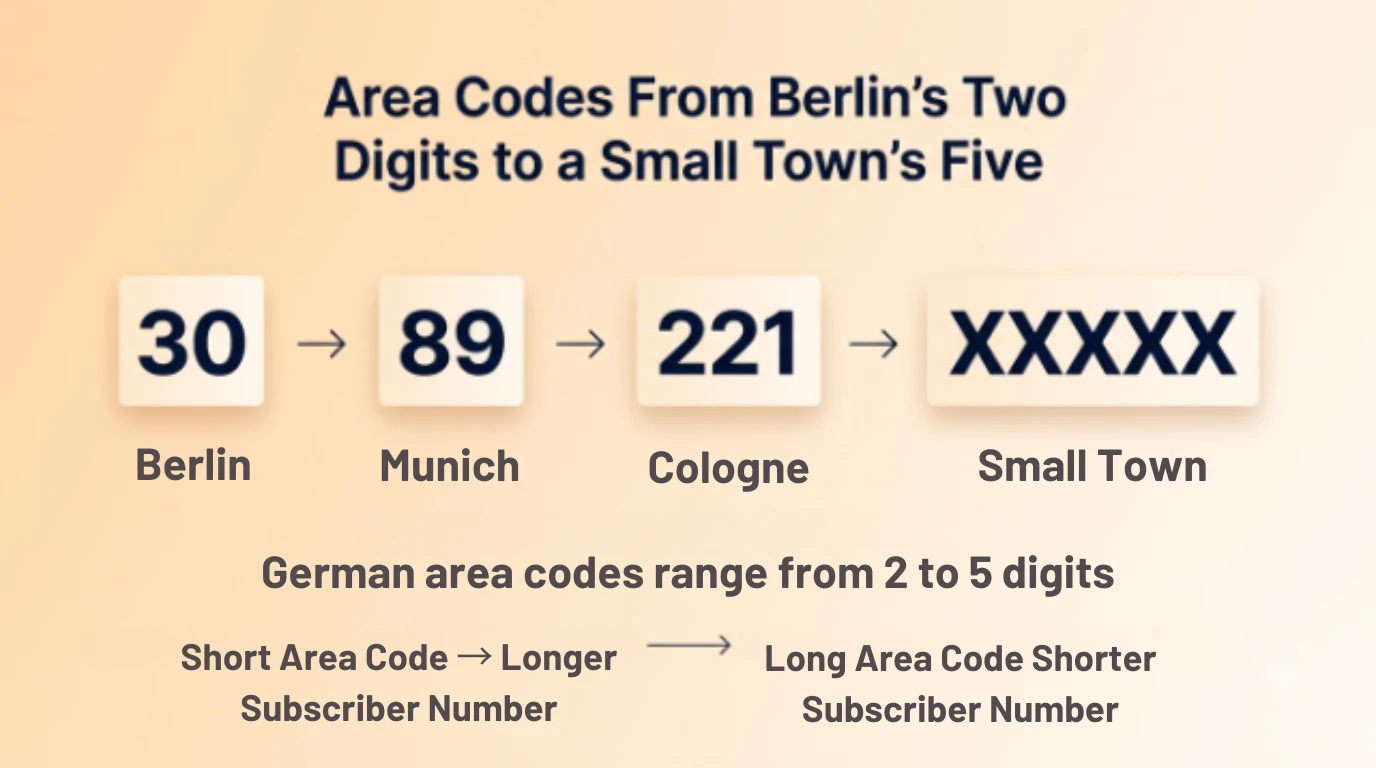
Der größte Teil der Formatverwirrung liegt tatsächlich in deutschen Vorwahlen. Im Gegensatz zu den in Nordamerika verwendeten festen dreistelligen Codes sind sie zwischen zwei und fünf Ziffern lang. Der Code Berlins ist nur „30“ – einer der kürzesten im Land, was seinen Status als großer Metropolenaustausch widerspiegelt. München verwendet „89“, Hamburg „40“, Frankfurt „69“ und Köln „221“. Wenn Sie sich von den großen Ballungsräumen entfernen, dehnen sich die Codes erheblich aus. Kleinere Städte und Landkreise können fünfstellige Codes führen, da sie nie viel Platz für Teilnehmeranschlüsse benötigen.
Genau diese Variabilität ist der Grund dafür, dass es keine universelle Ziffernzahl gibt, die man sich für eine deutsche Telefonnummer merken kann. Eine vollständige Nummer, einschließlich Vorwahl, Amtsvorwahl und Teilnehmeranschluss, kann aus sieben bis elf Ziffern bestehen. Wenn Sie die Nummer eines Kontakts überprüfen oder die Anrufweiterleitung einrichten, sollten Sie diese Codes bewusst als variabel behandeln, anstatt nach einem festen Muster zu suchen, das nicht existiert. Für Unternehmen, die in mehreren deutschen Städten tätig sind, ist dies auch ein praktisches Argument dafür, einen Anbieter zu nutzen, der bereits deutsche Vorwahlen versteht, anstatt separate Ziffernblöcke für Kunden in Berlin, München und Frankfurt manuell zu verwalten.
Mobilfunkvorwahlen 015, 016 und 017: Eine Handynummer sofort erkennen
Festnetzanschlüsse sind nicht das einzige Puzzleteil – Mobilfunkanschlüsse folgen einem separaten Nummernblock. Deutsche Mobilfunknummern beginnen immer mit 015, 016 oder 017, gefolgt von einem anbieterspezifischen Untersegment und den eigenen Ziffern des Teilnehmers. Eine Mobilfunknummer könnte im Inland 0151 23456789 lauten und im Ausland zu +49 151 23456789 werden.
Die Struktur 015/016/017 ist bewusst gewählt: Sie ermöglicht es jedem, einen Blick auf eine Nummer zu werfen und sofort zu erkennen, ob es sich um einen Festnetzanschluss handelt, der an eine physische Stadtvermittlungsstelle angeschlossen ist, oder um einen Mobilfunkanschluss, der irgendwo im Land sein könnte, da Mobilfunknummern überhaupt keine geografische Bedeutung haben. Das ist ein echter Unterschied zu Vorwahlen, die immer an eine bestimmte Stadt oder Region gebunden sind. Anhand der Vorwahl eines Festnetzanschlusses erfahren Sie, woher der Anruf kam. Ein mobiles Präfix verrät Ihnen nur den Carrier-Block. Für Unternehmen, die Anrufe von deutschen Kunden entgegennehmen, ist dies auch operativ von Bedeutung: Anrufe, die über das Mobilfunknetz erfolgen, verursachen andere Routing-Kosten und andere Erwartungen an die SMS-Nachverfolgung als Festnetzanrufe, so dass eine Vermischung der beiden in der Anrufabwicklungslogik zu vermeidbaren Reibungen führt.
Schritt für Schritt aus dem Ausland nach Deutschland einwählen
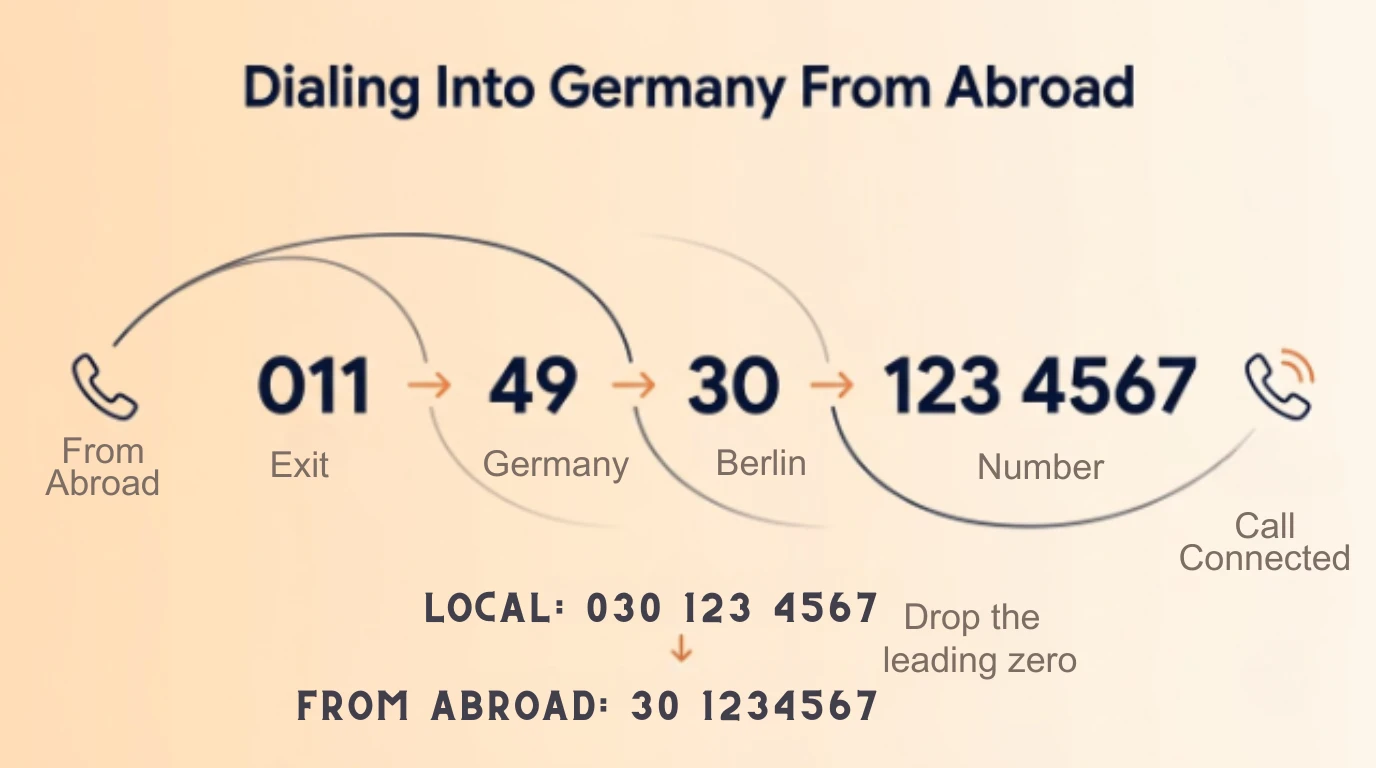
Das Anrufen einer deutschen Telefonnummer aus dem Ausland folgt einer einheitlichen Reihenfolge: Wählen Sie die Ausreisevorwahl Ihres eigenen Landes – 011 aus den USA und Kanada oder 00 aus Großbritannien und den meisten Teilen Europas – dann 49, dann die Ortsvorwahl ohne führende Null und dann die Teilnehmernummer.
Wenn Sie aus den USA das gleiche Berliner Festnetz anrufen, müssen Sie 011, dann 49, dann 30 und dann die Teilnehmernummer wählen – keine führende Null in der Reihenfolge. Ein Mobilfunkanschluss folgt der identischen Struktur, tauscht lediglich die Vorwahl gegen die Vorwahl 015/016/017 aus. Wenn Sie die führende Null falsch eingeben – wenn Sie sie einfügen, obwohl Sie dies nicht tun sollten, oder wenn Sie die Landesvorwahl ganz vergessen –, wird der Anruf einfach nicht hergestellt, was der häufigste Fehler ist, den ausländische Anrufer machen.
Hinauswählen: Inländische Ferngespräche und internationale Anrufe
Innerhalb Deutschlands ändern sich die Regeln leicht. Um eine Nummer in einer anderen Stadt anzurufen, ist das vollständige Inlandsformat erforderlich: die Amtsvorwahl 0, die Ortsvorwahl und die Teilnehmernummer. Innerhalb derselben Stadt erlauben einige ältere Vermittlungsstellen immer noch das Weglassen der Vorwahl, obwohl dieser Komfort mit der zunehmenden Mobil-First-Wählgewohnheit nachgelassen hat.
Um aus Deutschland heraus anzurufen, ist die Reihenfolge 00 (Deutschlands eigene Ausgangsvorwahl), die Vorwahl des Ziellandes, dann die Rufnummer dieses Landes abzüglich der eigenen lokalen Amtsleitungsvorwahl – das Spiegelbild der Einwahl. Amtsleitungsvorwahlen gelten ausschließlich für das Inland und werden entfernt, sobald ein Anruf eine Grenze überschreitet.
Warum Validierungstools weiterhin gültige deutsche Nummern ablehnen
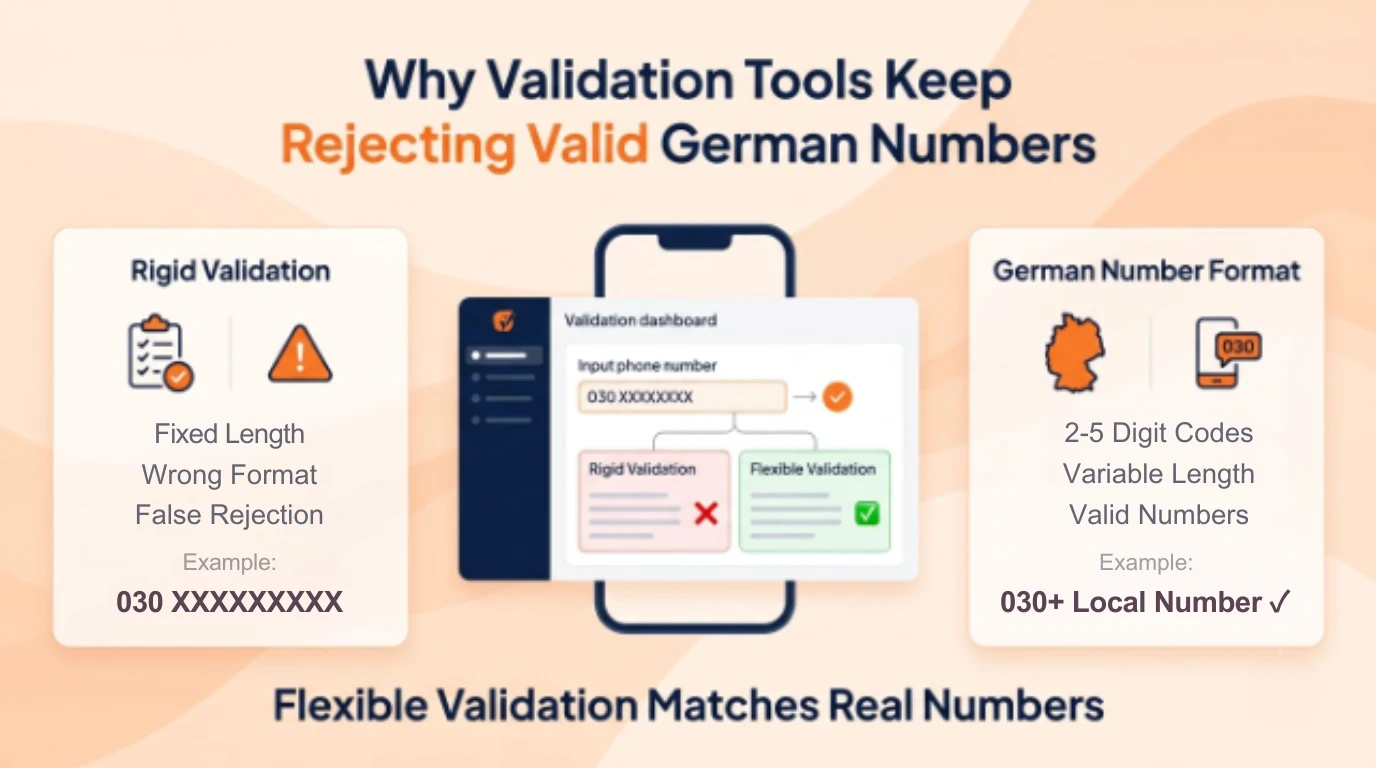
Jeder, der ein telefonisches Validierungsformular erstellt hat, das deutsche Eingaben akzeptiert, ist wahrscheinlich auf dieses Problem gestoßen: Es gibt keine einzige korrekte Ziffernanzahl, mit der man prüfen kann. Da die Ortsvorwahlen zwei- bis fünfstellig sind und die Teilnehmeranschlüsse entsprechend variieren, kann eine technisch gültige deutsche Telefonnummer sieben- bis elfstellig sein, die Landesvorwahl nicht mitgerechnet. Gebührenfreie und Sonderdienstleitungen fügen eine weitere Ebene hinzu und verwenden spezielle Vorwahlen wie 0800, die überhaupt keiner geografischen Vorwahl zugeordnet sind.
Dies ist ein häufiger Grund für Frustration bei internationalen Unternehmen, die Kontaktdatenbanken standardisieren, da eine auf US- oder UK-Formate abgestimmte Regel einen großen Teil der wirklich gültigen Einträge ablehnt. Die praktische Lösung ist eine flexible Längenvalidierung, die speziell für den deutschen Nummerierungsplan entwickelt wurde, oder die Weiterleitung von Anrufen über einen virtuelle Telefonnummer System, das das Format bereits korrekt verarbeitet, anstatt diese Logik intern neu zu erfinden.
Eine deutsche Nummer bekommen, ohne nach Berlin zu ziehen
Keine dieser Komplexitäten sollte ein Unternehmen außerhalb Deutschlands davon abhalten, dort tatsächlich vor Ort präsent zu sein. Mit einer virtuellen deutschen Telefonnummer kann ein Unternehmen Anrufe unter einer echten deutschen Vorwahl entgegennehmen, weiterleiten und tätigen, ohne ein Büro eröffnen oder Personal versetzen zu müssen. Anrufe an diese Nummer gehen zu jedem Gerät oder Team durch, das bereits den Support übernimmt, egal wo sie gerade sitzen.
LetsDial bietet genau das: a Virtuelle Telefonnummer für Deutschland gebunden an echte deutsche Vorwahlen für Städte wie Berlin, München, Frankfurt und Hamburg, eingerichtet über dasselbe Dashboard, das ein Team bereits für andere Märkte verwendet. Kunden wählen es auf die gleiche Weise, wie sie jedes andere lokale Unternehmen anrufen würden, während Anrufe dorthin weitergeleitet werden, wo das Unternehmen sie benötigt.
Die Einrichtung dauert in der Regel Minuten, nicht Wochen, ohne physische Hardware, ohne deutsche Unternehmensregistrierung und ohne langfristige Verträge, die ein Unternehmen an einen Markt binden, den es noch testet – ein praktischerer Einstiegspunkt als ein traditioneller lokaler Festnetzanschluss für die meisten wachsenden Unternehmen.
Abschluss
Das deutsche Telefonnummernformat sieht auf den ersten Blick inkonsistent aus, aber es kommt auf einen Kompromiss an: Kürzere Vorwahlen tragen längere Teilnehmernummern und längere Vorwahlen tragen kürzere, alle hinter der gleichen Landesvorwahl +49 mit der inländischen Amtsvorwahl Null.
Wenn Sie regelmäßig über den gesamten Kontinent telefonieren, vergleichen Sie, wie die Nachbarländer ihre Strukturen aufbauen internationale Vorwahlen ist eine nützliche Möglichkeit, Formatverwechslungen zwischen Märkten zu vermeiden. Bereit für eine echte deutsche Nummer? Richten Sie noch heute eines mit LetsDial ein.
Häufig gestellte Fragen
Geschrieben von Arischer Khan · 6. August 2026
Antwort an den Autor