
Outbound vs. Inbound Call Center: Understanding the Core Difference
The primary difference lies in one word: proactive versus reactive. An outbound call center proactively reaches out. An inbound call center reactively responds to customer needs. While some centers do both (known as hybrid or blended centers), understanding their distinct functions is key. Here’s a simple breakdown of the key differences:
| Feature | Outbound Call Center | Inbound Call Center |
| Call Direction | Outgoing Calls | Incoming Calls |
| Primary Goal | Generate leads, make sales, conduct surveys. | Resolve issues, answer questions, process orders. |
| Core Mentality | Proactive | Reactive |
| Agent Skills | Resilience, persuasion, persistence. | Empathy, problem-solving, product knowledge. |
| Key Metrics | Conversion Rate, Calls Per Agent, CPA. | First Call Resolution, Average Wait Time, CSAT. |
The Modern Evolution: “Call Center” vs. “Contact Center”
You’ll often hear the terms “call center” and “contact center” used to describe outbound operations. While they are related, there’s a modern distinction.
- A call center traditionally focuses on voice-only communication over the phone.
- A contact center is omnichannel, meaning agents can reach out through various channels, including phone calls, email, SMS text messages, and social media.
For this guide, we’ll primarily use the term “outbound call center,” but know that its strategies and functions apply to the broader, multichannel “contact center” as well.
What Are the Primary Functions of an Outbound Call Center?
Outbound operations are versatile and can be tailored to meet specific business goals. Here are the most common functions.
Sales & Telesales
This is the most direct revenue-generating function. Agents call prospects or existing customers with the specific goal of selling a product or service over the phone.
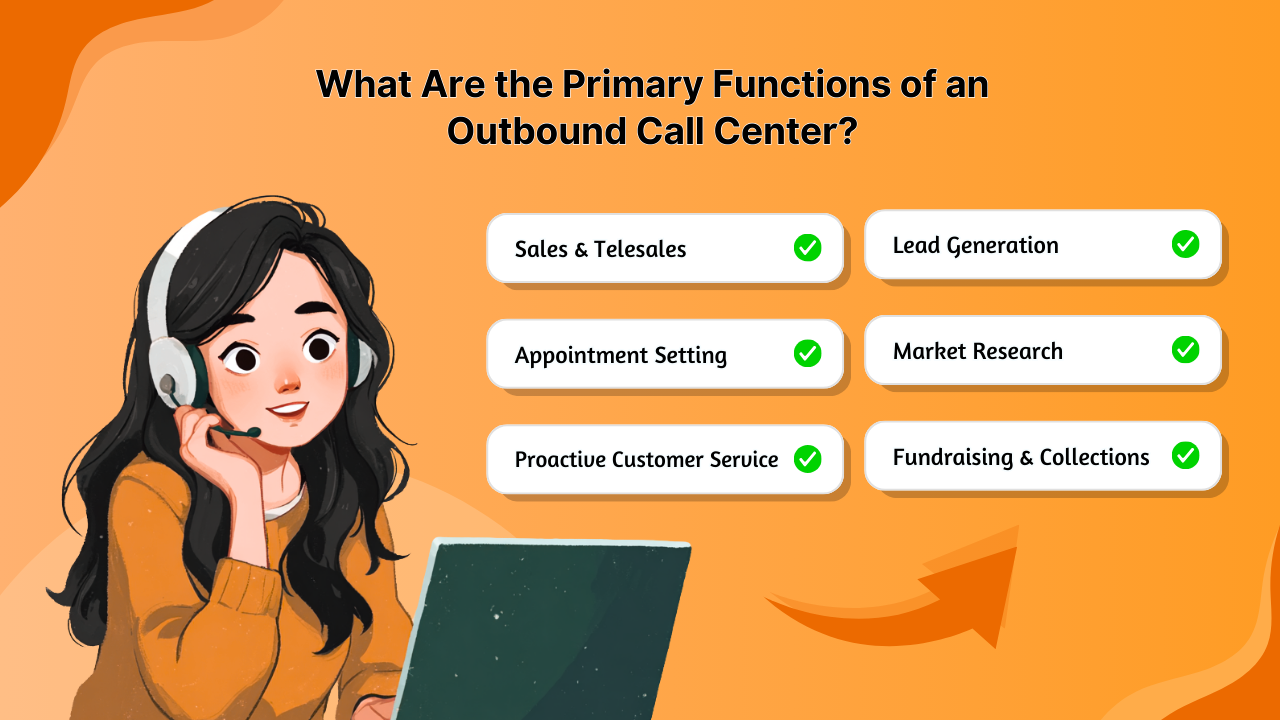
Lead Generation & Telemarketing
Not every call is about closing a deal on the spot. Telemarketing agents focus on identifying potential customers, gauging their interest in a product or service, and qualifying them as a “lead” to be nurtured by the sales team.
Appointment Setting
For many businesses, especially in B2B or high-value services, the goal isn’t an immediate sale but securing a meeting. Outbound agents specialize in scheduling qualified appointments, demos, or consultations for sales executives.
Market Research & Customer Surveys
Want to know what your customers really think or what the market wants? Outbound calls are a direct way to conduct surveys, gather valuable feedback on products, and understand market trends to make smarter business decisions.
Proactive Customer Service
Excellent service isn’t just about waiting for problems. Outbound agents can make follow-up calls after a purchase to ensure satisfaction, notify customers about service updates or outages, or remind them of warranty expirations.
Fundraising & Collections
Non-profit organizations rely heavily on outbound calls for fundraising campaigns to solicit donations. Similarly, a company’s finance department may use an outbound team to make collection calls for overdue payments.
How to Choose Your Path: In-House Software vs. Outsourcing
Once you decide to leverage an outbound strategy, you face a critical choice: do you build your own team using specialized software, or do you hire an external agency (a BPO, or Business Process Outsourcer) to do it for you?
| In-House (Using Software) | Outsourcing (Using a BPO) |
| Pros: Full control over branding, training, and quality; deep integration with your existing systems. | Pros: Access to trained experts immediately; lower initial startup costs; scalability. |
| Cons: Higher initial investment in software and hiring; requires significant management time. | Cons: Less direct control over agents and brand representation; potential communication gaps. |

For most small to medium-sized businesses, outsourcing is a great way to start and test strategies without a large upfront investment. For larger companies or those with specific compliance needs, building an in-house team often makes more sense for long-term control and integration.
Key Regulations and Compliance You Must Follow
Operating an outbound call center comes with serious legal responsibilities. Ignoring them can lead to massive fines and damage your brand’s reputation.

The Telephone Consumer Protection Act (TCPA)
This is a set of US federal regulations governing telemarketing. Key rules include:
- Calling Hours: You cannot call residences before 8 a.m. or after 9 p.m. in the recipient’s local time.
- Consent: You must have prior express consent to call a cell phone using an autodialer.
- Identity: Agents must provide their name, the name of the company they’re calling for, and a contact number.
The Do Not Call (DNC) Registry
The US government maintains a national list of consumers who have requested not to receive telemarketing calls. You are legally required to scrub your calling lists against this registry and remove any matching numbers.
The Future of Outbound: The Role of AI and Automation
Artificial Intelligence (AI) is revolutionizing the outbound call center, making it smarter, faster, and more effective.
- Predictive & Power Dialers: These automated systems dial numbers from a list and connect agents only when a live person answers, dramatically increasing the number of conversations an agent can have per hour.
- Generative AI: Modern AI can automatically summarize entire conversations, analyze call transcripts for customer sentiment, and even help create personalized training materials for agents.
- AI-Powered Virtual Agents: For simple tasks like surveys or appointment confirmations, AI bots can handle the initial outreach, freeing up human agents for more complex conversations.
- Real-time Agent Assist: AI can listen to calls in real-time and provide agents with on-screen prompts, answers to tough questions, and compliance reminders, acting as a live coach on every call.
Conclusion
An outbound call center is far more than just a room full of phones. When run strategically, it’s a vital tool for driving revenue, gathering market intelligence, and building lasting customer relationships.
By understanding its core functions, carefully measuring success with the right KPIs, and choosing the right path—whether through in-house software or an outsourced partner—you can turn proactive outreach into one of your business’s greatest strengths.


