Introduction
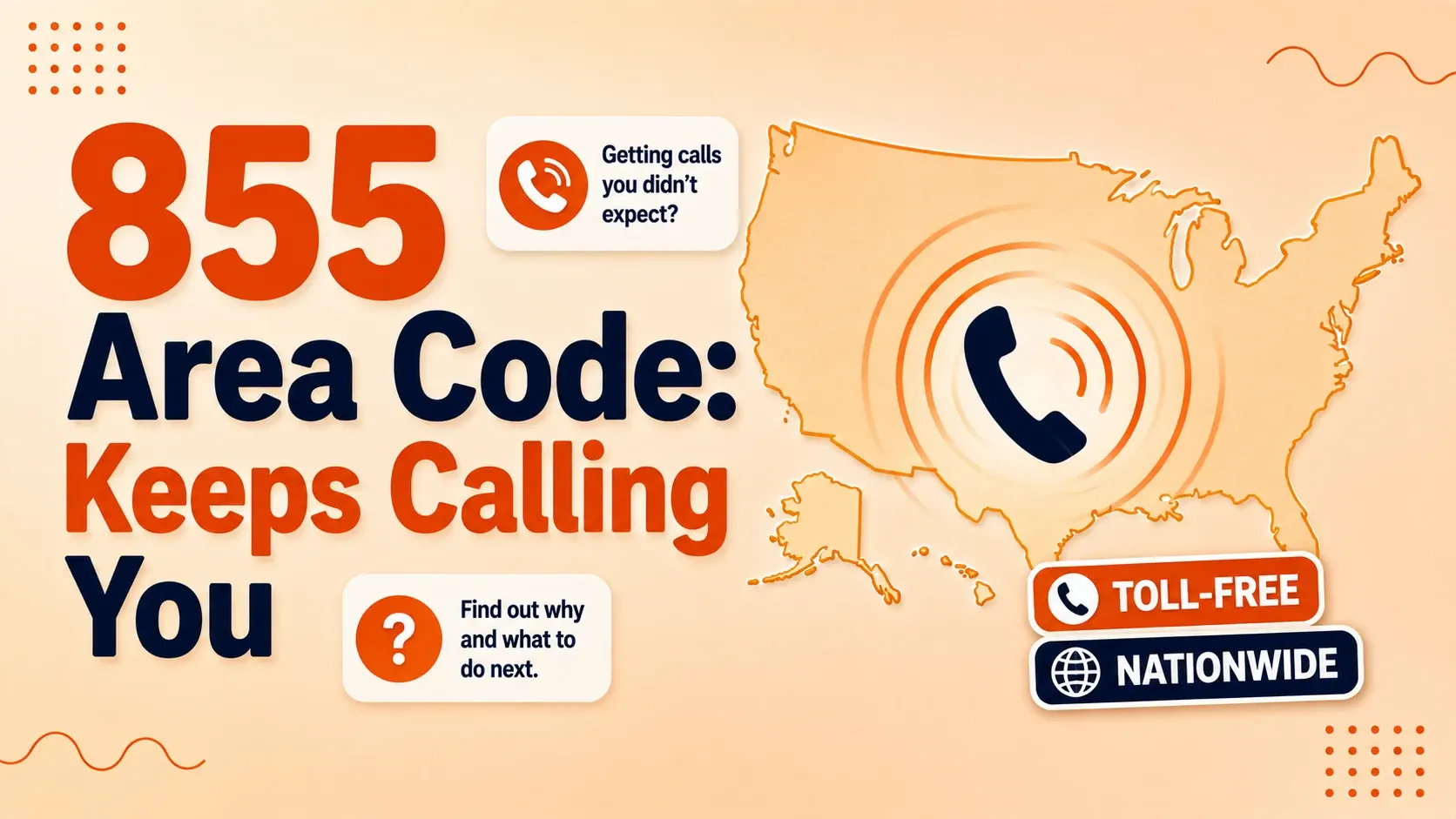
The 855 area code shows up on more phones than almost any other prefix, and most people have no idea why. Anyone who types what is 855 area code into a search bar is usually staring at a missed call, not planning a trip anywhere. This article explains exactly what the 855 area code is, why it keeps ringing your phone, and how to tell a legitimate call from a scam one using it. By the end, that unfamiliar number will make a lot more sense.
- The 855 area code is a toll-free prefix, not tied to any city, state, or time zone.
- It launched in October 2010, as the fifth toll-free code added to the numbering plan.
- Legitimate businesses use it for support lines and call centers, but scammers exploit that same trust.
- A cloud phone provider lets any business activate an 855 number in minutes, alongside a local number, with no hardware required.
855 Numbers Explained: Toll-Free, Not Local
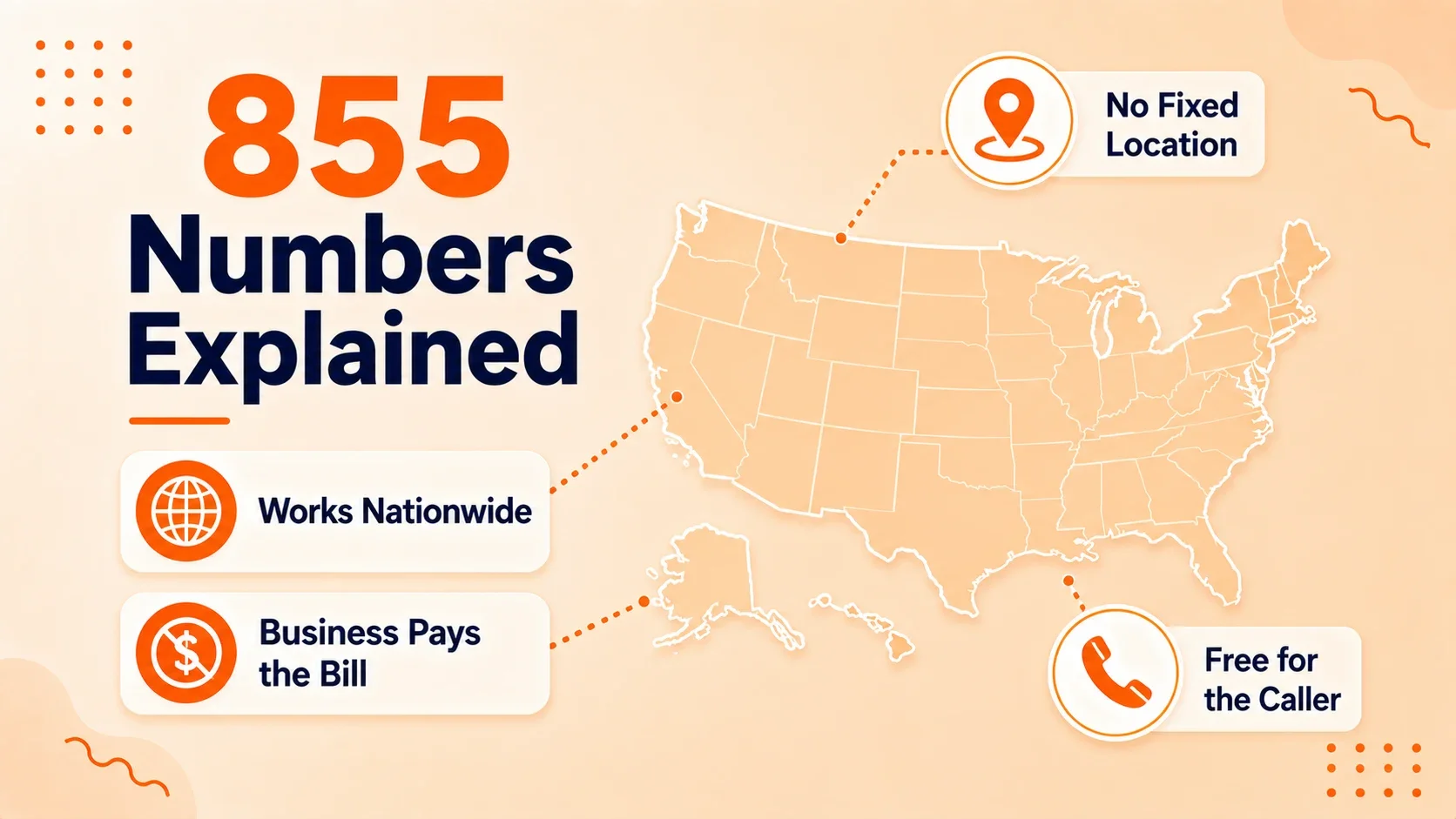
Anyone searching what is 855 area code usually expects a location, but this prefix works completely differently from a geographic code. Unlike a 810 area code number, which ties a business to a specific Michigan community, an 855 number carries no location information at all. A company in Seattle and a company in Miami can both operate an 855 line without either one claiming a specific address.
No City, No State, No Time Zone
An 855 number routes to whatever phone system a business connects it to, wherever that business actually sits. There is no coverage map, no county list, and no fixed time zone tied to the code itself; any support hours attached to an 855 line come entirely from the business running it. That makes the prefix useless for signaling local roots, but ideal for a company that wants to look reachable from anywhere.
Free for You, Billed to the Business
Every toll-free code, 855 included, works the same way: the person dialing in pays nothing, and the business receiving the call covers the cost instead. That arrangement is exactly why so many support lines, order desks, and sales teams use an 855 number in the first place. It costs the caller nothing to reach out, which removes one small barrier between a curious customer and an actual conversation.
When 855 Launched and Why It Exists
Toll-free numbers didn't start with 855, and understanding where it fits in that longer history explains why so many similar-looking codes exist today.
The Fifth Toll-Free Code
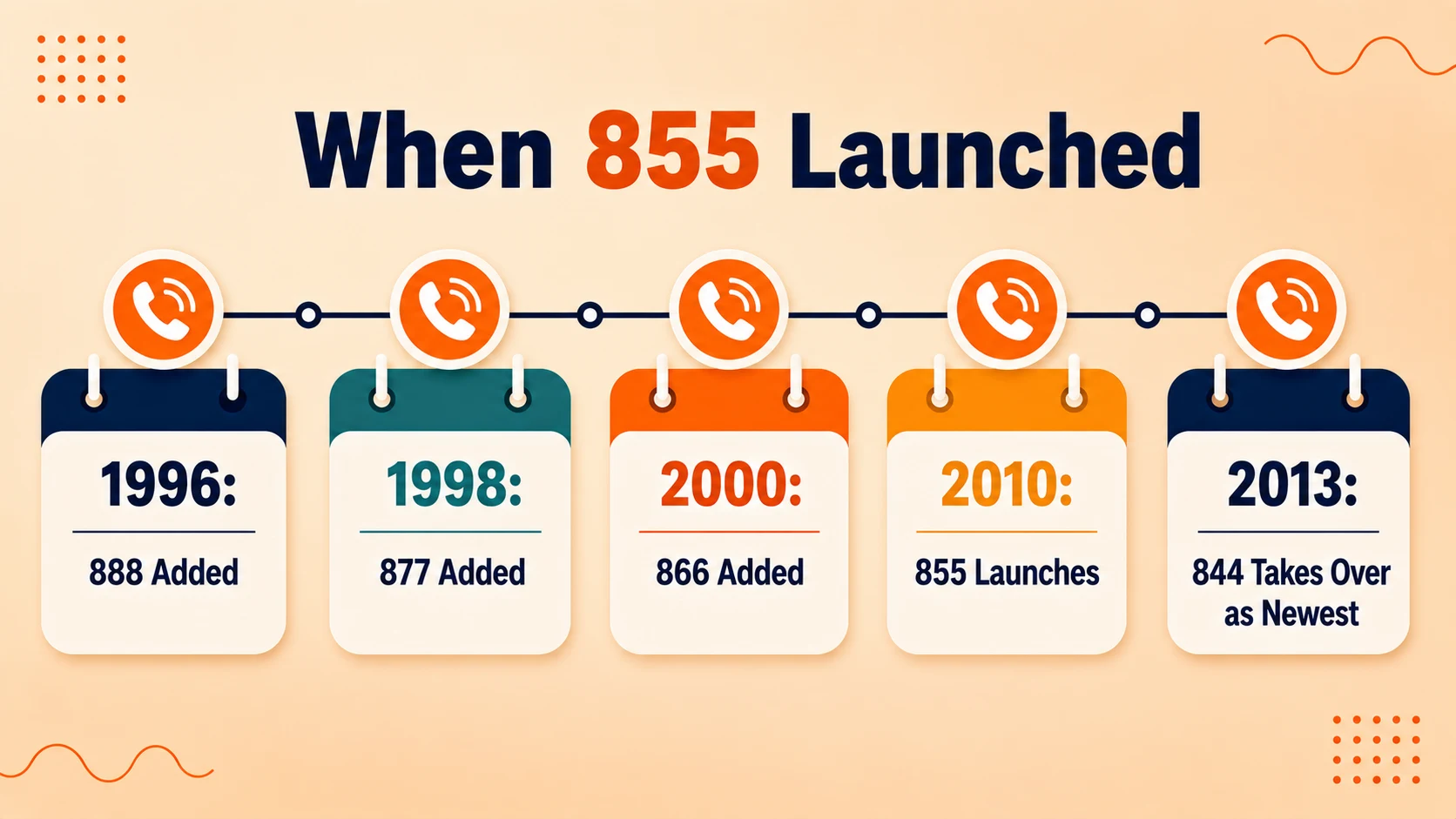
AT&T introduced the original 800 area code decades earlier, and demand for toll-free numbers eventually outgrew that single prefix. Regulators added 888, then 877, then 866 as each pool filled up, and finally 855 followed in October 2010. The Federal Communications Commission authorized the code specifically to relieve pressure building up across the entire toll-free system.
Filling the Gap Before 844 and 833
855 served as the newest toll-free option for three full years before 844 arrived in 2013, and it remained the second-newest until 833 launched in 2017. That gap matters because it means an enormous number of businesses adopted 855 specifically during that window, which is part of why the prefix still shows up so often today. A code that stays the newest option for years tends to accumulate far more active numbers than one quickly replaced by the next release.
That three-year head start coincided with a period of rapid growth in cloud-based call centers and outsourced customer support, which needed fresh toll-free capacity faster than the older codes could supply. Plenty of companies that picked up an 855 number back in 2011 or 2012 have kept it ever since, simply because switching a well-known support line risks confusing loyal customers. That inertia is part of why 855 still feels so common more than a decade after 844 and 833 both arrived to take some of the pressure off it.
Why Businesses Choose Local Phone Numbers
Not every business wants a toll-free number, and plenty still prioritize a local area code instead. A caller ID that matches the region a customer already recognizes tends to get answered more often than an unfamiliar prefix, and that small signal builds trust before a conversation even starts. Contractors, clinics, and neighborhood retailers often pick a matching local number for exactly this reason, even while keeping an 855 line for national support.
Virtual phone numbers make either choice possible without renting office space just to justify a regional prefix. A business can hold a local number, a toll-free 855 number, or both, since every number lives in the cloud rather than tied to a physical desk phone. Letsdial is one example of a provider that bundles local and toll-free numbers together with call routing, voicemail, and texting in a single dashboard.
Cloud phone systems add flexibility on top of that choice. Teams can scale a number up or down as call volume shifts, add new lines without an installation appointment, and route calls intelligently based on time of day or caller intent. When choosing between a local prefix and a toll-free one like 855, prioritize whichever signal your actual customers respond to, confirm the provider supports the channels you need, and check that porting an existing number stays simple if you ever switch providers.
Why Do I Keep Getting Calls From 855 Numbers?
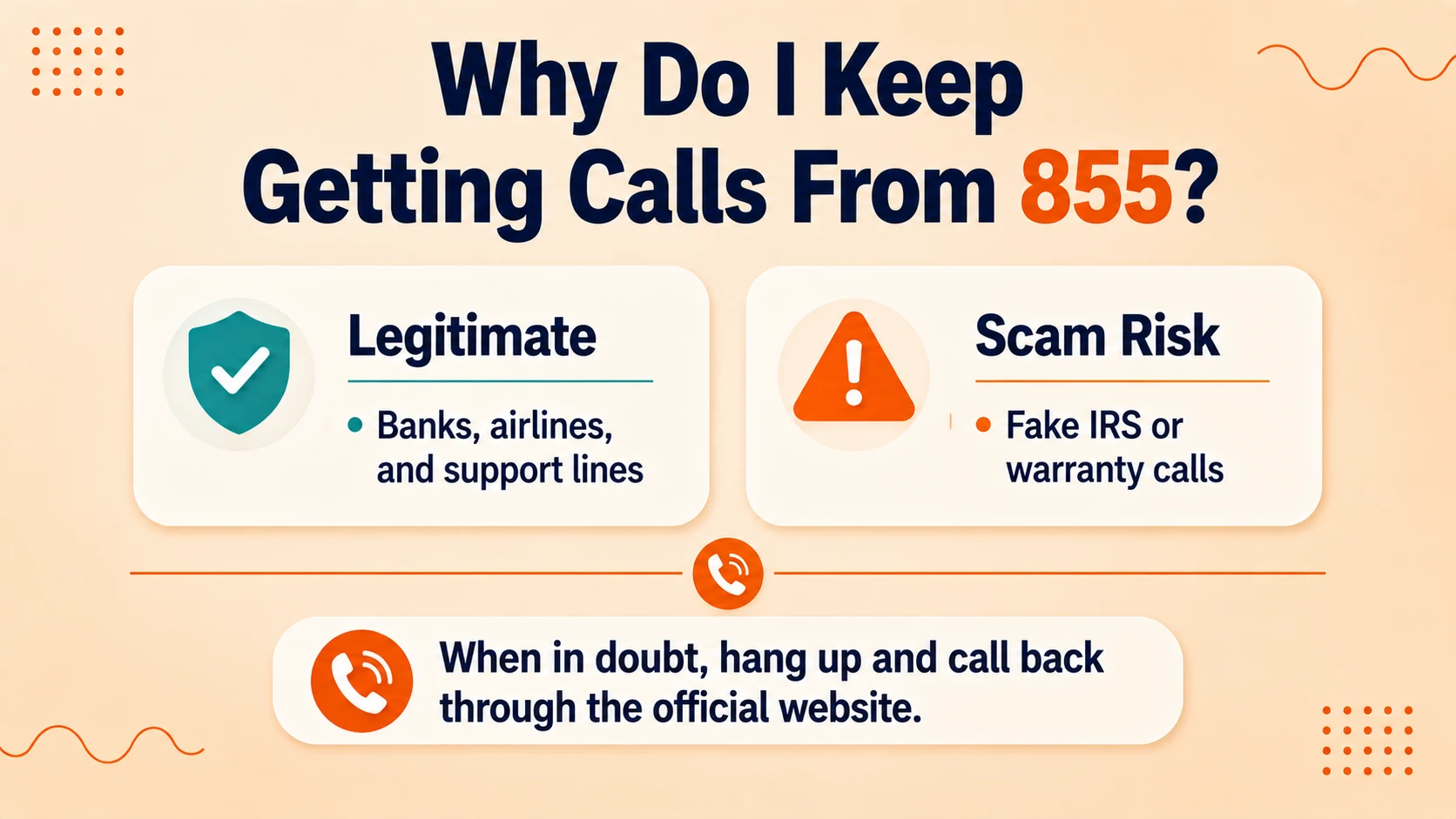
This is the question that actually brings most people to this article, and the honest answer is that both legitimate businesses and scammers rely on this prefix constantly. Sorting out which is which comes down to a few consistent patterns.
Legitimate Uses: Support Lines and Call Centers
Banks, insurance companies, airlines, and large retailers all lean on 855 numbers for customer service, order tracking, and appointment reminders. Because the code carries no geographic meaning, a single 855 line can route calls to agents anywhere, which makes it a natural fit for national call centers. If a company you already do business with reaches out from an 855 number, it is very likely a routine, expected call.
How Scammers Exploit Toll-Free Trust
The same professional appearance that makes 855 numbers useful for real businesses also makes them attractive to scammers impersonating one. A fake IRS agent, a fraudulent warranty renewal, or a spoofed bank security team can all display an 855 caller ID to seem more credible than a random ten-digit number. Verifying a suspicious call by hanging up and calling the company back through its official website takes only a few seconds and avoids the trap entirely.
855 vs. Other Toll-Free Codes: Which One Fits Your Business?
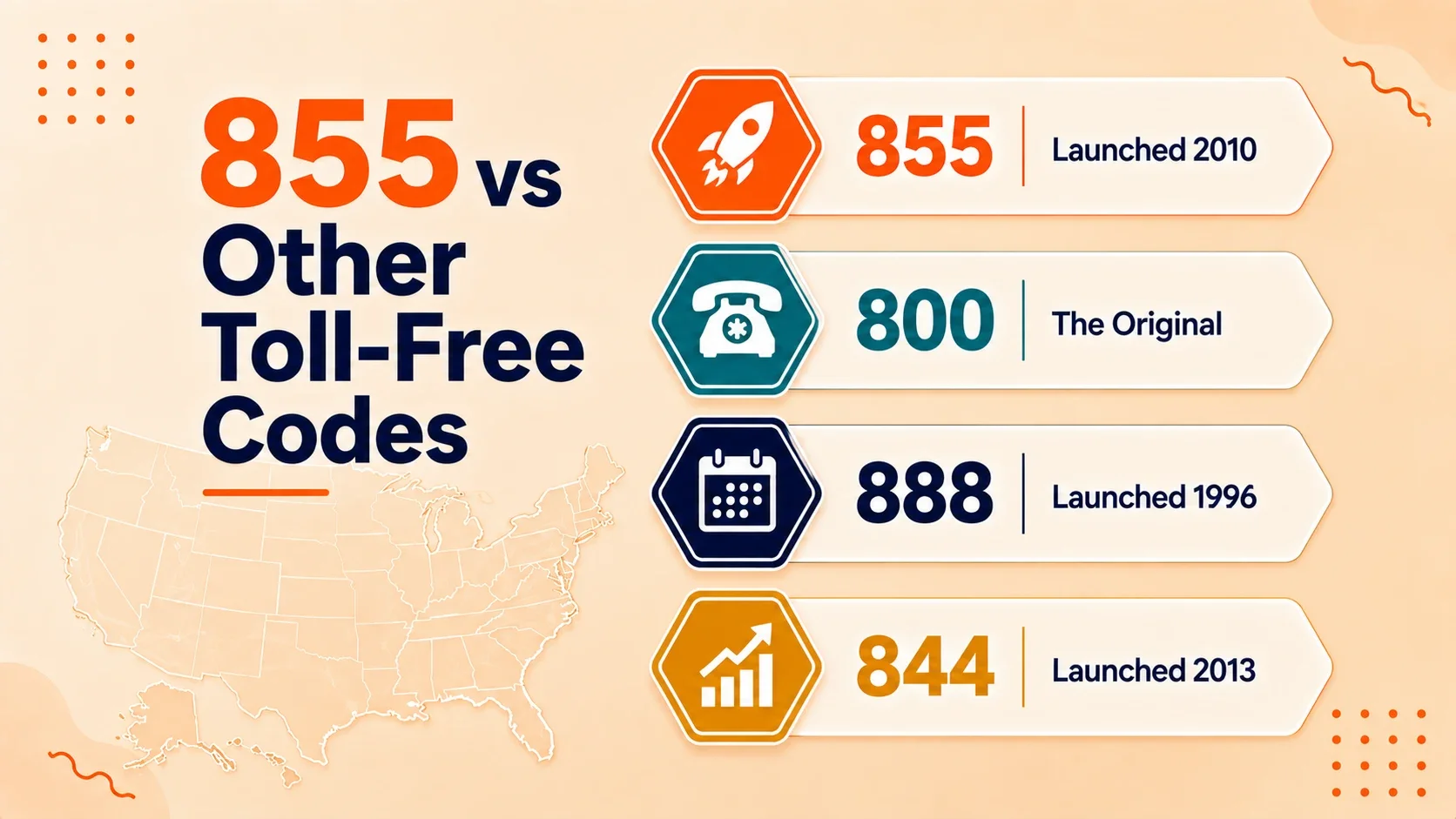
Businesses picking a toll-free number today have several nearly identical options to choose from. The original 800 code remains the most recognized, followed by 888, 877, 866, and 855, with newer additions like 844 and 833 rounding out the list. All of these function identically on the technical side, so the decision usually comes down to availability and how memorable a specific combination sounds.
Companies that already hold an 855 number rarely have a reason to switch, since customers who call it regularly have already learned to trust it. A cloud phone system keeps that number working alongside any other line a business adds later, the same way a company anchored in Florida's Panhandle might also hold an 850 area code line for a completely separate regional presence. That flexibility matters more than which specific toll-free prefix a business started with years ago.
The full toll-free rollout history is documented on the FCC's overview of toll-free numbers.
Choosing 855 specifically today, for a business setting up its first toll-free line, still makes sense simply because plenty of easy-to-remember combinations remain available. The prefix carries the exact same professional weight as 800 or 888, without competing for the scarcest options left in those older codes. That availability is a quiet advantage for a growing business picking its first nationwide number.
Conclusion
The 855 area code answers a question a lot of people never think to ask until an unfamiliar number lights up their phone. It launched in 2010 as the fifth toll-free code, and it has quietly powered support lines, order desks, and sales teams for well over a decade since. Both legitimate companies and scammers know that an 855 number signals professionalism, which is exactly why verifying the caller matters more than trusting the caller ID alone. Anyone asking what is 855 area code now understands why it keeps calling, and how to tell a real business from an impostor.
Setting up an 855 number for a business no longer requires a call center or a dedicated phone system. A cloud-based provider can assign the line, route the calls intelligently, and even staff an AI receptionist while the rest of the team works from anywhere. Whether the goal is launching a national support line or simply giving customers a free way to reach out, the next step is straightforward. Set up a Letsdial number today and start sounding reachable before a competitor claims the same advantage.
Frequently Asked Questions
Written by Aryan Khan · May 15, 2024
Reply to the author