

Introduction
What is a business communication ? Effective business communication is the lifeblood of any successful organization. It’s the force that turns individual efforts into unified results, drives strategy, and builds a culture where everyone can thrive. But when it fails, the consequences are severe—missed deadlines, frustrated teams, unhappy customers, and a direct hit to the bottom line.
So, what separates a thriving, well-aligned company from one that struggles with confusion and inefficiency? The answer often lies in its communication strategy.
This Business Communication guide will break down everything you need to know. We’ll explore what business communication is, why it’s so important, and provide actionable steps to improve it in your own organization.
What is Business Communication?
Business communication is the process of sharing information between people within and outside an organization. It’s a purposeful exchange of ideas, instructions, and data to achieve business goals. This includes everything from a CEO’s company-wide email and a project team’s video call to a sales representative’s chat with a customer.
It’s not just about talking; it’s about ensuring the message is received, understood, and acted upon correctly.
Why Business Communication is Crucial for Success
Strong business communication isn’t just a “nice-to-have”—it’s a fundamental driver of performance and profitability.
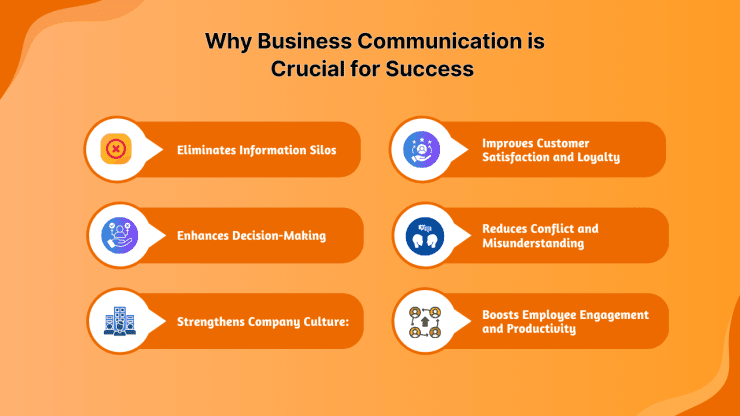
- Boosts Employee Engagement and Productivity: When employees understand the company’s vision and feel their voice is heard, they are more motivated, engaged, and productive. Studies show that companies with connected employees see productivity increase by up to 25%.
- Improves Customer Satisfaction and Loyalty: Clear, responsive communication is the cornerstone of excellent customer service. When customers feel understood and valued, they become loyal advocates for your brand.
- Enhances Decision-Making: Effective communication ensures that decision-makers have access to accurate, timely information from all levels of the organization, leading to smarter, more strategic choices.
- Reduces Conflict and Misunderstanding: A culture of open communication helps clarify expectations and address issues before they escalate into larger conflicts, saving time and preserving team cohesion.
- Strengthens Company Culture: Transparent communication builds trust and fosters a positive work environment where collaboration and innovation can flourish.
- Eliminates Information Silos: It ensures that knowledge flows freely between departments, preventing the bottlenecks that slow down projects and stifle creativity.
The 4 Core Types of Business Communication
Communication flows in different directions and serves different purposes. Understanding these four types is key to building a balanced strategy.

1. Downward Communication
This is the most traditional form, where information flows from leadership down to employees. It’s essential for providing direction and clarity.
- What it is: Managers giving instructions, executives sharing company goals, or HR sending out policy updates.
- Purpose: To inform, direct, and align teams with organizational objectives.
2. Upward Communication
This is when information flows from employees up to management. A healthy flow of upward communication is a sign of a trusting and transparent culture.
- What it is: Employees providing feedback, teams sending performance reports, or individuals submitting suggestions.
- Purpose: To inform leadership of progress, highlight potential issues, and foster innovation.
3. Lateral (or Horizontal) Communication
This is the exchange of information between peers or individuals at the same level in the organizational hierarchy, often across different departments.
- What it is: A marketing team collaborating with the sales team on a new campaign, or developers coordinating with designers.
- Purpose: To coordinate tasks, solve problems collaboratively, and break down departmental silos.
4. External Communication
This includes any communication between the organization and outside parties. It directly shapes your brand’s public perception and reputation.
- What it is: Marketing campaigns, press releases, customer support interactions, and conversations with suppliers or partners.
- Purpose: To attract customers, build brand loyalty, and manage relationships with external stakeholders.
Key Channels: Where Business Communication Happens
The modern workplace uses a diverse mix of channels to facilitate communication. The key is knowing which one to use for the right situation.
Email: Best for formal announcements, detailed documentation, and creating a paper trail.
Video Conferencing (e.g., Zoom, Google Meet): Essential for face-to-face interaction with remote teams, client presentations, and collaborative meetings.
Instant Messaging (e.g., Slack, Microsoft Teams): Perfect for quick, informal questions, real-time collaboration, and team-based chats.
VoIP (Voice over Internet Protocol).
Voice communication remains critical, but it has evolved. VoIP phone systems transmit calls over the internet instead of traditional phone lines, unlocking a new level of flexibility and power.
- What it solves: VoIP is the modern solution for businesses needing a reliable, scalable, and feature-rich phone system. It’s perfect for supporting remote/hybrid teams and delivering professional customer service.
- Key Benefits:
- Mobility: Employees can make and receive calls from their business number on any device (desk phone, computer, or mobile app), from anywhere in the world.
- Advanced Features: Go beyond standard calling with tools like multi-level auto-attendants (IVR), call recording, advanced analytics, and smart call routing to ensure customers always reach the right person.
- Cost-Effective: Typically offers lower costs than traditional landlines, especially for international calls.
- Integration: Connects seamlessly with other business tools like your CRM to provide your team with valuable customer context on every call.
Social Media: A powerful tool for external communication, customer engagement, and brand building.
Live Chat: An increasingly popular channel for providing instant customer support on your website.
5 Actionable Steps to Improve Your Business Communication Strategy
Ready to elevate your organization’s communication? Start with these five proven steps.
1. Audit Your Current State and Set Clear Goals
Before you can improve, you need to know where you stand. Identify your biggest communication challenges. Is employee turnover high? Are projects consistently delayed? Use these pain points to set specific, measurable goals, such as improving employee satisfaction rates or reducing customer response times.
2. Establish Clear Communication Guidelines
Don’t leave communication to chance. Create and document clear guidelines. This should include:
- Which channel to use for which purpose (e.g., urgent matters via chat, formal reports via email).
- Expected response times.
- A consistent tone of voice for internal and external messaging.
3. Choose the Right Tools and Technology
Equip your team with the tools they need to succeed. Using multiple disconnected apps creates confusion. Instead, consider a unified communication platform (UCaaS) that integrates chat, video, phone (VoIP), and project management. This centralizes information and makes collaboration seamless.
4. Foster a Culture of Open Feedback
Effective communication is a two-way street. Actively encourage both upward and downward feedback. Create safe spaces for employees to share their ideas and concerns without fear of reprisal. This can be done through regular one-on-one meetings, anonymous suggestion boxes, and employee surveys.
5. Lead by Example
Great communication starts at the top. Leaders must model the behavior they want to see. This means being transparent, listening actively, and communicating with clarity and empathy. When leaders prioritize communication, it becomes ingrained in the company culture.


