

Introduction
In the vast landscape of telecommunications, area codes serve as crucial geographical identifiers, routing calls and connecting people across regions. The area code 778 location number is a prominent player in the Canadian province of British Columbia (BC), a testament to the region’s growth and the increasing demand for telecommunication services. Understanding it’s essential not just for residents but also for businesses aiming to establish a local presence in this vibrant part of Canada.
This guide delves deep into the origins, coverage, significance, and practical aspects of the 778 area code. We’ll explore its relationship with other BC area codes, the technology behind number allocation, the benefits of having a local 778 number for individuals and businesses, and how modern solutions make acquiring and managing these numbers easier than ever. Whether you’re moving to BC, expanding your business, or simply curious about the numbers on your caller ID, this comprehensive overview will provide valuable insights.
Key takeaways:
- 778 area code location number is a BC-wide overlay, not city-specific, requiring 10-digit dialing for local calls.
- A 778 number provides local BC presence, building trust, aiding marketing, and enhancing professional image.
- Get 778 area code numbers via traditional carriers or flexible, cost-effective modern VoIP and online sellers.
- Modern 778 providers often include advanced features like call forwarding, voicemail-to-email, and business texting.
- Beware of scams spoofing 778; be cautious with unknown calls, don’t trust caller ID.
What is the 778 Area Code?
The 778 area code is a telephone numbering plan area code serving the entire province of British Columbia (BC), Canada. It functions as an overlay code, meaning it covers the same territory as existing codes rather than a new, separate geographic area. It’s part of the North American Numbering Plan (NANP).
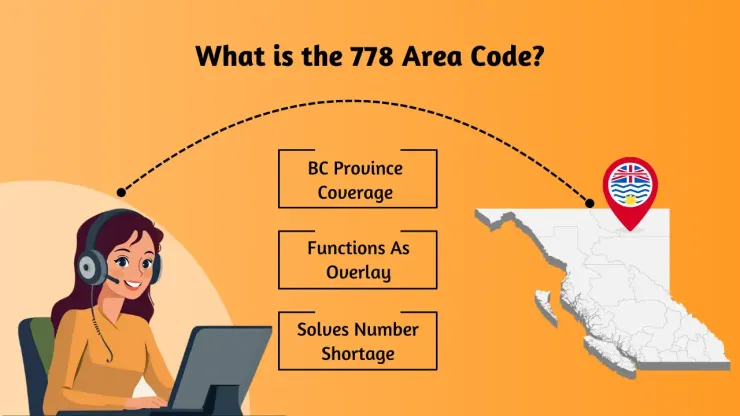
Here are the key things to know about it:
| Aspect | Details |
| Coverage | Operates province-wide in British Columbia, overlaying the regions originally served by area codes 604 (Lower Mainland/Metro Vancouver) and 250 (rest of BC). |
| Reason for Introduction | Implemented because the pool of available phone numbers in the original codes was running out, largely due to the proliferation of cell phones and internet technology. |
| Timeline | Initially introduced on November 3, 2001, for the 604 region; expanded to cover the entire province on July 4, 2007. |
| Further Overlays | Continued demand led to additional province-wide overlays: 236 (in 2013) and 672 (in 2019). |
| Coexisting Codes | As a result, numbers starting with 604, 250, 778, 236, and 672 can all be found in the same BC communities. |
| Geographic Meaning | A 778 phone number indicates a connection to British Columbia, but unlike traditional area codes, it doesn’t specify a particular city or town. |
| Dialing Impact | The introduction of overlays like 778 led to mandatory 10-digit dialing (area code + seven-digit number) for all local calls within BC. |
The Power of Local Presence: Why a 778 Number Matters
In an increasingly globalized and digital world, the concept of “local” still holds immense power, especially in business and personal communication. Having a phone number with a familiar, local area code like 778 can offer significant advantages:

Building Trust and Credibility:
Customers are often more comfortable calling a local number. It feels familiar, accessible, and suggests a nearby presence, even if the business operates remotely. A 778 phone number area code location instantly signals a connection to British Columbia, fostering trust with BC residents.
Enhanced Local Marketing:
For businesses targeting the BC market, using a 778 phone area code number in advertising (websites, brochures, local directories) reinforces their commitment to the region. It makes marketing efforts seem more relevant and less like those of a distant, impersonal corporation.
Cost Perception:
While long-distance charges are less of a concern now than in the past, some customers (especially older demographics or those with specific phone plans) might still perceive calls to non-local area codes as potentially costing more. A local phone number eliminates this potential hesitation.
Search Engine Optimization (SEO):
For businesses wanting to rank locally in BC search results, having a local number 778 listed consistently across online platforms (Google My Business, Yelp, etc.) can contribute positively to local SEO signals.
Professional Image:
For individuals (freelancers, consultants) or small businesses operating from home, a dedicated 778 business line separates professional calls from personal ones, projecting a more established and professional image.
Seamless Integration:
For national or international companies expanding into the BC market, a 778 phone number provides a seamless point of contact for local clients, suppliers, and partners.
Whether you’re a Vancouver startup, a Victoria-based retailer, a Kelowna service provider, or a national enterprise targeting BC customers, a 778 phone number acts as a digital handshake, establishing an immediate local connection.
Who Benefits Most from a 778 Area Code Number?
Essentially, anyone needing a stable, credible, and locally identifiable phone number within British Columbia is a prime candidate for obtaining a 778 phone number.The need for a 778 local phone number spans various user groups:
New Residents: Individuals moving to British Columbia often need a local phone number for job applications, apartment hunting, setting up utilities, and integrating into the community.
Businesses Expanding into BC: Companies headquartered elsewhere but targeting the lucrative BC market can establish a virtual presence with a 778 location number, making them appear local and accessible.
Startups and Small Businesses in BC: Local entrepreneurs need a dedicated business line. A 778 location number (along with 604, 250, 236, 672) is the standard for new business lines in the province.
Remote Workers and Freelancers: Professionals working remotely but serving BC clients can use a 778 phone number to maintain a local professional identity.
Marketing Campaigns: Businesses running specific marketing campaigns targeting BC consumers can use unique 778 tracking numbers to measure campaign effectiveness.
Individuals Needing a Second Line: People wanting to separate personal calls from work calls, online listings, or other purposes can benefit from an additional line with a 778 country code.
Tech and Service Industries: Given BC’s thriving tech sector (especially in Vancouver) and tourism/service industries, clear and local communication channels provided by area code 778 phone numbers are vital.
Acquiring Your 778 Area Code Number: Traditional vs. Modern Methods
Getting a phone number used to mean dealing directly with large, traditional telephone companies (telcos). While that option still exists, the landscape has evolved significantly, offering more flexible and feature-rich alternatives.
Traditional Telcos:
Incumbent carriers (like Telus or Bell in Canada) and cable companies offering phone services can provide 778 numbers, often bundled with internet or TV packages or as standalone landlines/mobile plans. This route usually involves contracts, potentially physical installation, and sometimes fewer modern calling features unless added at extra cost.
Mobile Carriers:
Wireless providers (Rogers, Bell Mobility, Telus Mobility, Freedom Mobile, etc.) issue 778 numbers for mobile phone plans. This is the most common way individuals acquire numbers today.
Voice over Internet Protocol (VoIP) Providers:
VoIP technology transmits voice calls over the internet instead of traditional phone lines. VoIP providers offer virtual phone numbers, including those with the 778 code area. These numbers can be used via desktop apps (softphones), mobile apps, or dedicated VoIP hardware phones. They often come packed with features at competitive prices.
Dedicated Number Sellers:
Specialized online platforms focus specifically on providing virtual phone numbers across various area codes. These services streamline the acquisition process, often offering vast inventories and easy management through web portals or apps. For those seeking specific numbers or needing flexibility, services like Letsdial offer a streamlined online process for finding and activating area code 778 phone numbers.
The Modern Advantage (VoIP and Specialized Sellers):
Choosing a VoIP provider or a dedicated number seller often brings several benefits:
- Flexibility: Use your number from anywhere with an internet connection.
- Cost-Effectiveness: Often lower monthly fees and cheaper long-distance/international calling rates.
- Rich Features: Access to advanced features often included standard (see next section).
- Scalability: Easily add or remove lines as business needs change.
- Easy Setup: Typically faster and simpler setup compared to traditional landlines.
Number Choice: Greater likelihood of finding specific or memorable numbers.
Beyond the Digits: Features and Functionality with Modern 778 Numbers
When you acquire a 778 code number through a modern provider (VoIP or specialized service), you’re often getting much more than just the ability to make and receive calls. These platforms usually leverage VoIP technology to offer a suite of powerful features:
- Call Forwarding: Automatically redirect incoming calls to another number (mobile, landline, colleague) ensuring you never miss important calls.
- Voicemail-to-Email/Transcription: Receive voicemail messages as audio files or even transcribed text directly in your email inbox for easy management and archiving.
- Virtual Receptionist / Auto-Attendant: Greet callers professionally with custom menus (“Press 1 for Sales, Press 2 for Support”) to direct calls efficiently.
- Business Texting (SMS/MMS): Send and receive text messages using your 778 business number, keeping personal and professional communications separate.
- Simultaneous Ring: Have incoming calls ring on multiple devices (desk phone, mobile app, softphone) at the same time.
- Call Analytics: Access detailed reports on call volume, duration, missed calls, and peak times to understand communication patterns and optimize operations.
- Number Porting: If you already have a 778 phone area code number with another provider, you can usually transfer (port) it to a new service to keep your existing number while gaining new features.
- Conference Calling: Host multi-participant phone meetings.
- Call Recording: You can record incoming calls and outgoing calls for quality assurance, training, or compliance purposes (ensure adherence to privacy laws).
- Custom Caller ID: Control the name and number displayed when making outbound calls.
These features transform a simple phone number into a comprehensive communication tool, enhancing productivity for businesses and convenience for individuals. Many VoIP features available through providers such as Letsdial enhance productivity and streamline communications for businesses of all sizes.
Navigating Potential Downsides: Scams and Caller ID Spoofing
Unfortunately, like any area code, 778 can be used by scammers. Caller ID spoofing is a technique where callers deliberately falsify the information transmitted to your caller ID display to disguise their identity. Scammers often spoof local area code, like 778, to increase the chances you’ll pick up the phone, assuming it’s a local caller.
Tips to Protect Yourself:
Be Wary of Unsolicited Calls: If you receive an unexpected call from a 778 phone number area code (or any number) you don’t recognize, be cautious.
Don’t Trust Caller ID Alone: Remember that the displayed number can be faked.
Never Give Personal Information: Legitimate organizations rarely call unsolicited to ask for sensitive data like your Social Insurance Number, bank account details, or passwords.
Listen for Red Flags: Scammers often create a sense of urgency, make threats (e.g., arrest, account closure), or demand payment via unusual methods (gift cards, wire transfers).
Hang Up: If you suspect a scam, hang up immediately. Don’t engage or press buttons.
Verify Independently: If the caller claims to be from a known organization (bank, government agency), hang up and call the organization back using a verified number from their official website or statement.
Use Call Blocking Features: Many smartphones and VoIP services offer features to block specific numbers or flag suspected spam calls. Reputable providers, including options available through Letsdial, often incorporate security features or allow integration with call blocking tools.
The Future of Communication and Area Codes in BC
The telecommunications landscape is constantly evolving. While apps and data-based communication methods grow, the traditional phone number remains a fundamental identifier for individuals and businesses.
- Continued Growth: British Columbia continues to attract new residents and businesses. This ongoing growth suggests that the demand for phone numbers will persist, potentially necessitating even more area code relief measures in the distant future, although the current multi-overlay system (778, 236, 672) provides significant capacity.
- Technology Integration: Expect deeper integration between phone numbers and other digital communication tools. Features like business texting, AI-powered call routing, and enhanced analytics will become increasingly standard.
- The Enduring Phone Number: Despite alternative communication methods, the phone number remains a universal, easily understood contact point, crucial for everything from emergency services to customer support to personal connections. Its role as a primary identifier is unlikely to disappear soon.
The 778 code, alongside its overlay companions, will continue to be a vital part of BC’s communication infrastructure for the foreseeable future.
Choosing the Right Provider for Your 778 Number: Key Considerations
Selecting the best way to obtain and manage your 778 location number depends on your specific needs. When evaluating providers, especially modern VoIP services and dedicated number sellers, consider these factors:
1. Number Availability and Choice:
Do they have a good selection of 778 numbers? Can you choose a specific or memorable (vanity) number? When selecting your number, the extensive inventory found at platforms like Letsdial can be a major advantage.
2. Features:
Does the service include the features you need (call forwarding, voicemail-to-email, auto-attendant, call recording, texting)? Are there extra costs for essential features?
3. Reliability and Call Quality:
Research provider reviews regarding uptime, call clarity, and service stability. VoIP quality is heavily dependent on your internet connection, but the provider’s infrastructure also matters.
4. Ease of Use:
Is the online portal or mobile app intuitive and easy to manage? Look for a user-friendly interface, a hallmark of services streamlined by companies like Letsdial.
5. Pricing Structure:
Understand the pricing & plan for monthly fees, per-minute charges (if any), costs for additional numbers or features, and any contract requirements. For businesses needing multiple lines or specific features, exploring solutions from providers like Letsdial is crucial.
6. Customer Support:
What kind of support is offered (phone, email, chat)? Are they responsive and helpful? Consider the level of customer support offered; reliable assistance, as aimed for by services like Letsdial, is invaluable.
7. Scalability:
Can the service easily grow with your needs, allowing you to add or remove lines and features as required?
8. Portability:
Can you port your existing number to their service, or port your number away if you decide to leave? Ensure number portability is an option, a standard feature with many modern services, including those provided via Letsdial. The flexibility to choose vanity or memorable numbers, often facilitated by platforms such as Letsdial, can boost branding.
Conclusion
The 778 area code is more than just a sequence of three digits; it’s a digital gateway to British Columbia. As a province-wide overlay, it reflects the region’s dynamism and the ever-increasing need for telecommunication services. Whether for personal use or business growth, obtaining a 778 number establishes an instant local identity within BC, fostering trust and facilitating connection.
Understanding its history as an overlay for 604 and 250, the implications of 10-digit dialing, and the power of local presence helps unlock its strategic value. Furthermore, the evolution of telecommunications means that acquiring and managing a 778 phone number is now more flexible and feature-rich than ever, thanks to VoIP technology and specialized providers. By leveraging features like call forwarding, virtual receptionists, and business texting, a simple 778 code number transforms into a powerful communication hub.


