導入
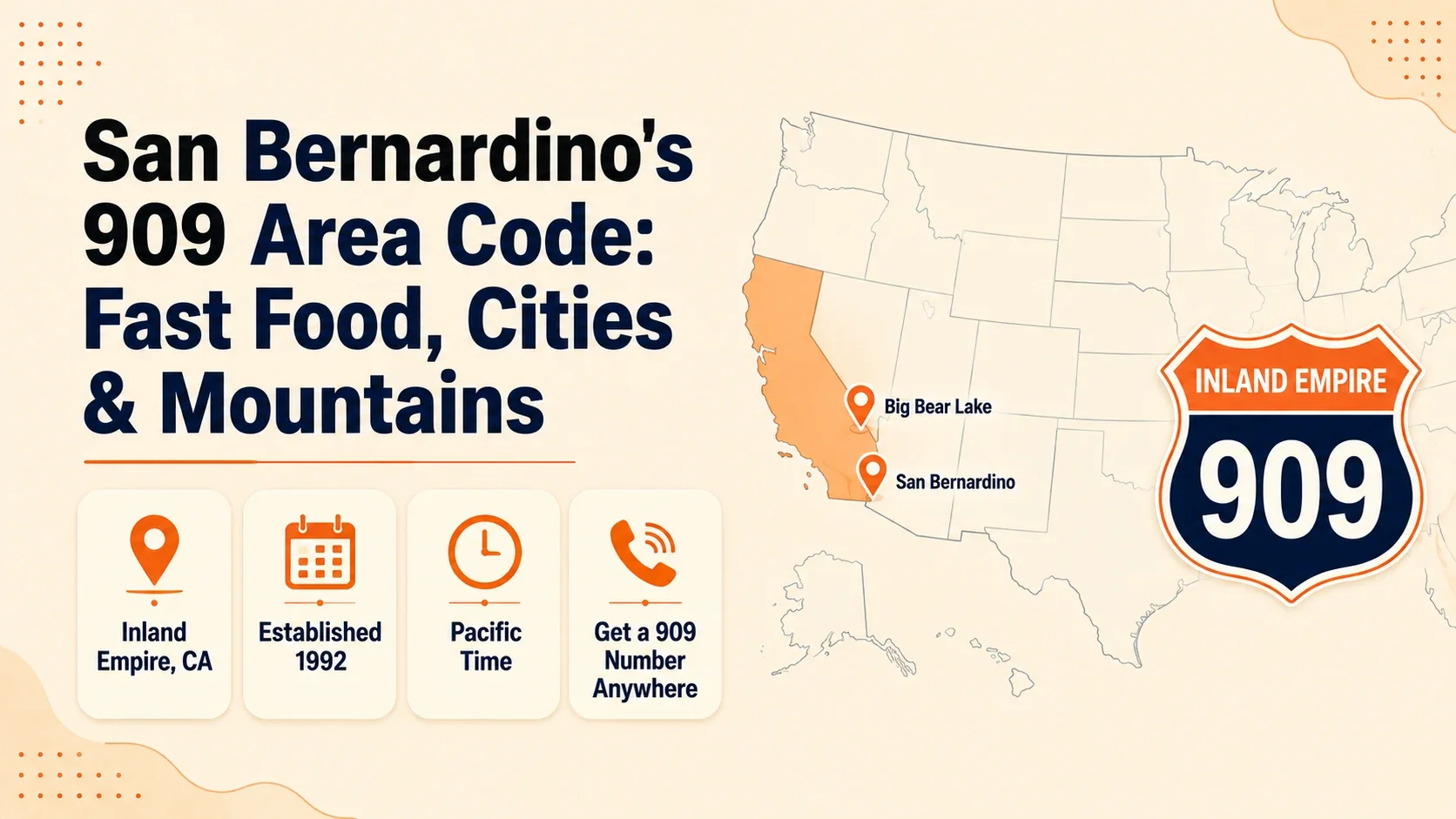
909 市外局番は、カリフォルニアのインランド エンパイアをカバーしており、1992 年から使用されています。この市外局番は、ほとんどの発信者が電話プレフィックスを関連付けることのない地域、つまり現代のファストフード レストランの発祥の地を接続します。このガイドでは、どの都市に電話が届くのか、倉庫の国と同じ 3 桁を共有する山間の町、そしてそれを使った詐欺電話を特定する方法について説明します。
- 州: カリフォルニア
- 地域: サンバーナーディーノ郡西部 + ロサンゼルス郡東部 — サンバーナーディーノ、オンタリオ州、ランチョ クカモンガ、ビッグベアー レイク、レイク アローヘッド
- 開始: 1992 年 11 月 14 日 (市外局番 714 から分割)
- タイムゾーン: 太平洋時間
- オーバーレイ: 市外局番 840 (2021 年以降) — どちらも 10 桁のダイヤルが必要です
市外局番を検討しているビジネス オーナーと、検索バーに市外局番 909 を入力する住民はどちらも、同じ明確な事実を必要としています。このガイドを読み終える頃には、工業地帯からスキーリフトに至るまで、この南カリフォルニアの接頭語が完全に意味をなすようになるでしょう。
909 市外局番とは何ですか?サンバーナーディーノ郡の人口密集地帯
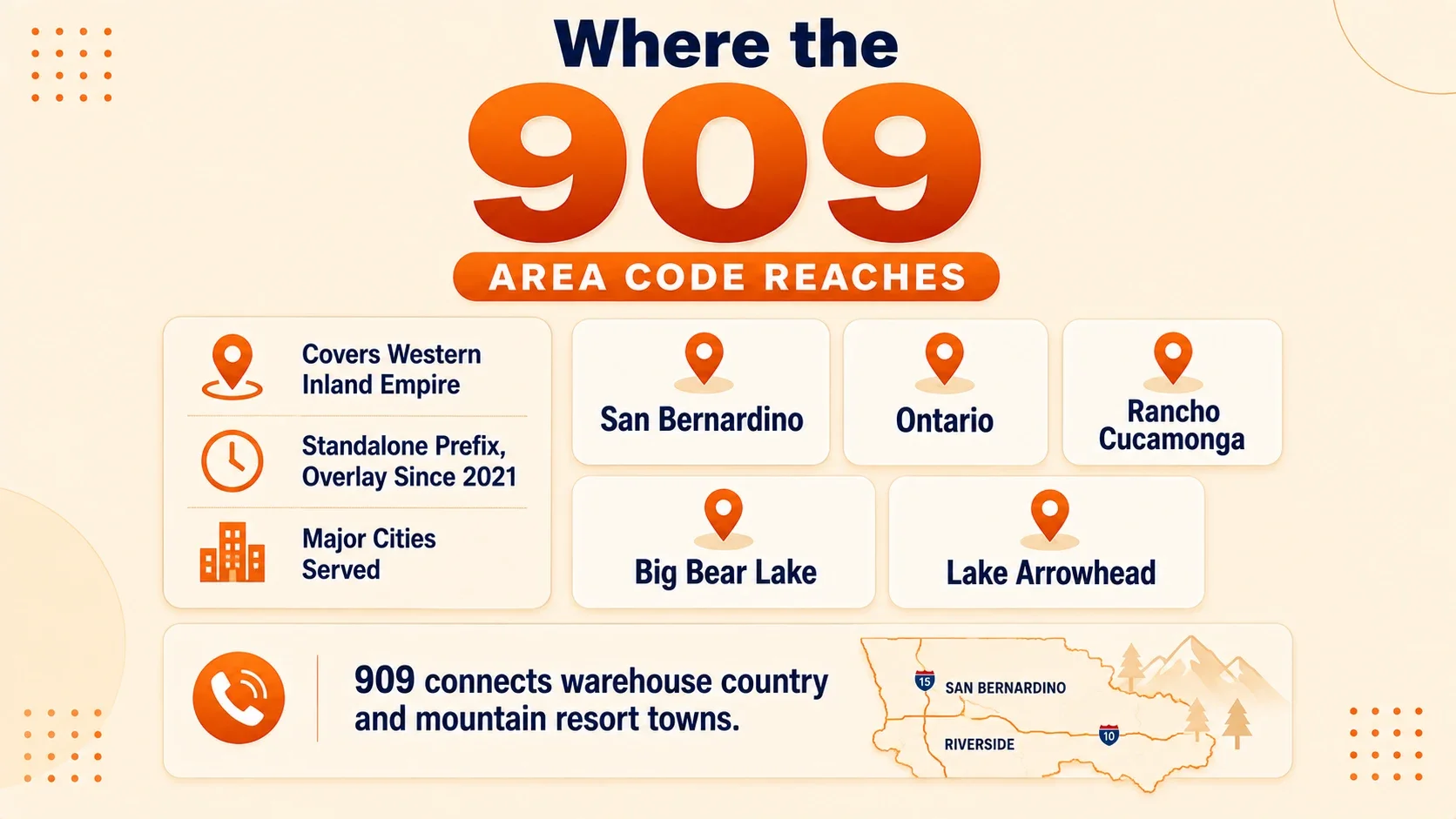
市外局番 909 はどこにあるのかを検索している人は、何よりも早く答えを知りたいと思っています。この地域は、サンバーナーディーノ郡の西部の人口が最も多い地域と、ロサンゼルス郡東部の一部をカバーしており、1992 年に古い市外局番 714 から分離されて開設されました。このプレフィックスがカバーする地域は、ほとんどの人が電話番号だけから想像するよりもはるかに多様であるため、その歴史は物語の一部にすぎません。
オンタリオ州サンバーナーディーノと山岳地帯のコミュニティ
オンタリオ州サンバーナーディーノ、ランチョ クカモンガ、フォンタナ、チノはすべて、サンバーナーディーノ山脈の高地にある山岳リゾート都市ビッグベアー レイクとレイク アローヘッドと並んで、このプレフィックスを使用してダイヤルアウトします。この組み合わせには、歴史的な郡庁所在地、急速に成長する郊外の平地、スキーと湖のレクリエーションを中心に構築された高山コミュニティが含まれており、すべてが新しい 840 オーバーレイと共有される同じ 10 桁のダイヤル ゾーン内にあります。
太平洋時間、南カリフォルニアの他の地域と同じ
市外局番 909 の下のすべての番号は太平洋時間で使用され、ロサンゼルス、オレンジ郡、および南カリフォルニア沿岸部のその他の地域と一致します。州全体のパートナーと連携している企業は、ここでタイムゾーンのギャップについて考える必要はありません。この共有タイムゾーンにより、インランド エンパイアはより広範な南カリフォルニア経済としっかりと結びついています。
ファストフード発祥の地: 909 の最も有名な住所
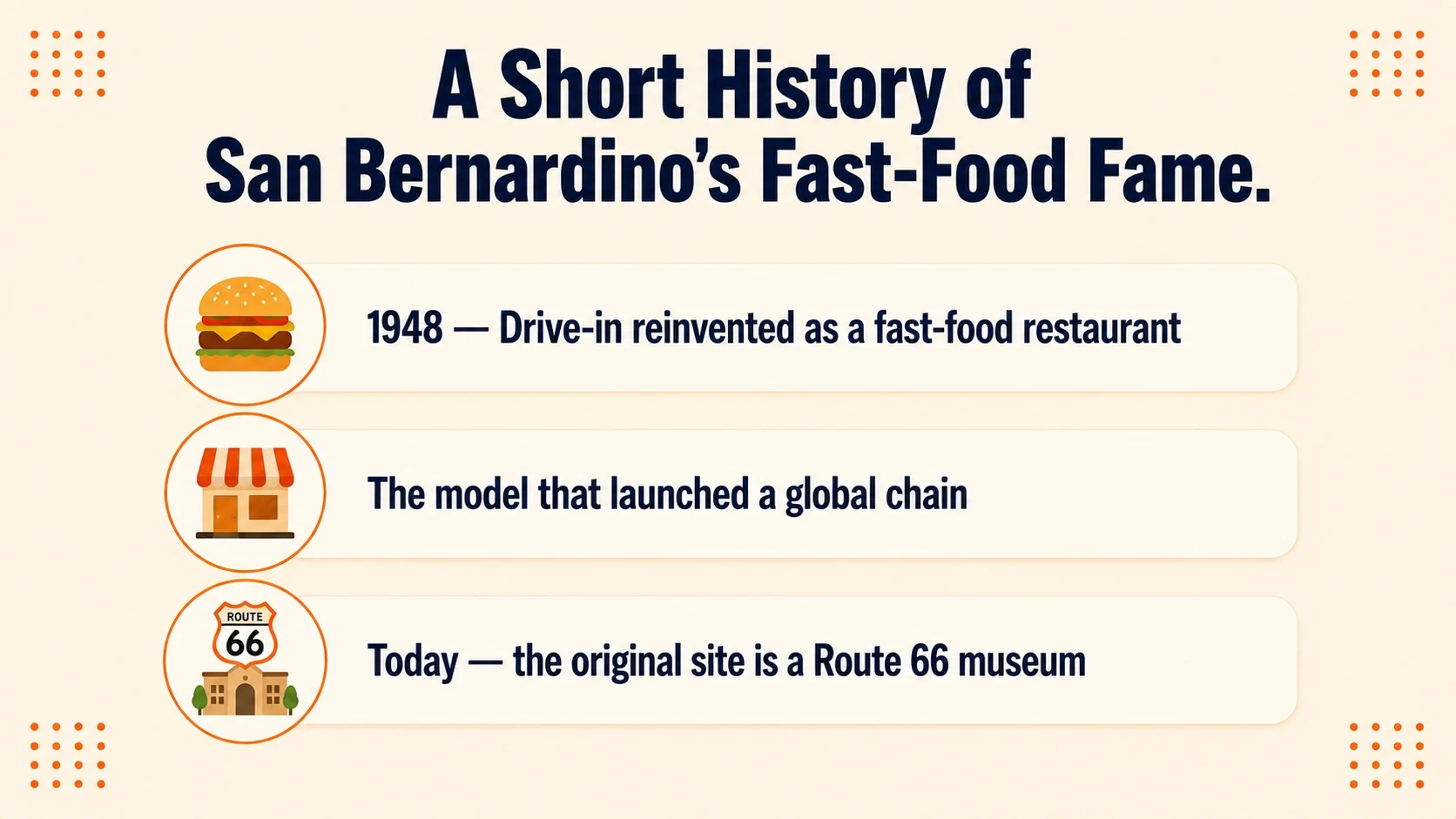
サン バーナーディーノが倉庫で知られるようになるずっと前から、それとはまったく異なる種類の名声が得られ、現在でも訪問者を惹きつけています。
ダイニングを永遠に変えた 1948 年の再発明
ディックとマックのマクドナルド兄弟は、1940年代を通じてサンバーナーディーノの14番地とEストリートでカーホップドライブインを経営したが、1948年に閉店し、カーホップを使わずにハンバーガー、フライドポテト、シェイクのメニューを簡素化して再オープンした。このたった 1 つの決断が、今日でも世界中のレストランが模倣するファストフード モデルを生み出しました。元の建物は失われていますが、その場所には現在、その歴史をテーマにした博物館が建てられており、ルート 66 の旅行者が高速道路から降りて、すべてが始まった場所を見ることができます。
レイ・クロックとその後のシリーズ
実業家のレイ・クロックは、1954 年にレストラン設備の販売中にマクドナルド兄弟と出会い、後に彼らと提携してそのコンセプトを世界的なチェーンに成長させました。そのパートナーシップは、今日現代の 909 番が鳴る場所からわずか数マイルの場所で始まり、このインランド エンパイアという接頭辞をアメリカのビジネスで最も有名なブランドの起源物語の 1 つに結びつけました。ここで営業するレストラン、フランチャイズ コンサルタント、またはホスピタリティ ビジネスは、シリコンバレーの企業が歴史に頼るのと同じように、その歴史に頼ることができます。 市外局番408 この数字はサンノゼのテクノロジーのルーツに関係しています。
倉庫平地からアルペンスキー場まで
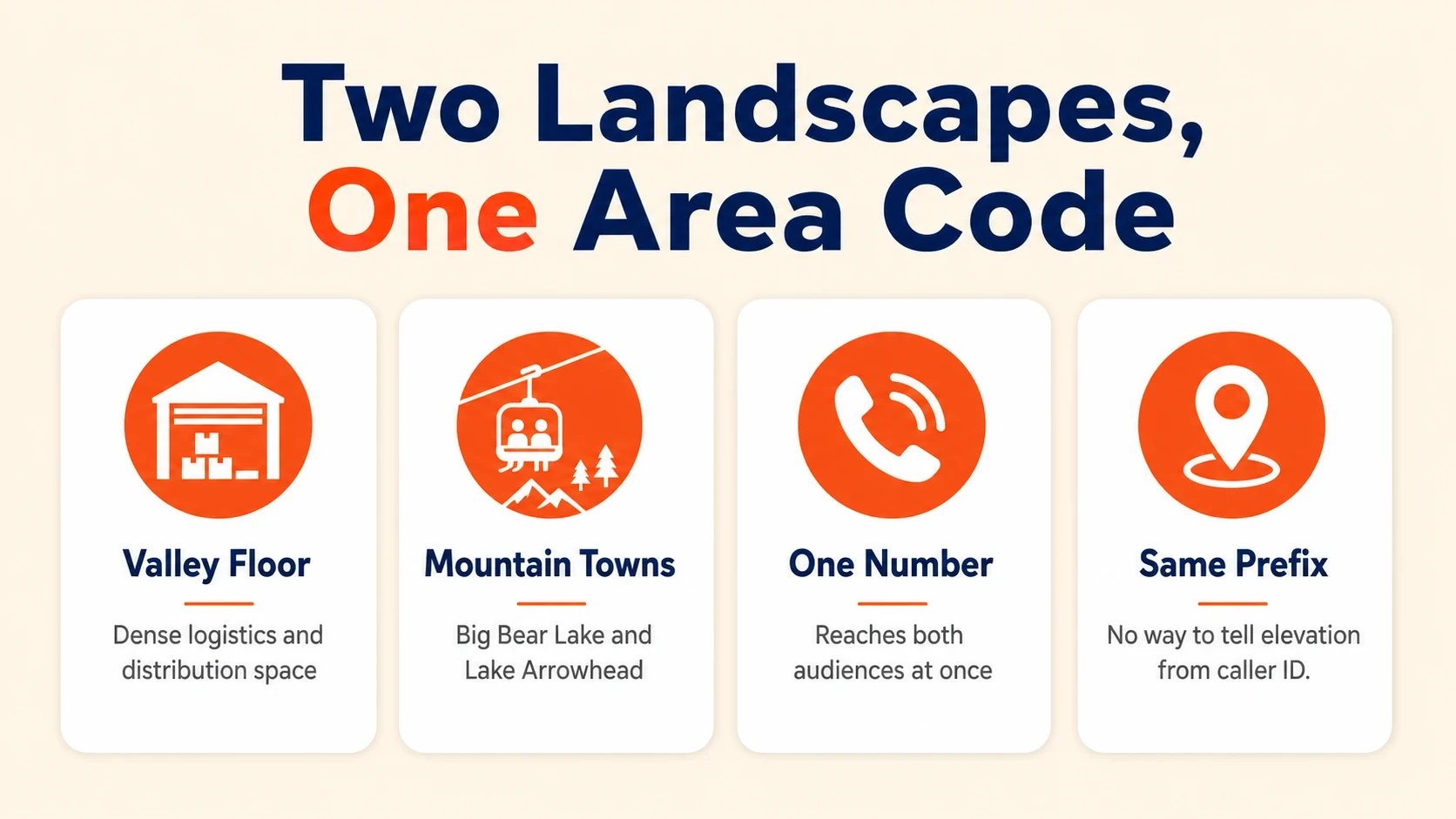
1 つの通話地域内で 909 のように 2 つの異なる地域にまたがる市外局番はほとんどありません。
標高が 2 つある地域
渓谷の下流には、オンタリオ州サンバーナーディーノとフォンタナがあり、国内で最も密集した倉庫と流通スペースがいくつかあります。サン バーナーディーノ山脈を車で 1 時間もかからずに登ると、同じ市外局番 909 がビッグベアー レイクとレイク アローヘッドに届きます。これらの高山の町は貨物ではなく、スキー、ハイキング、湖畔の小屋を中心に作られています。 2021 年 1 月以降、谷であっても山であっても、これらの通話にはすべて 10 桁が必要です。同じルールが新しい通話にも同様に適用されます。 市外局番840 オーバーレイはまさにこの領域を共有します。
2 つのまったく異なる顧客ベースに 1 つの数字を対応させる
ある週はハードウェア サプライヤーが倉庫に配送し、次の週にはバケーション レンタル会社がキャビンを予約するという、両方の顧客にサービスを提供する企業は、同じ 909 回線を通じてどちらの顧客ベースにも到達できます。ここでは、ほとんどの地域よりも柔軟性が重要です。発信者番号だけでは、企業が谷間にあるのか山の上にあるのかを判断できないためです。市内の 909 番号は単に「Inland Empire」を通知するだけで、具体的な住所はその後の会話に委ねられます。
市外局番 909 による詐欺電話の見分け方
この市外局番には他の市外局番ほどのリスクはありませんが、人口が密集しているため、なりすましロボコールの格好の標的となります。詐欺師は、実際にはカリフォルニア州のはるか外から発信されている場合でも、発信者 ID を偽って Inland Empire の番号を表示することができます。オンラインで正確な番号を検索して不審な電話を確認するのにかかる時間はわずか数秒で、通常は疑問はすぐに解決します。
画面に表示される市外局番に関係なく、標準の注意が適用されます。要求がどれほど正式なものであるかに関係なく、銀行口座の詳細、社会保障番号、またはワンタイム パスコードを、最初に連絡した発信者と決して共有しないでください。繰り返される詐欺番号を通信事業者に報告すると、さらに多くの住民が同じなりすましの 909 番号の標的になる前にパターンを警告することができます。
909 対 840: 元のコードとそのオーバーレイの選択
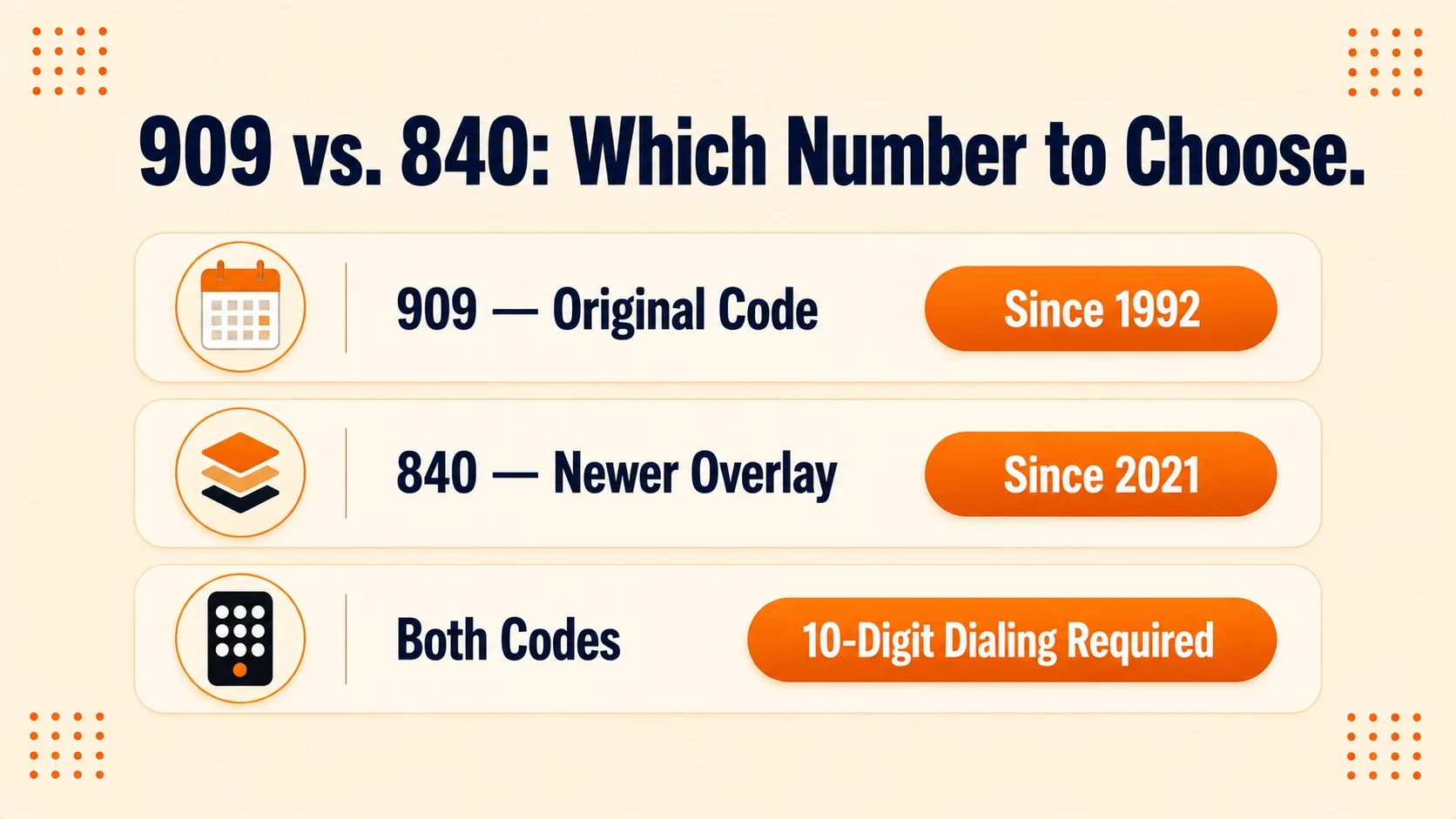
現在、新しい Inland Empire 回線を開設する企業には、2 つの市外局番がまったく同じ地域にサービスを提供しているため、他のほとんどの地域では提供されていない選択肢が実際にあります。
一部の企業が依然としてオリジナルの 909 を好む理由
市外局番 909 は 1992 年以来この地域を固定しており、30 年以上にわたり、新しいプレフィックスがまだ確立されていないことが認識されてきました。一部の企業は、その理由から、新しい 840 オプションではなく 909 番号を特に要求しており、長年にわたってローカルで認識されていることが、新しいコードで利用可能な幅広い組み合わせよりも重要であると賭けています。によると、 カリフォルニア公共事業委員会、両方のプレフィックスが同じ 10 桁ルールの下で同じようにダイヤルするようになったため、どちらの場合でも顧客の実際のエクスペリエンスは同じになります。
多くの場合、可用性がそれを決定します
実際には、選択はどちらの方法でも強い優先順位ではなく、どのプレフィックスに一致する組み合わせがまだ利用可能であるかということになることがよくあります。クラウド電話システムでは、1 つのアカウントで 909 と 840 の両方の番号を保持できるため、企業は基になるプレフィックスを気にすることなく、最適な組み合わせを選択できるようになります。この柔軟性により、混乱を招きかねない 2 コード領域が、シンプルな運用上の決定に変わります。
企業が市内電話番号を選択する理由
市内局番は、誰かが電話に出るずっと前から、顧客にとって重要な役割を果たします。顧客がすでに認識している地域と一致する発信者 ID は、見慣れないプレフィックスよりも応答される可能性が高く、その小さな信号によって会話が始まる前に信頼が構築されます。インランド・エンパイア中の請負業者、診療所、法律事務所は、まさにこの理由から、一致する 909 番号を選択することがよくあります。
仮想電話番号を使用すると、地域プレフィックスを正当化するためだけにオフィス スペースを借りることなく、ローカル プレゼンスが可能になります。番号自体は物理的な卓上電話に関連付けられるのではなくクラウド内に存在するため、企業はチームがどこからでも作業している間、Inland Empire 番号を保持できます。 Letsdial は、この種の仮想番号とコール ルーティング、ボイスメール、テキスト メッセージを 1 つのダッシュボードにバンドルするプロバイダーの一例です。
クラウド電話システムは、ローカル プレゼンスに加えて柔軟性を追加します。チームは、通話量の変化に応じて番号を増減したり、設置の予約なしで新しい回線を追加したり、時間帯や発信者の意図に基づいて通話をインテリジェントにルーティングしたりできます。会社の電話番号を選択するときは、実際の顧客が認識しているプレフィックスを優先し、プロバイダーが必要なチャネルをサポートしていることを確認し、プロバイダーを切り替えた場合でも既存の番号の移植が簡単であることを確認してください。
結論
909 市外局番は、ほとんどの発信者が 3 桁で予想するよりも多様性があり、同じ発信地域内の現代のファストフード レストランの発祥の地からアルペン スキーの町まで広がっています。サンバーナーディーノ、オンタリオ、ビッグベアー レイク、レイク アローヘッドはすべて今でもこのコードを共有しており、カリフォルニアの他の地域と同様に太平洋時間で実行されています。 1992 年に市外局番 714 から分離して開始され、現在は Inland Empire の領土を新しい 840 オーバーレイと共有しています。市外局番 909 とは何かと尋ねる人は、その歴史と、それが接続する真に異なるコミュニティの両方を理解できるようになりました。
ビジネスで 909 番号を設定する場合、サンバーナーディーノ近郊に物理的なオフィスを開設する必要はなくなりました。クラウドベースのプロバイダーは、回線を割り当て、通話をインテリジェントにルーティングし、チームの他のメンバーがどこからでも作業している間に AI 受付係を配置することもできます。目標が渓谷のビジネスや山間の町の顧客との信頼関係を築くことであっても、次のステップは簡単です。今すぐ Letsdial 番号を設定し、競合他社が同じ利点を主張する前にローカルなサウンドを開始してください。
よくある質問
作者 アーリアン・カーン · 2026 年 8 月 7 日
著者への返信