Introduction
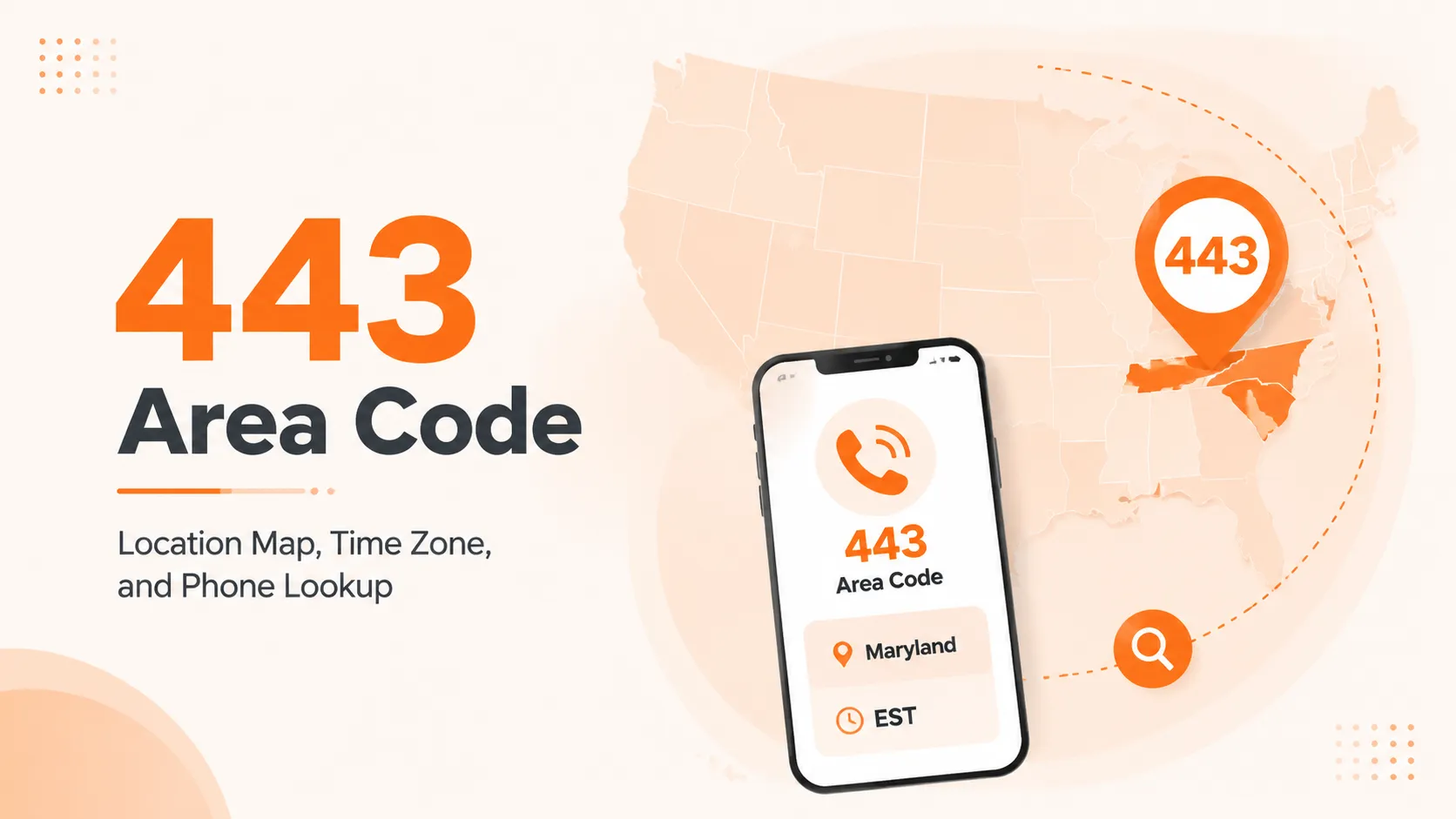
The 443 area code serves central and eastern Maryland, operating in the Eastern Time Zone (ET) alongside New York and Washington, D.C. It went into service on July 1, 1997, as an overlay to the 410 area code, after cell phones and pagers exhausted the original 410 number supply far faster than regulators had planned. Rather than split the state a second time, officials laid 443 directly over 410's existing footprint, so both codes — and later a third overlay, 667, added in 2012 — now serve the exact same geography.
Because all three codes share one territory, a 443 number carries the same local weight as a 410 or 667 number anywhere from downtown Baltimore to Ocean City on the Eastern Shore. For businesses, that means a 443 number signals a genuine Maryland presence without tying the company to a single side of the overlay; for residents, it means every local call — even to a next-door neighbor — requires all 10 digits, since the overlay makes 7-digit dialing unreliable across the shared number pool.
- State: Maryland
- Region: Baltimore metro and the entire Eastern Shore
- Launched: July 1, 1997 (overlay added to the original 410 area code)
- Time zone: Eastern Time (ET)
- Overlay: Yes — shares its territory with 410 and 667; every local call needs all 10 digits
Location, Coverage, and Time Zone
The 443/410/667 numbering plan area spans Baltimore City and Baltimore County (Towson, Dundalk, Owings Mills), Anne Arundel County (Annapolis, Glen Burnie), Harford County (Bel Air, Aberdeen), Howard County (Columbia, Ellicott City), and Carroll County, plus all nine Eastern Shore counties — Caroline, Cecil, Dorchester, Kent, Queen Anne's, Somerset, Talbot, Wicomico, and Worcester (home to Ocean City). It's one of the largest overlay footprints in the country by county count, a legacy of 410 originally covering the entire eastern half of Maryland when it split from 301 in 1991.
The region sits in the Eastern Time Zone, observing Eastern Standard Time (EST, UTC−5) in winter and Eastern Daylight Time (EDT, UTC−4) from March through November — the same clock as the rest of the Baltimore-Washington corridor.
Fort Meade, inside the 443/410/667 footprint between Baltimore and Washington, hosts the National Security Agency alongside 117 other military, intelligence, and civilian agencies — together making the base Maryland's single largest employer, with more than 60,000 military, civilian, and contractor personnel. The NSA alone employs more than 20,000 people at Fort Meade, making it the largest employer of mathematicians in the country and one of the most significant concentrations of cleared cybersecurity and signals-intelligence work anywhere in the US. That density of federal and contractor employment is a major reason the 443 overlay's Anne Arundel County section carries such steady call volume for defense and technology vendors.
The three-way overlay serves a large population base: Baltimore City itself was estimated at roughly 568,000 residents in 2024 (its first year-over-year gain since 2014), and the broader Baltimore metro area has grown to about 2.39 million people as of 2025. That scale is exactly why a single area code couldn't keep up with demand once mobile phones and pagers took off in the 1990s, forcing the 443 overlay in the first place. The 410 guide covers the neighbouring ground.
How to Dial the 443 Area Code
Local and Long-Distance Calls
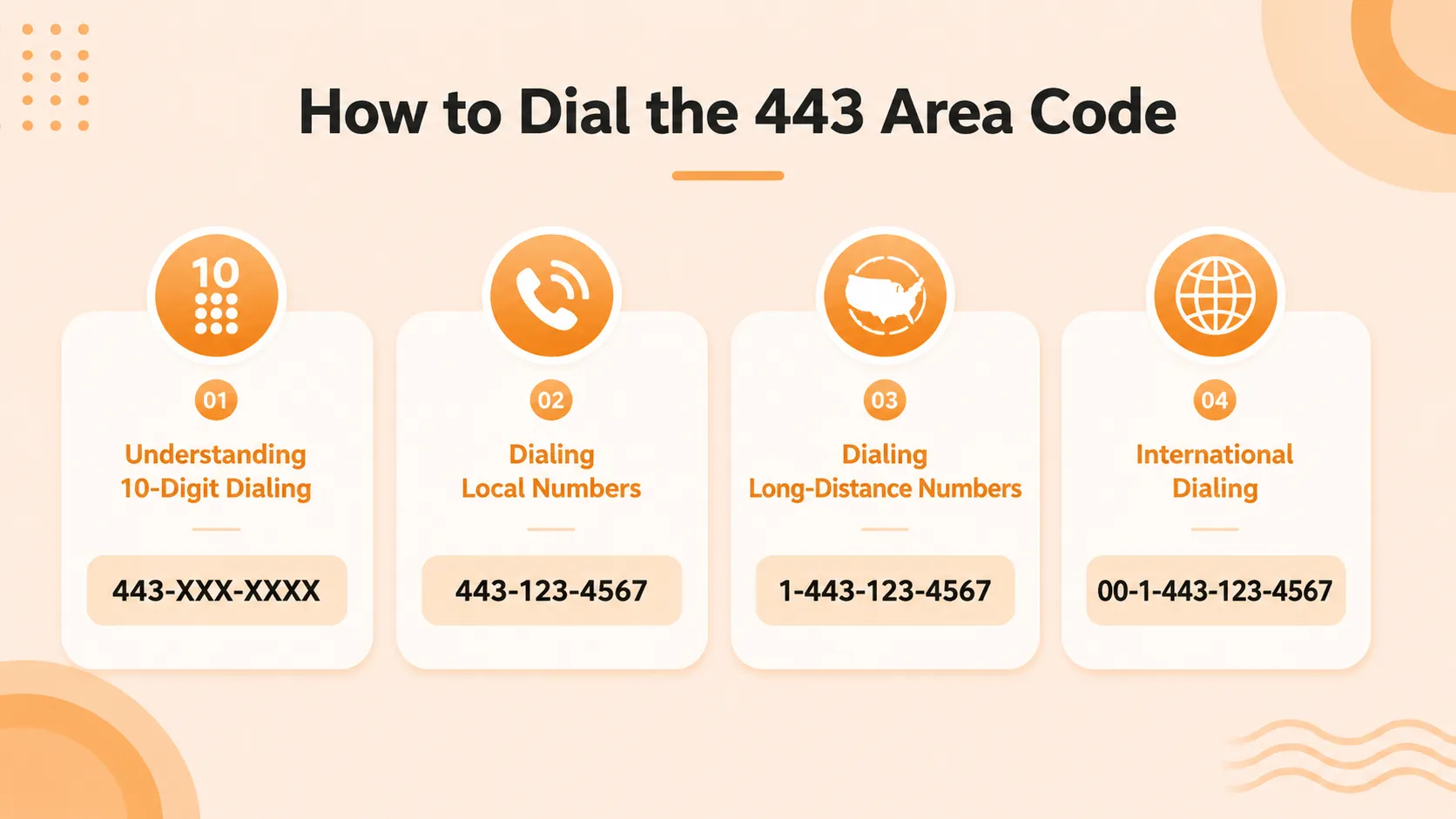
All calls within the 410/443/667 region require the full 10-digit format — area code plus the 7-digit number — even for a call across the street, because the overlay means neighboring lines can carry different area codes. Dial 443 + the 7-digit number for a local call (443-XXX-XXXX), or 1 + 443 + the 7-digit number for long distance within the US (1-443-XXX-XXXX).
International Dialing
From outside the US, dial your country's exit code, then 1 (the US country code), then 443, then the 7-digit number. From the UK, that's 00-1-443-XXX-XXXX. More detail sits on our cloud business phone system page.
Scam Awareness and Emergency Services
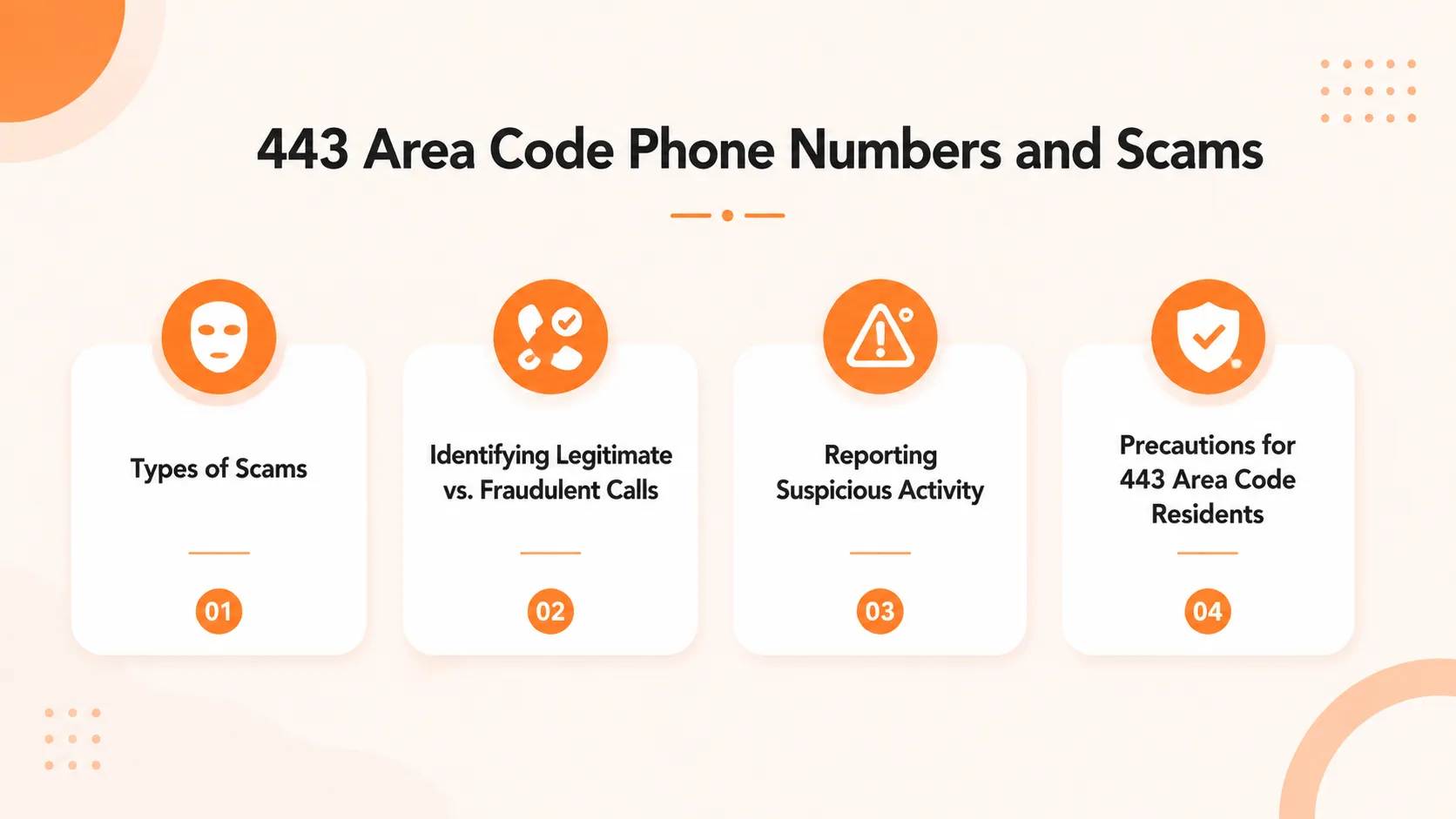
As with any active area code, scammers spoof 443 caller IDs for robocalls, phishing attempts, and fake charity or tech-support pitches. Verify unfamiliar callers before sharing information, watch for urgent payment demands or scripted-sounding agents, and report suspicious calls to the FTC (reportfraud.ftc.gov) or FCC (consumercomplaints.fcc.gov). Registering with the National Do Not Call Registry (donotcall.gov) and using a call-blocking app cuts down on repeat robocalls.
The concentration of federal, defense, and financial-services employers across the 443 footprint makes that spoofing risk cut both ways. A legitimate business calling into Fort Meade's contractor network, T. Rowe Price's vendor relationships, or Johns Hopkins' procurement office needs its own caller ID to arrive verified, not flagged as Spam Risk alongside the scammers borrowing the same area code. STIR/SHAKEN attestation solves that by cryptographically signing outbound calls so carriers can confirm the caller ID hasn't been spoofed — a baseline expectation in a region this security-conscious.
For genuine emergencies, dial 911 as anywhere else in the US; local police non-emergency lines and the Maryland Emergency Management Agency (MEMA) handle routine safety questions and severe-weather alerts for the region.
Area code 443 is officially documented under the North American Numbering Plan, which governs area code assignments across the US, Canada, and the Caribbean. For the official record, see the FCC's North American Numbering Plan page.
Business Benefits of a 443 Number
Local Credibility and Reach
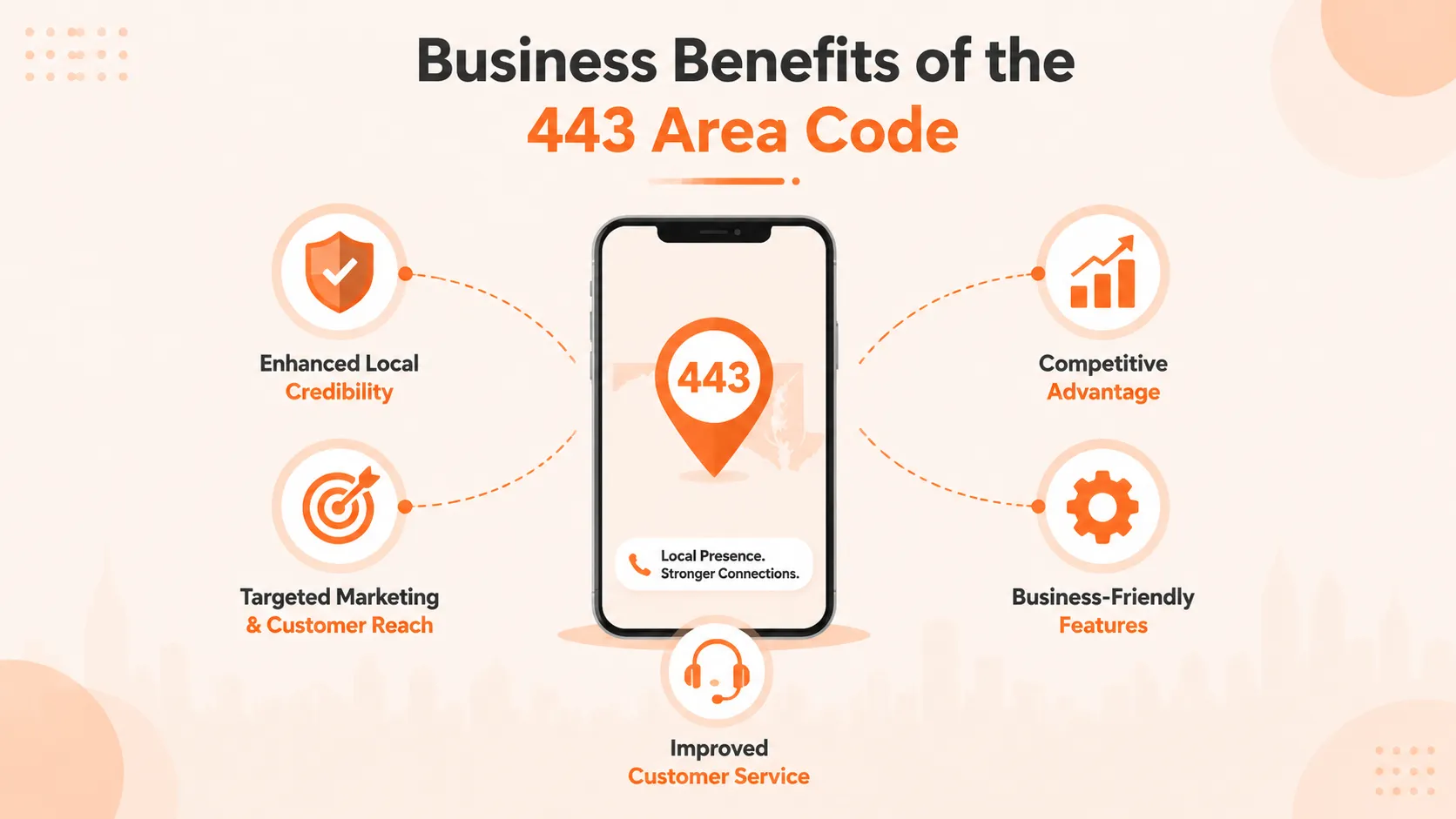
- Signals a genuine Baltimore-metro or Eastern Shore presence to customers and partners
- Improves local search visibility for geographically targeted marketing
- Local numbers consistently see higher answer rates than toll-free or out-of-area caller ID
Competitive Edge and Service
- Differentiates a business from out-of-state competitors and faceless national chains
- Local area code recognition builds faster rapport with Maryland-based customers
- Pairs with call routing, tracking, and CRM integration on a cloud phone system to keep the whole team reachable from one number
Because 443, 410, and 667 all draw from the same shared number pool, a business's choice of which overlay code it's assigned carries no real weight with customers — what matters is that the number itself is local. That makes it easy for a growing Maryland business to add lines under any of the three codes as it scales, without customers ever noticing a difference in service quality or local standing.
Under Armour is one of the clearest examples of how the 443 footprint's corporate base keeps shifting without leaving the region. Kevin Plank founded the company and built its original headquarters at Tide Point in Locust Point, then spent more than $100 million through his own investment firm acquiring roughly 200 acres at nearby Port Covington starting in 2013. Under Armour has been relocating its global headquarters to that new Port Covington campus, planning to fully vacate the Locust Point site — a corporate move that stayed entirely within a few miles of South Baltimore, and entirely within the 443/410/667 territory, the whole time.
VoIP, Infrastructure, and Number Portability
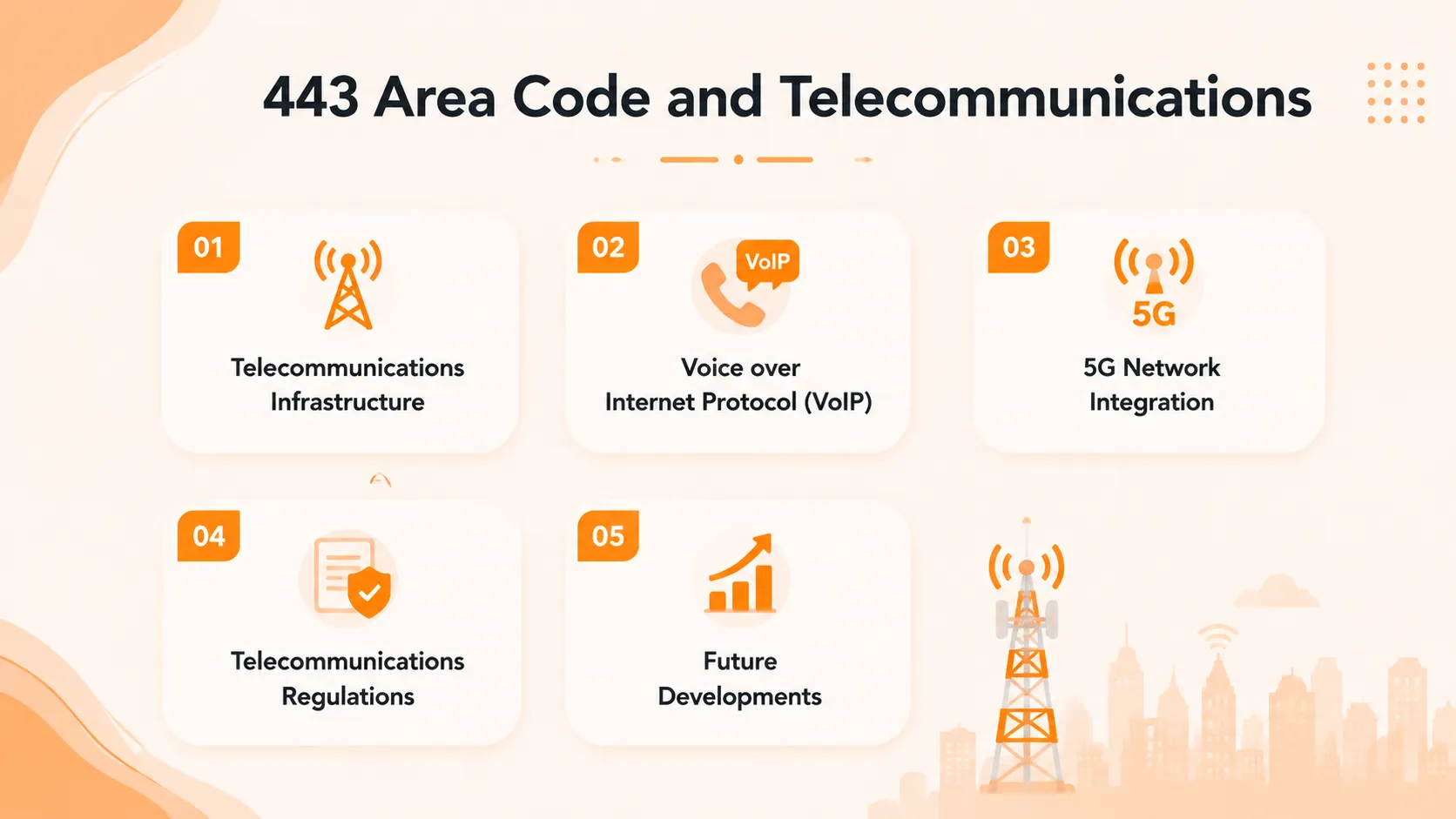
A cloud business phone system lets any business claim a 443 number and route calls to a distributed team, without opening a physical office anywhere in Maryland. VoIP service over the region's fiber and 5G infrastructure adds features legacy phone lines can't match — call forwarding, voicemail-to-email transcription, and call analytics — while keeping the number itself fully portable.
Number portability lets you keep your 443 number when you switch carriers. Porting between two wireless carriers typically completes in 1-3 business days; moving from a wireline or VoIP line to wireless usually takes 2-5 business days, and international carrier transfers can run up to a week. Eligibility just requires that the 443 number is active and the account is current, with no outstanding balance blocking the transfer.
T. Rowe Price, founded in Baltimore in 1937 by Thomas Rowe Price Jr., has stayed headquartered downtown ever since, growing into a global asset manager overseeing more than $1.6 trillion by 2025. The firm opened a new 550,000-square-foot global headquarters at Baltimore's Harbor Point that same year, marking its 85th anniversary in the city — a reminder that alongside the defense and cybersecurity work concentrated at Fort Meade, the 443 footprint anchors a genuine financial-services hub, not just a government-contracting one.
To port a number, contact the new carrier and provide the account number, billing details, and the number itself, then verify your identity. Most providers complete the transfer with only a brief service interruption — often just a few minutes — rather than a hard cutover, so calls and texts keep flowing while the port finishes in the background.
Conclusion
The 443 area code has shared Maryland's Baltimore-to-Eastern-Shore territory with 410 since 1997, and with 667 since 2012 — a three-way overlay that makes 10-digit dialing mandatory but keeps local identity intact for residents and businesses alike. Get a 443 area code virtual phone number through Letsdial in minutes — no hardware required, full VoIP features included.
Frequently Asked Questions
Written by Aryan Khan · October 29, 2024
Reply to the author