Introduction
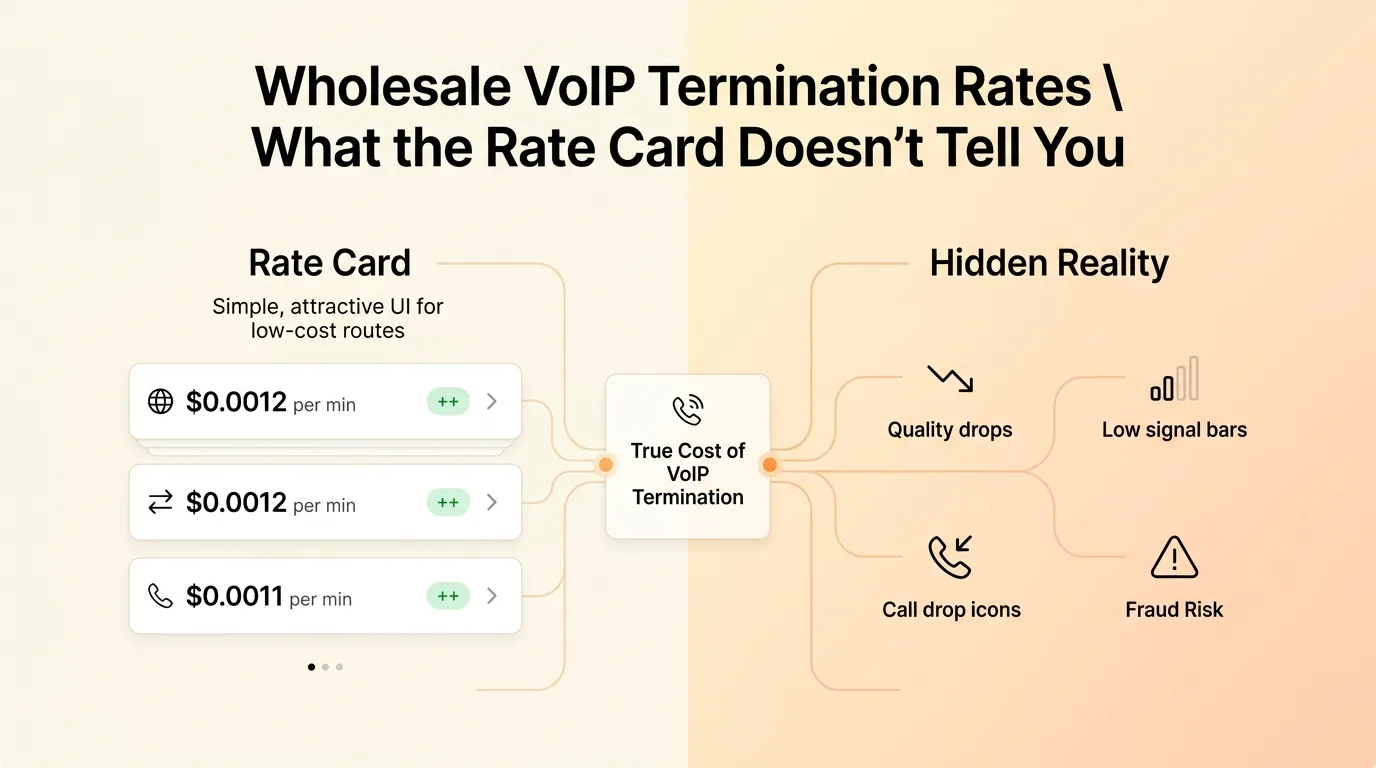
A wholesale VoIP termination rate card can quote $0.008 per minute while your actual cost lands at $0.024. That gap is not an error — it is a billing structure, and it is almost never explained unprompted.
The per-minute rate is one input to the final cost. Billing increments, per-call connection fees, monthly minimums, feature surcharges, and mobile-vs-landline distinctions each add their own multiplier. This guide breaks down how wholesale VoIP termination rates actually work — what drives the differences between destinations, where costs hide in the billing structure, and the four strategies that give high-volume operations real negotiating leverage.
On this page:
- How Wholesale VoIP Termination Rates Are Structured
- Destination Tiers: Why Rates Vary by Geography
- Mobile vs. Landline: The Rate Gap
- Five Hidden Costs That Inflate Your Effective Rate
- Four Strategies to Reduce Your Average Cost
- What to Negotiate Before You Sign
- How letsdial Structures Termination Pricing
- Frequently Asked Questions
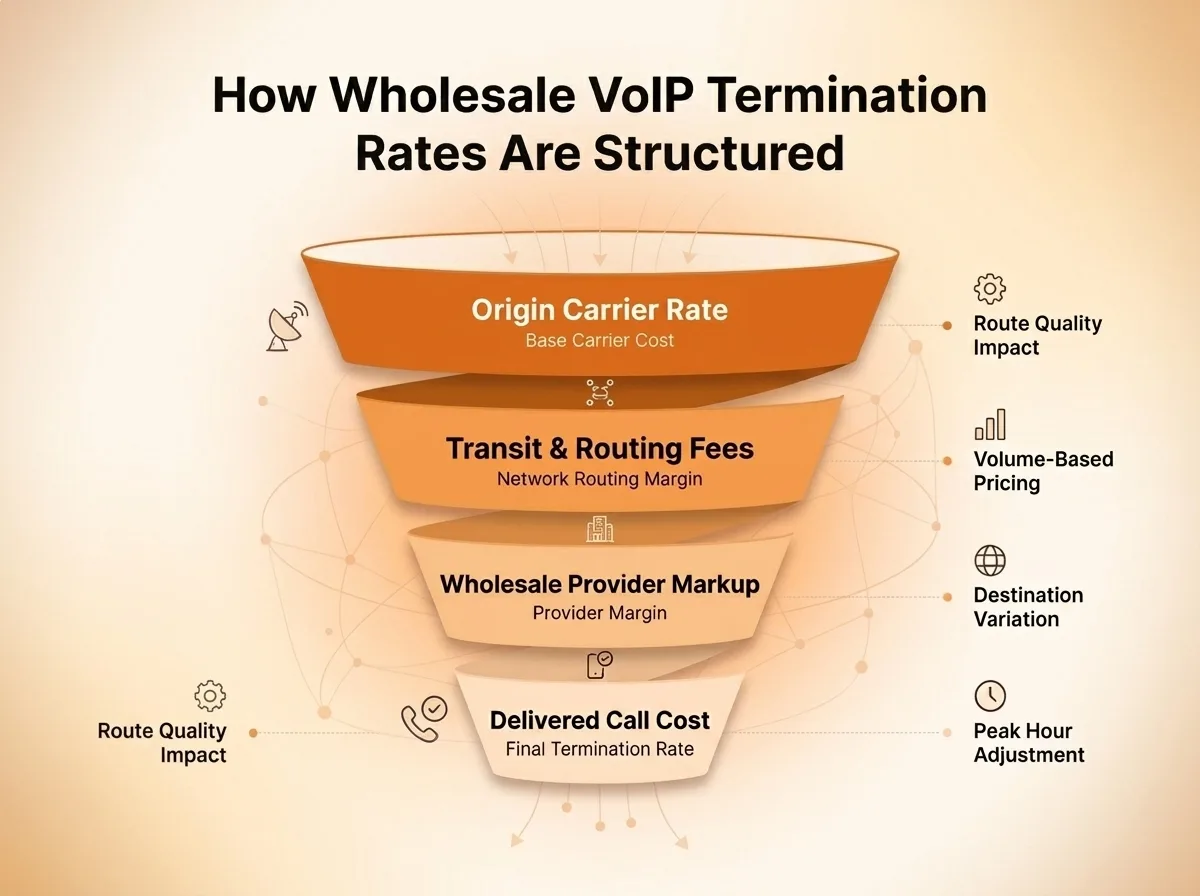
How Wholesale VoIP Termination Rates Are Structured
Wholesale VoIP termination rates are priced per minute of connected call time and organized on a rate card — a document that lists costs by destination, call type (mobile vs. landline), and sometimes by route quality (premium vs. standard vs. economy). Rate cards are the starting point for cost calculation, not the ending point. The advertised per-minute rate applies only to connected call time, billed in whatever increment the provider specifies — per second, per 6 seconds, per 30 seconds. A 10-second call billed in 30-second increments is three times more expensive than the per-minute rate suggests.
Pricing models fall into three categories: per-minute billing (most common, flexible for variable volume), per-channel billing (flat fee for concurrent call capacity, predictable for high-volume floors), and bundled minute blocks (a set monthly fee for a defined minute allowance). Each has a different cost profile depending on your call volume pattern and traffic mix. More detail sits on our letsdial page.
Destination Tiers: Why Rates Vary by Geography
Not all destinations cost the same to terminate a call. Rates are tiered by market maturity, carrier competition, and infrastructure investment in each country:
- Tier 1 (USA, Canada, UK, Germany, Australia): $0.002–$0.008/min — high carrier competition, mature infrastructure, direct interconnects widely available
- Tier 2 (India, Brazil, Mexico, Southeast Asia): $0.012–$0.035/min — growing infrastructure, fewer in-country carriers, higher mobile penetration
- Tier 3 (remote Africa, Pacific Islands, specialized regions): $0.080–$0.200/min — limited competition, infrastructure costs passed to buyers, few direct routes
- Mobile premium (any country): 2–3x the landline rate — wireless carriers charge higher interconnection fees; mobile termination is a separate cost category
> [TIP] If your outbound campaigns target markets with high mobile penetration — India, Brazil, most of Africa — expect 60–70% of your traffic to land on mobile numbers at 2–3x the landline rate. Run your route-mix analysis before comparing provider quotes, or you'll be comparing rates against different traffic assumptions. More detail sits on our Cloud Phone and AI Contact Center page.
Mobile vs. Landline: The Rate Gap
Mobile termination consistently runs 2–3x higher than landline termination in the same destination market. The reason is interconnection: wireless carriers charge higher termination fees to route calls onto their networks than wireline operators charge. This distinction appears separately on rate cards — usually two line items per country: 'fixed' (or 'landline') and 'mobile.' Providers that quote a single blended per-minute rate are averaging across both, which obscures the true cost when your traffic skews mobile.
In practice: if you're running outbound campaigns into Southeast Asia or Sub-Saharan Africa, where mobile penetration exceeds 80% in many markets, the mobile rate is effectively your rate. A provider quoting a $0.015 blended rate with a $0.012 landline and $0.028 mobile rate will cost significantly more than the blended number implies. letsdial shows route-level pricing by destination — no blended rates hiding your mobile exposure. For how carriers settle these charges, see the FCC's intercarrier compensation overview.
Five Hidden Costs That Inflate Your Effective Rate
The per-minute rate on a rate card is rarely what you pay. These five mechanisms each add cost that doesn't appear in the headline number — and most proposals don't volunteer them:
- Billing increment — the provider bills per 6-second (or 30-second) minimum regardless of actual call length; a 10-second call at a 30-second minimum triples your effective rate. Ask: is per-second billing available?
- Per-call connection fee — a flat $0.01–$0.05 charged per connected call on top of the per-minute rate; on 10,000 short calls/day that adds $100–$500 daily. Ask if it's in the service agreement.
- Monthly account minimum — a minimum monthly spend ($200–$500) regardless of volume used, punishing during quiet periods or ramp-up.
- Feature surcharges — call recording, echo cancellation, and STIR/SHAKEN attestation billed separately at $0.005–$0.02/min, inflating cost 50–200% per affected minute.
- Rate card fluctuation — international rates change with carrier costs; a heavily-routed destination can rise 20–40% within a contract year. Ask how often rates change and whether you get advance notice.
> [NOTE] Billing-increment math: take your average call duration, divide by the provider's billing increment and round up — that's the billed duration. On short outbound calls (under 30 seconds), 6-second billing can increase effective cost by 150–300%. Run this before you accept any quote.
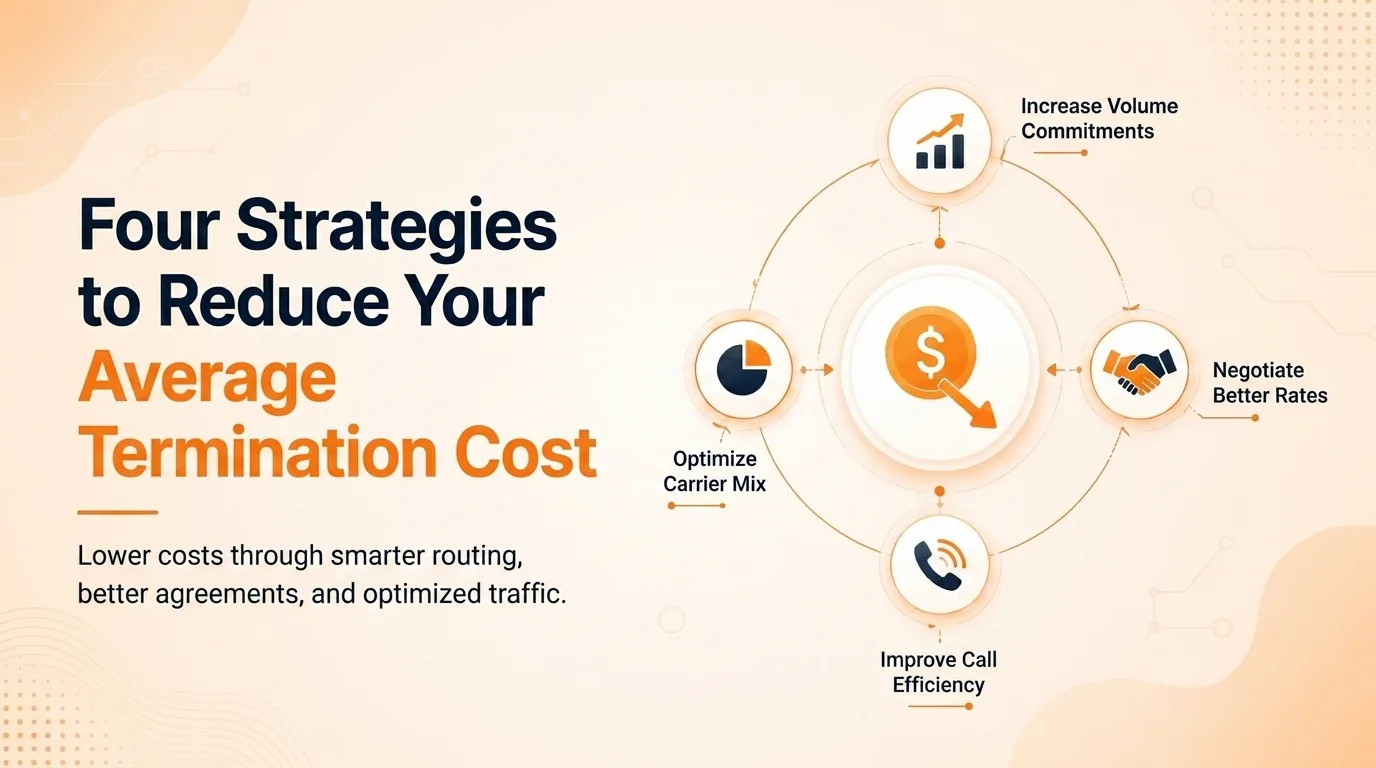
Four Strategies to Reduce Your Average Cost
Wholesale VoIP termination rates are negotiable — but only when approached with the right information at the right time.
- Separate traffic by quality requirement — reserve premium direct routes for sales, healthcare, and quality-critical calls; route notifications and non-critical automated calls through standard/economy paths.
- Use a multi-provider strategy for top destinations — splitting volume across 2–3 providers for your highest-traffic markets can cut average cost 10–15% while adding routing redundancy.
- Build volume history before negotiating — providers discount for predictability; an account showing 100,000+ consistent monthly minutes is a stronger position than a promise of future volume.
- Demand per-second billing as a baseline — it eliminates increment inflation, costs providers nothing to offer, and is standard among modern wholesale providers.
> [TIP] The 100,000-minute threshold: accounts reaching 100,000+ monthly minutes unlock average rate reductions of 15–20% through volume negotiation with most wholesale providers. Track your monthly minute volume across all destinations before entering a rate discussion. letsdial uses per-second billing on all outbound calls — no increment inflation, no connection fees.
What to Negotiate Before You Sign
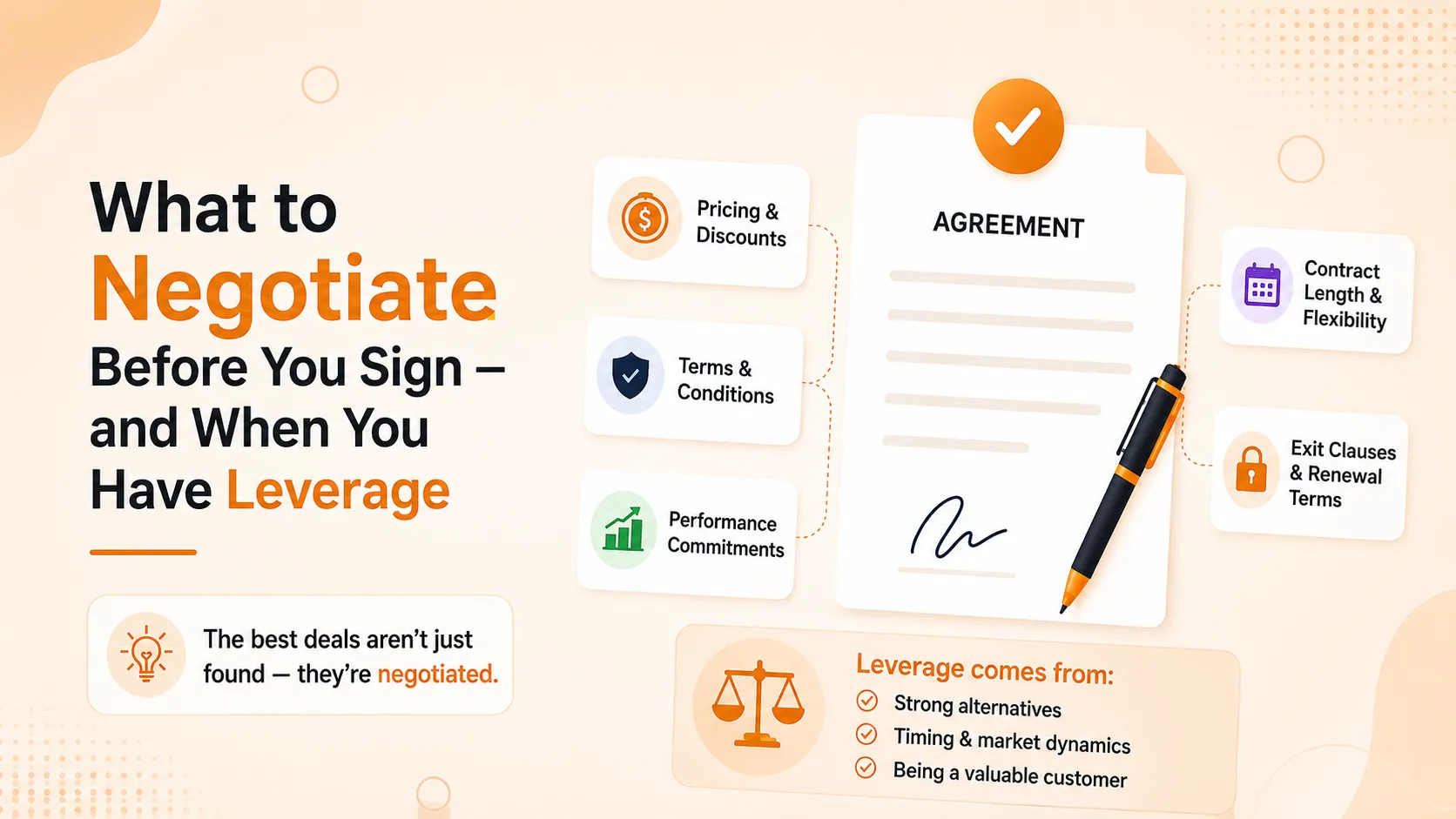
Every term below is negotiable in a wholesale VoIP termination agreement. The leverage you have depends on your volume and how credibly you can demonstrate it:
- Rate floor guarantees — lock maximum rates for your top 10–20 destination markets for a defined term.
- Advance notice on rate increases — request 30–60 days written notice before any rate card change takes effect.
- Monthly minimum waivers — negotiate a 3–6 month ramp period where the minimum is waived or reduced while volume builds.
- Feature inclusion without surcharge — call recording, STIR/SHAKEN attestation, and echo cancellation should be standard, not line-item add-ons.
- Exit terms and number porting — confirm port-out fees in writing; free porting out is a mark of a confident provider.
> [WARN] The best time to negotiate is before you commit volume, not after. Providers are most flexible while you're still evaluating alternatives — once you're live on their network, switching costs reduce your leverage significantly.
How letsdial Structures Termination Pricing
letsdial routes voice through direct Tier-1 carrier interconnects — Telin, MTT, Reliance Communications, Deutsche Telekom, China Mobile International, PLDT, and Telekom Slovenije — into 200+ countries. Per-second billing is standard on all outbound calls. There are no per-call connection fees and no feature surcharges for call recording, transcription, or STIR/SHAKEN attestation.
Conclusion
Every paid plan includes AI transcription on 100% of calls, call recording with PII redaction, STIR/SHAKEN A-level attestation, and real-time fraud monitoring — none are per-minute add-ons. SOC 2 Type II, HIPAA-readiness, PCI DSS, and GDPR compliance are on every tier. The same Tier-1 infrastructure powers the full Cloud Phone and AI Contact Center stack under one invoice. Starter plans begin at $9.99/user/month; number porting is free both directions. See pricing.
Frequently Asked Questions
Written by Aryan Khan · May 14, 2022
Reply to the author