Introduction
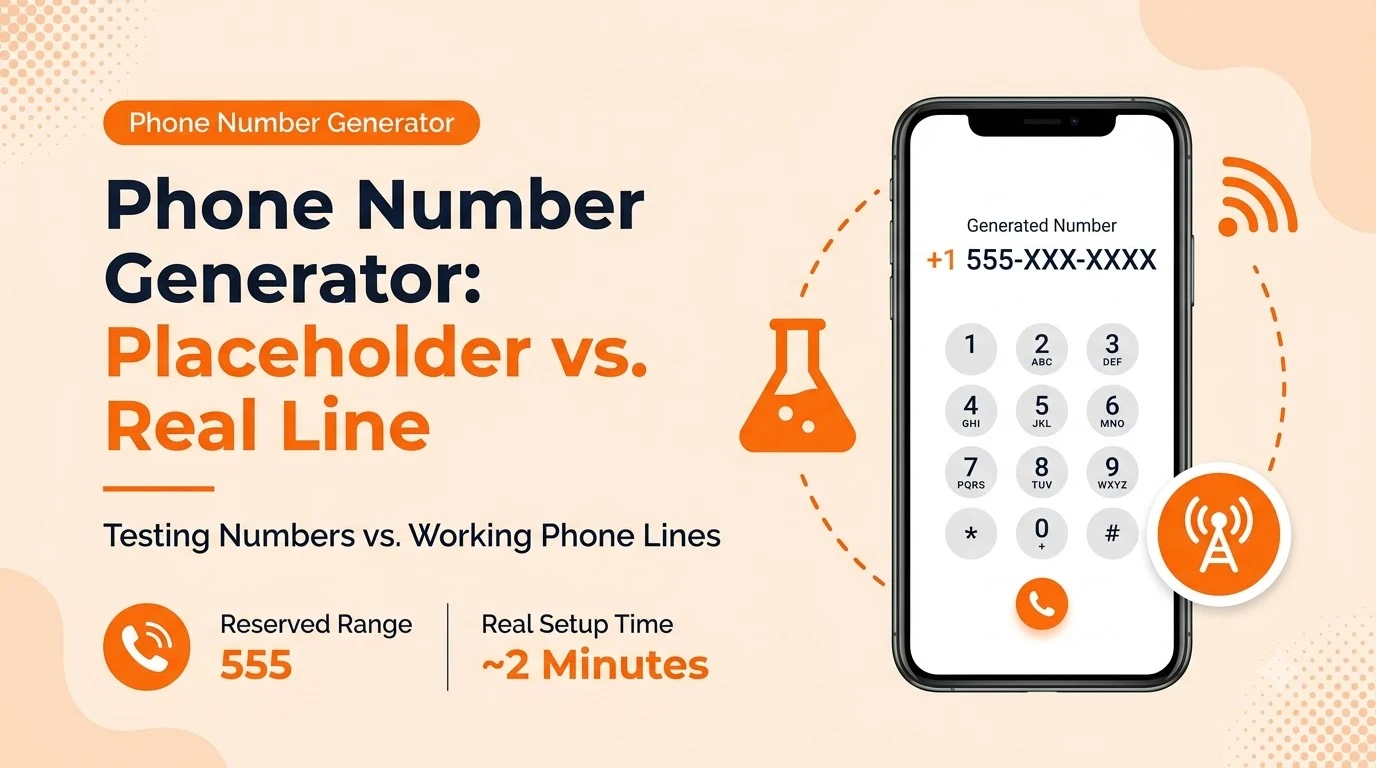
A phone number generator produces numbers that look real — correct digit count, a plausible area code, the right punctuation — without any of them connecting to an actual line. Developers use them to fill test databases, QA teams use them to fill out forms without touching a real customer's number, and writers use them so a mockup doesn't accidentally list someone's actual cellphone. By the end, you'll know exactly when a generated number is enough and when it just wastes a setup step.
Key takeaways
- A phone number generator produces a number-shaped string for a form field — it never connects to an actual line.
- Well-built generators default to the 555 range the North American Numbering Plan reserves for fiction and testing.
- Generated numbers fail every OTP, SMS, and callback flow instantly, since nothing is provisioned behind the digits.
- A real, working number takes about the same few minutes to activate as a generator takes to spit out a fake one.
How a Phone Number Generator Actually Works
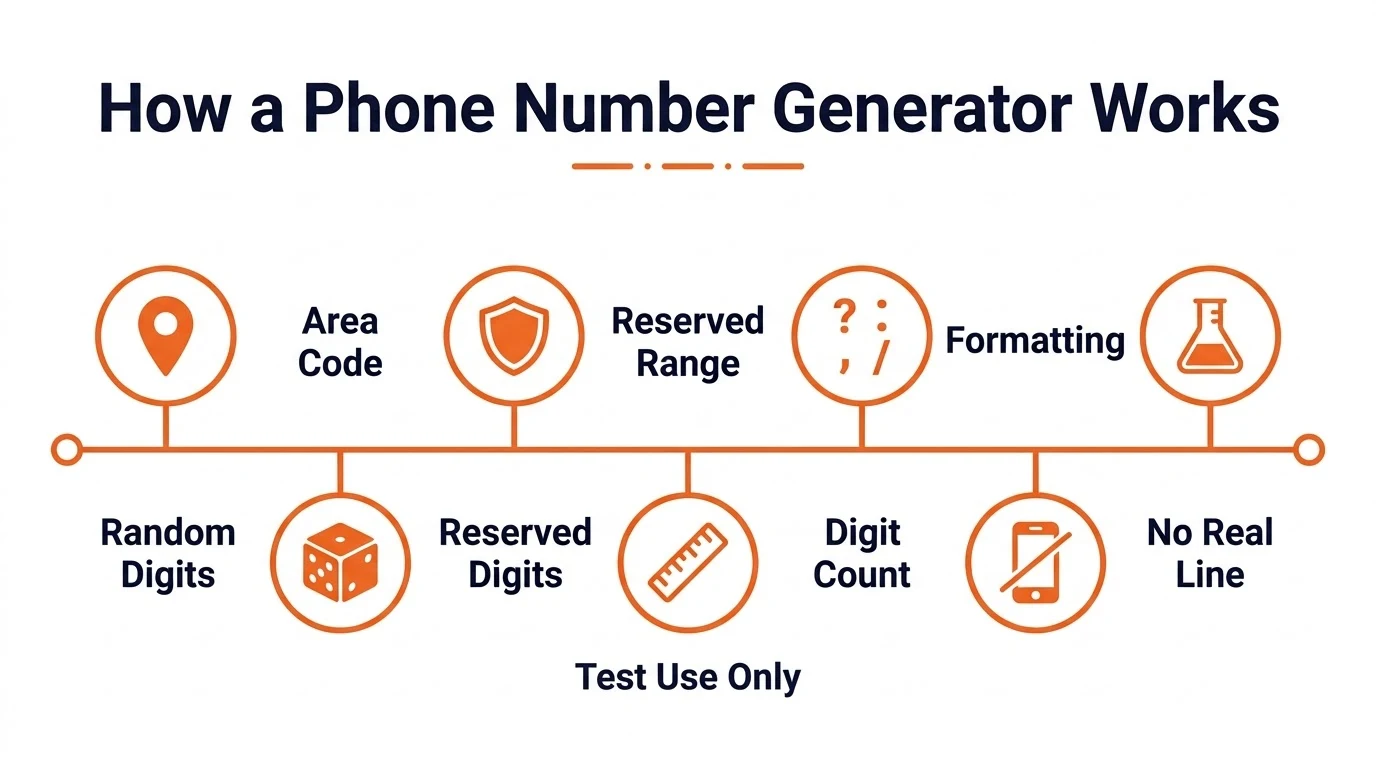
Most generators do one of two things. The simple version picks a real area code and appends random digits after it, which produces something that passes a glance but can accidentally match a real, working number. The safer version uses reserved ranges that numbering authorities have set aside specifically so fiction and testing never collide with a real subscriber.
In the North American Numbering Plan, that reserved range is 555 in the last four digits of certain exchanges — the block film and TV have used for decades so a phone number on screen is never someone's real line. A well-built generator defaults to that range rather than pure randomness, and a careless one just gambles on an area code that happens to be quiet.
Where a Generated Number Falls Short
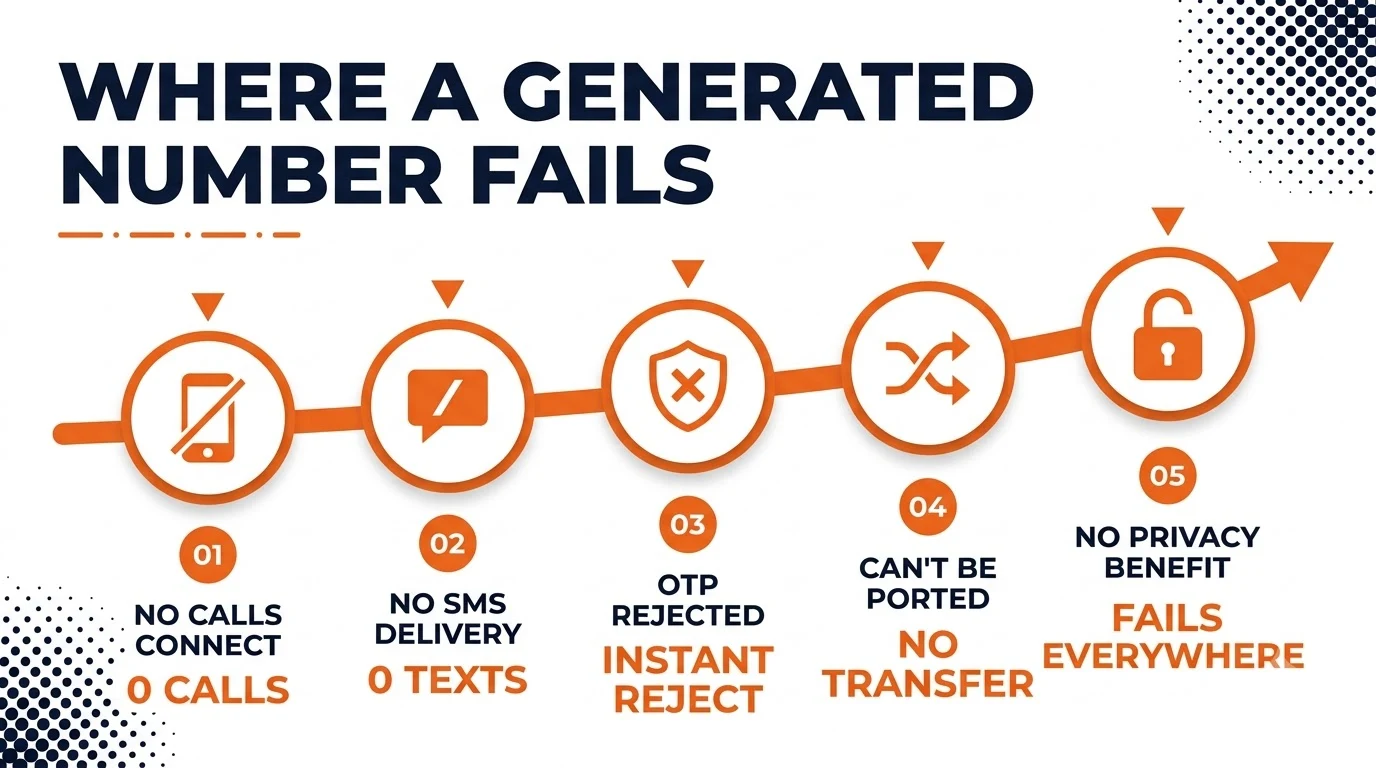
A generated number does exactly one job: it looks correct in a field that expects a phone number. It cannot receive a call, cannot receive an SMS, and most payment or signup forms that verify a number with a one-time code will simply reject it. That's fine for a test fixture. It's a dead end the moment a real person needs to call the number back.
- No calls or texts ever reach it — there is no line behind the digits
- OTP and 2FA verification flows reject it immediately
- It cannot be ported, forwarded, or assigned to a person or business
- Reusing the same generated number across services offers no privacy benefit — it simply fails everywhere
When You Actually Need a Working Number
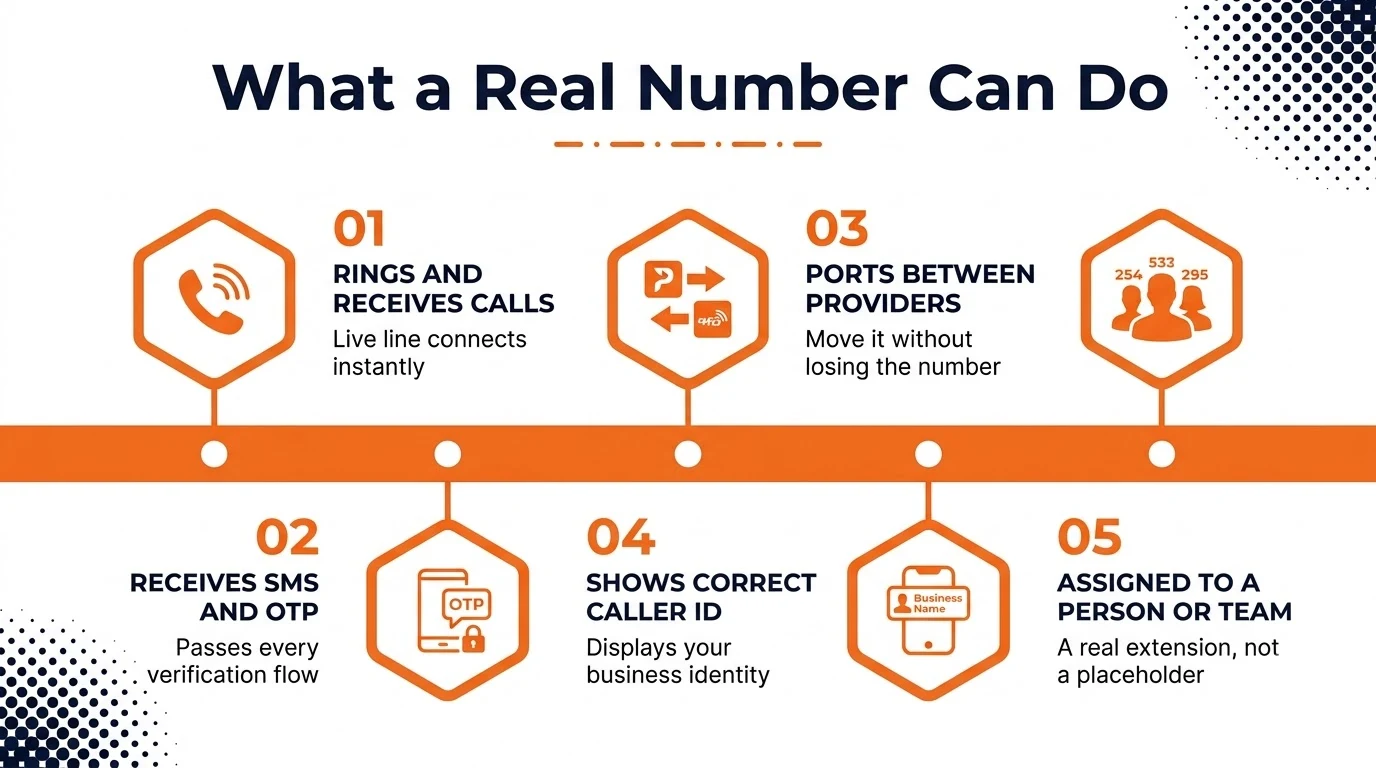
The moment a generated number needs to do anything a phone number is supposed to do — ring, receive a text, pass verification, show up correctly on caller ID — it has to be a real, provisioned number. That's a different tool for a different job, and it does not have to be slower to set up than pasting a placeholder.
A cloud phone platform can hand you a real, working number — local, toll-free, or in another country — in about the same few minutes a generator takes to spit out a fake one. letsdial's business phone system provisions the line, the caller ID, and the routing together, so what you get back is immediately usable rather than another placeholder to swap out later.
Picking a Real Number the Same Way You'd Pick a Generated One
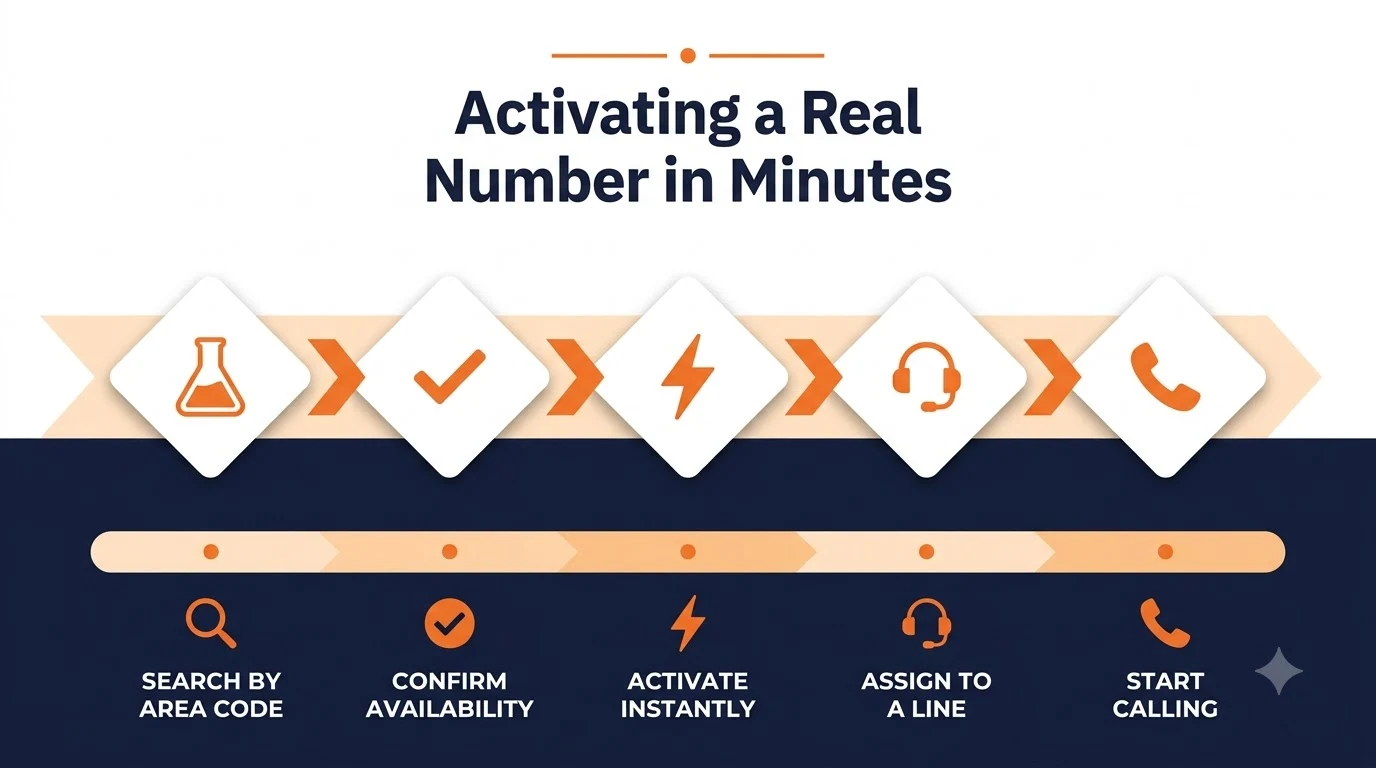
Search by area code or city, confirm it's available, and activate it — no porting wait, no hardware, no separate carrier contract. The whole flow takes a similar number of clicks to picking a fake area code out of a dropdown, except what comes out the other end actually rings.
Reading a Number Someone Sends You
The same instinct that makes a generated number obvious once you know what to look for also works in reverse. A string sitting in the 555-01XX exchange, or a number with an area code that doesn't match the sender's stated location, is worth a second look before you dial it back or key it into a form. A real number, by contrast, resolves cleanly to an actual carrier and region every time.
Mistakes That Waste Time on Placeholder Numbers
- Pasting a generated number into a signup form that requires SMS verification — it fails every time, no exceptions.
- Assuming a random area code is 'safe' — only the reserved 555 range is actually guaranteed to be unreachable.
- Reusing one generated number across a dozen test accounts, expecting some kind of shared privacy shield that doesn't exist.
- Waiting until a demo or launch to discover the placeholder number needs to be real — provisioning takes minutes, not days.
A generator gives you a number-shaped string for a form field. A provisioned number gives you a phone line. The full numbering-plan rules behind the reserved 555 range — and why it exists — are documented in the North American Numbering Plan.
Where This Leaves You
Use a generator for what it's built for: filling a field in a form or a test database with something that looks right and can't reach a real person. The moment the number needs to actually ring, text, or pass verification, generating one stops being useful.
Provisioning a real one takes about the same few minutes and actually works — and businesses that hit this wall often enough tend to just start from a real number instead of a placeholder, which is exactly the kind of setup letsdial is built for.
Frequently Asked Questions
Written by Aryan Khan · July 30, 2026
Reply to the author