Introduction
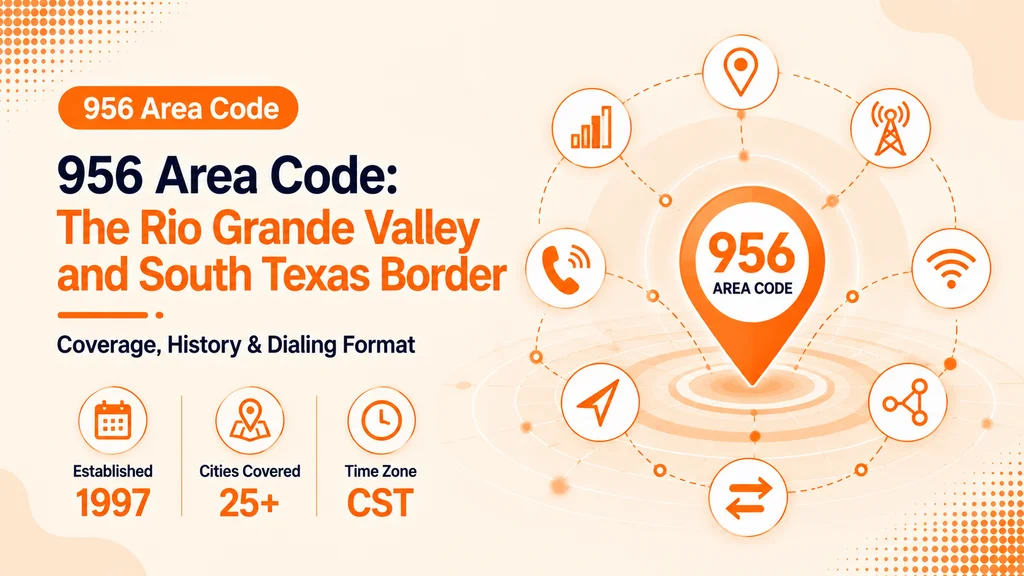
The 956 area code is the number deep South Texas answers to — the prefix that rings from Laredo down the border to McAllen, Harlingen, and Brownsville. It covers the Rio Grande Valley and the stretch of the U.S.-Mexico line where cross-border trade, agriculture, and healthcare drive one of the fastest-changing regional economies in the state.
This guide maps where the 956 area code reaches, the industries that shape it — international trade, produce, medicine, and tourism — its Central Time calling window, its 1999 split from 210, and how to put a Rio Grande Valley number in front of customers in minutes.
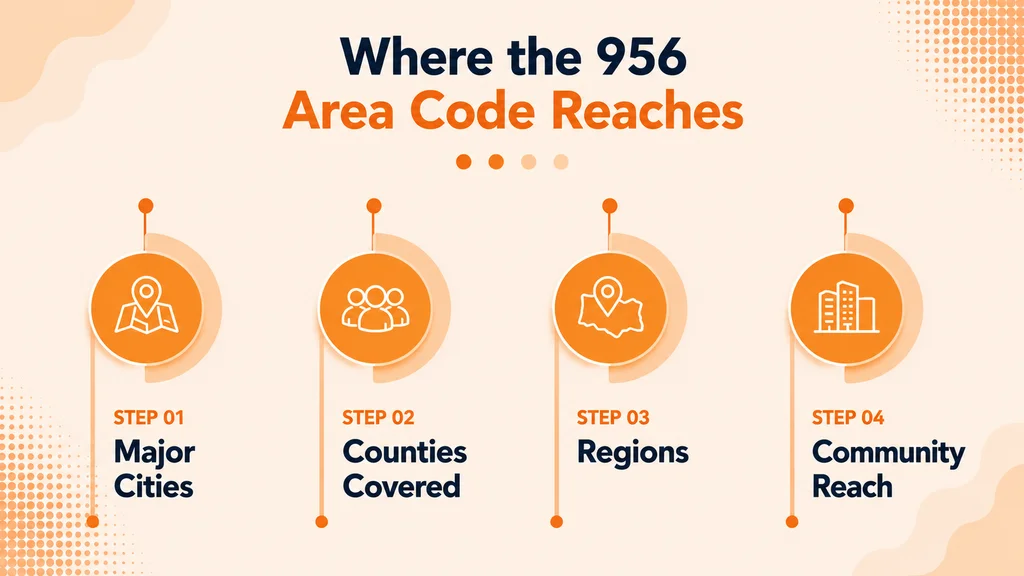
Where the 956 Area Code Reaches
The 956 area code covers the southern tip of Texas along the U.S.-Mexico border, running from Laredo in the northwest down through the Rio Grande Valley to the Gulf Coast. It is a border-hugging footprint that follows the river rather than a tidy county block.
- Laredo — Webb County seat and the busiest inland port on the U.S.-Mexico border, anchored by the World Trade Bridge
- McAllen — the commercial hub of the Rio Grande Valley and a major cross-border retail and medical market
- Brownsville — the southernmost city in Texas, at the mouth of the Rio Grande on the Gulf
- Harlingen — a central Valley crossroads for healthcare, aviation, and distribution
- Edinburg and Mission — fast-growing Hidalgo County cities anchoring government, education, and produce
- Pharr — a key produce-import port of entry with one of the busiest international bridges in the Valley
Because the code hugs the border so tightly, an area code 956 line signals a genuine Rio Grande Valley presence rather than a generic Texas-metro number. It reads as local from Laredo to South Padre Island.
International Trade and the Border Economy
International trade dominates the 956 economy, and few regions in the country lean on the border quite as heavily. Laredo handles more overland freight than any other inland port on the U.S.-Mexico border, and the World Trade Bridge alone moves thousands of commercial trucks a day between Texas and Mexico.

Laredo and the World Trade Bridge
Freight forwarding, customs brokerage, and logistics firms fill the Laredo corridor, tied directly to the manufacturing plants across the river. The city's port operations connect the Interstate 35 trade route to the whole of North American supply chains.
Valley Manufacturing and Logistics
Downriver, the Rio Grande Valley runs its own dense network of cross-border logistics and manufacturing. Warehouses and maquiladora-linked suppliers cluster around the Pharr, Hidalgo, and Brownsville bridges, moving produce, electronics, and industrial goods north every day. For a business working the wider state, the 956 code connects naturally to San Antonio's 210 area code up the I-35 corridor.
Agriculture, Healthcare, and Higher Education
Beyond trade, the area code 956 footprint rests on a deep agricultural base. The Rio Grande Valley is one of the country's leading citrus and winter-produce regions, shipping grapefruit, oranges, onions, and leafy greens across the U.S. from its packing houses and cold-storage yards.
The Produce Economy
Citrus groves and vegetable fields fan out from the river across Hidalgo and Cameron counties. Packing, cold storage, and produce distribution feed the same bridges that carry international freight, tying agriculture directly to the border trade economy.
Healthcare and UTRGV
Healthcare is one of the largest and fastest-growing employers across the Valley, with major hospital systems in McAllen, Harlingen, and Brownsville. The University of Texas Rio Grande Valley, with its new medical school, anchors higher education and a professional workforce across Edinburg, Brownsville, and the surrounding cities. A full Texas area codes breakdown shows how the 956 footprint fits alongside the rest of the state.
Tourism and South Padre Island
Tourism rounds out the 956 area code economy, led by South Padre Island on the Gulf Coast. The barrier island draws spring-break crowds, winter Texans, and year-round beach visitors, supporting a dense hospitality market of hotels, charters, and restaurants.
Ecotourism, birding along the river, and cross-border day trips add to the Valley's visitor economy. Every lodge, outfitter, and tour operator depends on reliable local phone service to reach guests and booking partners across the region. The state's official portal at texas.gov lists the agencies, permits, and filings that govern businesses operating across South Texas.
Time Zone and Calling Hours for the 956 Area Code
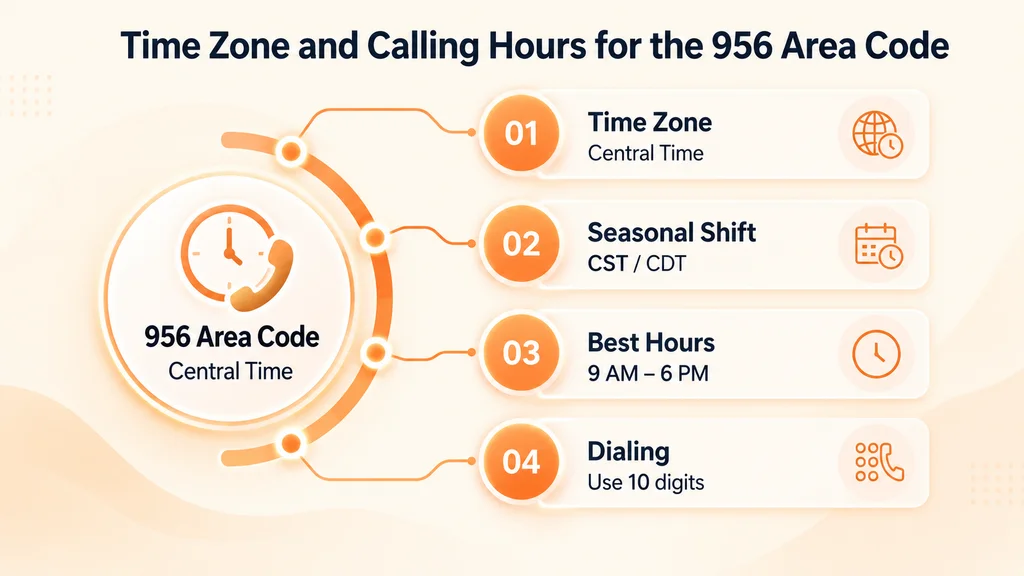
The entire 956 area code observes Central Time — UTC-6 (CST) in winter and UTC-5 (CDT) during Daylight Saving. The Rio Grande Valley shares the clock with Houston, Dallas, San Antonio, and the rest of Texas.
East Coast teams calling area code 956 are one hour ahead, so mid-morning outbound campaigns on the Eastern seaboard land comfortably inside the South Texas workday. West Coast callers should start early to catch the full Valley business day.
956 History: Split From 210 in 1999
The 956 area code was created in 1999 as a geographic split from 210, which had covered San Antonio and much of South Texas. The new code gave the Rio Grande Valley and the Laredo-to-Brownsville border region its own dedicated prefix.
The split reflected fast growth in both population and wireless lines across the border corridor through the 1990s. Demand for fresh numbers simply outran what the older code could supply, and the Valley has anchored the 956 area code ever since.
How to Get a 956 Area Code Number
- Cloud phone platform — search available 956 numbers in real time and activate a line the same day, with no hardware and no technician visit.
- Port your existing number — already run a 956 line on another carrier? Move it over without downtime and keep the number active through the transition.
- Wireless SIM or landline carrier — valid for a single physical handset, but slower to provision and harder to scale seat by seat.
With letsdial, an area code 956 number provisions in under three minutes on a free trial, no credit card required, so a Rio Grande Valley presence can be answering calls the same afternoon.
Call Trust in the Rio Grande Valley Market
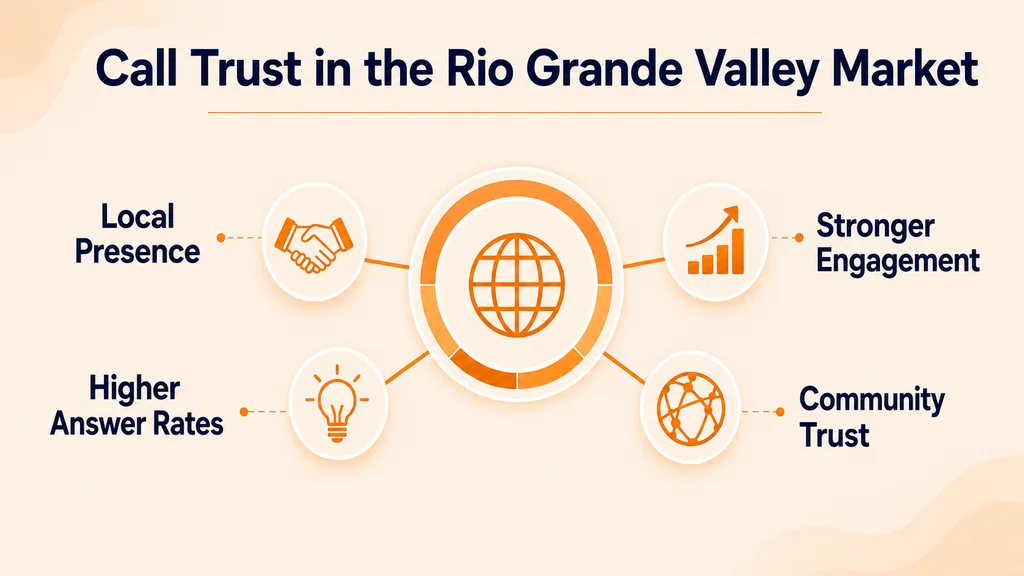
The 956 area code market runs on cross-border relationships — freight contracts, produce buyers, and hospital vendor channels — where an unknown out-of-state number gets screened before it is answered. A recognizable local prefix earns the first hearing, and in a region that fields constant cold outreach, that first impression often decides whether the conversation happens at all.
STIR/SHAKEN for Trade, Produce, and Healthcare
Apply STIR/SHAKEN attestation so every outbound call from letsdial arrives verified with your registered business name on screen. Register text campaigns for 10DLC compliance from day one and warm new numbers before scaling volume.
A verified 956 line that displays a real business name reads as Valley-local rather than out-of-area — the difference between a broker or buyer picking up and routing the call to voicemail.
Conclusion
The 956 area code covers one of the most dynamic corners of Texas — the busiest inland trade gateway on the border, a leading produce region, a growing medical hub, and a Gulf-coast tourism draw packed into the Rio Grande Valley. From the Laredo bridges to South Padre Island, it identifies a business as genuinely part of South Texas.
Standing up a line takes minutes on a cloud platform, with STIR/SHAKEN attestation so calls arrive verified rather than flagged. Put a Rio Grande Valley number in front of trade partners, produce buyers, and healthcare vendors, and let a familiar prefix open the door before the first word is spoken.
Frequently Asked Questions
Written by Aryan Khan · July 11, 2026
Reply to the author