Introduction
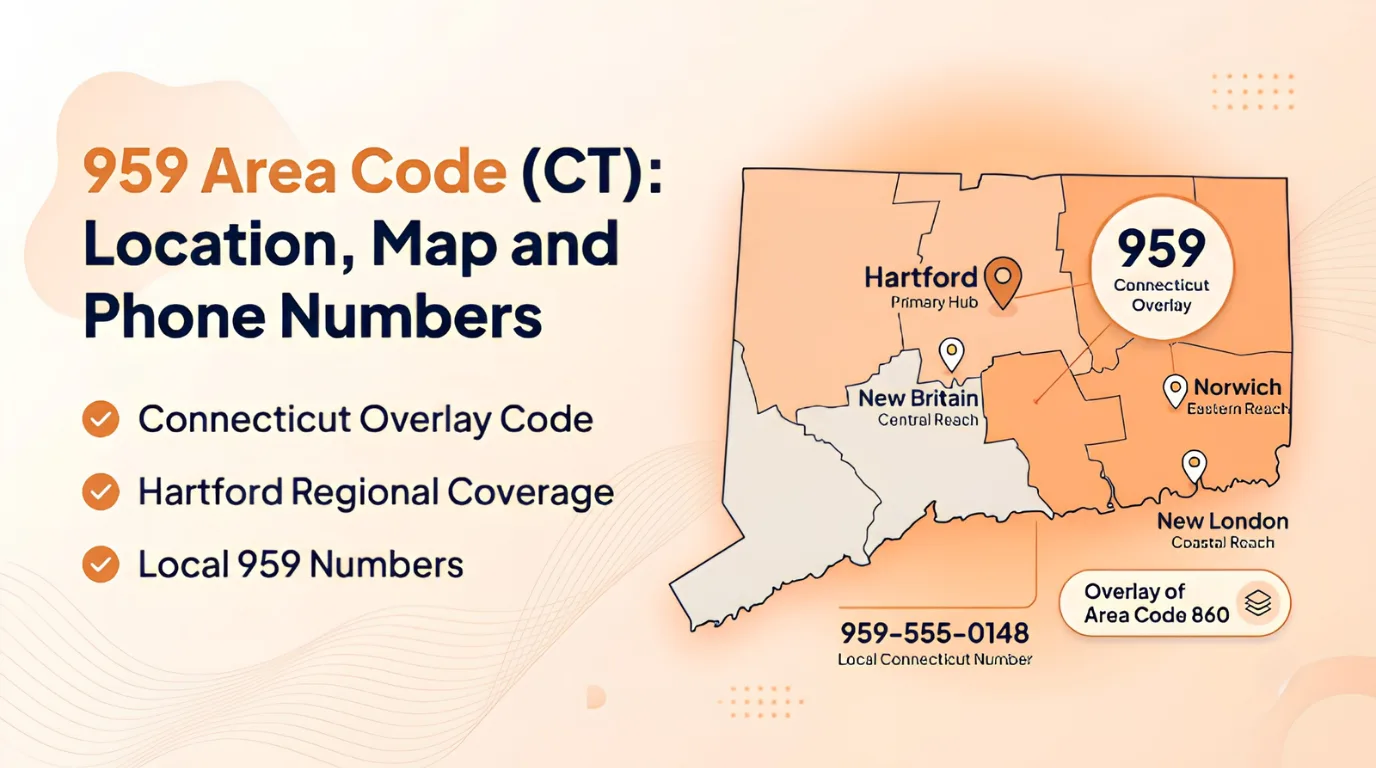
Where is the 959 area code located? It's in the USA — central and eastern Connecticut, not California. 959 shows up on caller ID next to a 203 or 860 number and gets mistaken for out-of-state or overseas traffic often enough that it's worth saying plainly: this is a Connecticut prefix, full stop.
This guide covers what the 959 area code is, the towns and territory it actually reaches, how to get a local 959 line through letsdial in a few simple steps, and the scam and spam-call patterns to watch for so a legitimate 959 number doesn't get lumped in with the fraud traffic.
Decoding the Digits: What is Area Code 959?
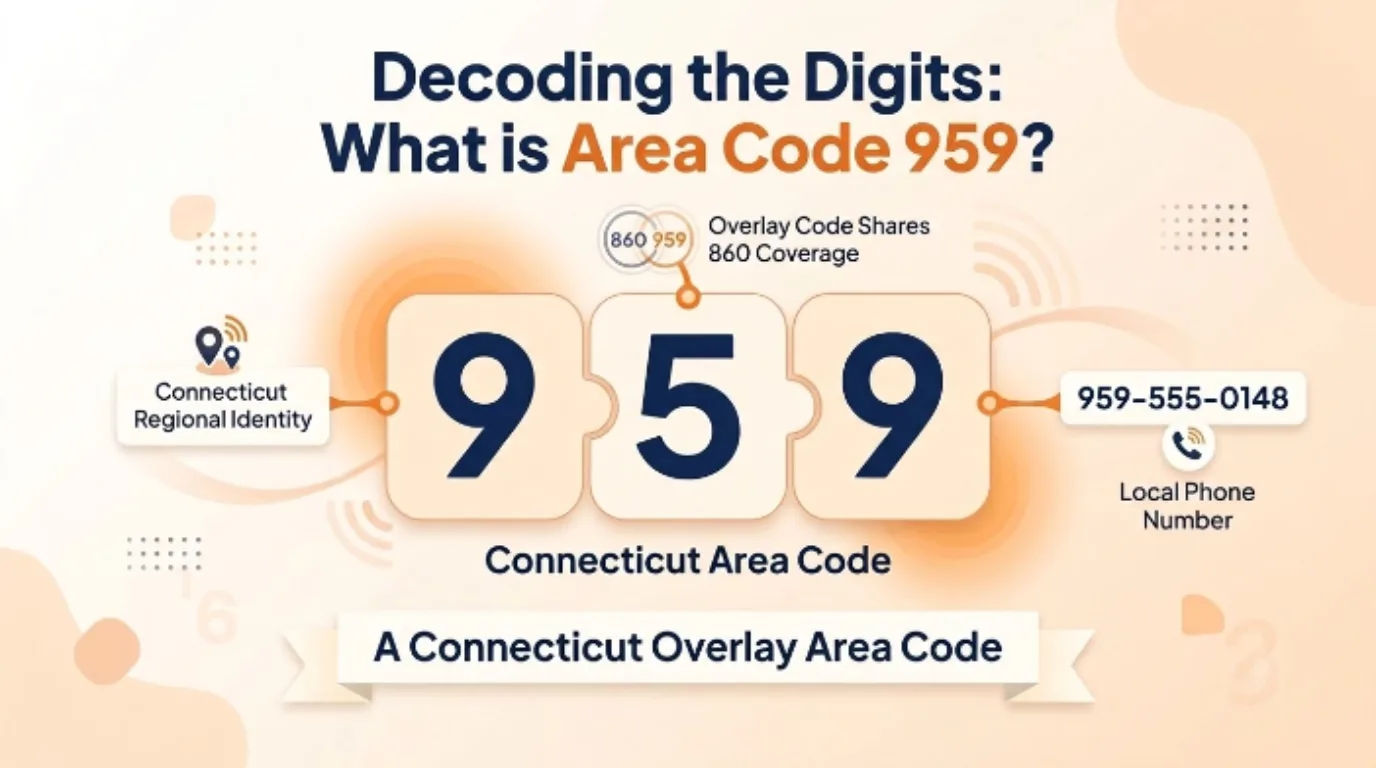
959 is an overlay code, not a new region — it shares its entire footprint with the older 860 area code rather than covering separate ground. Overlay simply means two codes are layered onto the exact same towns instead of the map being split in two, which is why every call in the 860/959 region, even one between neighbors, has required all 10 digits since the overlay went live. The overlay itself went into service on August 30, 2014, more than a decade after the 860 region was first flagged as a candidate for relief, because aggressive number-conservation measures kept pushing the actual shortage date back. Overlay assignments like this one are documented under the North American Numbering Plan, the same registry that governs every area code in the US, Canada, and the Caribbean.
A full 959 number follows the standard format 959-XXX-XXXX, and international callers dial +1 959 XXX XXXX. The whole 860/959 footprint runs on Eastern Time — UTC-5 in winter, UTC-4 during Daylight Saving — the same clock as New York, Boston, and the rest of the Northeast.
Bradley International Airport, just north of Hartford in Windsor Locks, is Connecticut's largest airport and sits squarely inside the same footprint a 959 number reaches, giving the region a direct air link that the rest of the state routes through New York or Boston to match. West Coast callers reaching into the 959 region are three hours behind Eastern Time, so a call placed at the start of a Pacific workday lands right around lunchtime in Hartford — worth planning around to catch the full Eastern business day.
Key locations covered (originally 203 territory)
Every town now inside the 860/959 footprint was once part of a single, statewide 203 area code — Connecticut ran on 203 alone from 1947 until 1995, longer than most comparably sized states kept a single code. Hartford, New Britain, Bristol, Middletown, Norwich, and New London all originally answered to 203 before the state's numbering territory was ever divided.
That single-code era ended when 1995 growth forced a geographic split: the central and eastern two-thirds of the state, including all of the towns above, broke off into a new area code, while the southwestern coast — Bridgeport, New Haven, Stamford, and Danbury — kept 203 for itself. A full Connecticut area codes breakdown maps how 959 fits alongside the state's other overlay pairs.
Key locations covered (originally 860 territory)
That 1995 split created 860, and for nearly two decades it alone covered Hartford, New Britain, Bristol, Middletown, Norwich, New London, and every other central and eastern Connecticut town — the same footprint 959 shares today. Hartford anchors the region as the state capital and the historic home of the insurance industry; New Britain still carries its old "Hardware City" manufacturing identity; Bristol hosts ESPN's global headquarters; and Norwich and New London sit near the Naval Submarine Base, home port to a large share of the US Navy's Atlantic submarine fleet.
Hartford has carried the nickname "Insurance Capital of the World" for well over a century, and that industry still anchors the local economy — The Hartford, Travelers, and Aetna all trace major operations to the city, filling the office towers around the state capitol with underwriting, claims, and actuarial work. The city also holds an older layer of history: the Mark Twain House, where the author lived and wrote several of his best-known novels, sits a short walk from Hartford's financial district, and Wesleyan University in Middletown adds a well-known liberal arts college to the same footprint.
New Britain's manufacturing legacy runs through the old Stanley Works — now Stanley Black & Decker — which traces its roots to the city and still carries the "Hardware City" name today. Torrington, further out toward the Litchfield Hills, built a parallel history on precision ball-bearing production, giving the 860/959 footprint a genuine industrial heritage that predates Hartford's insurance dominance.
By the early 2010s, 860's original number pool was running low across this same growing footprint, and rather than split the region a second time, regulators added 959 as a second layer over it — so a 959 number today reaches the identical towns an 860 number always has.
Why Choose LetsDial for Your 959 Number?
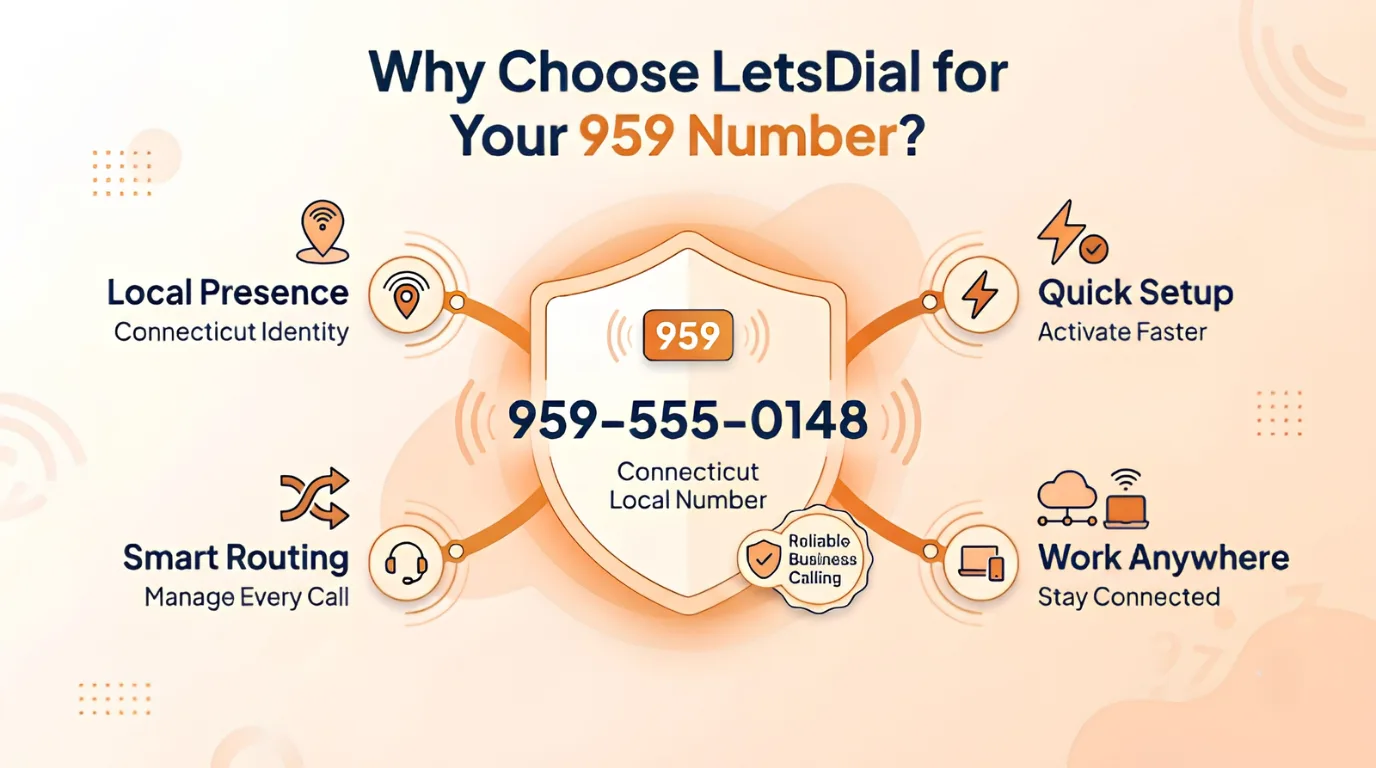
letsdial gives a business genuine Connecticut local presence on a 959 number without a Hartford-area office — the prefix alone signals the call is coming from inside the region rather than an unfamiliar out-of-state line. That matters most in a market built on insurance procurement and dense B2B vendor outreach, where an unrecognized out-of-state number tends to get screened before it's ever answered.
- Local presence — a 959 number carries Connecticut identity from the first ring, even for a fully remote team
- Quick setup — activate a working line in minutes, no hardware to install and no technician visit required
- Smart routing — manage every inbound call, so a Hartford sales inquiry and a Norwich support call each land in the right place
- Work anywhere — the number stays connected to any device, so the team can answer from a laptop, phone, or desk app anywhere
Get Your LetsDial Connecticut Number in 5 Simple Steps
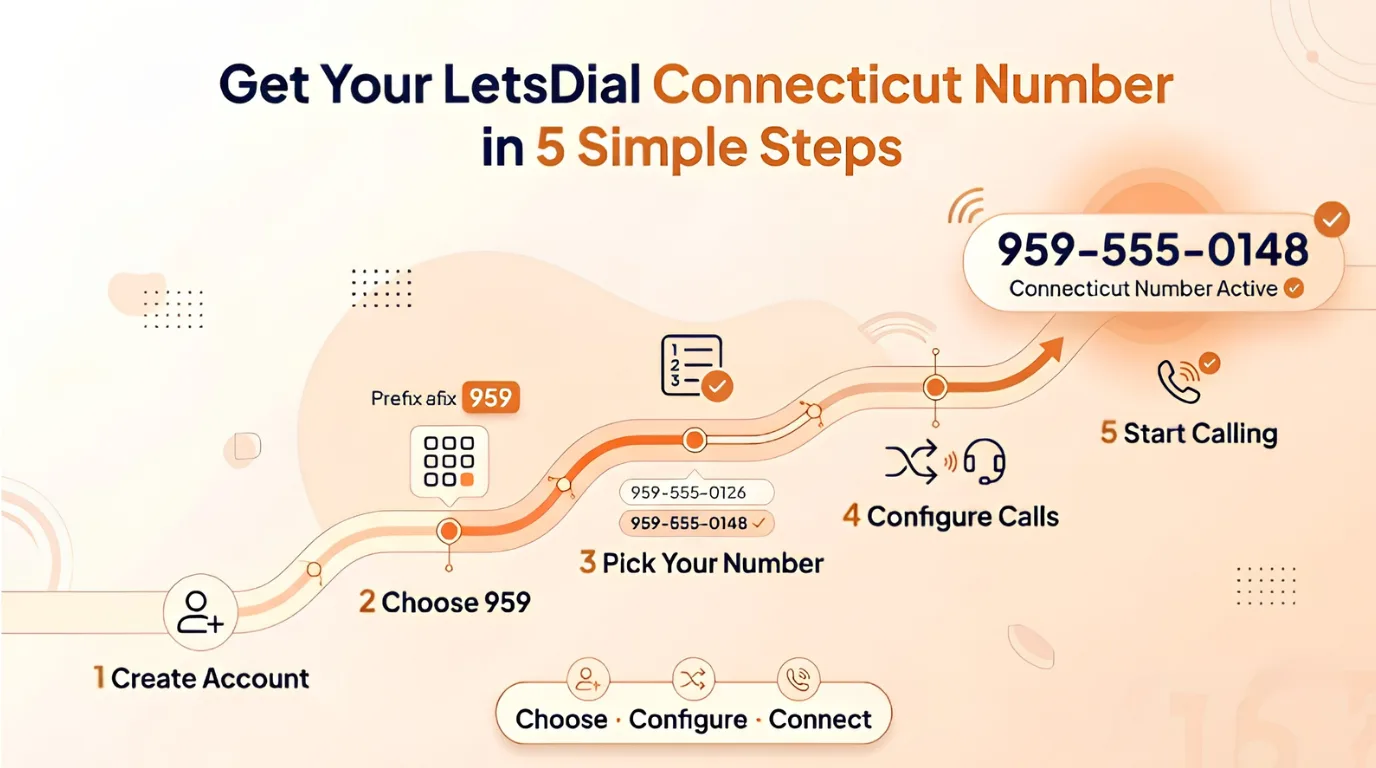
- Create an account — sign up for a free letsdial trial, no credit card required to get started.
- Choose 959 — search the 959 (or 860) prefix specifically, rather than taking whatever number is offered by default.
- Pick your number — browse the available combinations and select the one that's easiest for customers to remember.
- Configure calls — set up routing, voicemail, and business hours before the line goes live.
- Start calling — the number is active immediately, answering and placing calls the same day.
None of the five steps requires a technician visit or new hardware — the whole process runs from a browser, which matters for a business that wants a Hartford-region presence without ever renting Hartford-region office space. Porting an existing 959 or 860 number into letsdial works the same way in reverse: the number stays live throughout the switch, so a business that already has the line printed on signage or listings doesn't lose that history moving providers.
Staying Safe: Recognizing and Avoiding Scams Associated with the 959 Area Code
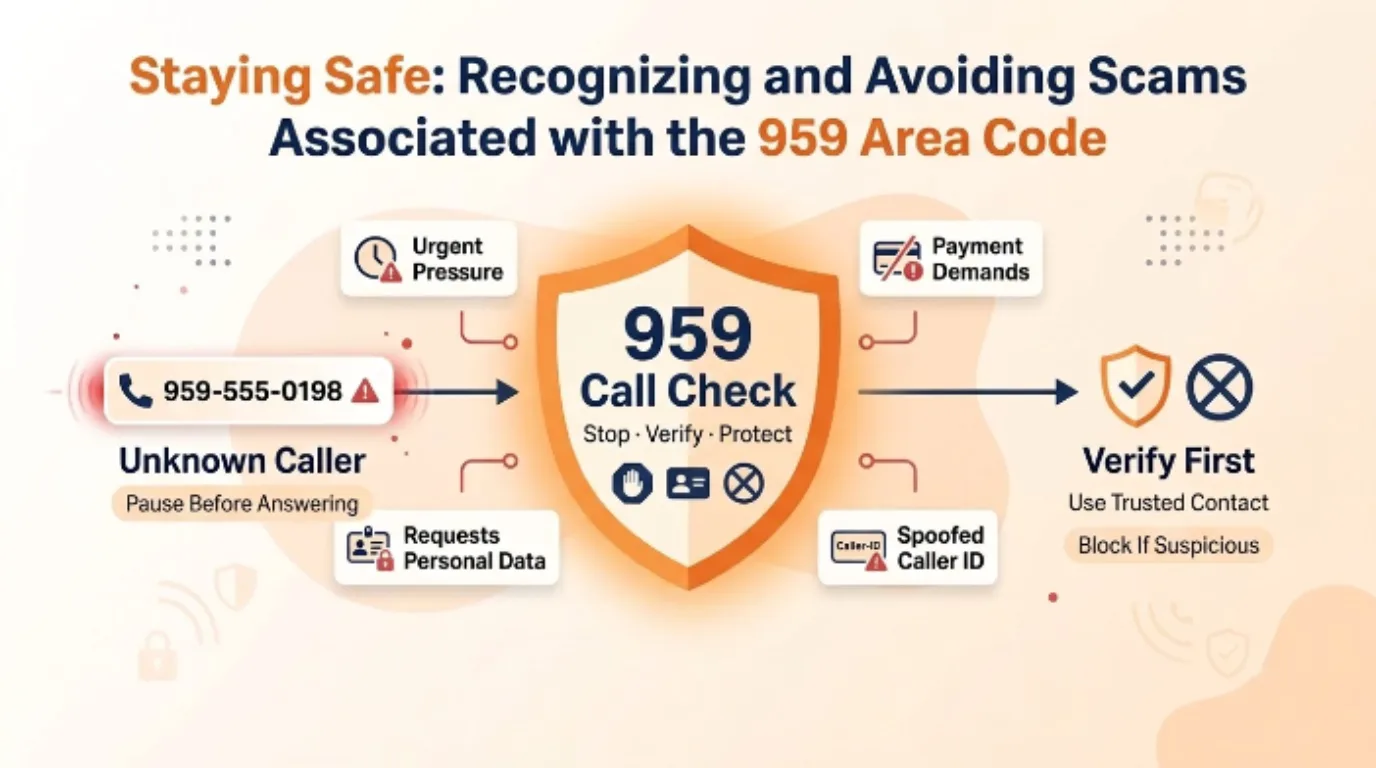
Calls and text messages from the 959 area code get reported as spam and flagged as potential scams more often than the older, more familiar 860 code — not because the region carries more fraud, but because people simply recognize 959 less and default to suspicion when it shows up unannounced.
The pattern to watch for is consistent: an unknown 959 caller applying urgent pressure, demanding a payment on the spot, requesting personal or account information, or spoofing a caller ID to look like a trusted local contact. The right response is the same every time — pause before answering an unfamiliar 959 number, don't act on pressure or payment demands over the phone, and verify the caller through a number you already trust before giving out any information.
That screening habit runs especially deep in an insurance town — claims adjusters, brokers, and underwriters field an unusually high volume of unsolicited calls and texts compared to most regional economies, so procurement and vendor-management offices across Hartford have learned to filter aggressively by caller ID before ever picking up. A business that skips call verification is competing for attention in a market that already assumes most unfamiliar numbers aren't worth answering.
For a legitimate business calling out on a 959 line, that same wariness works against them unless the call is signed. Apply STIR/SHAKEN attestation so outbound 959 calls arrive with a verified business name on screen instead of a bare number, and register text campaigns for 10DLC compliance — together they keep a real 959 line from getting caught in the same spam filter as the fraud traffic it's often mistaken for.
Warming a brand-new 959 number up gradually, rather than dialing full volume from day one, also helps — carriers watch for a sudden burst of outbound calls from a fresh line as one of the clearest spam signals, so ramping volume up over the first few weeks alongside signed caller ID keeps a legitimate business number from tripping the same filters built to catch fraud traffic.
Conclusion
959 is a Connecticut area code, not a California one and not a statewide code — it overlays the exact same Hartford, New Britain, Bristol, and Norwich-area footprint that 860 has covered since 1995, reaching back to a single 203 code before that. Insurance underwriters in Hartford, tool manufacturers in New Britain and Torrington, and the Navy's submarine fleet near New London all answer to the same 860/959 dialing area, regardless of which of the two codes lands on a new line.
Standing up a local 959 line takes minutes with letsdial, no hardware and no local office required, and applying STIR/SHAKEN attestation from day one keeps a legitimate business number from reading like the scam traffic it too often gets mistaken for.
FAQs
Written by Aryan Khan · July 31, 2026
Reply to the author