Introduction
Spotting a 571 number on your phone usually means someone from the DC suburbs is trying to reach you, or you're deciding whether to claim one for your own company. Either way, this prefix covers one of the busiest, most competitive business corridors on the East Coast.
Below, we'll map out exactly which cities and counties fall under 571, how it ended up sharing territory with 703, what the mandatory 10-digit dialing rule means day to day, and why so many Northern Virginia companies pick this code on purpose. We'll close with the spoofing tactics tied to 571 so you can tell a real call from a fake one.
Where the 571 Area Code Reaches
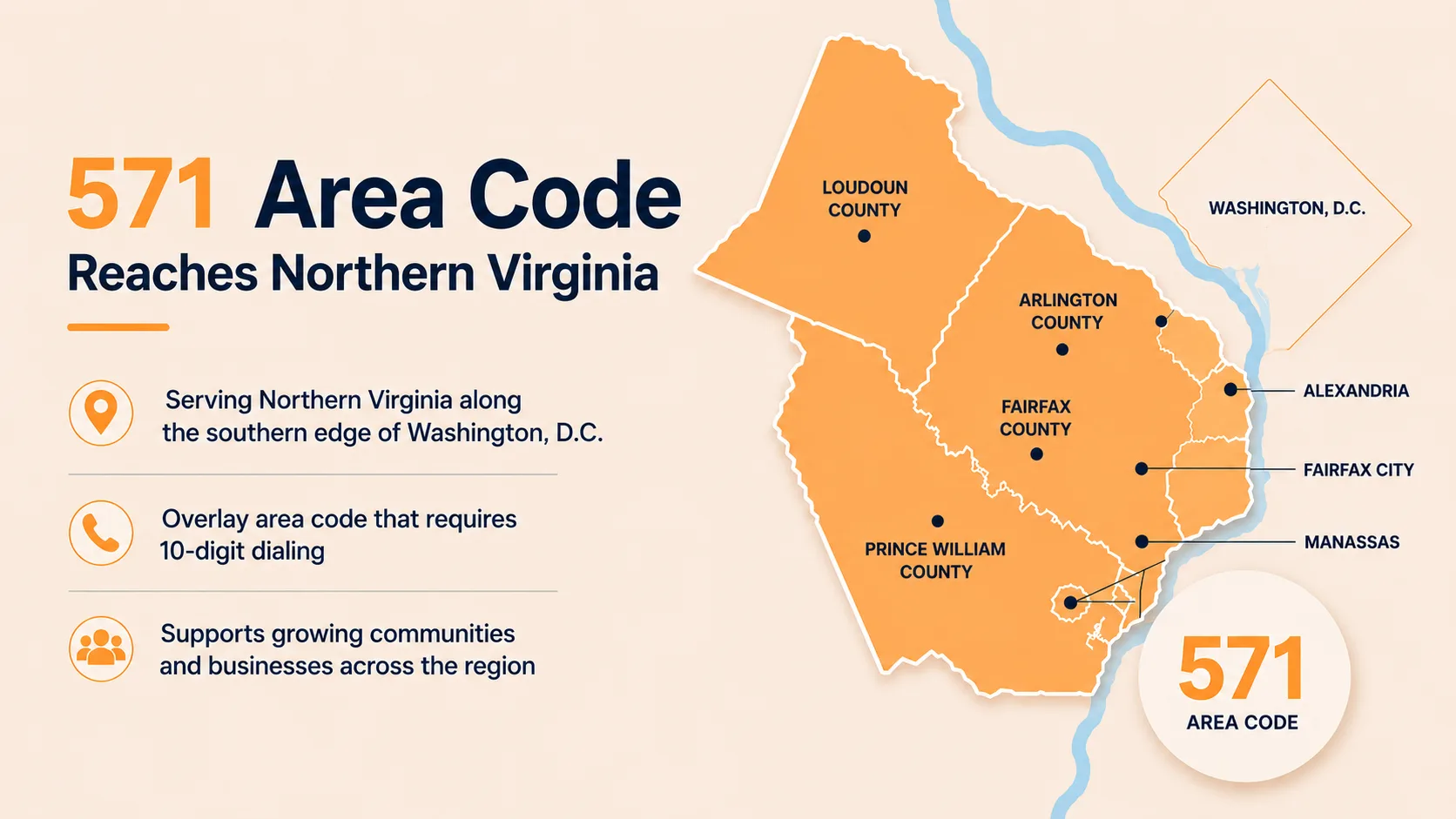
571 sits entirely inside Northern Virginia, tucked against the southern edge of Washington, D.C.
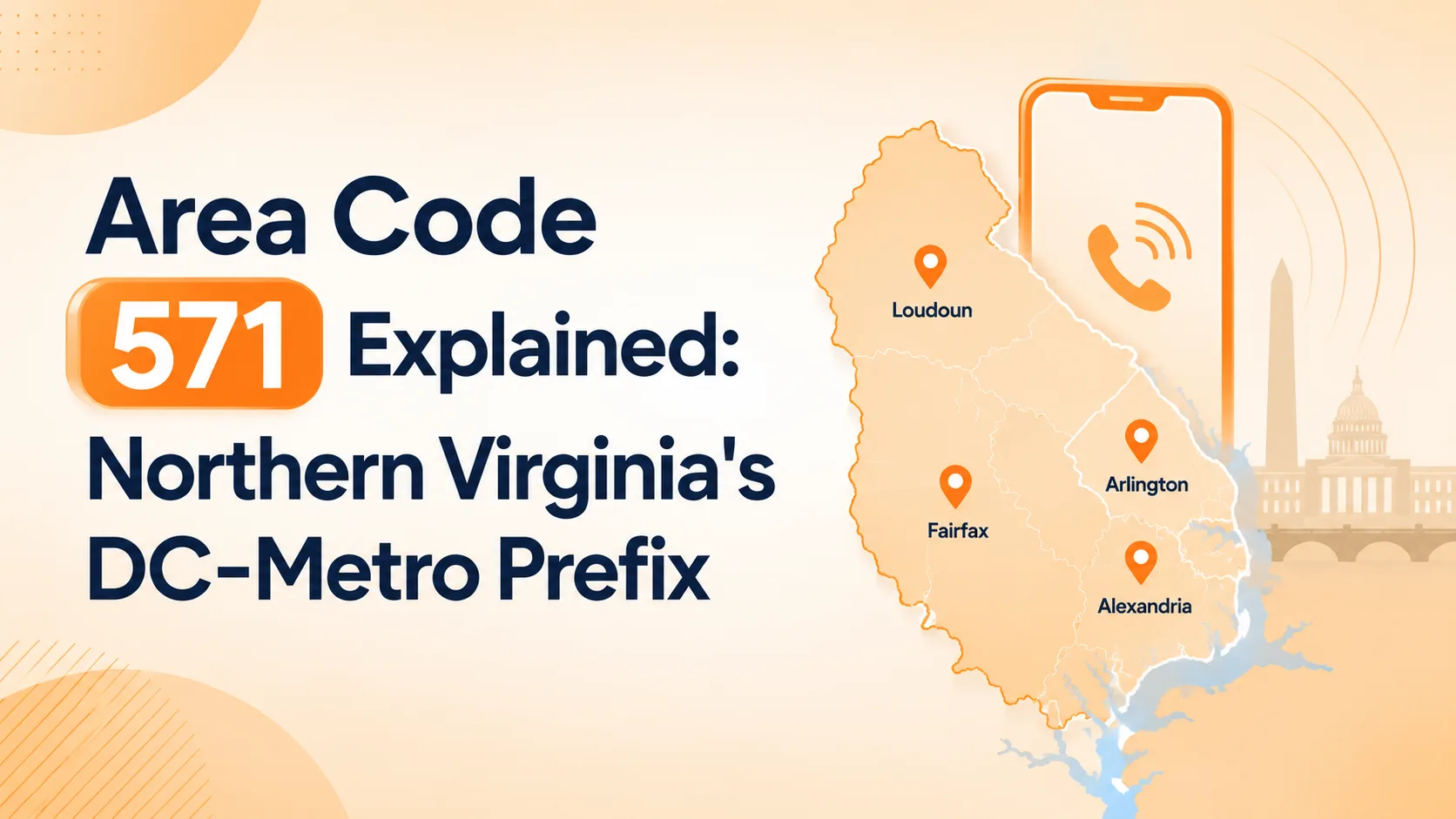
The footprint runs through Arlington, Fairfax, Loudoun, and Prince William counties, plus the independent cities of Alexandria, Fairfax City, and Manassas. It's a relatively compact geographic area compared with many regional codes, but it's dense — home to well over two million people once you count every suburb feeding into the D.C. job market. Everything in the zone runs on Eastern Time, matching D.C. itself, so a 571 number never creates a scheduling mismatch for clients or government offices across the river.
How 571 Became Northern Virginia's Second Code
Area codes rarely change unless a region genuinely runs out of number combinations, and that's exactly what happened here.
For decades, all of Northern Virginia dialed through a single code: 703. But the area's explosive growth in government contracting, tech, and defense-adjacent business through the 1990s burned through available 703 combinations faster than regulators expected. Rather than force a full split and reassign existing numbers, the North American Numbering Plan Administrator layered a second code, 571, directly on top of the same territory starting March 1, 2000. That overlay approach let existing 703 customers keep their numbers while giving new lines somewhere to go.
Cities, Counties, and Communities Under 571
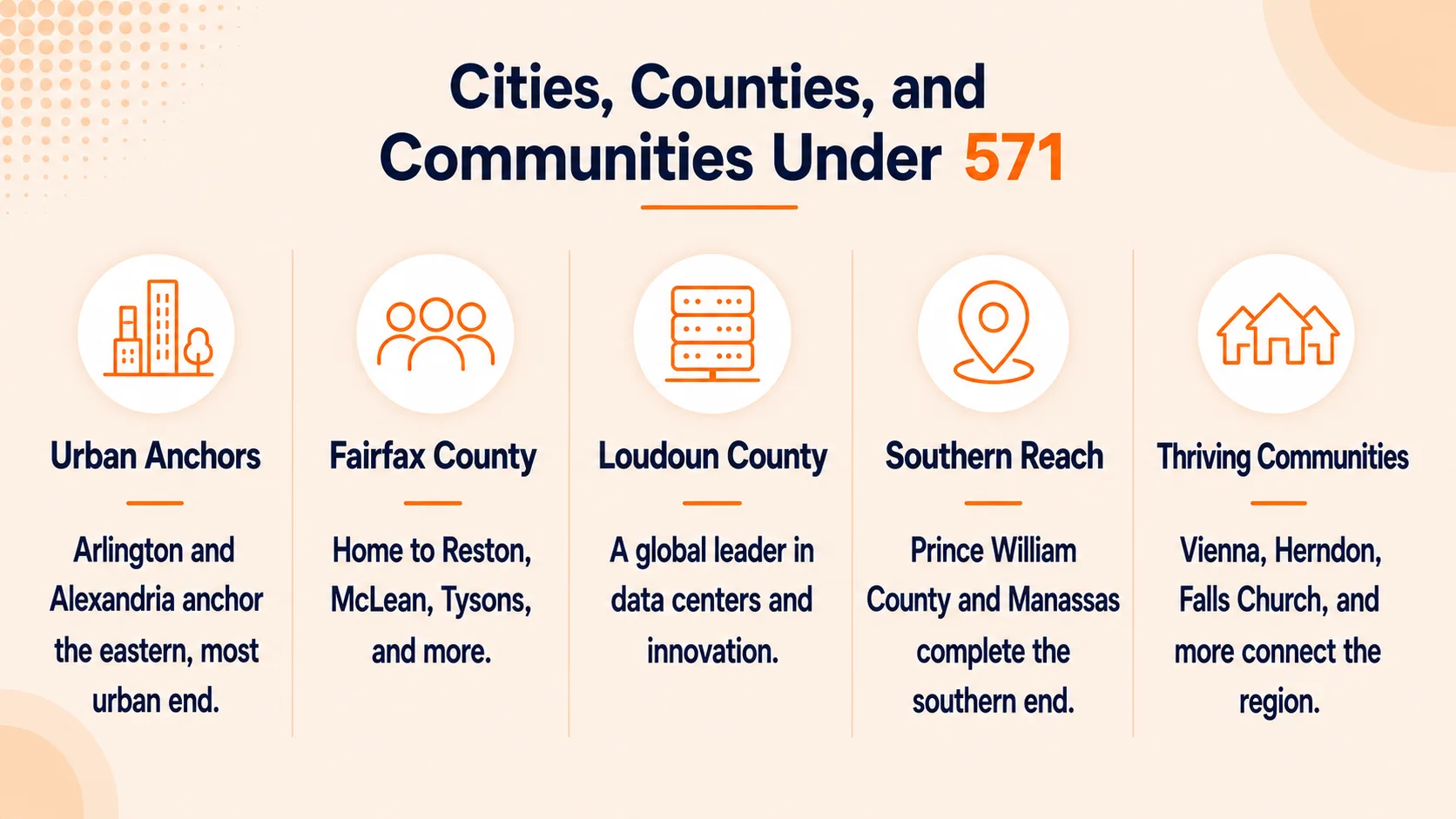
Because 571 shares its footprint with 703, the two codes serve identical geography — just split across two number pools.
Arlington and Alexandria anchor the eastern, most urban end of the territory, closest to the district itself. Fairfax County, one of the wealthiest counties in the country, makes up the bulk of the population and includes tech-heavy communities like Reston, McLean, and Tysons. Loudoun County, home to a huge share of the world's internet data center capacity, sits on the western edge, while Prince William County and Manassas round out the southern reach. Smaller communities like Vienna, Herndon, and Falls Church fill in the gaps between these anchor cities, each with its own concentration of contractors, consultancies, and small businesses that all draw on the same 571/703 number pool. For a business, that mix means a single 571 number can plausibly represent a client meeting in Old Town Alexandria one day and a data center vendor in Loudoun the next.
Ten-Digit Dialing: What Changed and Why It Matters
Every overlay code comes with the same trade-off: shared numbers mean shared dialing rules.
Since 571 and 703 cover the same streets, the region has required 10-digit dialing for every local call for years — you can't just dial the last seven digits, even for a call across the office. That applies whether you're on a landline, a mobile phone, or a VoIP line. Businesses that still list a bare seven-digit number on old signage, invoices, or voicemail greetings should update it, because a caller trying that shortcut will hit a recording instead of your desk.
571 Compared With Nearby DC-Metro Area Codes
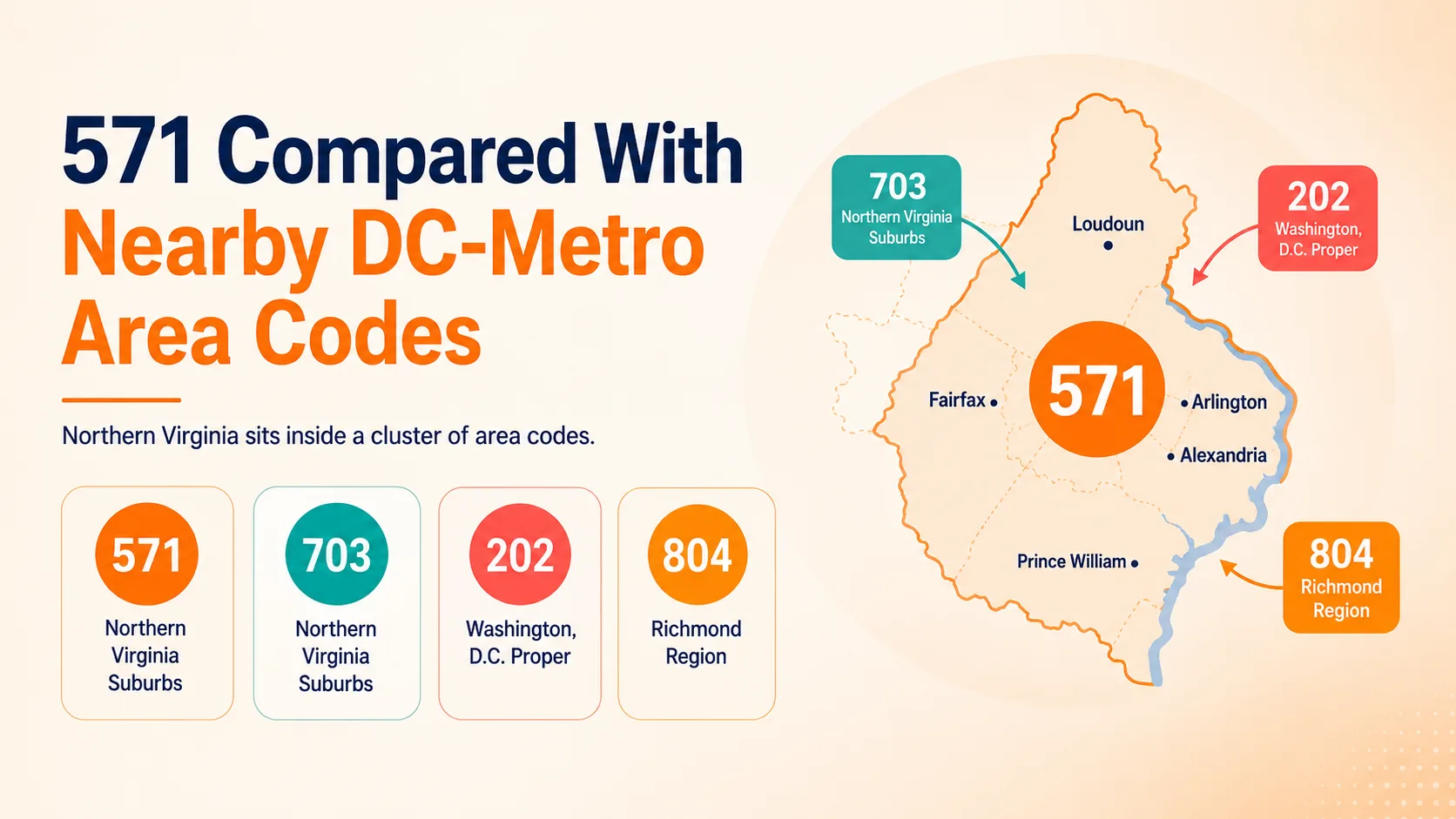
Northern Virginia sits inside a cluster of area codes, and knowing how they differ helps you pick the right one for your audience.
703 is 571's direct twin, covering the exact same Virginia counties. Cross the Potomac and you're in 202 territory, the code reserved for Washington, D.C. proper, which reads as more government-agency than suburban-business to most callers. Head south into Richmond and you're in a completely different market covered by 804, a region we cover in our Richmond business number guide. For a company specifically courting Fairfax, Arlington, or Loudoun clients, 571 signals "Northern Virginia suburb" in a way that neither the D.C. code nor a Richmond number ever could.
Why Northern Virginia Businesses Want a 571 Number
A 571 number does more than fill in a contact field — it tells a very specific kind of customer that you're already in their backyard.
This corridor is packed with federal contractors, defense subcontractors, and technology firms that all prefer working with vendors who feel local, especially when contracts involve in-person meetings or site visits near a federal agency. Consulting firms, IT staffing agencies, and legal practices serving that world routinely report that a 571 number gets picked up more often than an out-of-area or toll-free line, since decision-makers screen unfamiliar codes aggressively. The same logic applies to recruiting: staffing agencies placing candidates into Northern Virginia government roles often find that a 571 callback number reassures candidates the opportunity is genuinely local, not an offshore or out-of-state agency cold-calling with a generic script. Even companies that don't need a Virginia office can still open the door to this market with a virtual 571 line before ever renting local space.
Setting Up a 571 Number for Your Team
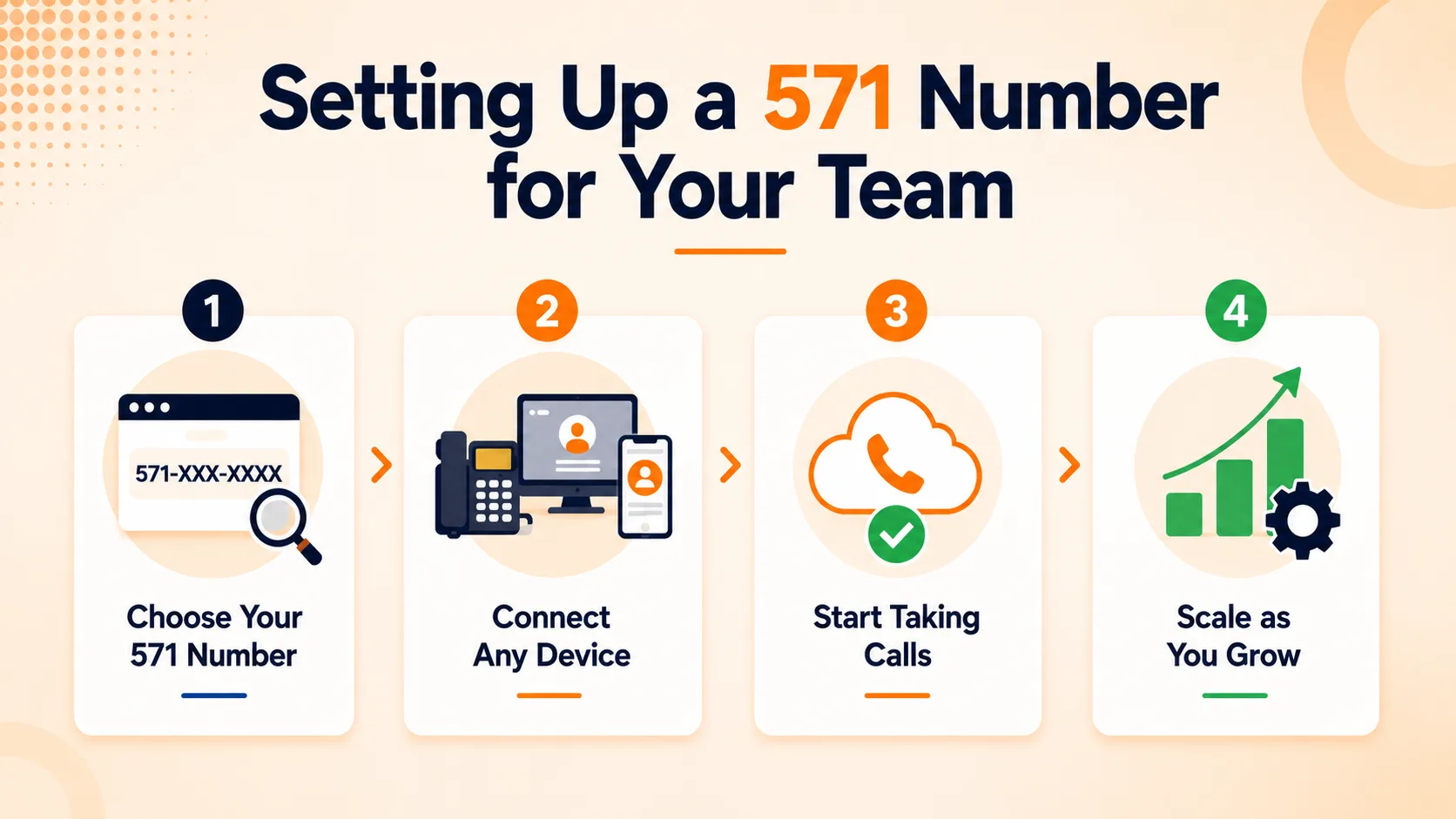
Claiming a 571 number today is a self-service process, not a multi-week carrier order.
With a cloud provider like letsdial, you pick an available 571 number, connect it to a phone, softphone app, or existing office system, and it's typically live the same day. Most plans include call routing, voicemail-to-email, and the ability to add more numbers as headcount grows, so a five-person remote team can run a 571 line the same way a fifty-person office does. There's also no equipment to install — the number lives in the cloud, so a hiring manager in one state and a support rep in another can both answer the same 571 line without any special hardware. The setup mirrors what we walk through in our guide to virtual phone numbers — pick the number, plug it into your existing phone system, and start taking calls.
Is That 571 Call Real? Spotting Spoofed Numbers
Because 571 is common and trusted, it's also a frequent target for caller ID spoofing.
Scammers fake a local 571 number specifically because Northern Virginia residents are used to seeing it and are more likely to answer. Common scripts include fake IRS or court-summons threats, government-benefits "verification" calls, and tech-support scams targeting the area's large remote-work population. Some callers even pose as security-clearance investigators, a scam tailored to the region's high concentration of federal and defense employees who take clearance-related calls seriously. The FCC's guidance on caller ID spoofing is clear that no legitimate agency demands payment or personal information over an unexpected call. If a 571 number pressures you to act immediately, hang up and call the organization back directly using a number from its official website.
Conclusion
Area code 571 has quietly become one of the most important prefixes on the East Coast, layered over 703 to serve Arlington, Fairfax, Loudoun, and the rest of Northern Virginia's DC-metro suburbs. Understanding the overlay, the 10-digit dialing rule, and how it compares to neighboring codes like 703, 202, and 804 helps you use the number with confidence.
For a business, a 571 line is a fast, low-risk way to look local in a region full of government, defense, and tech buyers who reward that kind of familiarity. Set it up through a virtual provider, keep an eye out for spoofed calls trying to borrow that same trust, and you'll get the benefit without the overhead of a physical office.
FAQs
Written by Aryan Khan · August 4, 2026
Reply to the author