Introduction
A 574 number on your screen almost always traces back to Northern Indiana, a region built around manufacturing, higher education, and one of the country's most concentrated RV industries. Whether you're curious who's calling or planning to claim a 574 number for your own company, it helps to know the territory first.
This guide walks through exactly where 574 reaches, how it split off from the old 219 area code, which cities carry the most weight in the region, and why the nationwide 10-digit dialing rule applies here too. We'll finish with the scam patterns tied to 574 so you can separate a real local call from a spoofed one.
Where the 574 Area Code Covers
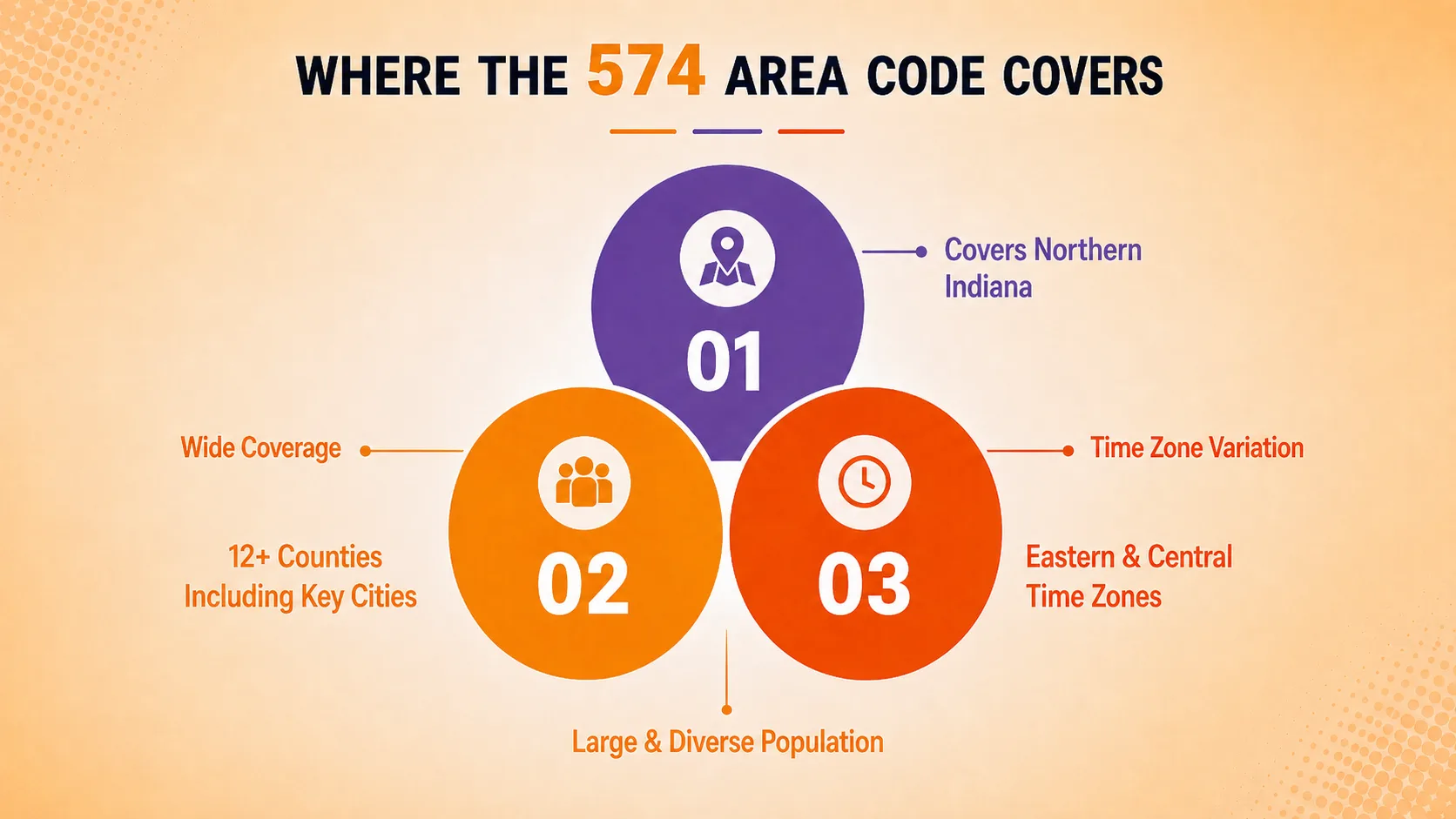
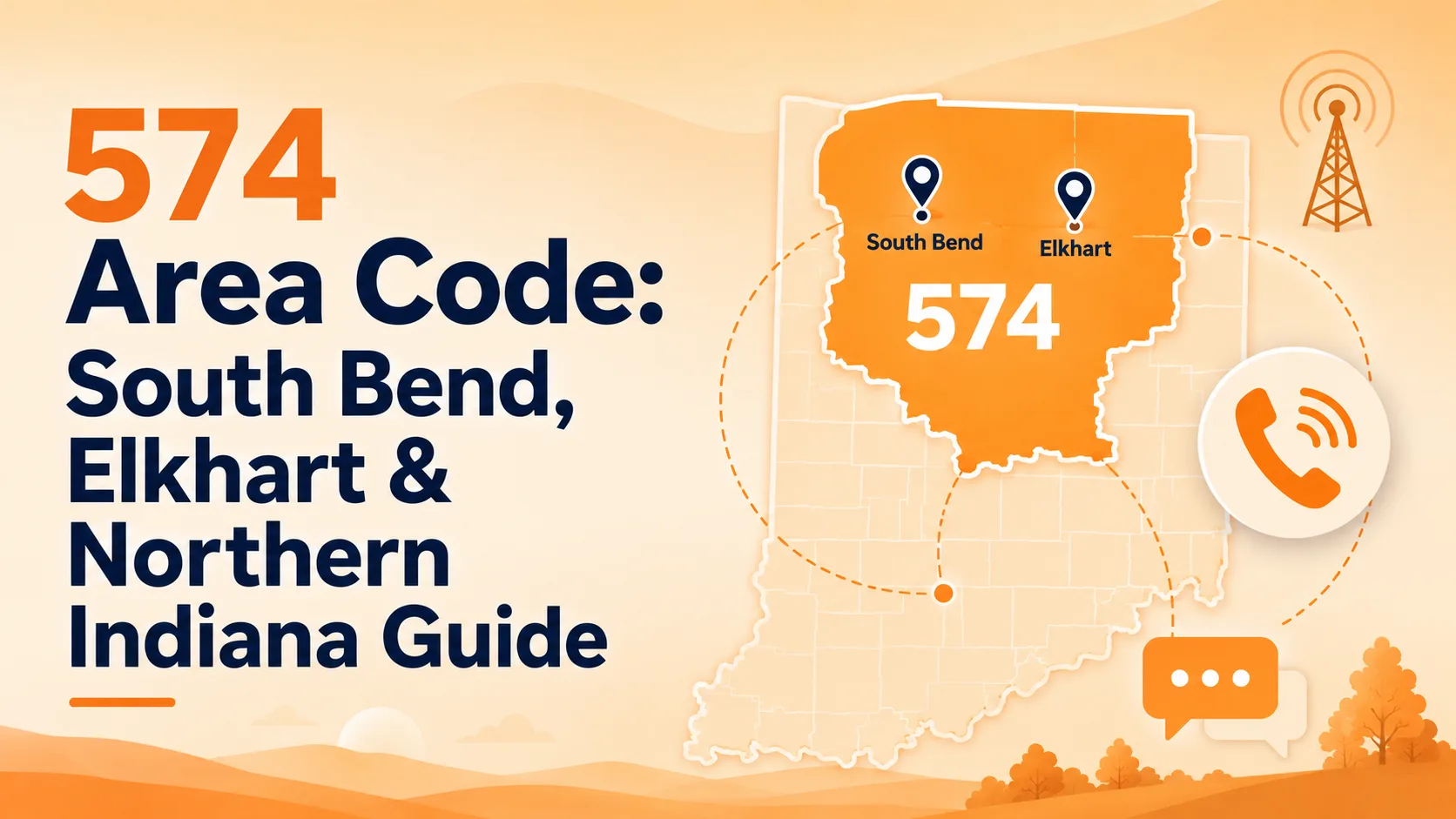
574 sits entirely in Northern Indiana, stretching from the Michigan border down toward the middle of the state.
The territory spans roughly a dozen counties, including St. Joseph, Elkhart, Kosciusko, Marshall, and Cass. Most of the region runs on Eastern Time, though a handful of western counties near the Illinois line observe Central Time, so businesses handling calls across the full 574 footprint should double-check a customer's local time before dialing out. Well over a million residents and businesses fall inside this coverage area, spread across a mix of mid-sized cities and small manufacturing towns rather than one dominant metro.
How the 574 Area Code Split From 219
Unlike overlay codes that stack a second number pool on existing territory, 574 was created through a clean geographic split.
Northern Indiana originally shared the 219 area code with the entire northwestern part of the state. As population and phone line demand grew through the 1990s, regulators carved the region into three separate codes, and 574 went into service on January 15, 2002, taking over the South Bend and Elkhart corridor specifically. Because it's a split rather than an overlay, 574 numbers didn't have to share their new territory with any other code — every number in the region belonged exclusively to 574 from day one.
Major Cities and Industries in the 574 Region
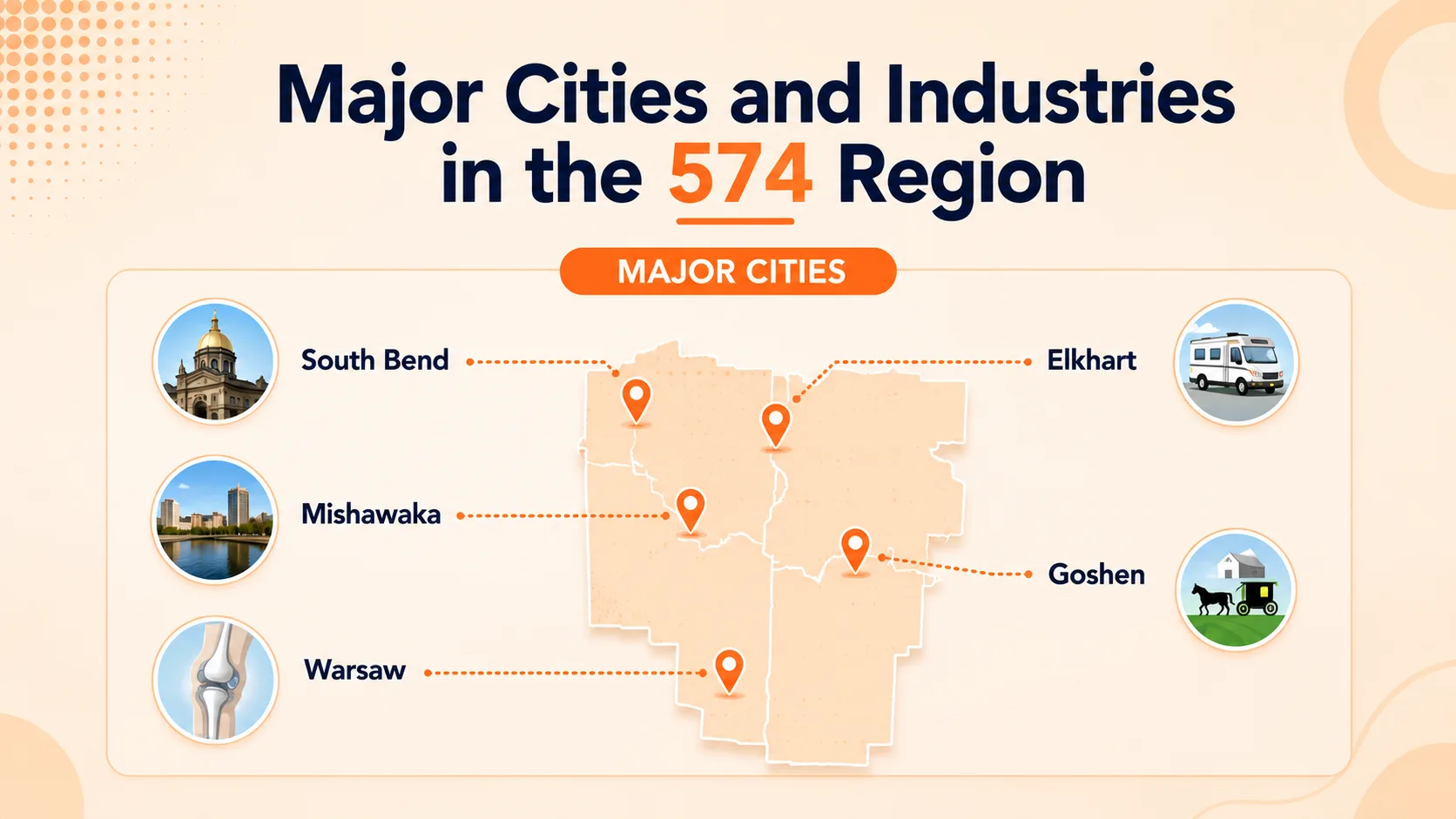
574 covers a surprisingly varied economy for a single area code, from higher education to heavy manufacturing.
South Bend anchors the region and is home to the University of Notre Dame, one of the most recognized university names in the country. Elkhart, just to the east, produces the majority of the recreational vehicles built in the United States and has earned the nickname "RV Capital of the World," supporting thousands of local jobs in parts supply and assembly. Mishawaka sits alongside South Bend as part of the same metro core, while Goshen supports a strong Amish and Mennonite community alongside its manufacturing base. Warsaw, further south, hosts a cluster of orthopedic device manufacturers that supply hip and knee implants worldwide, giving the small city an outsized role in global medical device production. For any business targeting this region, a 574 number reaches customers across manufacturing, healthcare, agriculture, and academia all at once.
Ten-Digit Dialing: A Rule That Now Applies Everywhere
574 residents didn't always need to dial the full area code for local calls, but that changed for reasons that have nothing to do with 574 itself.
Because 574 is a standalone split code rather than an overlay, seven-digit local dialing worked fine here for nearly two decades. That changed nationwide in 2021, when regulators mandated 10-digit dialing across the entire country to make room for the new 988 Suicide and Crisis Lifeline, which needed the old three-digit "988" pattern freed up everywhere, not just in overlay regions. As a result, 574 callers now dial the full area code plus seven-digit number for every local call, the same as residents in overlay territories like 571 or 570. Businesses with older printed materials showing a bare seven-digit number should update them to avoid confusing customers.
574 Compared With Other Indiana Area Codes
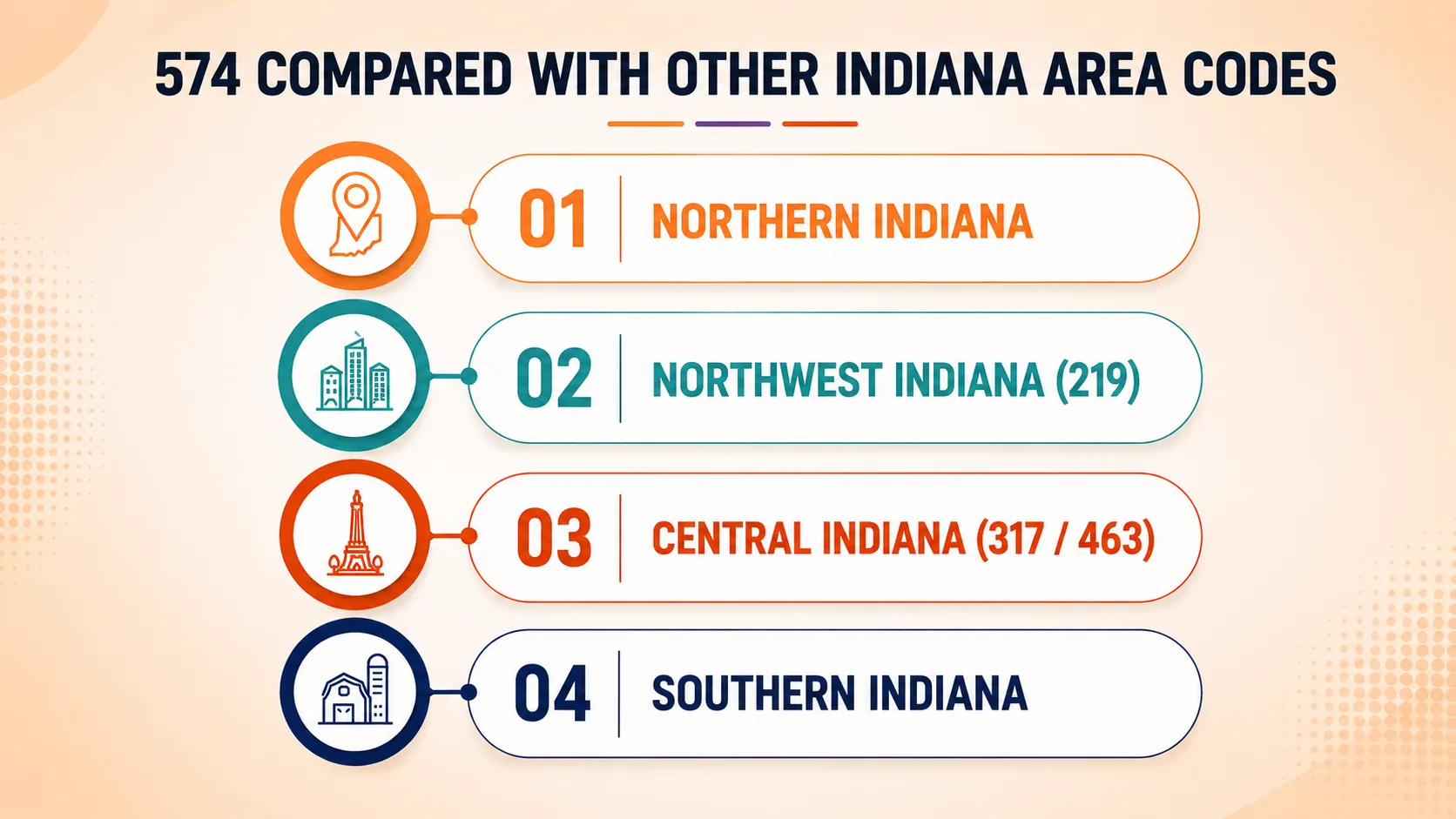
Indiana is split across several regional codes, and knowing where 574 fits helps you choose the right number for your market.
To the west, the remaining 219 territory now covers Gary and the Chicago-adjacent Lake County suburbs, a market with a very different, more industrial-Chicago feel than Northern Indiana's South Bend corridor. Indianapolis and the central part of the state run on 317 and its overlay, 463, while the southern half of Indiana uses a separate set of codes entirely. If your customer base is concentrated around South Bend, Elkhart, or the RV manufacturing corridor specifically, 574 reads as authentically local in a way that a Chicago-leaning 219 number or a downstate code never would. It's a similar logic to how a South Florida area code builds trust with customers in that specific market rather than a generic national number.
Why Businesses Choose a 574 Number
A local area code carries real weight with Northern Indiana customers who are used to screening unfamiliar numbers.
Suppliers working with Elkhart's RV manufacturers, vendors serving Warsaw's medical device cluster, and service businesses courting Notre Dame's student and alumni population all benefit from a number that signals "we're already here." Local numbers consistently see higher answer rates than toll-free or out-of-area numbers, since regional customers are quicker to trust and pick up a call that looks like it's coming from their own community. A 574 number also strengthens local ad campaigns and directory listings, since a matching area code reinforces the same regional identity a business is already building elsewhere, similar to how a Chicago-area business benefits from a local 630 number when courting Naperville and Aurora customers specifically.
How to Get a 574 Area Code Number
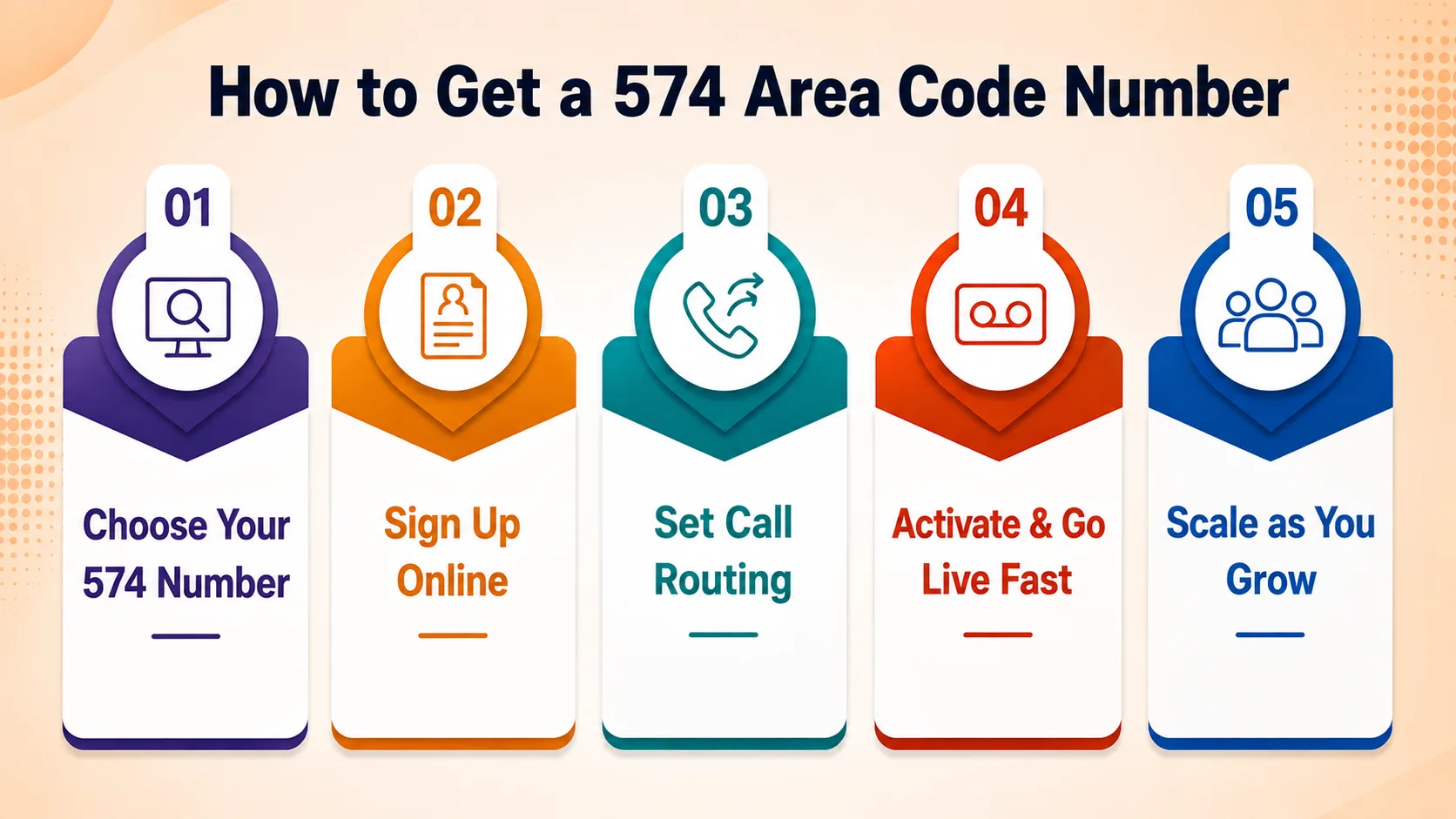
Claiming a 574 number doesn't require a Northern Indiana address or a long-term carrier contract.
Cloud-based virtual phone providers, letsdial included, let you select an available 574 number and route it to any phone, softphone, or existing business line, usually going live within a day. Most plans bundle call forwarding, voicemail transcription, and multi-user routing, so a small remote team can operate a 574 line the same way a fully staffed South Bend office would. There's no equipment to buy or technician visit required — the number activates through an online dashboard, and you can add more 574 lines later as your Northern Indiana customer base grows. This makes it just as practical for a supplier onboarding a new Elkhart RV manufacturer as it is for a solo consultant picking up occasional Notre Dame-area clients.
574 Area Code Scams and Spoofed Calls
A trusted local code is exactly what scammers look for when they want a call answered.
"Neighbor spoofing" shows up in 574 the same way it does elsewhere — fraudsters fake a local number so residents assume it's a neighbor or nearby business. Common scripts in this region include fake vehicle warranty offers (a natural target given Elkhart's RV industry), utility shut-off threats, and fake university financial-aid calls aimed at Notre Dame and other regional student populations. According to the FCC's rules on nationwide 10-digit dialing and caller ID, the shift to 10-digit numbers was meant to improve routing accuracy, not to make spoofing easier, so a full 10-digit local number is still no guarantee a call is genuine. If a 574 caller pressures you for immediate payment or personal information, hang up and contact the organization directly through its official number.
Conclusion
The 574 area code covers one of Indiana's most economically diverse regions, from Notre Dame in South Bend to the RV manufacturing hub in Elkhart and the orthopedic device cluster in Warsaw. Its history as a clean 2002 split from 219, rather than an overlay, means the territory has always belonged exclusively to this one code.
For businesses, a 574 number offers a straightforward way to build credibility with Northern Indiana customers without opening a local office. Just remember the nationwide 10-digit dialing rule applies here too, stay alert for spoofed scam calls borrowing the region's trust, and pick a provider that can get a number live quickly.
FAQs
Written by Aryan Khan · November 11, 2024
Reply to the author