Introduction
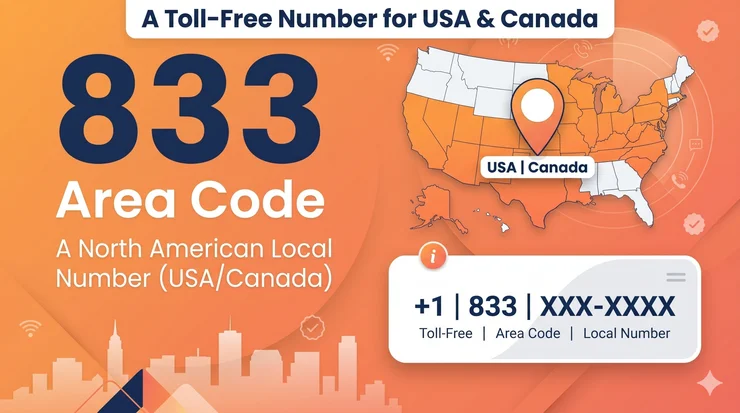
The 833 area code is a toll-free number prefix used across the United States and Canada. Unlike traditional area codes tied to a specific city or state, 833 numbers are not location-based — they let a business offer customers a free way to call in from anywhere in North America, on one number that never has to change as the company grows or moves.
833 was released by the FCC in April 2017, making it the newest member of the toll-free family after 800, 888, 877, 866, 855, and 844. Because it's the youngest prefix, it carries the largest pool of unclaimed combinations, which is why a vanity-number search that comes up empty under 800 often still turns up a match under 833.
The rollout followed a staged timeline rather than a single switch-flip: the FCC's order authorizing 833 was issued April 21, 2017, Responsible Organizations could begin reserving blocks of up to 2,000 numbers starting May 14, 2017, and the code opened for general assignment on June 3, 2017. That reservation-window-then-general-availability sequence has since become the standard template the FCC follows whenever it opens a new toll-free code.
- Toll-free for the caller: the receiving business pays the call cost, not the customer.
- Not tied to any city, state, or time zone — it works the same everywhere in North America.
- The newest toll-free prefix, so vanity combinations are easier to find than under 800 or 888.
What Is an 833 Number, and Where Is It Located?
The 833 area code doesn't belong to any specific city, state, or province. It's a toll-free overlay that functions across the entire North American Numbering Plan (NANP), covering the United States, Canada, and several Caribbean nations. A business using an 833 number could be based anywhere from a home office to a national call center, since the prefix itself carries no location information.
That's exactly what makes it useful for companies with national or cross-border operations: a company in New York, Texas, or Toronto can all operate under the same 833 toll-free prefix, and every customer dials the identical number regardless of where they're calling from.
The NANP itself extends beyond the U.S. and Canada to more than 20 participating countries and territories, including the Bahamas, Jamaica, Bermuda, and several other Caribbean nations that share the same 1-plus-10-digit dialing structure. In practice, most 833 traffic still originates from the U.S. and Canada, but the shared numbering plan means a toll-free line can, in principle, reach callers across that wider NANP footprint without the business having to set up separate international numbers for each market. The 800 guide covers the neighbouring ground.
How 833 Numbers Work
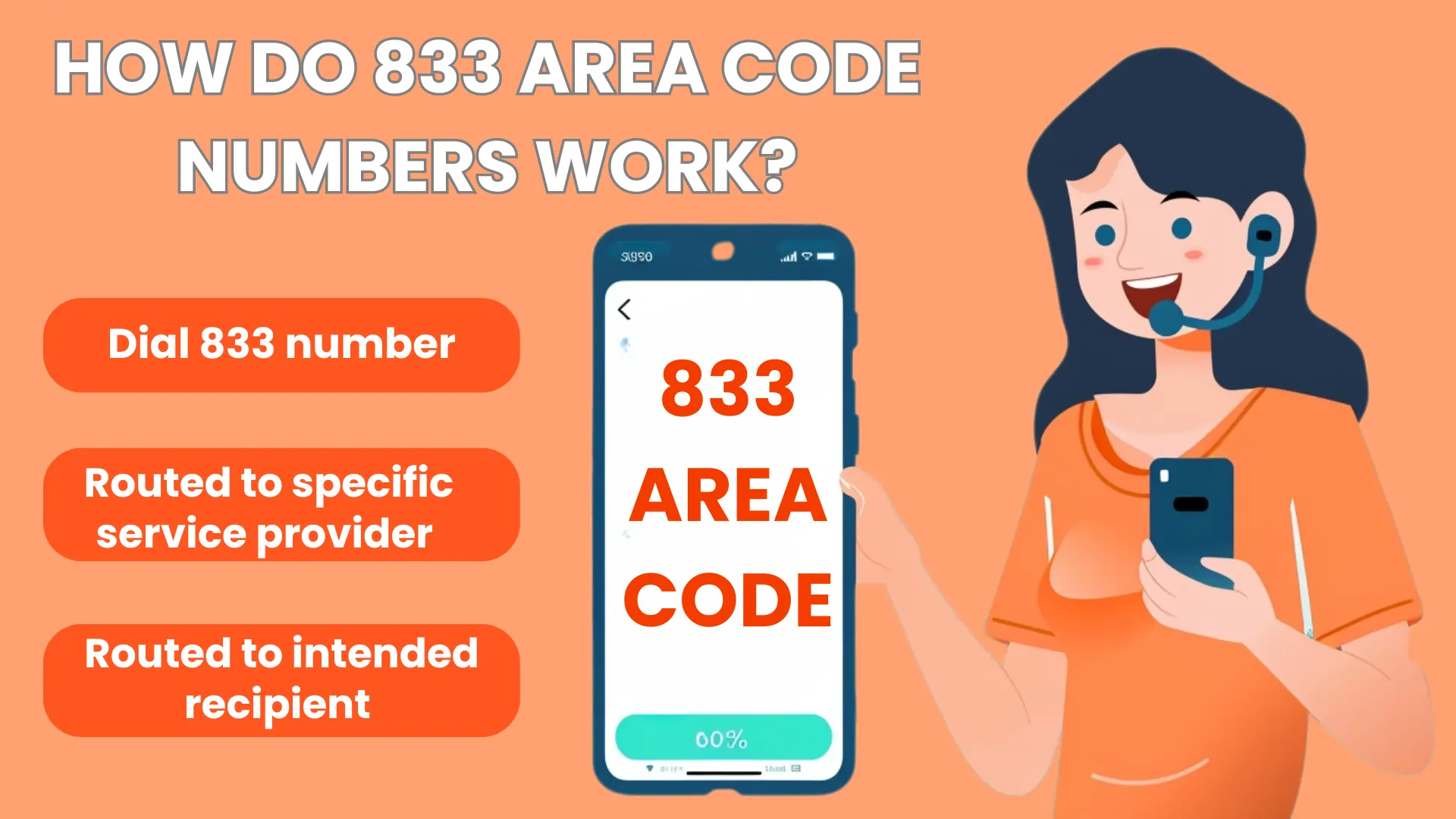
When someone dials an 833 number, the call routes through the public switched telephone network to the business's designated line — the recipient pays for the call through their toll-free service plan, not the caller. Behind the scenes, this runs through a Responsible Organization (RespOrg) system managed by the FCC: a business requests a number through a toll-free provider, the provider reserves it in the SMS/800 database, and once activated, calls route according to however the business has configured them.
- Call Routing: calls can be sent to any phone number, VoIP system, or call center
- Compatibility: 833 numbers work on cell phones, landlines, and VoIP apps alike
- Business Control: forward, record, or manage calls through the provider's dashboard
Dialing an 833 Number
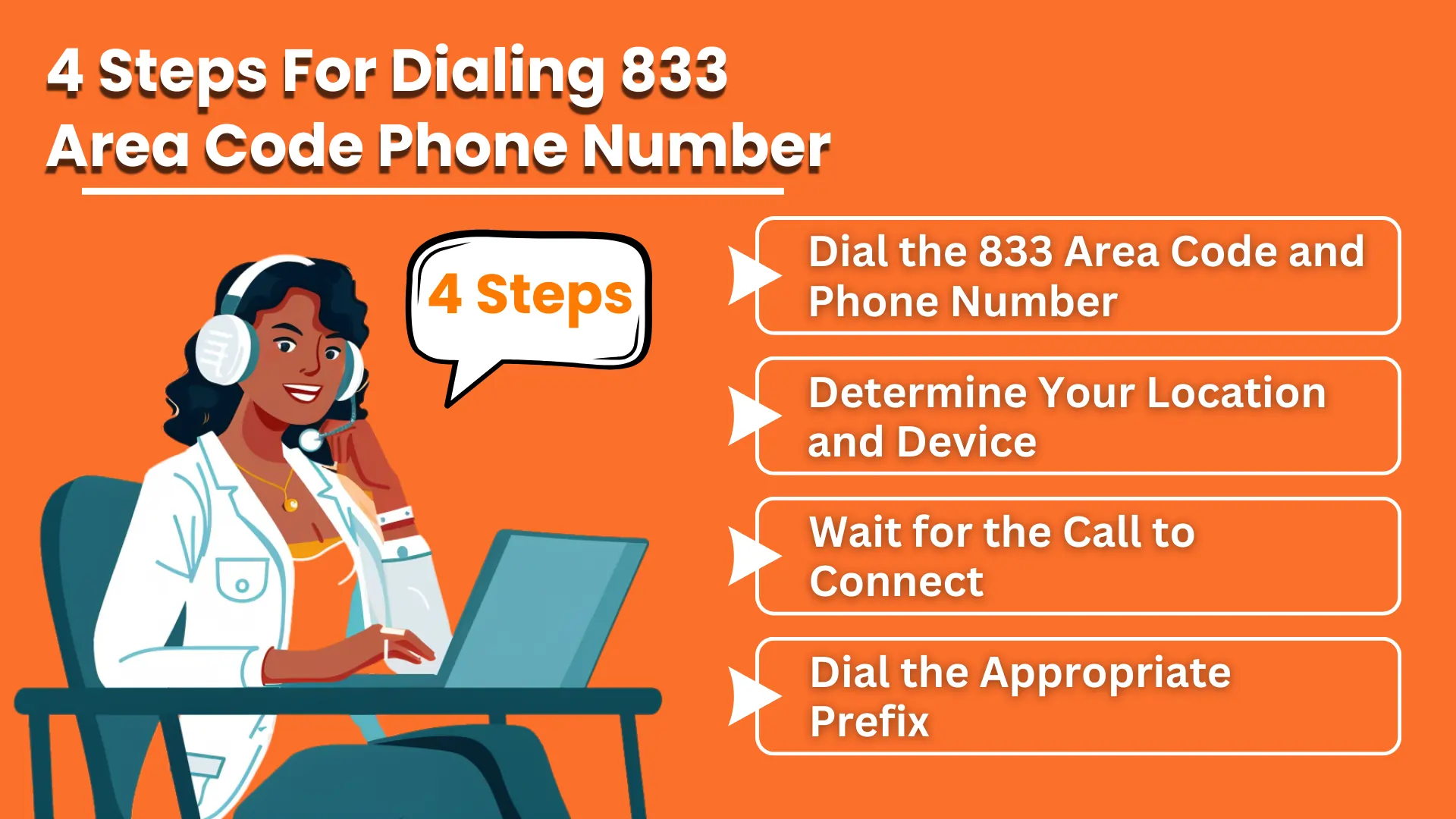
For callers within the U.S. and Canada, dial 1, then the full 10-digit 833 number, then press call — the call is free for you as the caller. International callers outside NANP countries need to use the U.S. country code (+1) followed by the full 833 number.
Texting an 833 Number
Toll-free numbers, including 833, can also be text-enabled so customers can send SMS messages to the same number they'd call. Under FCC rules, only the business that holds the number — the subscriber — can authorize text-enabling it; a RespOrg or messaging provider can't flip that switch on its own. Once enabled, the number is listed in a shared toll-free SMS database so every carrier and messaging platform knows to route texts to it correctly, letting a business run voice and two-way SMS support through one 833 number instead of maintaining a separate short code or 10-digit line for texting. More detail sits on our Get an 833 number page.
Who Uses 833 Numbers, and Vanity Branding
The 833 area code is commonly used by large enterprises with national customer service operations, e-commerce companies handling nationwide orders, healthcare providers running patient hotlines, financial services firms, government agencies and nonprofits, and small businesses or startups that want to project a professional, national image from day one.
One of the most useful features available to all of them is the vanity number — a phone number that spells out a word or phrase on the keypad, like 833-GET-HELP, 833-CALL-NOW, or 833-YOUR-BRAND. Vanity numbers are easier for customers to remember, increase brand recall, and give a business a professional edge over competitors running generic 10-digit numbers.
The pattern in how these industries actually deploy 833 lines tends to follow the same shape: a single main number for the brand, split into department-specific extensions or secondary numbers for billing, technical support, or sales, all tracked separately in analytics even though customers only ever have to remember one prefix. A healthcare network might route the same 833 line differently by time of day — a nurse triage line during business hours, an answering service overnight — while an e-commerce company routes it by IVR menu to shipping, returns, or general support.
That flexibility is what lets a two-person startup and a national call center both use 833 numbers the exact same way, just at different scale.
Benefits of an 833 Number for Your Business
Beyond removing the cost barrier for callers, an 833 number brings a handful of concrete advantages to how a business presents itself and scales:
- Professionalism and trust: toll-free numbers signal an established, customer-focused business, and callers are more likely to dial one than an unfamiliar local number
- National reach without geographic barriers, using the same number across every market and every piece of marketing
- Higher call volume, since customers call more freely when they aren't paying for it
- Call tracking and analytics to measure volume, duration, and source by campaign
- Scalability: route calls to growing teams or multiple locations without changing the number
- Portability: the number moves with you if you switch providers, and integrates with CRM, call center, and IVR systems
The trust effect is measurable, not just anecdotal: toll-free numbers have been a fixture of consumer-facing business since the 1960s, long enough that most callers instinctively read an 8YY prefix as a signal that a real company, not an individual, is on the other end. That perception matters most in the moments a customer is deciding whether to answer an unfamiliar inbound call or place an outbound one — a toll-free prefix reads as lower-risk than a random 10-digit local number, which is part of why the same businesses that adopt 833 lines often see fewer calls go unanswered on both ends of the conversation.
Getting an 833 Number, Comparing Codes, and Staying Safe
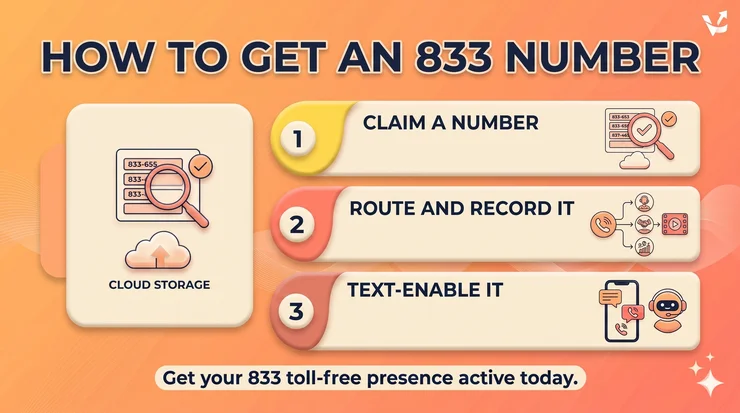
Getting one is a short process: choose a toll-free provider, search its inventory for available 833 numbers, pick a standard or vanity number that fits your brand, choose a plan sized to your expected call volume, then activate and configure routing and voicemail.
Cost varies by provider and features rather than by the prefix itself — a basic 833 line with call forwarding and voicemail typically runs somewhere in the $10–$30-a-month range, with per-minute charges for incoming calls layered on top, while plans that add IVR menus, call recording, and multiple extensions sit higher. Claiming a standard 833 number is usually free; only distinctive vanity combinations occasionally carry a premium. Because included minutes and features vary so much between providers, it's worth confirming what counts as included call volume before sizing a plan for a national support line.
833 vs. Other Toll-Free Codes, and vs. a Local Number
All toll-free prefixes — 800, 888, 877, 866, 855, 844, and 833 — function identically; the difference is mainly availability. 800 is the oldest and most recognized, with most simple combinations long taken. 833, being newest, still has the deepest pool of open vanity combinations. The separate decision is whether to go toll-free at all: a local number builds community presence for a business that genuinely serves one city, while 833 signals you serve customers anywhere. Plenty of growing businesses start local and add an 833 line as they expand, rather than porting the original — a provider like letsdial lets you run both on one account.
Blocking Unwanted 833 Calls
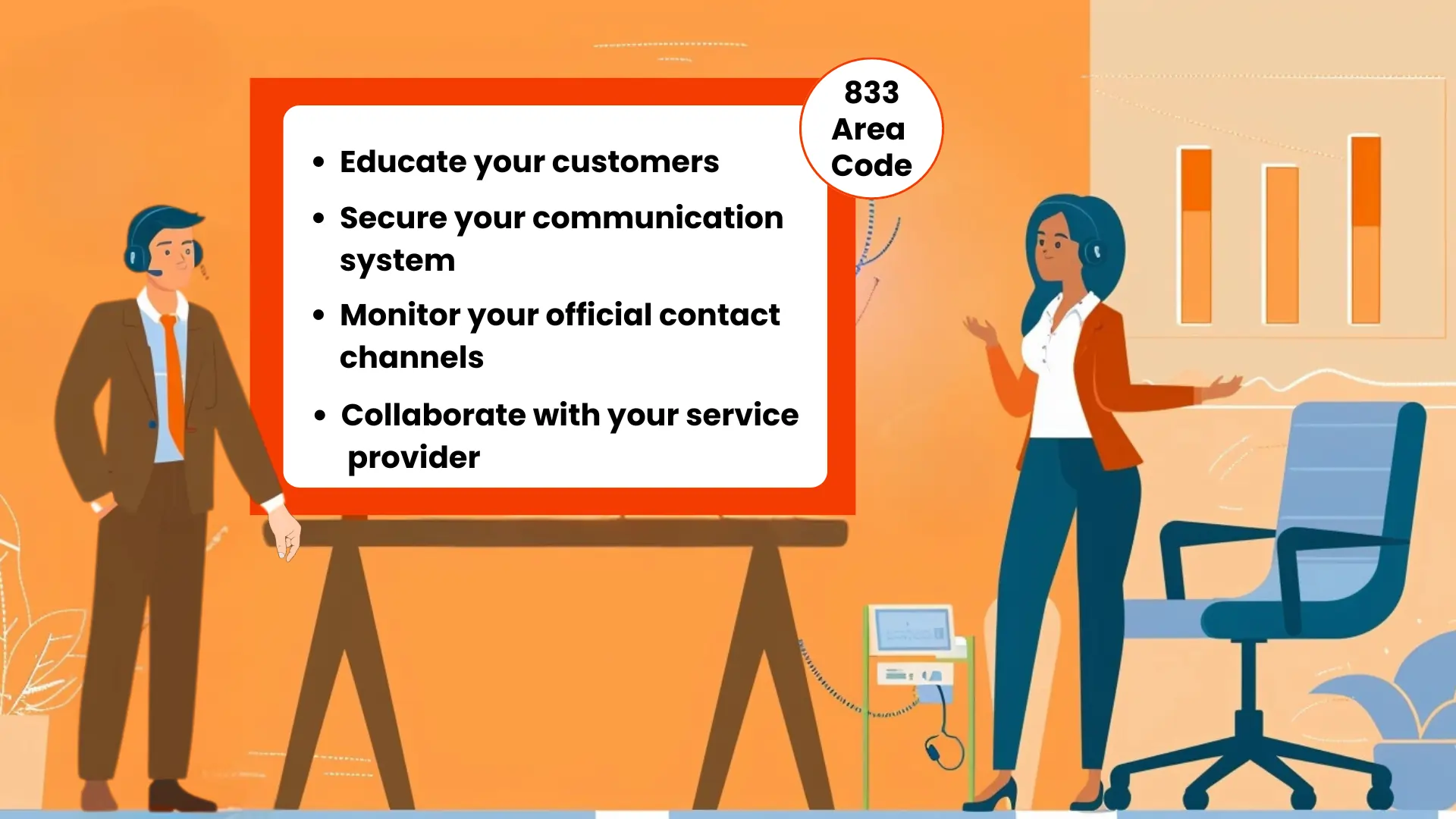
833 numbers are legitimate toll-free codes, but scammers sometimes misuse them like any prefix. Use your phone's built-in call blocking, install an app like Truecaller or Hiya, register on the National Do Not Call Registry (donotcall.gov), and report suspicious calls to the FTC at reportfraud.ftc.gov.
833 is officially documented under the North American Numbering Plan, which governs area code assignments across the US, Canada, and the Caribbean. That record is published in full as North American Numbering Plan.
Conclusion
An 833 number gives a business the same nationwide reach as any other toll-free code, with a wider pool of vanity combinations still available since it's the newest prefix in the family. Whether you're launching a national support line, running e-commerce, or simply want a number that never has to change as you expand into new markets, 833 is a practical, no-cost-to-callers way to look established from the first call. Get an 833 number activated in minutes, with routing, recording, and a real dashboard included.
Frequently Asked Questions
Written by Aryan Khan · May 7, 2024
Reply to the author