Introduction
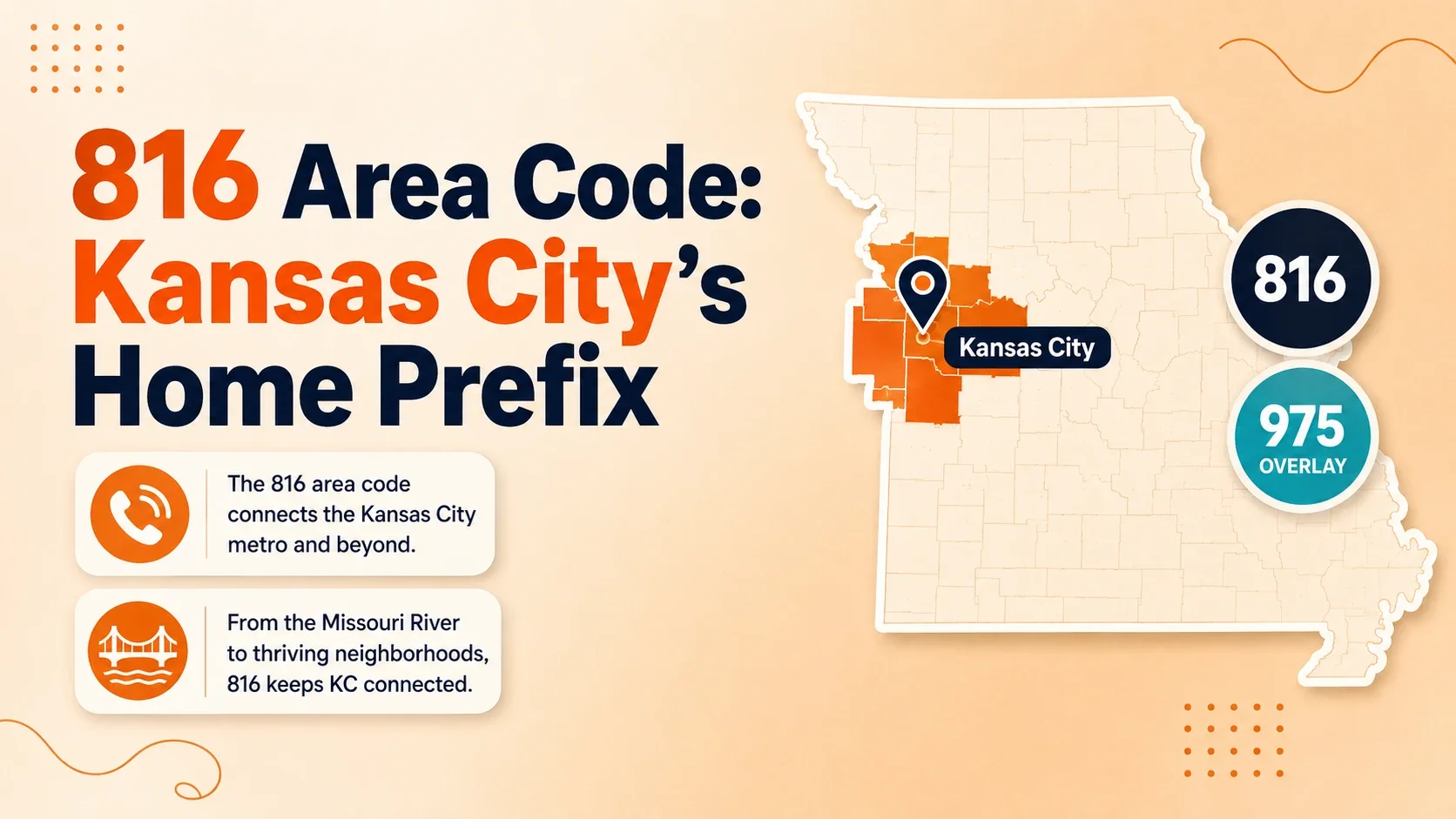
The 816 area code has rung through Kansas City since the very first days of the North American Numbering Plan, and this guide breaks down everything that prefix covers today. Anyone who spots this code on a missed call, or types what is 816 area code into a search bar, deserves a clear answer instead of a dozen scattered forum threads. This article walks through the cities the 816 area code reaches, the story behind its boundaries, the newer 975 overlay, and how to spot a scam call that borrows it. By the end, this Missouri prefix will make complete sense, from its 1947 origin to why every local call here now needs 10 digits.
- The 816 area code covers Kansas City, Independence, Blue Springs, Liberty, and the rest of northwestern Missouri.
- It launched in 1947 as one of the original North American Numbering Plan area codes.
- A 1997 split created area code 660, and the 975 overlay arrived in 2023.
- A cloud phone provider lets any business activate a local Kansas City number in minutes, with no hardware required.
816 Area Code Coverage: Cities and Counties
Where Exactly Is Area Code 816?
Anyone searching where is 816 area code wants a fast, map-based answer before anything else. The territory sits on the Missouri side of the Kansas City metro, stretching north toward St. Joseph and covering a wide stretch of northwestern Missouri. Roughly 72 cities and 16 counties fall inside its boundary, making it one of the larger area codes by geography in the Midwest.
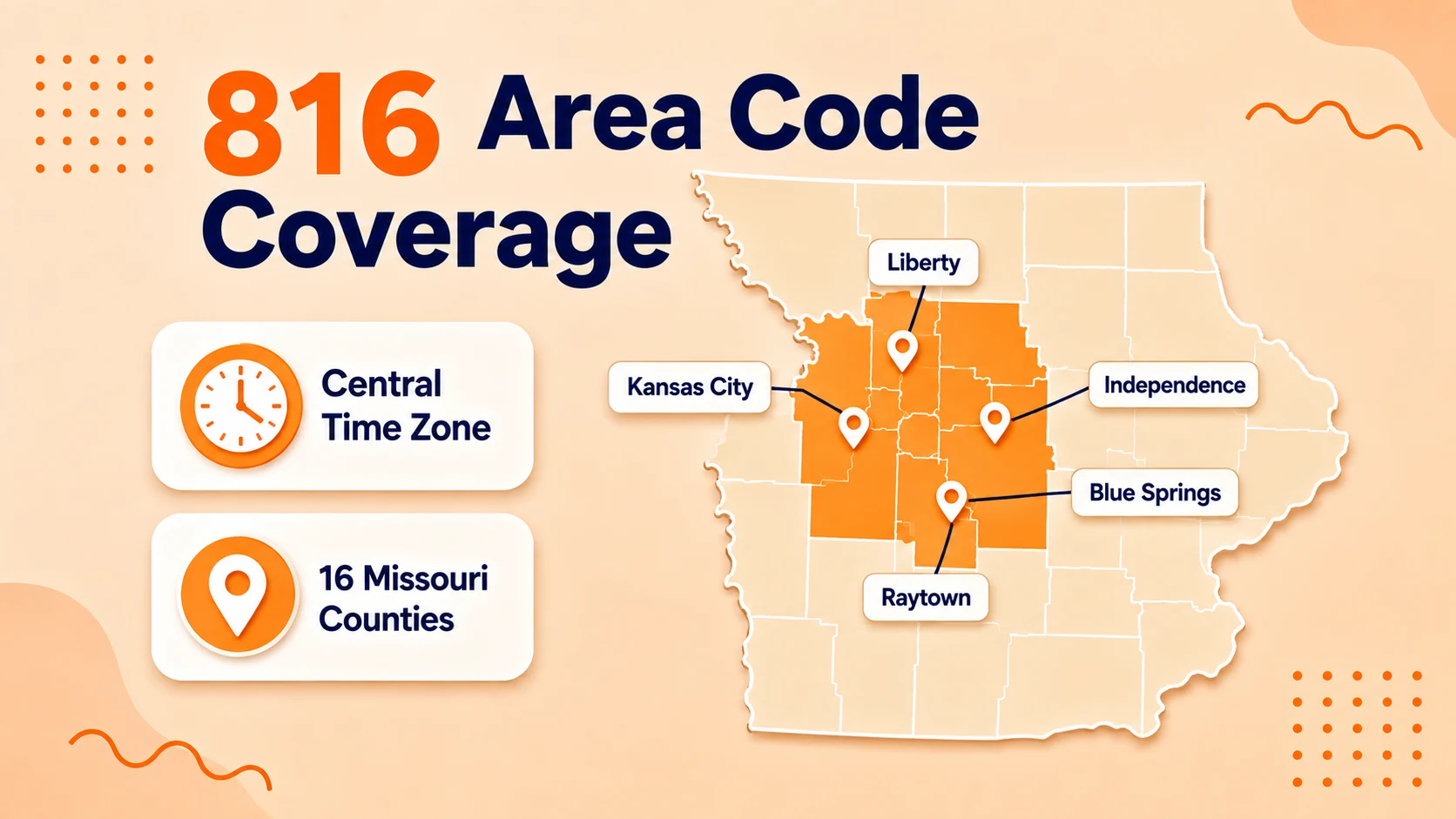
Kansas City, Independence, Blue Springs, Liberty, Raytown, Belton, Warrensburg, Excelsior Springs, Kearney, and Smithville all dial out using this prefix. That mix spans a major metro core, historic river towns, and smaller farming communities within the same calling region. The same layered-numbering pattern shows up elsewhere too, the way a Michigan business might hold an 810 area code line alongside a Kansas City one.
Central Time, No Exceptions
Every city under the 816 area code runs on Central Time, matching the rest of western Missouri and eastern Kansas. That puts it one hour behind the East Coast and two hours ahead of the Pacific Coast, a gap that rarely trips up local scheduling. Businesses coordinating with partners across the Midwest never need to do any time zone math here at all.
How Area Code 816 Came to Be
Missouri received its first area code in 1947, and 816 was it, making the prefix one of the original 86 area codes assigned across the entire country, more than a decade before a later prefix like the 408 area code even existed. It originally covered a much wider stretch of the state than it does now, long before later growth forced regulators to redraw its borders. Understanding that history explains why Kansas City's boundaries look the way they do today.
The 1997 Split to 660
In 1997, regulators split the region so the Kansas City metro kept area code 816 while the rest of northwestern and central Missouri received the new area code 660. That change trimmed the territory down to the dense metro core and its immediate surrounding counties. The split kept existing Kansas City numbers unchanged for residents who stayed within the new boundary.
The 975 Overlay in 2023
By the early 2020s, the Kansas City metro's growth pushed available 816 numbers close to exhaustion again, but regulators chose an overlay this time instead of another split. Area code 975 went into service in 2023, layered directly on top of the same territory as 816. Because both codes now share one region, every local call requires all 10 digits, even a call between two downtown offices.
Kansas City's Growing Business Scene
Kansas City sits at the crossroads of four major interstates and four Class 1 rail lines, a position that has made the metro a logistics magnet for decades. Distribution and fulfillment alone employ more than 100,000 people here, with companies like Amazon and FedEx running major operations alongside a dense network of regional carriers. That freight-and-fulfillment backbone is a big reason an 816 number still carries weight with logistics and manufacturing clients.
The metro has also become one of the fastest-growing tech hubs in the Midwest, part of a stretch of cities sometimes called the Silicon Prairie. Thousands of tech companies now operate in the area, and the sector is expanding faster than the national average, drawing on strengths in healthtech, fintech, and cloud infrastructure. Kansas City is also home to the country's largest concentration of animal health companies, giving the region an unusually diverse economic base for its size.
That mix of logistics muscle, tech momentum, and specialized industry gives a local 816 number real weight with Kansas City clients. A cloud phone provider such as Letsdial lets a business claim that presence immediately, without leasing warehouse or office space just to get a matching area code.
Why Businesses Choose Local Phone Numbers
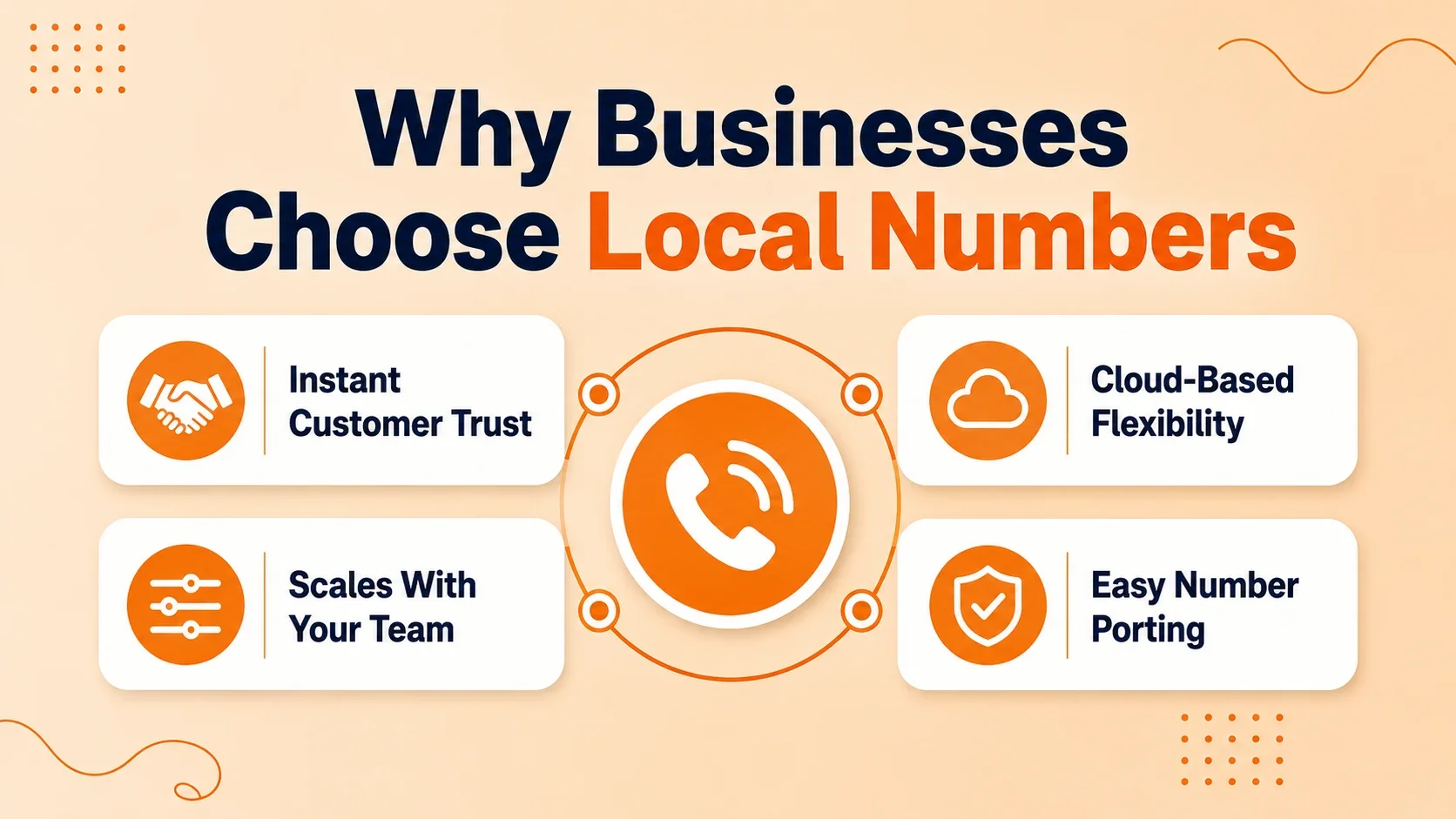
Local area codes carry weight with customers long before anyone answers the phone. A caller ID that matches the region a customer already recognizes tends to get answered more often than an unfamiliar prefix, and that small signal builds trust before a conversation even starts. Contractors, clinics, and law firms around Kansas City often pick a matching 816 number for exactly this reason.
Virtual phone numbers make that local presence possible without renting office space just to justify a regional prefix. A business can hold a Kansas City number while its team works from anywhere, since the number itself lives in the cloud rather than tied to a physical desk phone. Letsdial is one example of a provider that bundles this kind of virtual number with call routing, voicemail, and texting in a single dashboard.
Cloud phone systems add flexibility on top of that local presence. Teams can scale a number up or down as call volume shifts, add new lines without an installation appointment, and route calls intelligently based on time of day or caller intent. When choosing a business phone number, prioritize a prefix your actual customers recognize, confirm the provider supports the channels you need, and check that porting an existing number stays simple if you ever switch providers.
How to Avoid Scams Using the 816 Area Code
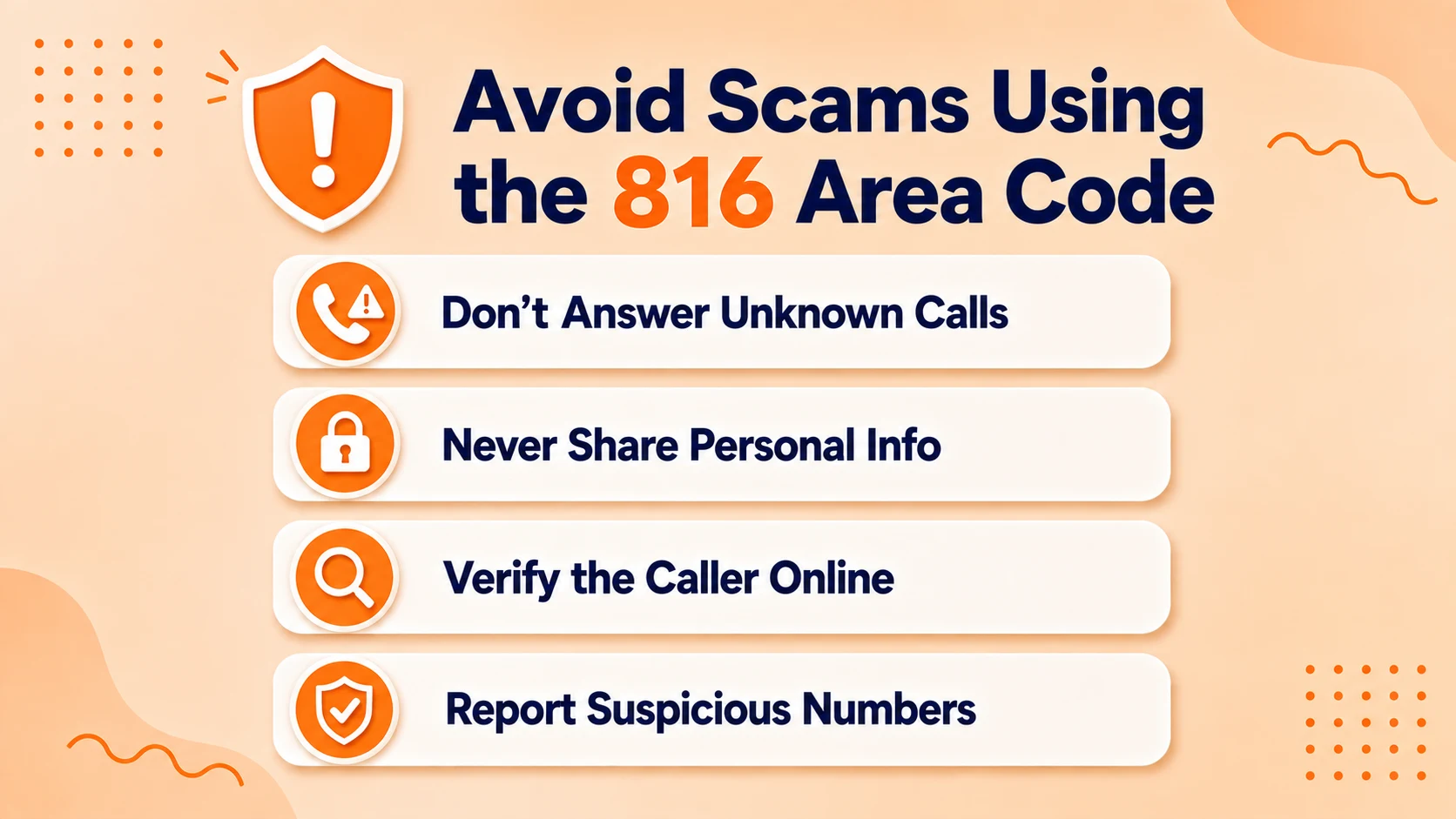
This prefix carries no more risk than any other, but its size and recognizability make it a frequent target for spoofed robocalls. Scammers can fake a caller ID to display a Kansas City number even when the call actually originates far outside Missouri. Verifying a suspicious call by searching the exact number online takes only a few seconds and usually settles the question fast.
816 vs. Nearby Missouri and Kansas Prefixes
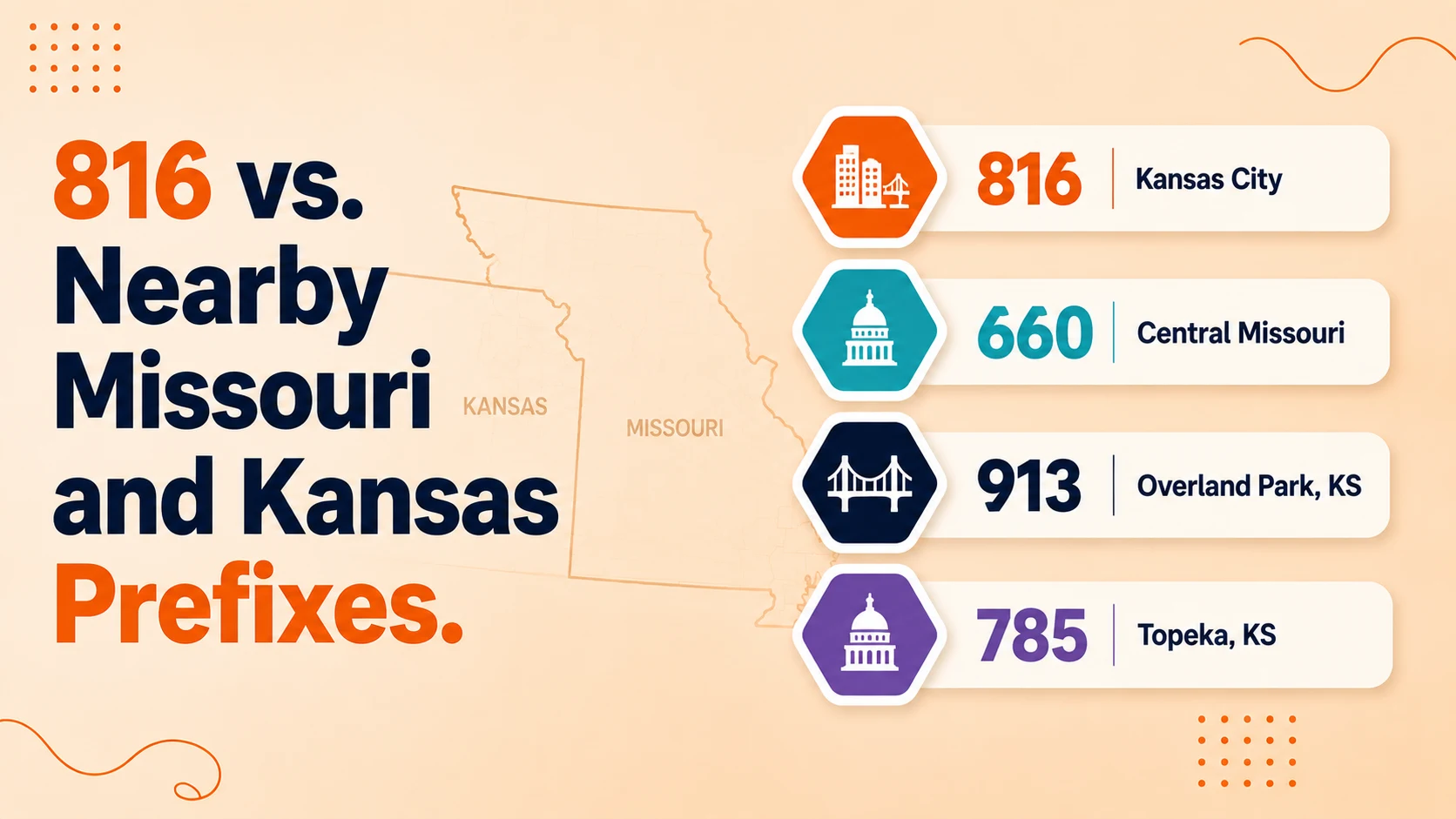
Kansas City's numbering map connects directly to several well-known neighboring codes. Area code 660 covers the rest of northwestern and central Missouri after the 1997 split, while 913 numbers serve the Kansas side of the metro, including Overland Park. According to the FCC's overview of area code overlays, 785 handles Topeka and much of central and northwestern Kansas, rounding out the prefixes that surround this one.
Businesses serving customers across the full Kansas City metro often hold numbers in both 816 and 913 rather than picking just one state's prefix. A cloud phone system keeps every one of those numbers inside a single login, regardless of which side of the state line a customer calls from. That setup turns a two-state metro's numbering map into a simple operational advantage.
Choosing area code 816 specifically still makes sense for any business rooted in Kansas City proper, even as 975 numbers become more common around it. The prefix remains the recognizable anchor of Missouri's original telephone identity, despite losing territory once and sharing its footprint with an overlay. That name recognition is a quiet advantage for companies planning to stay in the market long term.
Conclusion
The 816 area code remains Missouri's original prefix, shaped by a 1997 split and a modern 2023 overlay that reflect decades of Kansas City's growth. Kansas City, Independence, and Blue Springs all still share this code, running on Central Time alongside the rest of the region. Its history traces from a 1947 assignment as one of the country's first area codes, through the split into area code 660, to the 975 overlay added in 2023. Anyone asking what is 816 area code now has the complete picture, from its origin to why every call here needs 10 digits.
Claiming a number in this area code no longer requires opening a physical office anywhere near Kansas City. A cloud-based provider can assign the line, route the calls intelligently, and even staff an AI receptionist while the rest of the team works from anywhere. Whether the goal is building trust with Missouri customers or simply testing the market, the next step is straightforward. Set up a Letsdial number today and start sounding local before a competitor claims the same advantage.
Frequently Asked Questions
Written by Aryan Khan · August 6, 2026
Reply to the author