Introduction
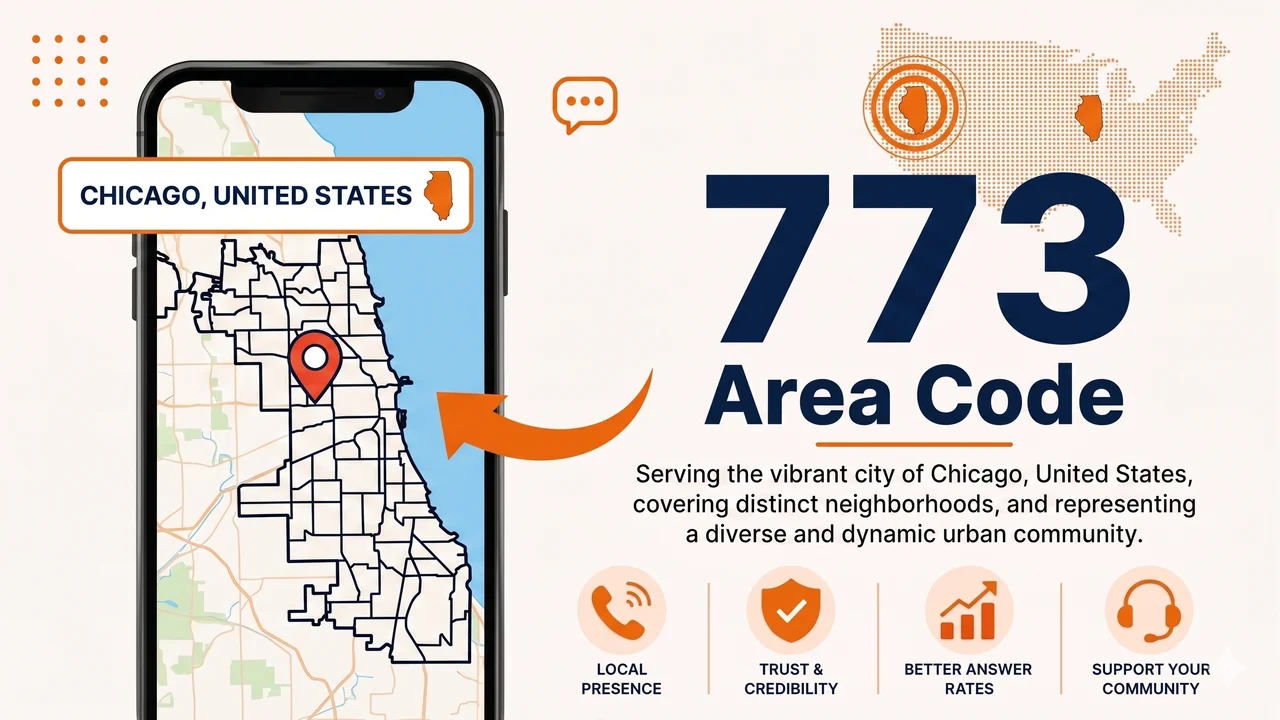
The 773 area code covers Chicago, Illinois — specifically the neighborhoods outside the downtown Loop. It went into service on October 12, 1996 as a geographic split from area code 312, carved out to give the city's outer North, West, and South Side communities their own numbering territory as Chicago's population, businesses, and early mobile-phone adoption pushed 312 toward exhaustion.
312 didn't disappear; it shrank down to the downtown core, and by 2009 even that split wasn't enough headroom, so regulators added 872 as an overlay across both 312 and 773. Today all three codes coexist across the city, which is why every local Chicago call needs all ten digits. This guide covers where 773 actually reaches, how it relates to 312 and 872, and how to get a 773 number for a business through Letsdial.
Key Takeaways
- Split from area code 312 on October 12, 1996 — not an overlay of it
- Covers Chicago's neighborhoods outside the downtown Loop, all within Cook County
- Overlaid by area code 872 since November 2009, requiring 10-digit local dialing
What Is the 773 Area Code?
Area codes are the three-digit prefixes the North American Numbering Plan (NANP) uses to route calls to a specific region. In a standard 10-digit US number, the first three digits identify the area code, the next three identify the central office serving that exchange, and the final four identify the individual line.
773 was assigned specifically to relieve 312, which by the mid-1990s covered all of Chicago and was running out of available numbers as residents, businesses, and pagers multiplied. Rather than overlay the whole city at that point, regulators chose a geographic split: downtown kept 312, and the city's outer neighborhoods became 773.
The changeover wasn't instant. Regulators built in a permissive dialing period from the October 12, 1996 launch through January 11, 1997, during which calls in outer Chicago would still connect whether a caller dialed the old 312 prefix or the new 773 one. That three-month cushion gave households and businesses time to reprogram fax machines, alarm systems, and printed stationery before 312 stopped working outside the downtown core and 10-digit dialing became mandatory citywide. More detail sits on our call recording page.
Where the 773 Area Code Covers
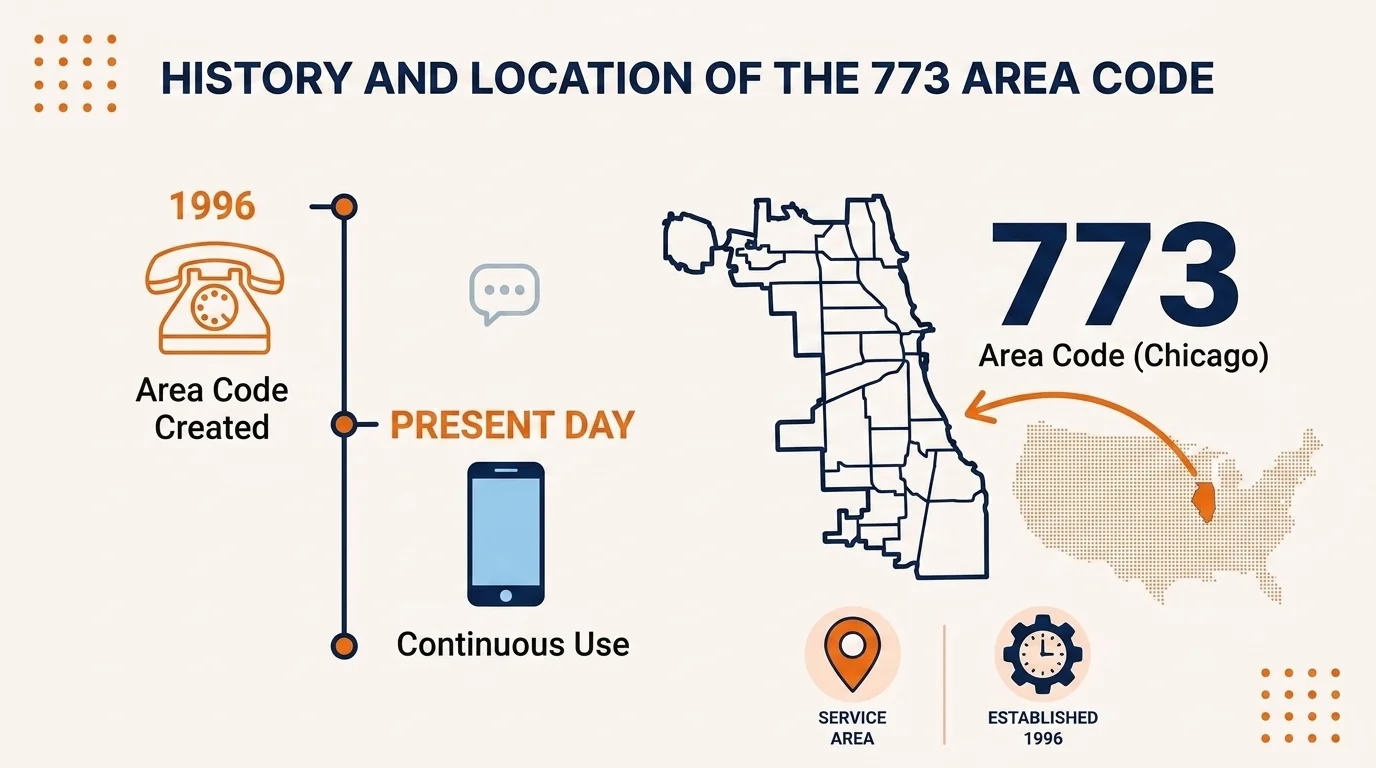
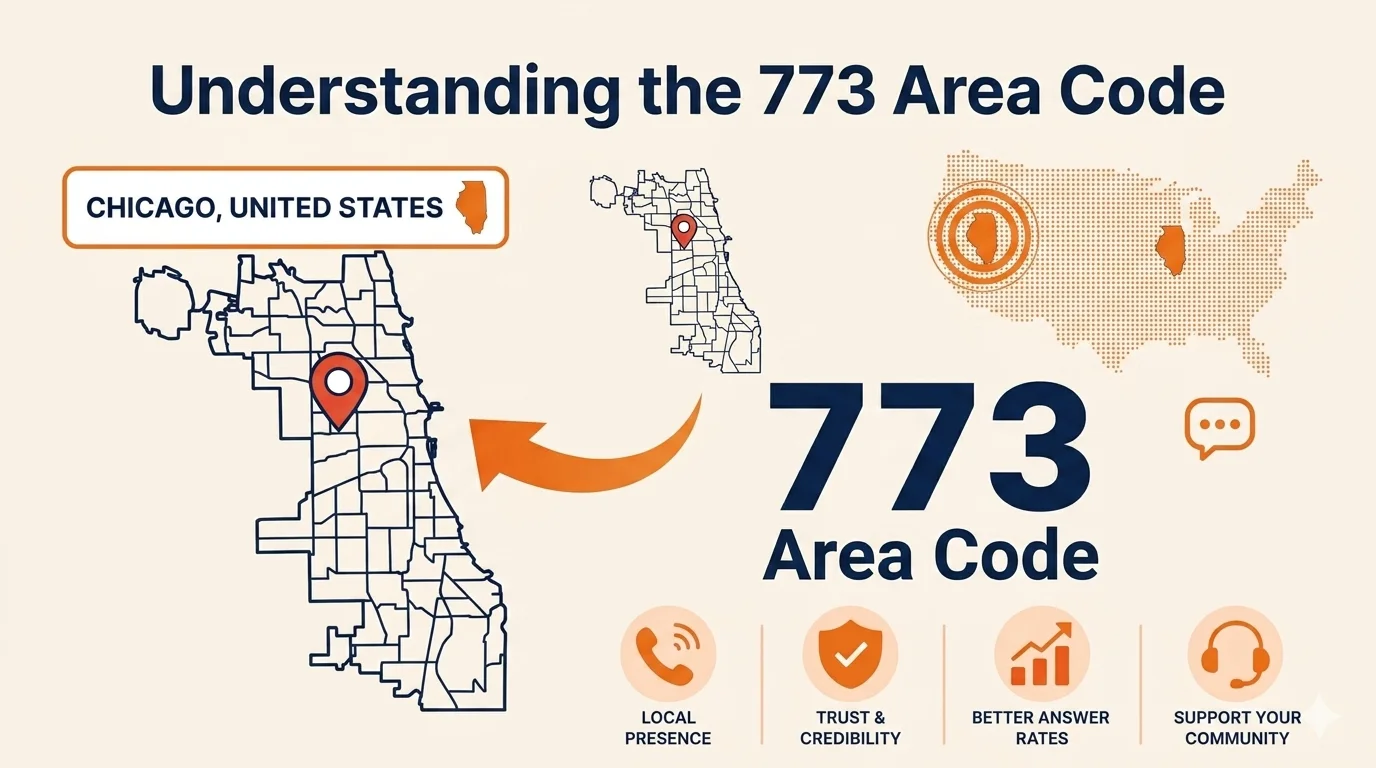
773 is entirely within Chicago and Cook County — it doesn't extend into DuPage, Will, or Kane counties, which are served by their own suburban area codes. Geographically, 773 is essentially everything outside the enclave that 312 kept: North Avenue to the north, Western Avenue to the west, and 35th Street to the south, bordered by Lake Michigan on the east, plus the rest of the city beyond that boundary.
Within that footprint, 773 reaches the bulk of Chicago's famous 77 community areas, including Lincoln Park, Lakeview, Wrigleyville, and Uptown on the North Side; Logan Square, Humboldt Park, and Wicker Park on the West Side; and Hyde Park, Bronzeville, and Englewood on the South Side. All of it sits in the Central Time Zone, same as the rest of Chicago and northeastern Illinois.
The territory carries plenty of Chicago's best-known addresses along with it. Wrigley Field sits squarely in 773 territory in Wrigleyville, and the University of Chicago's Hyde Park campus does too, alongside neighborhood landmarks like Lincoln Park Zoo and dozens of the CTA's Brown, Red, and Blue Line stops that link those outer communities back downtown. For a business, that mix of residential density and recognizable local landmarks is exactly what makes a 773 number read as authentically Chicago rather than generic Illinois. More detail sits on our Letsdial page.
The 312 vs. 773 vs. 872 Split
New Chicago-area callers often assume 773 is a hand-me-down or secondary code, but it isn't — 312 and 773 have always been equally genuine Chicago numbers, just for different parts of the city. 312 signals downtown and the Loop; 773 signals the broader residential and commercial city beyond it.
The Illinois Commerce Commission approved area code 872 as an overlay on August 10, 2007, and it went live on November 7, 2009, covering the exact same geography as both 312 and 773 rather than carving out new territory. That's the key difference between a split and an overlay: a split divides one region into two distinct areas with different codes, while an overlay stacks a new code onto an existing area so all of them share the same footprint. Because 872 overlays the whole city, new Chicago lines today can be issued as 312, 773, or 872, and every local call — even next door — requires the full 10 digits.
The rollout followed the same cautious pattern as the original 773 split: carriers began assigning the first 872 prefixes on August 7, 2009, opening a 90-day permissive dialing window before the overlay's mandatory 10-digit rule took full effect that November. That gap matters for anyone reading old paperwork or an inherited contact list today — a Chicago number without a leading area code from that era could technically have been dialed under 312, 773, or the newly arriving 872, which is one more reason to confirm the full 10 digits before saving any older Chicago contact.
How to Dial Within the Overlay
- Local calls: dial all 10 digits (area code + 7-digit number), even between two 773 numbers or a 773-to-312 call across the same city
- Long-distance calls: dial 1 + area code + 7-digit number for calls originating outside the 312/773/872 overlay
- A 7-digit-only dial will fail everywhere in Chicago's overlay region, so it's worth double-checking a saved contact's full area code before calling
Benefits of a 773 Area Code Number for Business
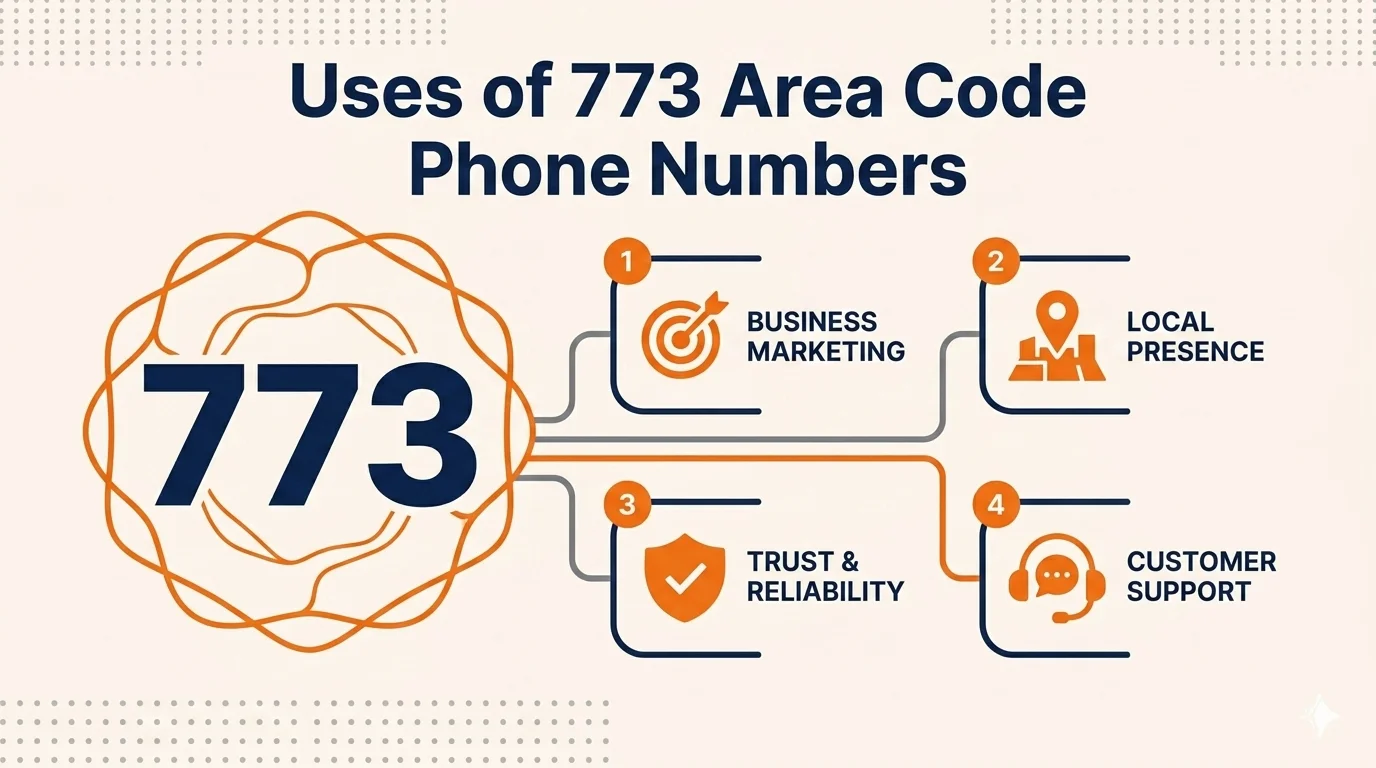
Because 773 covers the neighborhoods where most Chicagoans actually live, a business that carries the code reads as embedded in the city rather than parachuted in for downtown appointments only. That distinction matters for anything neighborhood-facing — a dental practice in Lakeview, a home-services contractor working the South Side, or a nonprofit organizing in Logan Square all benefit from a number that matches the community it serves.
Consider a real estate agent showing properties across Lincoln Park, Wicker Park, and Hyde Park in the same week — a 773 number tells every prospective buyer the agent actually works those blocks, rather than routing through an out-of-state call center. The same logic applies to a plumbing or HVAC company dispatching techs across the South Side, or a multi-location coffee shop chain that wants each storefront's callers to recognize the number before deciding whether to pick up. A recognizable local code shortens that hesitation, which shows up directly in answered calls and booked appointments.
- Local identity and credibility: a 773 number signals a genuine Chicago neighborhood presence, not just a downtown mailing address
- Targeted marketing and customer reach: helps campaigns aimed at North, West, and South Side residents land as locally relevant
- Increased accessibility: Chicago customers are more likely to answer or return a call from a recognizable local code
- Professionalism: pairs local presence with features like call recording and an AI receptionist so a lean team can sound like an established Chicago operation
How to Get a 773 Area Code Phone Number
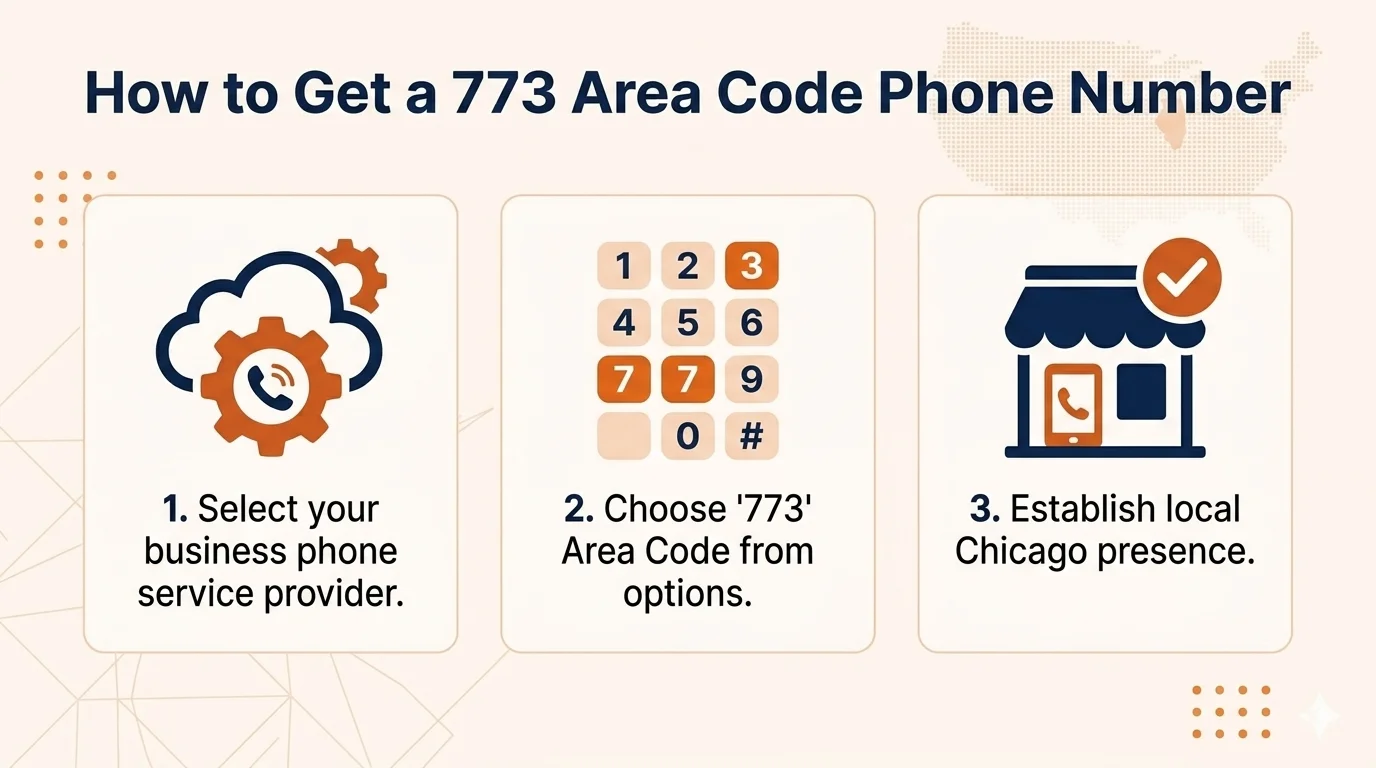
- Sign up with a cloud phone provider like Letsdial — no Chicago office or address required
- Search available numbers and select a 773 prefix (or 312/872, if 773 inventory is limited in the exchange you want)
- Choose a plan sized to the team, from a single line to a full contact center
- Configure call forwarding, voicemail-to-email, and an auto-attendant so calls route correctly from day one
- Activate the number and start dialing and receiving calls immediately — porting an existing 773 number follows the same setup with an added transfer step
When comparing providers, weigh call quality, STIR/SHAKEN spam attestation, and how easily the service scales, rather than picking on price alone — a 773 number that gets mislabeled as spam undermines the local credibility it was meant to build. A traditional carrier can assign a 773 line too, but porting, adding lines, and reconfiguring call routing typically take longer than they would on a cloud platform built for exactly that kind of change.
Porting an existing 773 number away from a legacy carrier usually takes a few business days rather than hours, since the losing carrier has to confirm account details before releasing the number — plan around that gap rather than canceling old service the same day a new line goes live. It's also worth requesting numbers from more than one exchange if the growth plan includes adding lines later: because 312, 773, and 872 now share the same overlay, a cloud platform can typically add a second or third line under whichever prefix has open inventory without disrupting the original number a business has already printed on signage or business cards.
Area code 773 is officially documented under the North American Numbering Plan, which governs how codes like 773, 312, and 872 are assigned and managed across the US, Canada, and the Caribbean. For the official record, see the FCC's North American Numbering Plan page.
Conclusion
The 773 area code is a full, original Chicago code in its own right — split from 312 in 1996 to cover the city's neighborhoods outside downtown, and now sharing that territory with the 872 overlay added in 2009. For a business, a 773 number is a straightforward way to establish real local presence across Chicago's North, West, and South Sides, and Letsdial makes getting one, and running it well, simple from anywhere in the country.
Frequently Asked Questions
Written by Aryan Khan · August 10, 2024
Reply to the author