Introduction
A 705 number covers more ground than almost any other code discussed in this series, stretching across a vast swath of Northern and Central Ontario that includes cottage country, mining towns, and small cities spread hundreds of kilometres apart. If a 705 call just reached you, or you're weighing one for your own business, this region has grown so much that it now shares its territory with not one but two additional codes.
This guide covers exactly where 705 reaches, how it split away from Ontario's earlier codes and later picked up two separate overlays, which cities and industries anchor this enormous region, and what dialing here requires today. We'll close with the scam tactics that try to trade on this widely recognized Canadian code's credibility.
The Ground a 705 Number Covers
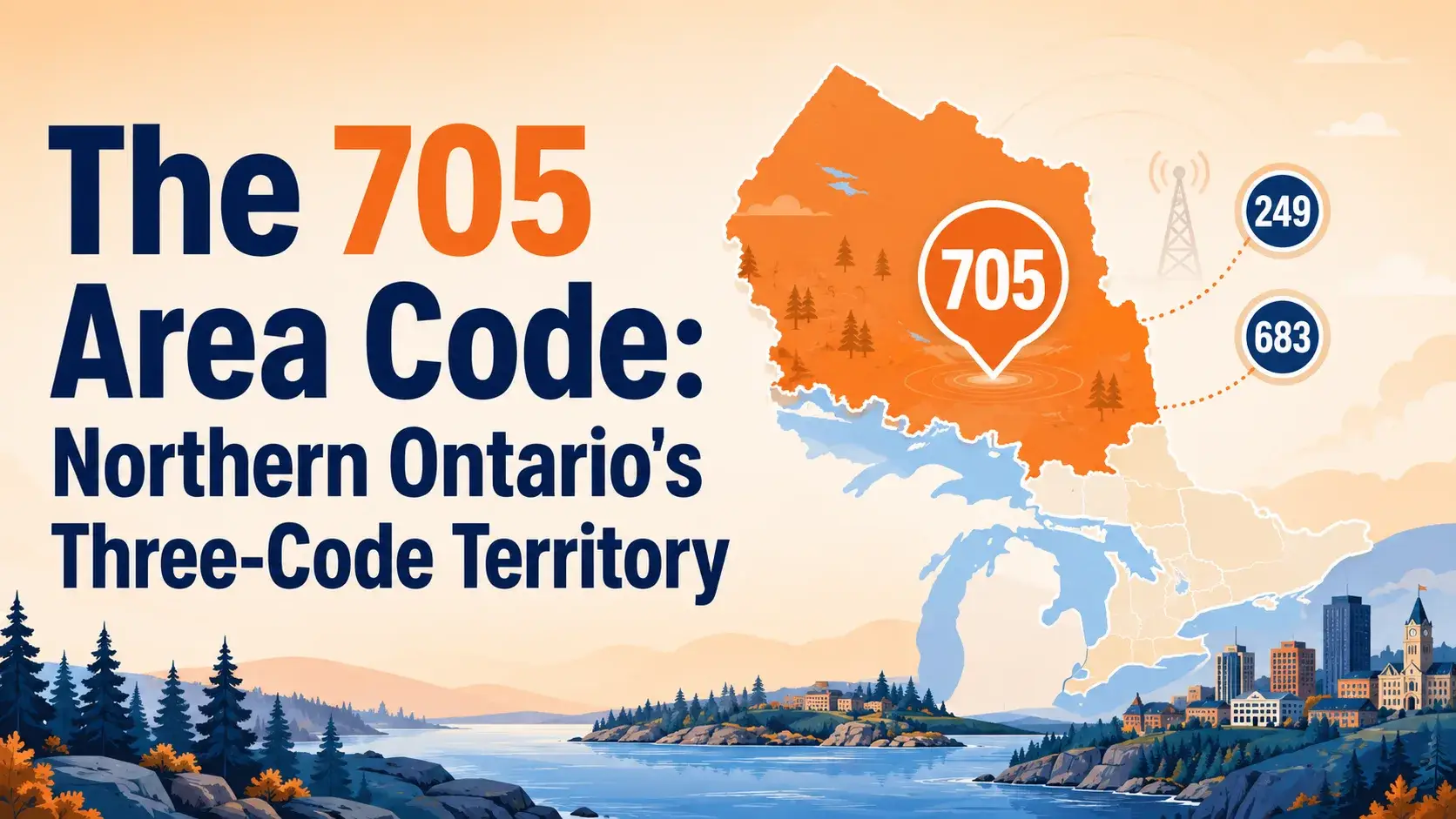
705 covers a huge stretch of Northern and Central Ontario, running from cottage country north of Toronto all the way up toward James Bay.
The territory includes major communities like Barrie, Sudbury, Peterborough, North Bay, Sault Ste. Marie, Timmins, and Orillia, along with dozens of smaller towns and remote communities scattered across an area larger than many entire American states. Everything in the region runs on Eastern Time, matching the rest of southern and central Ontario.
Because the land area is so large and the population relatively spread out, a single 705 number can represent a business serving customers separated by hundreds of kilometres of highway and lakeshore. Winters here are also notably harsher than in southern Ontario, a factor that shapes everything from tourism seasons to how local businesses plan their service schedules.
From an Early Split to a Double Overlay
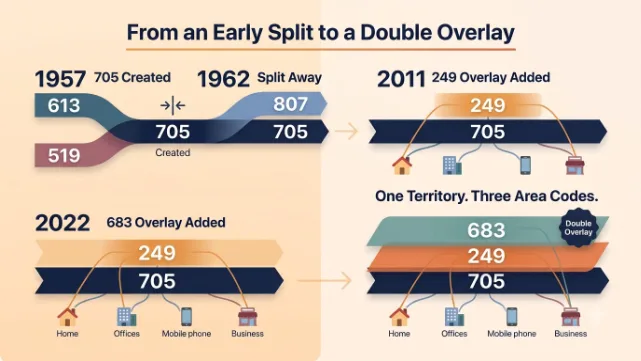
705 has one of the more layered histories in this series, shaped first by a split and later by not one but two separate overlay codes.
705 was created in 1957, carved out of the 613 and 519 area codes to give Northern and Central Ontario its own dedicated number space. Just five years later, in 1962, the far northwestern portion of that territory split away again to form 807, trimming 705 down closer to the footprint it holds today.
Decades of population and phone-line growth eventually caught up with the region, and in 2011 regulators added 249 as an overlay directly on top of the existing 705 territory rather than splitting it again. That wasn't the end of it: continued growth prompted a second overlay, 683, added in 2022, making 705 one of the few area codes anywhere in North America to share its exact territory with two separate overlay codes at once.
Cottage Country, Mining Towns, and the Cities Between
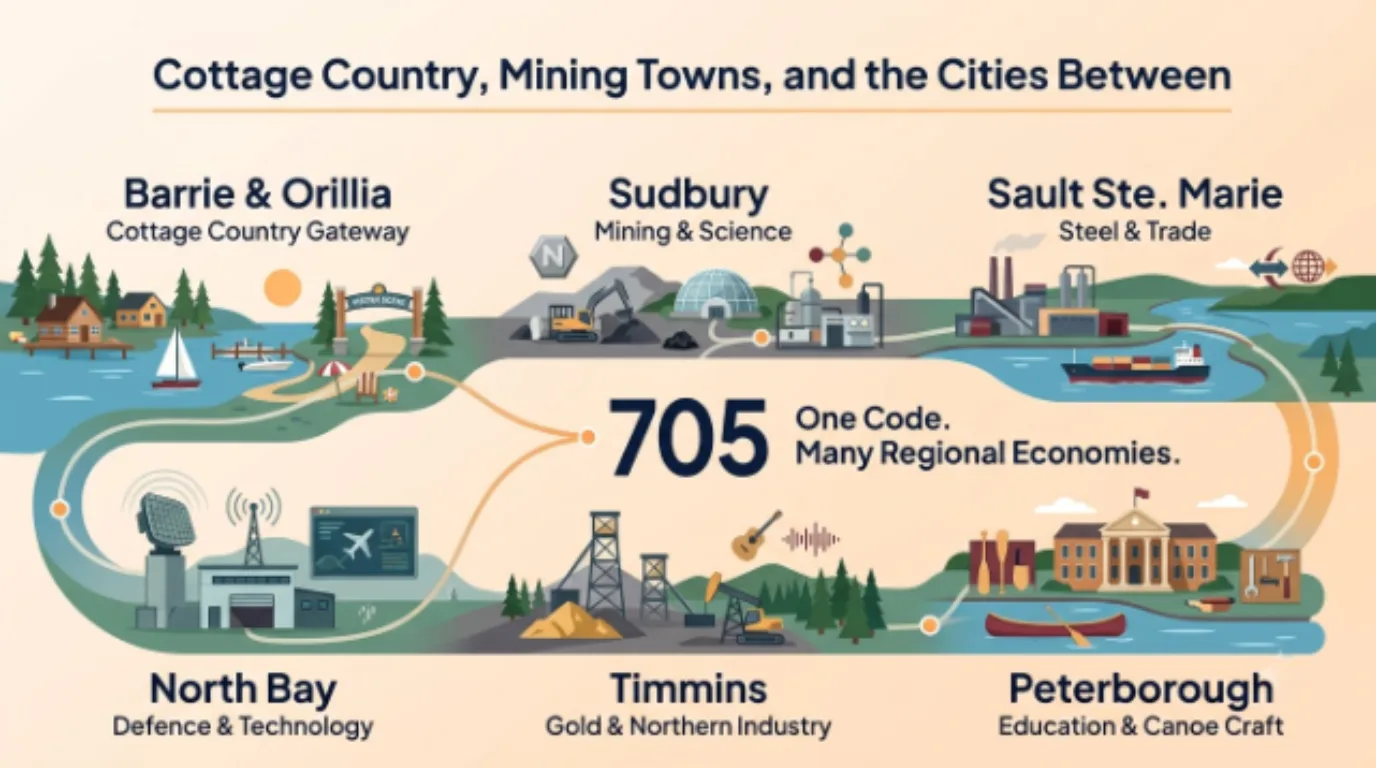
Few area codes cover as wide a range of Canadian industry and lifestyle as the territory behind a 705 number.
Barrie and Orillia anchor the southern end of the region as gateways to Muskoka, Ontario's famous cottage country, where seasonal tourism swells the local population every summer as visitors from Toronto head north for lake life. Sudbury built its economy on nickel mining and remains one of the largest mining centers in the country, home to the Big Nickel monument and the Science North museum.
Sault Ste. Marie, known locally as "the Soo," sits on the St. Marys River connecting Lake Superior and Lake Huron and has built its economy around steel production and cross-border trade with Michigan. North Bay hosts a significant military presence tied to NORAD's continental air defense operations, while Timmins anchors the far north with a gold-mining economy and a claim to fame as the birthplace of country singer Shania Twain.
Peterborough, closer to southern Ontario, supports a strong education and canoe-manufacturing heritage built around Trent University, having long been recognized as a hub for canoe and kayak craftsmanship that draws paddlers from across the country.
Dialing Across a Three-Code Region
Because 705 now shares its territory with both 249 and 683, dialing across the region follows the same overlay rule used elsewhere.
Every local call, whether from a mobile phone, landline, or VoIP line, requires the full 10-digit number, area code included, a rule that's been in place since the 249 overlay launched in 2011. That applies to a call between two neighbors in the same small town just as much as it does to a call across hundreds of kilometres of the territory, regardless of which of the three codes either side carries.
Businesses across the region that still display an old seven-digit number on signage or printed materials should update it, since a caller trying that shortcut will hit an error instead of reaching the business.
Why a 705 Number Still Signals Northern Ontario
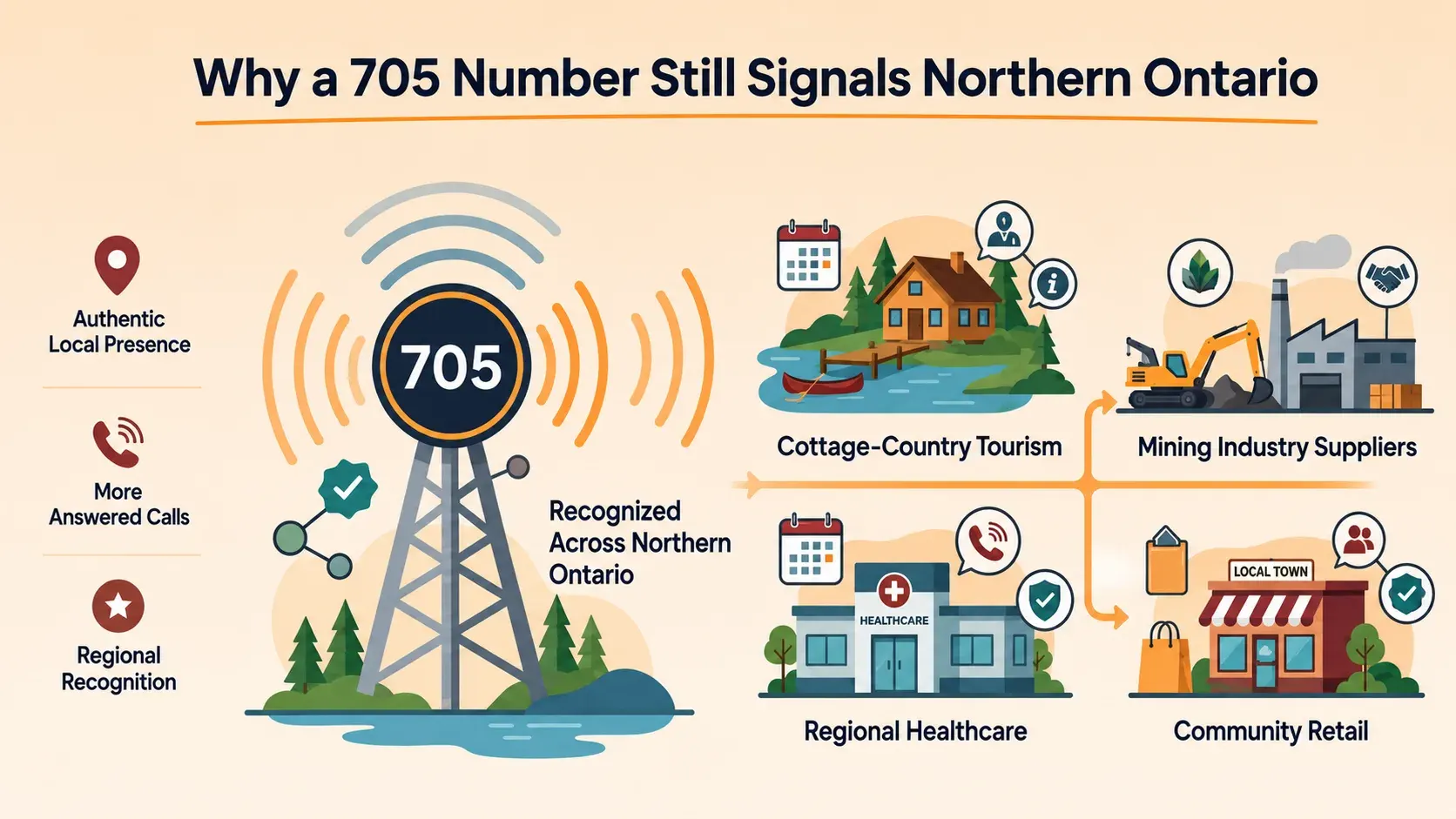
In a region this spread out, a familiar local area code carries real weight in building trust with customers scattered across small towns and rural communities.
Tourism operators courting Muskoka cottage-country visitors, suppliers working with Sudbury's mining industry, and healthcare or retail businesses serving Sault Ste. Marie or North Bay all benefit from a number that reads as genuinely local to the region.
Local numbers consistently earn higher answer rates than long-distance or unfamiliar out-of-area lines, a trust factor that matters even more in smaller Northern Ontario communities where residents are quick to recognize which numbers belong to their own region. That same local-identity effect shows up across the border too, the same way a Charlotte business leans on a 704 number to signal it's genuinely part of that specific regional economy.
Setting Up a 705 Number for Your Business
Claiming a 705 number today doesn't require a Northern Ontario address or a long-term carrier contract.
Cloud-based virtual phone providers, letsdial included, let you select an available 705 number and connect it to any device — a cell phone, desk phone, or softphone app — usually going live the same day. Most plans bundle call forwarding, voicemail transcription, and multi-user routing, so a small remote team can run a 705 line the same way a fully staffed Barrie or Sudbury office would.
There's no equipment to buy or technician visit required, the same self-service setup covered in our guide to claiming a Kansas 620 number for a very different but similarly spread-out rural market.
Scam Calls That Exploit the 705 Prefix
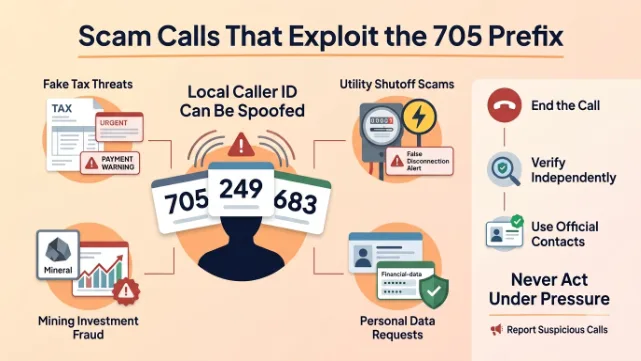
A widely recognized regional area code is exactly the kind of number scammers look to spoof, and Northern Ontario is no exception.
"Neighbor spoofing" shows up across the 705 region the same way it does elsewhere, with fraudsters faking a local number so it looks like it's coming from a nearby business or government office. Reported scripts in this area include fake Canada Revenue Agency tax-debt threats, utility shutoff calls impersonating Hydro One, and fake mining or resource-investment pitches aimed at residents in Sudbury and Timmins.
The Canadian Anti-Fraud Centre recommends never confirming personal or financial information to an unexpected caller, no matter how official or locally familiar the number looks, and encourages residents to report suspicious calls so patterns can be tracked across the region. If a 705, 249, or 683 call pressures you to act immediately, hang up and contact the organization directly through its official website.
The Bottom Line on the 705 Area Code
705 covers one of the largest and most varied territories in this entire series, from Muskoka cottage country to Sudbury's mining industry and the far north near Timmins, all stemming from a 1957 split that's since grown to share its footprint with two separate overlay codes. Few regions anywhere demonstrate as clearly how far a single area code can stretch, both geographically and numerically.
For businesses, a 705 number offers a straightforward way to build credibility across Northern and Central Ontario without opening an office in every town it serves. Dial all 10 digits, stay alert for spoofed scam calls trading on the region's trust, and pick a provider that can get your number active without delay.
Frequently Asked Questions
Written by Aryan Khan · August 4, 2026
Reply to the author