Introduction
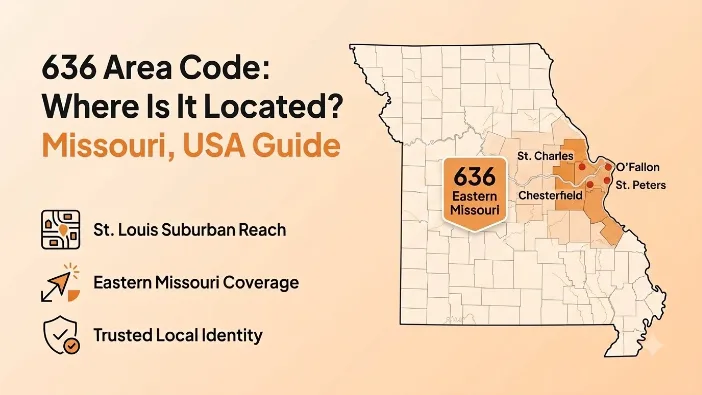
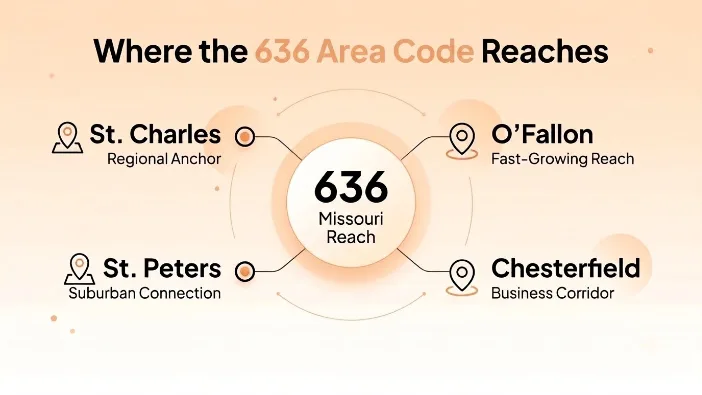
What area code is 636? It's in the USA — St. Charles County and the western suburbs of St. Louis, Missouri. 636 reaches O'Fallon, St. Charles, St. Peters, Wentzville, and Chesterfield, spanning several counties west of the city itself.
This guide answers exactly where the 636 area code is located, why it has never needed an overlay, the Lewis and Clark and theme-park history behind it, its 1999 split from 314, and how to get a St. Louis-suburbs number that gets answered.
Where the 636 Area Code Reaches
636 covers St. Charles, Jefferson, Franklin, and Warren counties, plus portions of St. Louis County and Lincoln County — a wide arc of suburban and exurban territory west and south of St. Louis.
- St. Charles — Missouri's first state capital and the county seat
- O'Fallon and St. Peters — two of the largest and fastest-growing St. Charles County suburbs
- Wentzville — a rapidly expanding suburb near the outer edge of the St. Louis metro
- Chesterfield and Ballwin — St. Louis County suburbs on the western edge of the metro
- Washington — a Franklin County city on the Missouri River
Between these anchor cities, 636 also covers dozens of smaller suburban and exurban towns across its multi-county footprint, from dense St. Louis County suburbs like Ballwin and Wildwood to more rural stretches of Franklin and Warren counties further west.
The entire 636 area code observes Central Time — UTC-6 (CST) in winter and UTC-5 (CDT) during Daylight Saving — the same clock as the rest of Missouri. West Coast teams calling into the 636 region are two hours behind, so a mid-morning Pacific call lands right around lunchtime in St. Charles.
To the east, the city of St. Louis and its inner suburbs answer to the separate 314 area code that 636 split from.
A full breakdown of how 636 fits alongside the rest of the state's prefixes is in this Missouri area codes guide.
636's Origin: No Overlay, Just a Split from 314
636 has no overlay today — it remains the single, original code for its entire multi-county territory more than two decades after it was created. Rather than layer a second code over the existing 314 region, Missouri regulators chose a straight geographic split, carving the fast-growing western and southern suburbs out into their own dedicated area code.
That kind of clean geographic split is standard practice nationwide when a region outgrows its numbers — Missouri took the same approach on the other side of the state when Kansas City's numbers ran low, carving out the 816 area code rather than layering a second code over the existing footprint.
That split took effect on May 22, 1999, with a permissive dialing period that let residents use either the old or new format before mandatory ten-digit dialing between 636 and 314 began on February 26, 2000. The 636 territory has stood as a single, un-overlaid code ever since — the full split history is documented in the FCC's overview of area code overlays.
St. Charles: Missouri's First Capital and Lewis and Clark's Departure Point
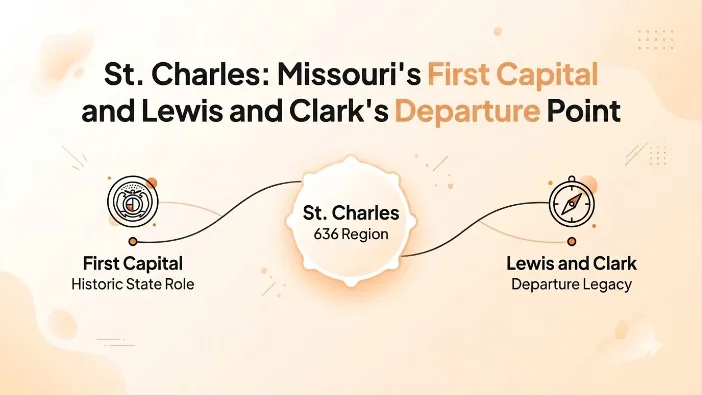
St. Charles carries a genuinely outsized place in American westward-expansion history for a city its size, anchoring the eastern edge of the 636 footprint.
Missouri's First State Capital
Founded in 1769 as a French trading post, St. Charles is the oldest settlement on the Missouri River and served as Missouri's first state capital from 1821 until the government relocated to Jefferson City in 1826. The First Missouri State Capitol building still stands today as a state historic site, and the surrounding historic district's brick storefronts and riverside setting still draw visitors interested in that early state history.
The Lewis and Clark Expedition
St. Charles was the final stop for the Lewis and Clark Expedition before it headed west — William Clark and roughly 42 men camped there for six days in May 1804 waiting for Meriwether Lewis to finish business in St. Louis, and the full Corps of Discovery departed from St. Charles on May 21, 1804, to the cheers of well-wishers who'd gathered to see them off. While waiting there, Clark also recruited two additional boatmen and interpreters into the Corps, making St. Charles not just a departure point but an active staging ground for the expedition itself.
Six Flags St. Louis and the Suburban Growth Corridor
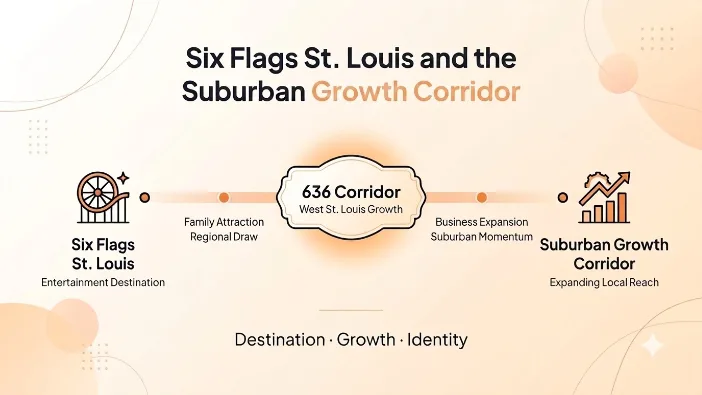
Six Flags St. Louis, located in Eureka inside the 636 footprint, opened on June 5, 1971, as one of the company's three original theme parks under the name Six Flags Over Mid-America. Decades later, it remains a major regional tourist draw and one of the largest seasonal employers anywhere in the St. Louis western suburbs, pulling visitors from across Missouri and Illinois every summer.
That seasonal hiring surge ripples out into the surrounding 636 suburbs each spring, as the park brings on thousands of temporary workers and drives a spike in hospitality and retail business across nearby Eureka, Fenton, and Chesterfield through the summer tourist season.
636 History
The 636 area code went into service on May 22, 1999, split off from the 314 area code, which had originally covered the entire St. Louis metro area. Explosive growth in mobile phones, pagers, and dial-up internet subscriptions through the 1990s pushed the combined territory toward exhaustion, and regulators split the fast-growing western and southern suburbs into their own dedicated code rather than force the whole metro to share an overlay.
That growth wasn't evenly spread across the old 314 territory — St. Charles County in particular had been one of the fastest-growing counties in the entire state through the 1990s, as commuter development pushed steadily west from the city, and that lopsided growth pattern is part of why regulators drew the new 636 boundary where they did.
A permissive dialing period followed the split, letting residents use either format before ten-digit dialing between 636 and 314 became mandatory on February 26, 2000. More than two and a half decades later, 636 remains the single code for its entire territory, with no overlay ever added.
How to Get a 636 Area Code Number
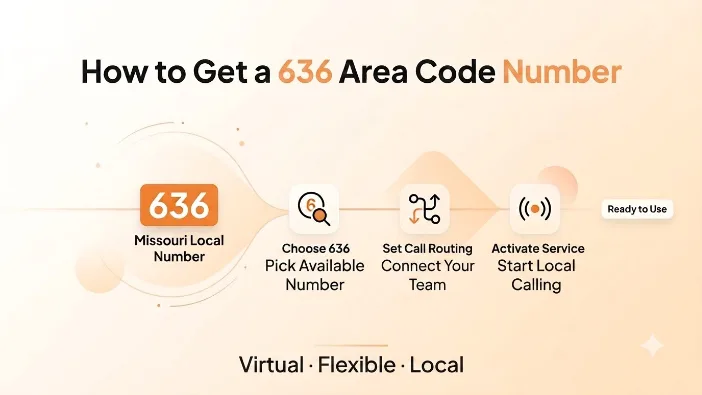
- Cloud phone platform — search available 636 numbers in real time and activate a line the same day, with no hardware and no technician visit.
- Port your existing number — already run a 636 line on another carrier? Move it over without downtime and keep the number active through the transition.
- Wireless SIM or landline carrier — valid for a single physical handset, but slower to provision and harder to scale seat by seat.
With letsdial, a 636 number provisions in under three minutes on a free trial, no credit card required, so a St. Louis-suburbs presence can be answering calls the same afternoon, whether that's a St. Charles office or a remote team representing the region from anywhere in the country.
That same setup works just as well for a business serving Six Flags' seasonal tourism traffic specifically — a vendor selling into the Eureka area doesn't need a physical office nearby to answer on a genuinely local 636 number.
Porting an existing 636 line into a new platform works the same way in reverse: the number stays live the entire time, so a business that's already printed the number on signage, contracts, and directory listings doesn't lose any of that history switching providers, no matter how long it's been printed on a truck or storefront sign.
Call Trust in the St. Louis Western Suburbs
The 636 footprint runs on a mix of dense suburban small-business competition across O'Fallon and St. Peters, tourism and seasonal-hiring traffic around Six Flags St. Louis, and exurban growth in Wentzville — settings where an unfamiliar out-of-area number gets screened before it's answered.
That competitive density is especially pronounced in St. Charles County's newer subdivisions, where residents field a steady stream of calls from contractors, landscapers, and home-services vendors all competing for the same rapidly growing customer base, making a verified local number meaningfully more likely to get answered than an unfamiliar out-of-area one.
A recognizable local prefix earns the first hearing across that varied economy, and because 636 has never split into an overlay, it still reads as an unambiguous, single-region signal rather than one of two or three competing prefixes.
STIR/SHAKEN for a Single-Code Suburban Market
Apply STIR/SHAKEN attestation so every outbound 636 call arrives verified with your registered business name on screen instead of a bare number. As a provider, letsdial registers text campaigns for 10DLC compliance from day one and warms new numbers before scaling volume, so a verified line reads as genuinely local rather than one more unidentified number competing for attention in a fast-growing suburban market.
Conclusion
636 is St. Louis's western and southern suburban area code — the single, un-overlaid code covering St. Charles's status as Missouri's first capital and Lewis and Clark's departure point, and Six Flags St. Louis's decades-long run as a regional tourist draw in Eureka. More than two and a half decades after its 1999 split from 314, it remains the sole, unambiguous prefix for the entire multi-county region.
Standing up a line takes minutes on a cloud platform, with STIR/SHAKEN attestation so calls arrive verified rather than flagged. Put a 636 number in front of suburban customers, tourism-industry vendors, and local partners, and let a familiar prefix open the door first, with letsdial handling the setup end to end, whether the business is based in St. Charles, O'Fallon, or Eureka.
Frequently Asked Questions
Written by Aryan Khan · September 27, 2024
Reply to the author