Introduction
Wisconsin's phone map traces back to a single line drawn in October 1947, and Milwaukee held one end of it. That's the 414 area code — one of the original 86 area codes assigned nationwide, and the parent code that eventually spun off three separate prefixes as the state grew.
Today, area code 414 covers a much smaller footprint than it once did, but that shrinkage is a business story worth knowing. If you're picking a Milwaukee-area number for your company, understanding how this code got here tells you exactly why it still commands trust on a caller ID.
What Is the 414 Area Code?
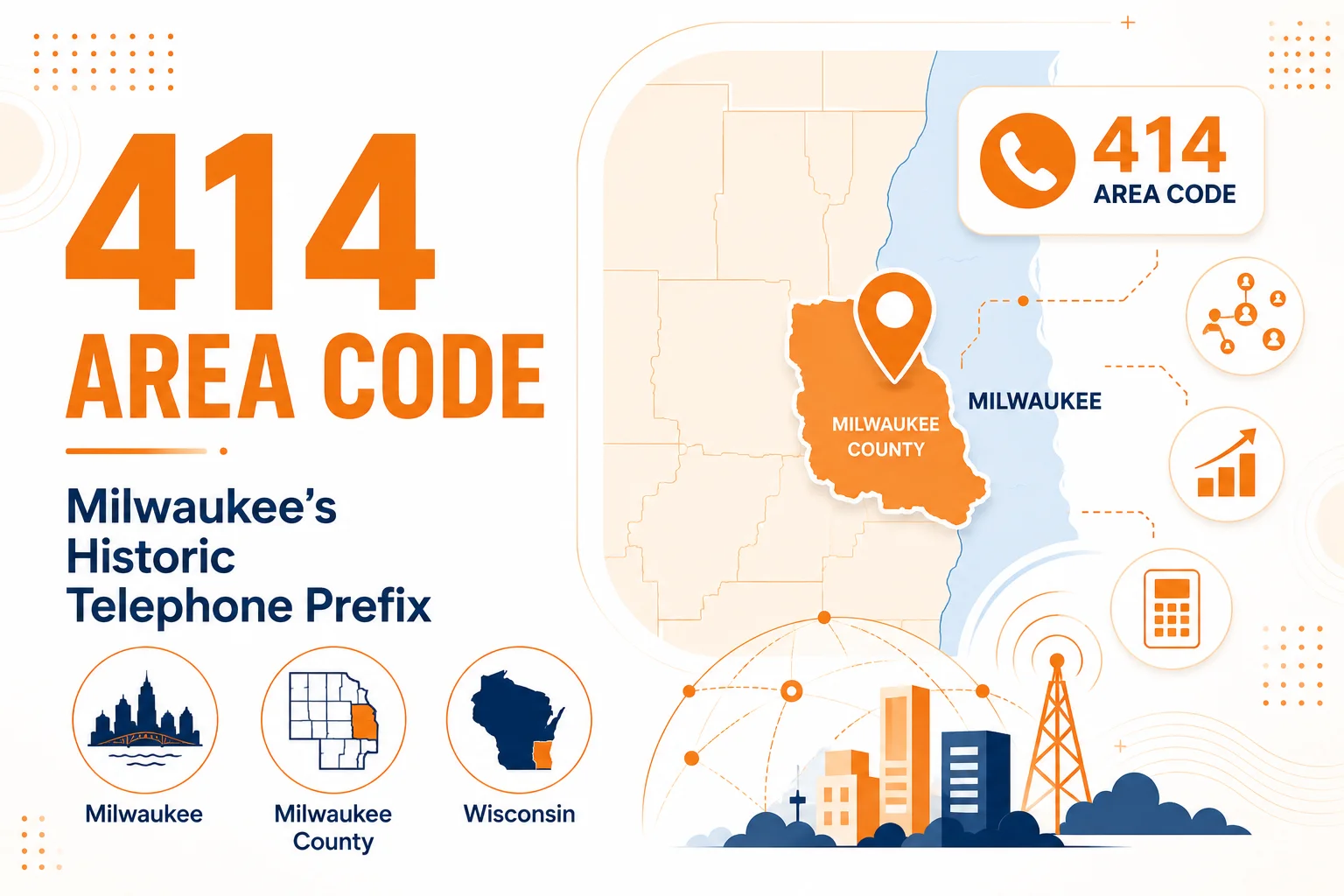
The 414 area code is the telephone prefix for Milwaukee, Wisconsin, and its immediate ring of suburbs. It sits inside Milwaukee County almost entirely, a compact footprint compared to its 1947 original.
That compactness is deliberate history, not accident. Every split since has carved territory away from this prefix while leaving the city itself intact — a sign of just how much numbering demand Milwaukee alone generates. The 608 guide covers the neighbouring ground.
Where the Prefix Reaches Today
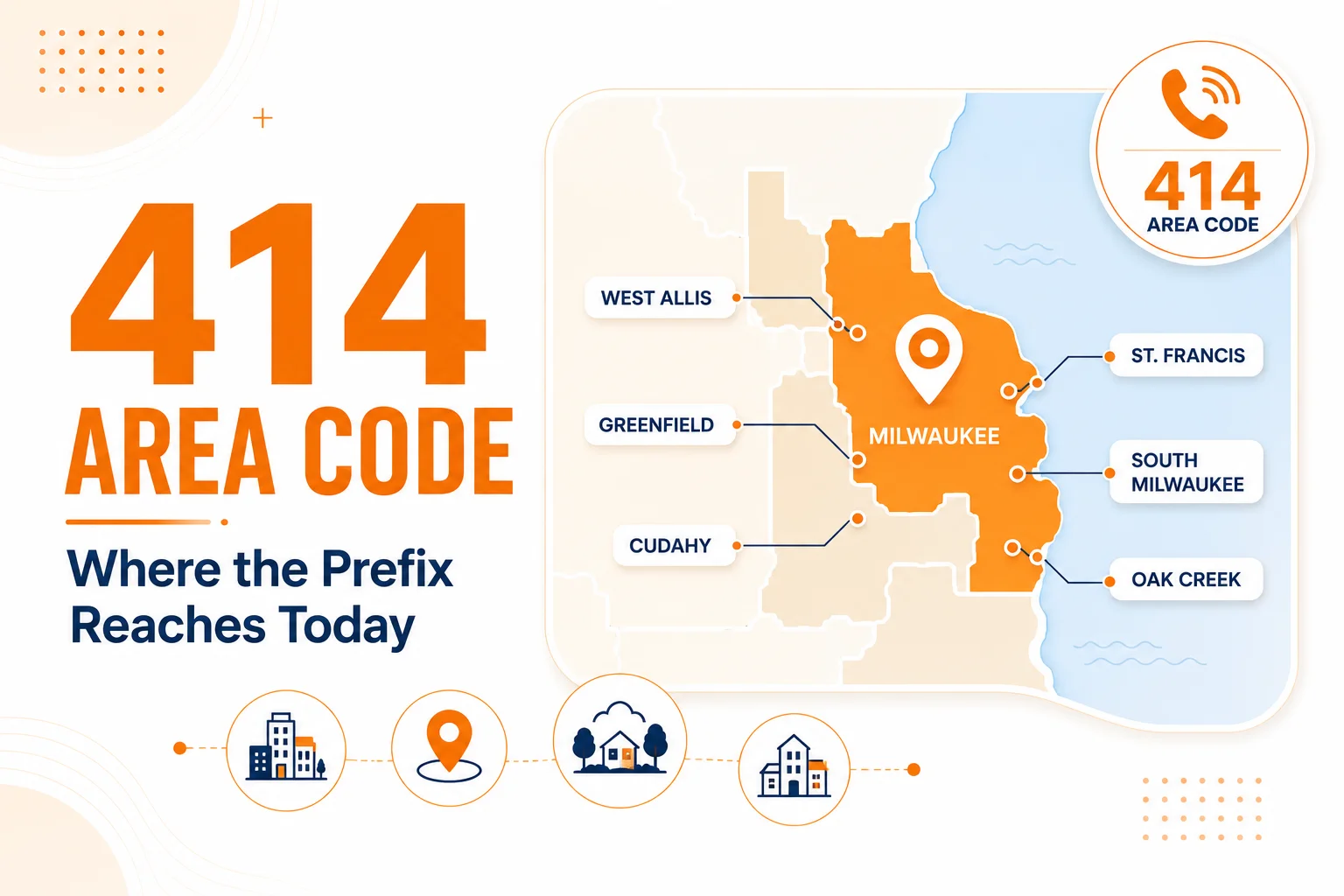
The 414 area code now covers Milwaukee proper along with West Allis, Greenfield, Cudahy, Oak Creek, St. Francis, and South Milwaukee. That's a tight, dense cluster rather than a sprawling region.
The Cities Still Inside It
Milwaukee anchors the code as Wisconsin's largest city and its financial and manufacturing center. West Allis and Greenfield sit just west, dense suburban commerce zones in their own right.
Cudahy, Oak Creek, St. Francis, and South Milwaukee round out the southern lakefront stretch, an industrial and residential mix that has used this prefix for generations.
A Code That Kept Losing Ground
Here's what makes the 414 area code story unusual: it didn't shrink because of a messy split fight. It shrank because Wisconsin kept growing around it, three separate times.
In 1955 the western half — including Madison — broke off into 608. Two more splits followed decades later, leaving the 414 area code covering Milwaukee alone. The 920 guide covers the neighbouring ground.
A Quick History Behind Area Code 414
This prefix went into service in October 1947, one of two original codes assigned to Wisconsin alongside 715. For eight years, it covered the whole southern and northeastern half of the state.
That changed in 1955, when the western territory carrying Madison split off into 608. It was the first sign that Wisconsin's population would keep outpacing a single prefix.
The 1997 and 1999 Splits
In 1997, Green Bay and the Fox River Valley broke away into 920, another growth region that had simply outgrown shared numbering. Two years later, in 1999, nearly all remaining territory outside Milwaukee County transferred to area code 262.
What was left is the tight Milwaukee-metro footprint that today's 414 area code covers — smaller, but far more concentrated with commercial numbering demand per square mile than almost any other Wisconsin prefix.
Why the Split Approach Made Sense
Splitting rather than overlaying kept the dialing habit simple for decades — residents never had to add ten digits to a local call until long after the last split settled. That's a meaningfully different path than the overlay route Madison and the state's north eventually took.
For a business, that history means a 414 number has always meant exactly one thing: Milwaukee, and only Milwaukee, since 1999. Wisconsin's official state government portal at wisconsin.gov offers the public records and business resources behind that long numbering history.
Calling and Time Zones for the 414 Area Code
The 414 area code sits in the Central Time Zone, observing UTC−6 in winter and UTC−5 during daylight saving. That matches Chicago, just 90 minutes south, which keeps business scheduling simple across the region.
How to Dial It
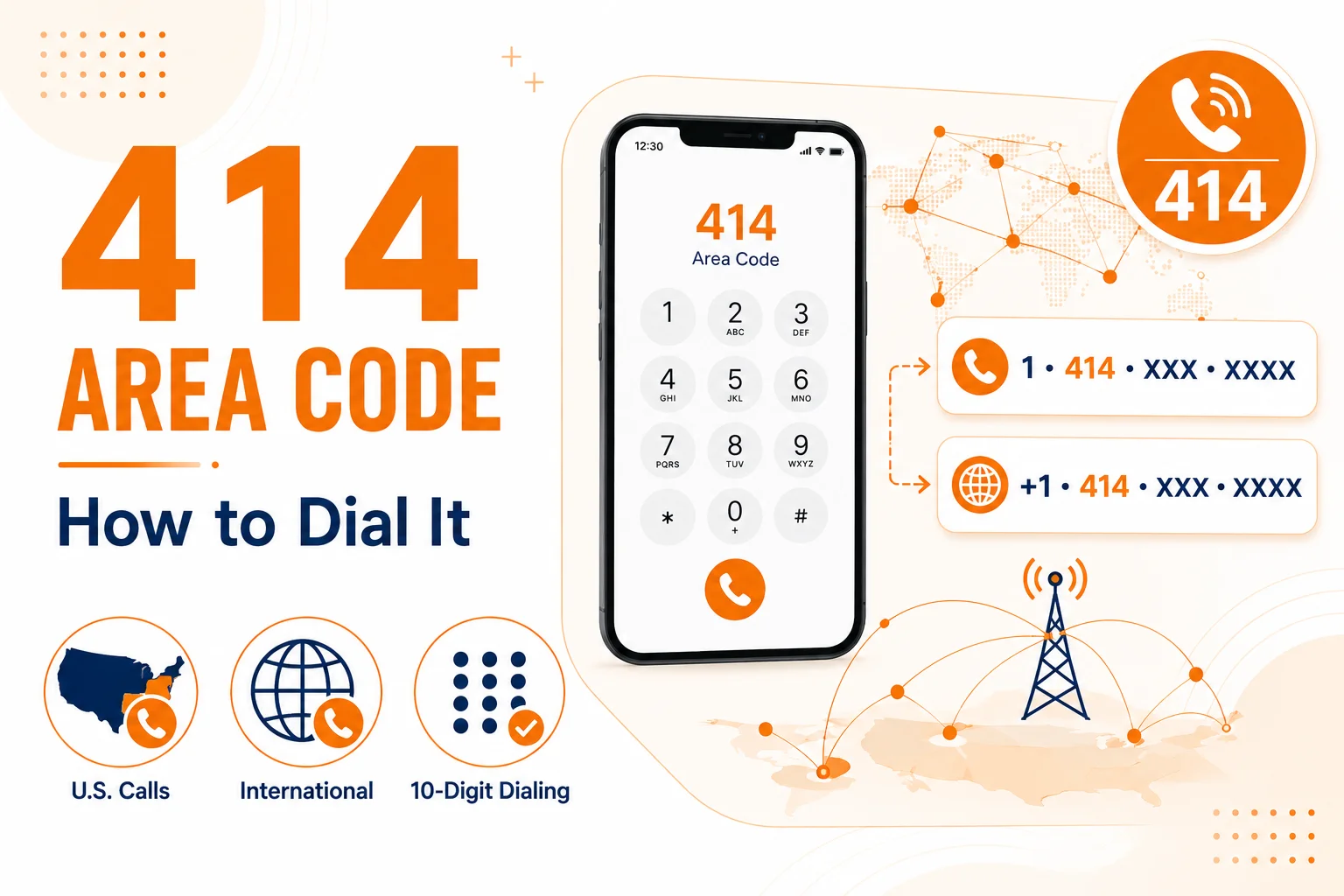
To reach a Milwaukee number from elsewhere in the U.S., dial 1, then the area code, then the seven-digit line. International callers dial their exit code, then country code 1, then the number.
Ten-digit dialing is required for every local call today, a rule Wisconsin adopted region by region as its numbering plan filled in around the remaining territory.
Common Dialing Mistakes
New residents and remote hires sometimes still try a seven-digit shortcut out of habit, especially if they moved from a region that only recently adopted ten-digit rules. That call simply won't connect.
Saving contacts with the full ten digits from the start avoids the problem entirely, and most modern phone systems handle the formatting automatically once a number is entered correctly the first time.
Who Actually Uses a Milwaukee Prefix
Beyond the obvious local businesses, this footprint shows up in a few less expected places. Remote-first companies hiring Milwaukee-based staff often provision a matching line so client-facing calls read as local rather than routed through a distant headquarters.
Franchise operators expanding into the metro do the same thing — a matching prefix on marketing materials and a business card signals the same local commitment a brick-and-mortar storefront would, without the lease.
Why the 414 Area Code Still Matters for Business
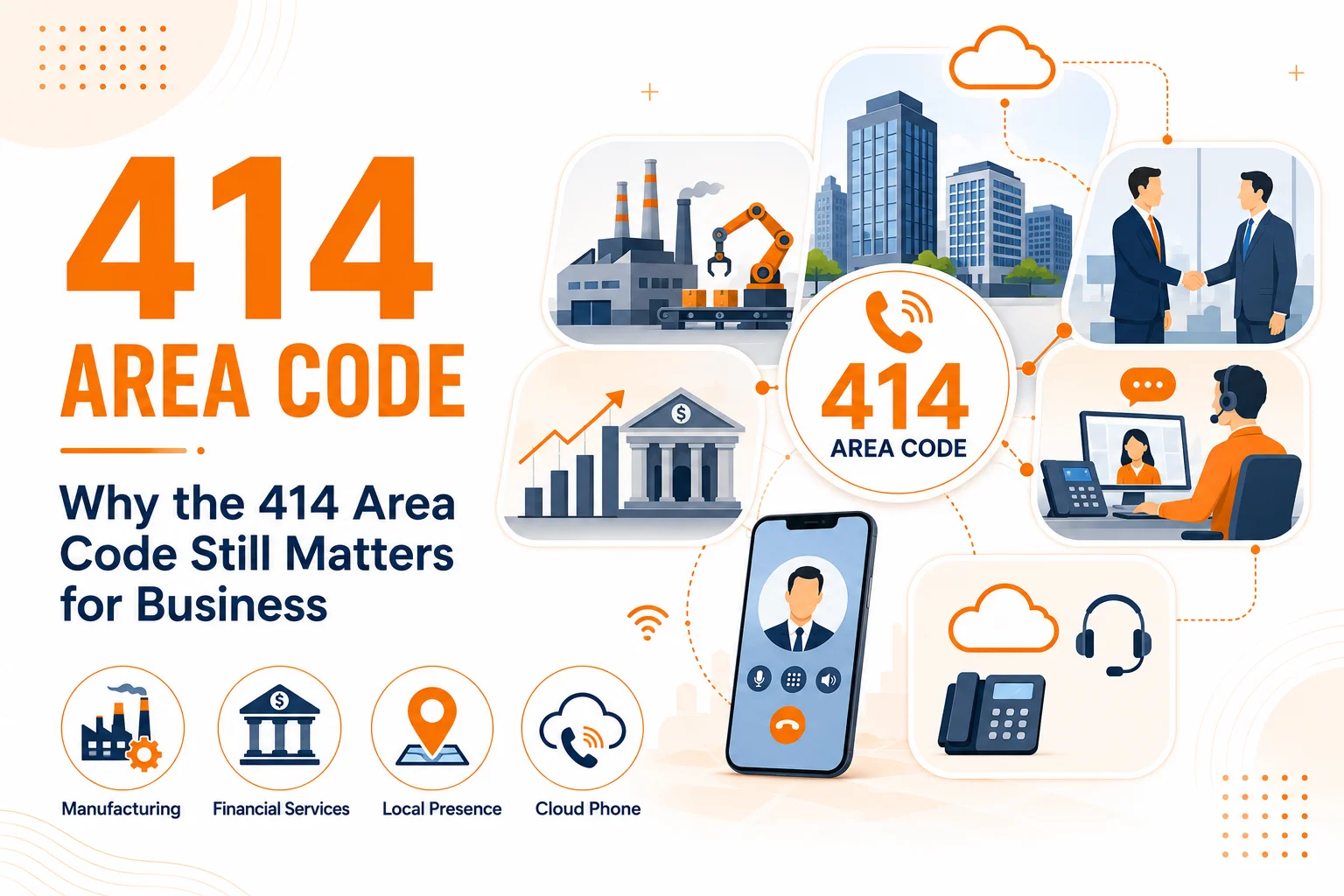
Milwaukee is home to a disproportionate share of major manufacturers and insurers for a metro its size, and a local number signals you're part of that economy rather than calling in from somewhere else. Familiar area codes get answered; unfamiliar ones get sent to voicemail.
Milwaukee's Business Weight
Milwaukee anchors industrial manufacturing, health systems, and financial services headquarters that have called the city home for over a century. A 414 area code line places a business inside that identity immediately.
For sales teams and service firms working the metro, this prefix reads as local before a single word is spoken.
Local Presence Without a Milwaukee Office
A cloud-based line lets a remote team answer as a Milwaukee business without leasing office space downtown. That's exactly what a virtual business number is built for — instant local footprint, zero real estate commitment.
Every call answered under a recognizable prefix beats a cold call from an out-of-area number, and letsdial transcribes every one of those calls on every paid tier so nothing gets lost afterward.
How to Get a 414 Area Code Number
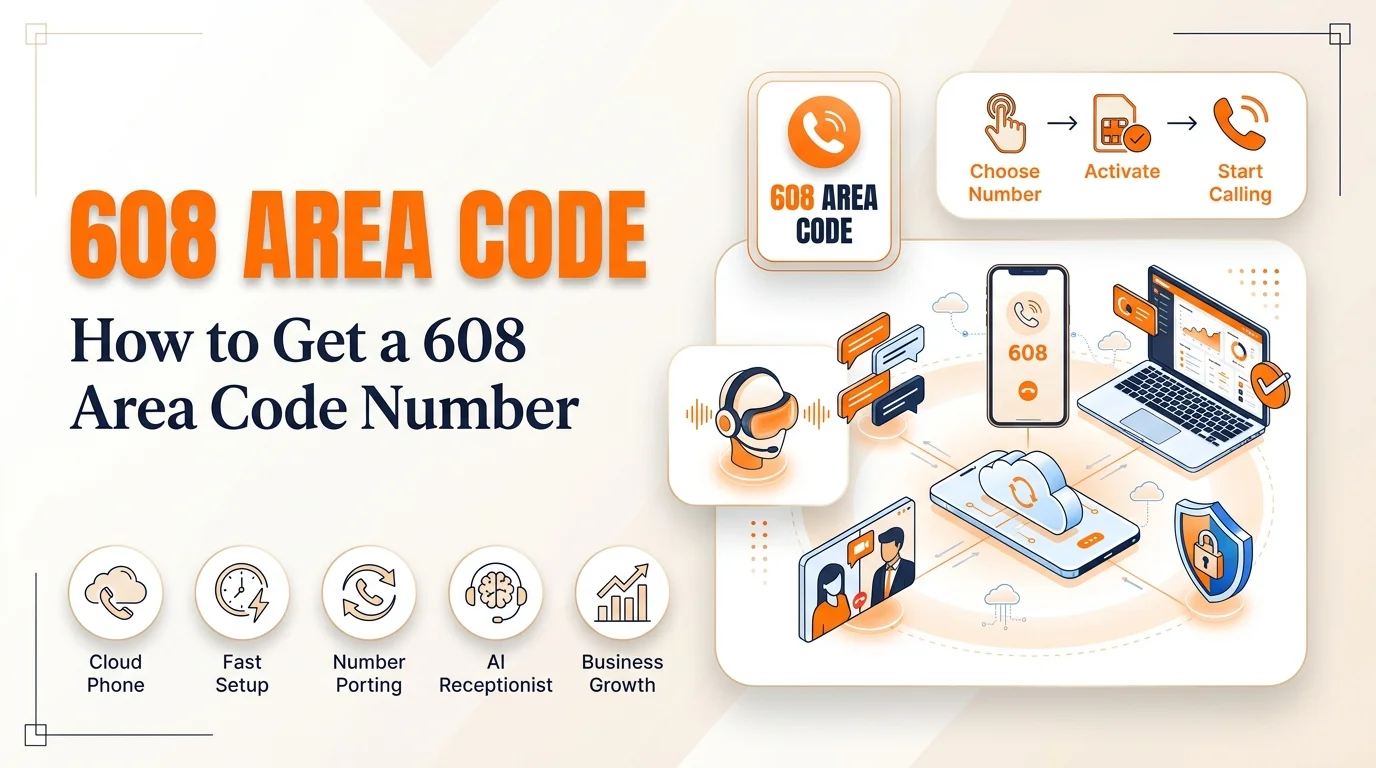
Setting up a Milwaukee line no longer means a service visit or a multi-week wait. Through a cloud platform, you pick a number under this prefix and take your first call in minutes.
letsdial offers local numbers across 100+ countries, with free porting in and free porting out — no contract locks you to a number you no longer want. Wisconsin's business community, including the Green Bay corridor to the north, has been switching to this model for exactly that flexibility.
What Ships on Every Plan
One login covers calling into 200+ countries, team SMS, HD video, and an AI receptionist that answers, qualifies, and books appointments — with zero per-minute AI charges. Every tier carries the same SOC 2 Type II and HIPAA-ready compliance.
Median setup runs under three minutes. Start the 14-day trial, no credit card required, and a Milwaukee-area presence can be live before your next meeting.
Keeping the Number as a Team Grows
Businesses change vendors and headcount, but customers rarely want to relearn a phone number they've already saved. Because porting works both directions at no cost, the same Milwaukee line can follow a company from three seats to thirty without any disruption to the customers dialing it. That record is published in full as state government portal at wisconsin.gov.
The Bottom Line on Milwaukee's Founding Prefix
Few area codes have a lineage this clear: one original 1947 assignment that quietly spun off three modern Wisconsin prefixes while holding onto its home city the entire time. That history is part of what makes area code 414 recognizable today.
Claim a Milwaukee number, point it at your team, and let 79 years of local identity do the trust-building for you.
Frequently Asked Questions
Written by Aryan Khan · July 11, 2026
Reply to the author