Introduction
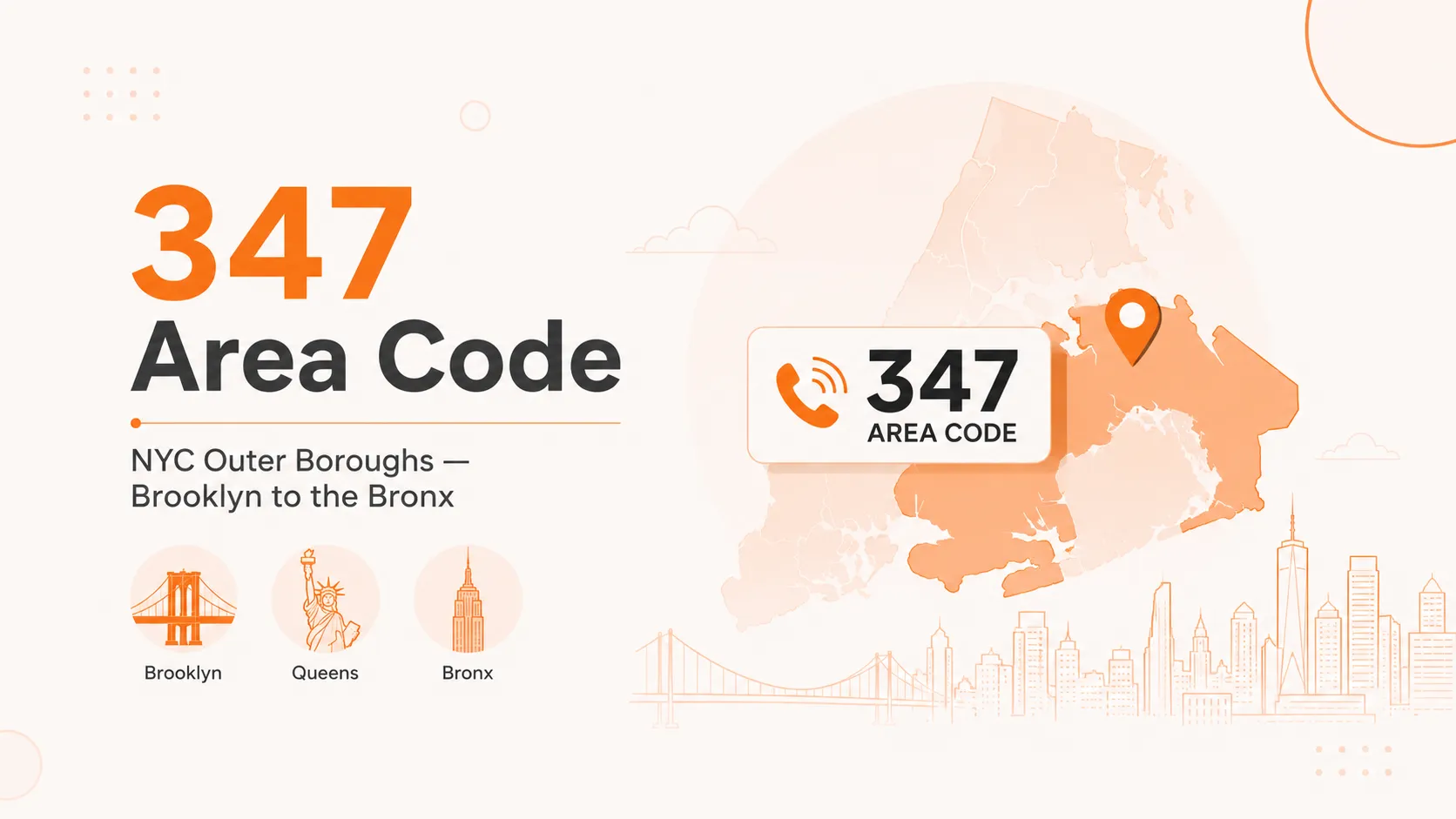
The 347 area code is a full overlay on 718, covering all four of New York City's outer boroughs — Brooklyn, The Bronx, Queens, and Staten Island. When the 718 number pool ran low in the late 1990s, regulators added 347 on October 1, 1999, and 10-digit dialing became mandatory across the entire footprint the following year. Today, five codes — 718, 347, 929, 917, and the newest overlay, 465 — share that same footprint, which is home to roughly 6.7 million people across some of the most commercially diverse territory in the country.
917 is the odd one out: originally assigned citywide for pagers and early cell phones in 1992, it also covers Manhattan, unlike the other four codes.
For businesses, a 347 number signals immediate presence in New York's outer boroughs. Calls from local area codes answer at rates 30–50% higher than out-of-state numbers — a gap that matters on every outbound dial in a market this competitive. This guide covers the 347 footprint, the major economic anchors in each borough, the overlay history through the newest 465 code, and how to get a 347 number with STIR/SHAKEN attestation from the first call.
- Covers Brooklyn, The Bronx, Queens, and Staten Island — the same footprint shared by 718, 929, and 465
- Added October 1, 1999; 10-digit dialing has been mandatory in the footprint since April 15, 2000
- Eastern Time year-round, with a combined outer-borough population of roughly 6.7 million
Where the 347 area code reaches
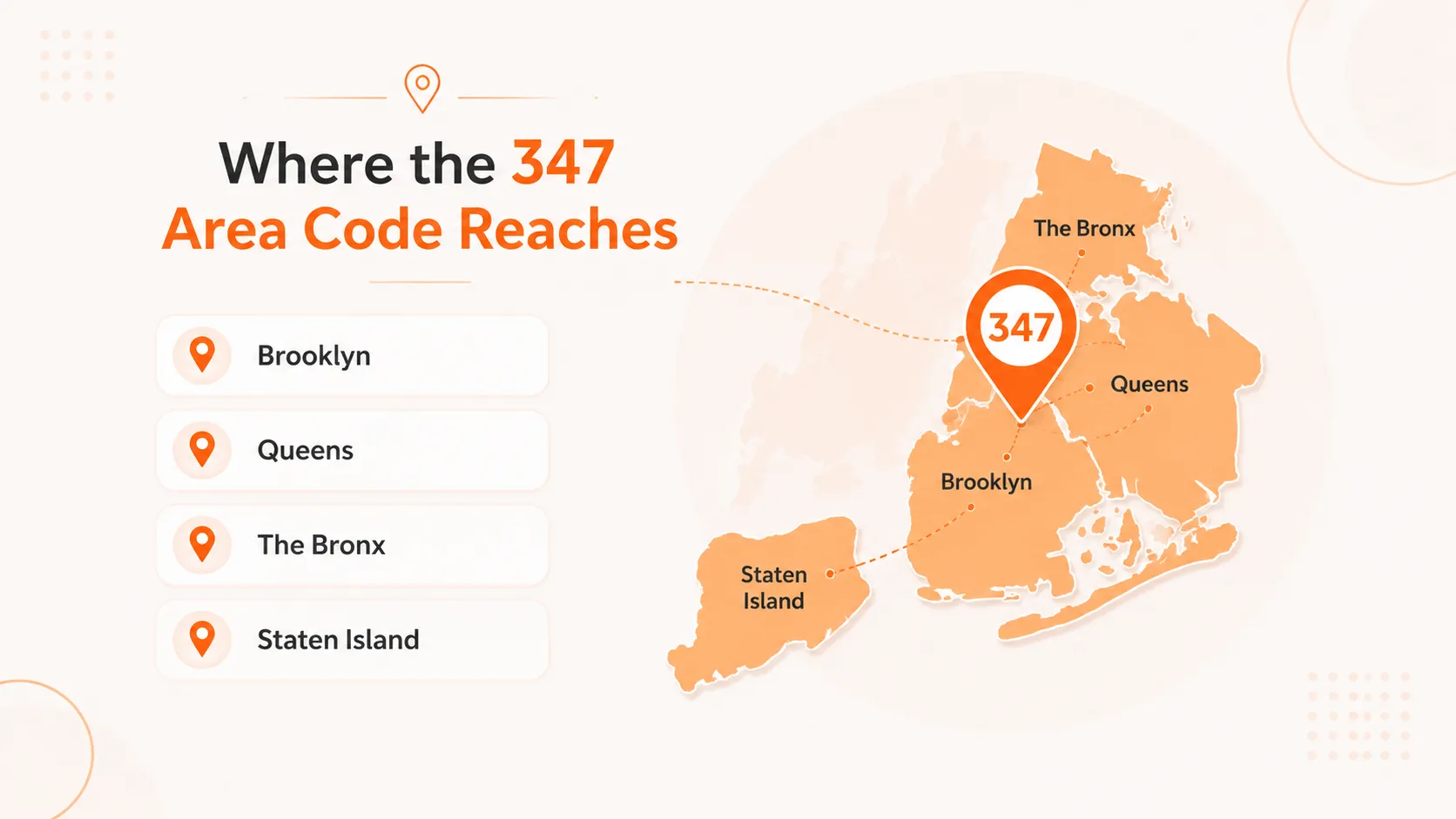
347 is a full overlay on 718 — it covers the same geographic footprint, which spans all four outer boroughs of New York City: Brooklyn (Kings County), The Bronx (Bronx County), Queens (Queens County), and Staten Island (Richmond County). Manhattan (New York County) and the Bronx's small Marble Hill neighborhood carry the 212 and 646 overlays, not 347.
- Brooklyn (Kings County) — the most populous borough, home to Barclays Center, Coney Island, DUMBO's tech scene, and Brooklyn Navy Yard
- The Bronx (Bronx County) — Yankee Stadium, Fordham University, Montefiore Health System, and the South Bronx's growing industrial corridor
- Queens (Queens County) — JFK International and LaGuardia airports, Citi Field, Flushing's Chinatown, Long Island City, and Astoria
- Staten Island (Richmond County) — the least densely populated borough, connected to Manhattan via the Staten Island Ferry, with a strong healthcare and public service employment base
Because 347 is an overlay on 718, 10-digit dialing is mandatory for every call within the footprint — even between two 347 numbers or two 718 numbers on the same exchange. The 929 guide covers the neighbouring ground.
Brooklyn: media, tech, and New York's creative economy
DUMBO, Brooklyn Tech Triangle, and the borough's startup scene
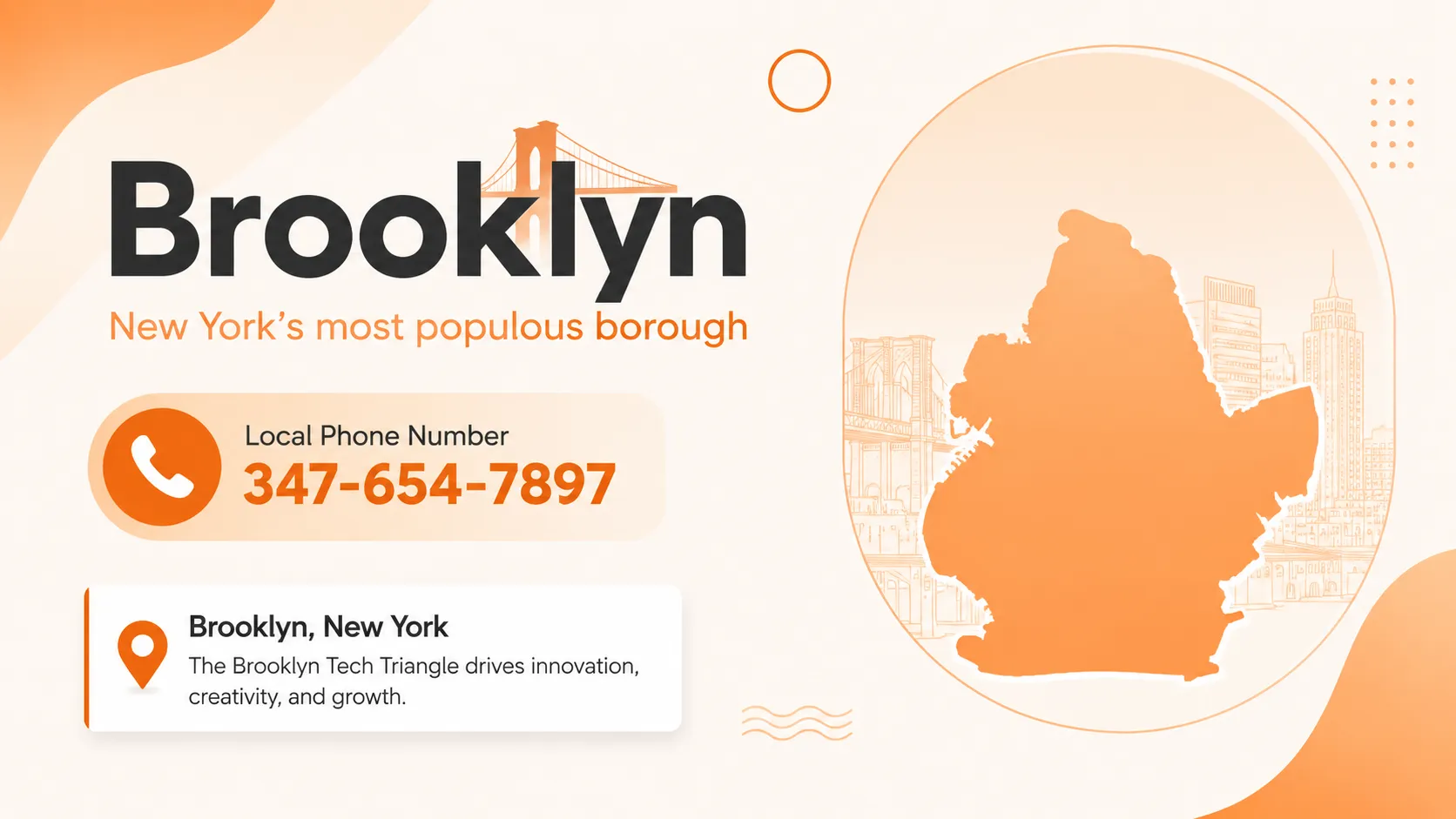
Brooklyn is the most populous of New York's five boroughs and the second-most-densely populated county in the United States, with roughly 2.7 million residents. DUMBO (Down Under the Manhattan Bridge Overpass) anchors Brooklyn's tech sector — once home to Etsy's headquarters and Kickstarter, and still a dense cluster of creative agencies and fintech startups.
Brooklyn Navy Yard and healthcare anchors
The Brooklyn Navy Yard is a 300-acre industrial complex redeveloped into a hub for manufacturing, film, and technology — home to Steiner Studios, the largest film studio complex outside Hollywood, and New Lab's advanced manufacturing campus. NYU Langone Health, Maimonides Medical Center, and SUNY Downstate Health Sciences University are among Brooklyn's largest healthcare employers.
Barclays Center, which opened September 28, 2012 in Downtown Brooklyn, gave the borough its first major professional sports venue in decades — seating 17,553 for Brooklyn Nets basketball and up to 19,000 for concerts, and drawing the kind of steady event traffic that supports hundreds of nearby restaurants, bars, and hotels.
Further south, Coney Island has drawn crowds since Frederic Thompson and Elmer "Skip" Dundy opened the original Luna Park in 1903 — a spectacle lit by 250,000 electric bulbs that, alongside Steeplechase Park and Dreamland, helped make Coney Island the largest amusement district in the country from the 1880s through World War II and earned it the nickname "America's Playground." More detail sits on our letsdial page.
The Bronx, Staten Island, and Queens: New York's other outer boroughs
The Bronx: healthcare, education, and the South Bronx corridor
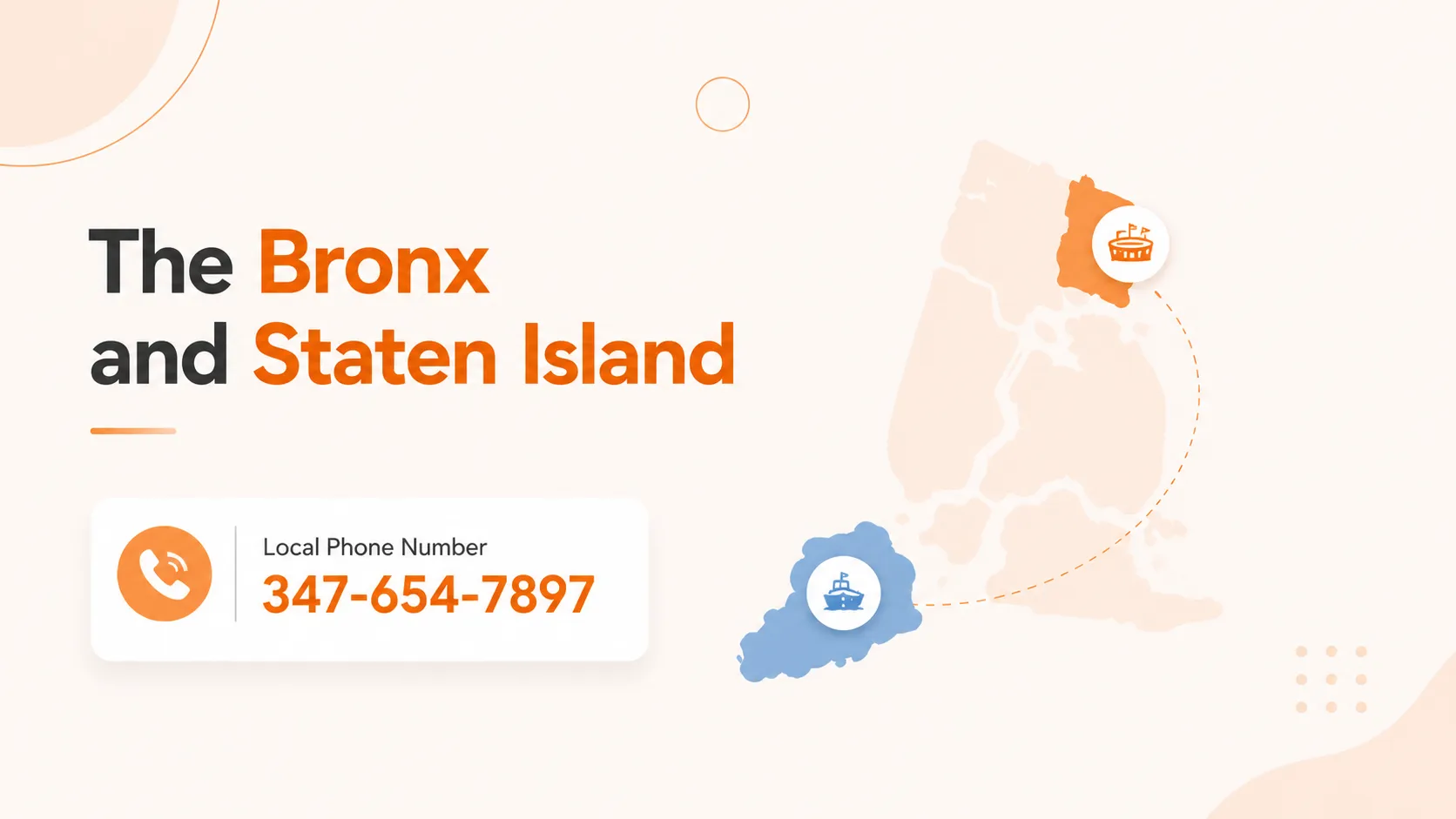
The Bronx is home to Montefiore Health System, one of the largest healthcare systems in the New York metro, Fordham University, and Yankee Stadium in the Concourse district. The current Yankee Stadium opened in April 2009 at a cost of roughly $2.3 billion, replacing the original 1923 ballpark across the street, and regularly draws crowds near 49,000 for marquee games — a steady stream of game-day traffic that supports restaurants, parking operations, and hospitality businesses throughout the Concourse neighborhood. The South Bronx has seen industrial reinvestment through the Hunts Point Produce Market — the world's largest wholesale produce market — and growing logistics activity along the Bruckner Expressway corridor.
Staten Island: ferry, healthcare, and public service
Staten Island is the least densely populated of the four 347 boroughs, connected to Manhattan by the Staten Island Ferry, which carries roughly 45,000 riders on an average weekday. Staten Island University Hospital and Richmond University Medical Center are the borough's largest healthcare employers, and its base of public-sector and skilled-trades workers makes it a productive market for a local 347 number.
Queens: aviation, logistics, and economic diversity
Queens is home to two of the three major airports serving the New York metro — JFK International and LaGuardia. JFK alone handled more than 63 million passengers in 2024 and anchors a dense logistics and freight-forwarding cluster stretching through Jamaica and South Queens. Long Island City has become one of the city's most active commercial real estate markets, Flushing's Chinatown is a major immigrant business district, and Astoria anchors a media production community alongside Silvercup Studios.
That airport-driven volume shapes the calling patterns of a huge slice of the Queens economy — freight forwarders coordinating with carriers on tight arrival windows, ground transportation dispatchers, and import-export brokers who all need to be reachable outside normal business hours to match flight schedules that don't respect a 9-to-5 day. A local 347 line that's easy to recognize and quick to answer matters more in that always-on environment than it would in a business running a fixed daytime schedule.
347 history: from 718 to 347 to 465
718 has served New York City's outer boroughs since September 1, 1984, when the original 212 area code was split to give Manhattan its own exclusive code. In 1992, regulators layered 917 on top as a citywide code for pagers and early cell phones — the only one of the five codes that also reaches Manhattan. As wireless adoption accelerated through the 1990s, the 718 pool depleted rapidly, and regulators added 347 as a full overlay on October 1, 1999, with 10-digit dialing becoming mandatory across the outer boroughs on April 15, 2000.
A third overlay, 929, followed on April 16, 2011. Most recently, a fifth code — 465, New York's first area code to start with the digit 4 — went into service on June 18, 2026, after depletion projections showed the existing pool running low, with capacity projected to last roughly 11 more years. All five codes now share the outer-borough footprint and carry equal local recognition.
The entire footprint observes Eastern Time — UTC-5 in winter (EST) and UTC-4 during Daylight Saving (EDT). West Coast teams calling 347 contacts are three hours behind — plan outbound campaigns before 2 p.m. Pacific to catch the full New York business day. Central Time callers are one hour behind, Mountain Time callers are two hours behind.
Getting a 347 number and building call trust
- Cloud phone platform — letsdial finds available 347 numbers and activates a line in under three minutes, no credit card required.
- Port your existing number — already on 347, 718, or 929 elsewhere? letsdial ports it in without downtime, at no charge, keeping the number active through the transition.
- Wireless SIM or landline carrier — works for a physical handset, but slower to provision and harder to scale without extra hardware per seat.
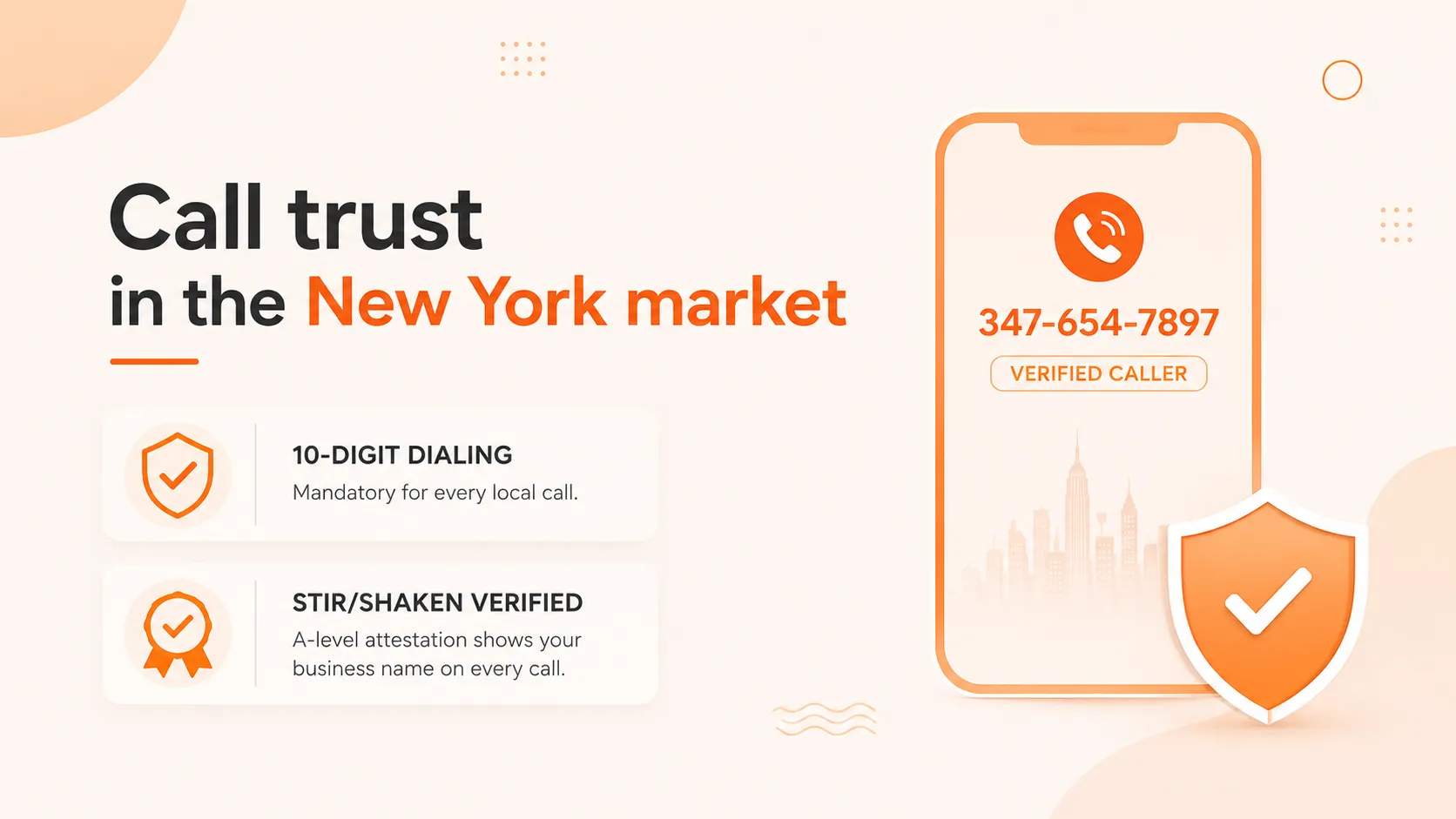
New York's outer boroughs are one of the highest-volume calling markets in the country — and one of the most skeptical. Spam call volumes across the 718/347/929/465 footprint are among the highest of any major metro, so unverified numbers face aggressive carrier filtering before the phone even rings. STIR/SHAKEN A-level attestation ensures your 347 number arrives verified with your business name displayed, rather than 'Spam Risk' or a blank caller ID field.
> [TIP] Note: letsdial applies STIR/SHAKEN A-level attestation automatically on every 347 number and files your 10DLC registration for text messaging — your New York line is protected from the first call with no extra setup required.
347 is officially documented under the North American Numbering Plan, which governs area code assignments across the US, Canada, and the Caribbean. For the official record, see the FCC's North American Numbering Plan page.
Conclusion
The 347 area code covers Brooklyn, The Bronx, Queens, and Staten Island — four boroughs with a combined population of roughly 6.7 million and an economic profile that spans media, tech, aviation, logistics, and healthcare. A local 347 number is the most direct way to signal presence in this market, and verified caller identity matters more here than almost anywhere else in the country.
letsdial provisions 347 numbers in under three minutes on a free trial — no hardware and no credit card needed to start. STIR/SHAKEN attestation and 10DLC text registration are handled automatically so your calls arrive verified from the first dial.
Frequently Asked Questions
Written by Aryan Khan · June 27, 2026
Reply to the author