Introduction
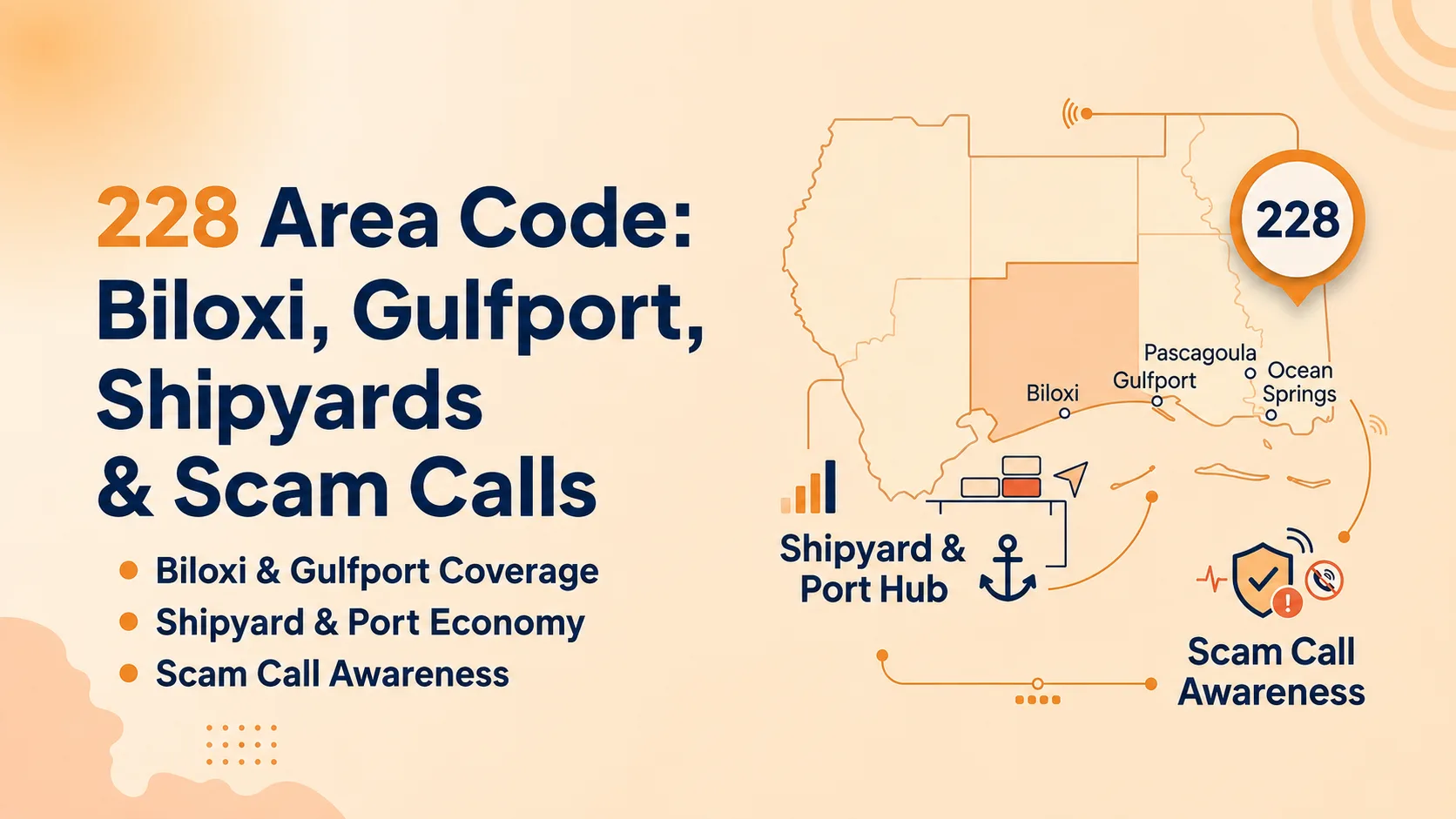
Mississippi ran on a single area code for exactly fifty years. 601 covered the entire state from 1947 until 1997, when the Gulf Coast finally got a number of its own — 228, carved out for the 80-mile stretch of coastline between Louisiana and Alabama.
This guide covers that split, why Pascagoula's shipyards and Biloxi's casino strip both depend on the code for credibility, and the loan-approval and precious-metals scam scripts most often reported against it. The 601 area code is the original code 228 was carved out of.
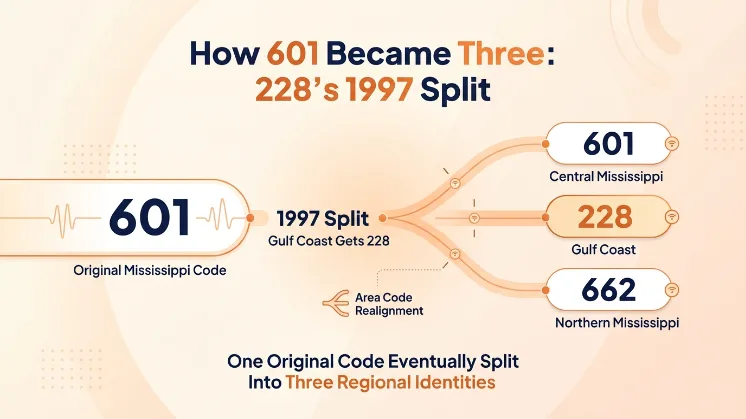
How 601 Became Three: 228's 1997 Split
228 covers Mississippi's three Gulf Coast counties — Harrison, Jackson, and Hancock — roughly 400,000 residents stretched along 80 miles of coastline from the Louisiana line to Alabama. Gulfport, Biloxi, Pascagoula, and Ocean Springs all answer to it.
Mississippi kept a single area code, 601, for the state's first fifty years under the North American Numbering Plan. Regulators approved a Gulf Coast split in March 1997, and 228 went into service that September, separating the coast from the rest of the state for the first time. A second split followed in 1999, when 662 took the northern half of what remained of 601's territory. A full Mississippi area codes breakdown maps how 228, 601, and 662 fit together today.
That fifty-year run on a single statewide code is unusually long by national standards. Most states with strong population growth split their original area code within twenty or thirty years; Mississippi saw significant out-migration during the mid-20th century's Great Migration decades and grew at only a fraction of the national rate afterward, which let 601 stretch across the entire state well past when many faster-growing neighbors had already divided theirs.
Is a Call From 228 Always From the Gulf Coast?
The area code itself covers real Gulf Coast residents and businesses, but the caller behind a spoofed 228 number often isn't. Scammers borrow the code's local familiarity from anywhere in the country — or outside it — because a Mississippi-looking number gets answered more readily than an unknown one. A 228 caller ID confirms only that a number was assigned to the Gulf Coast at some point; it says nothing about who's actually placing the call today.
Dialing Rules and Time Zone on the Coast
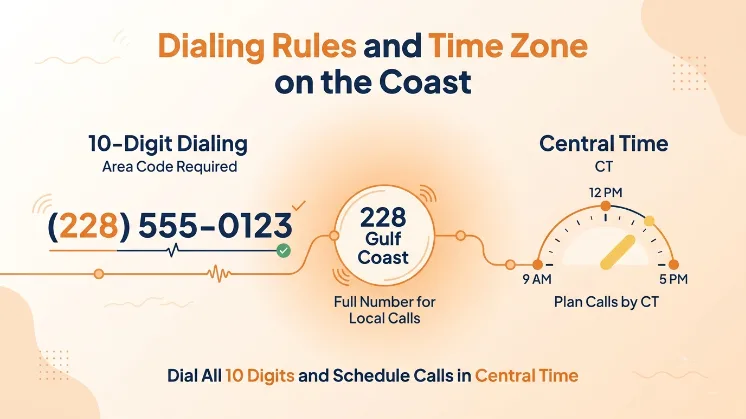
228 sits in the Central Time Zone, matching the rest of Mississippi and the broader Gulf Coast. It has never needed an overlay — a single code has covered these three counties without interruption since 1997.
- Local calls (within the coast): dial 228 + the 7-digit number — e.g., 228-555-1234
- Long-distance calls (within the US): dial 1 + 228 + the 7-digit number — e.g., 1-228-555-1234
- International calls to a 228 number: dial your country's exit code, then 1 (US country code) + 228 + the number — e.g., 00-1-228-555-1234 from the UK
Because there's no overlay to share the pool with, seven-digit dialing still works for local calls placed and received entirely within the 228 footprint, unlike most of the overlay-heavy metro codes covered elsewhere on this blog. That's increasingly rare nationally: most coastal and metro regions with any real population density have needed at least a second code by now, and the Gulf Coast's roughly 400,000 residents still fit comfortably inside what one code can support.
Getting a 228 Number From Anywhere
A recognizable Gulf Coast number doesn't require a physical presence in Gulfport, Biloxi, or anywhere else along the coast:
- Sign up with letsdial and search available 228 numbers
- Choose the features your team needs — call forwarding, an AI receptionist, voicemail transcription, SMS
- Start taking calls the same day — median setup runs under 3 minutes
Already have an existing business number? Porting it in is free and stays active the whole time, regardless of which carrier issued it originally — wireless-to-wireless typically takes 1–3 business days, wireline-to-wireless 3–5, and VoIP-to-wireless 5–7.
With no overlay competing for the same pool, 228 has had nearly three decades to work through its number inventory at a steadier pace than metro codes juggling two or three overlapping prefixes. That tends to mean more clean, memorable combinations still available for a business setting up fresh — worth checking before defaulting to whatever a single carrier happens to offer first.
For a business serving tourists as well as locals, that same number also needs to hold up under seasonal call spikes — spring break and summer weekends can multiply inbound volume several times over compared with a quiet winter weekday, and a platform built for a steady trickle of calls can buckle exactly when the coast's tourism economy needs it most.
Casinos and Warships: The Two Economies Behind 228
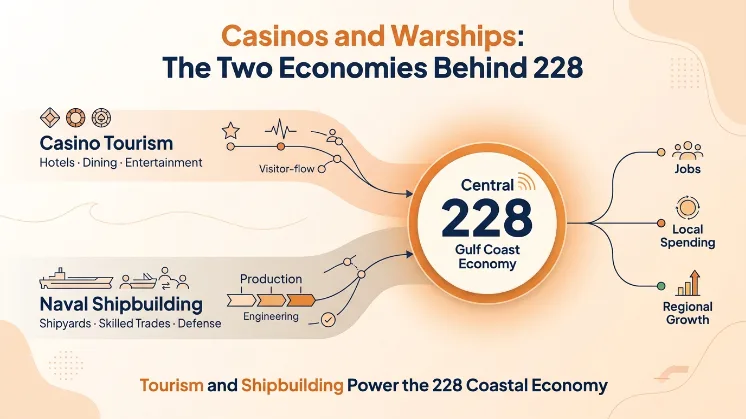
Two industries define the Mississippi Gulf Coast, and both lean on a 228 number for credibility. Casino gaming arrived first: the state legalized dockside gambling in 1990, and the Isle of Capri opened as Mississippi's first dockside casino on August 1, 1992. Beau Rivage, Hard Rock, and a strip of other resorts along Biloxi's waterfront followed, building a tourism and hospitality economy that now anchors much of the coast's employment.
Shipbuilding runs just as deep. Ingalls Shipbuilding in Pascagoula, founded in 1938 and now part of Huntington Ingalls Industries, has been Mississippi's largest manufacturing employer since 1939 — more than 11,000 workers today, building close to 70 percent of the US Navy's surface combatant fleet. The yard's workforce peaked at more than 27,000 in 1977, and even at today's smaller headcount it remains the economic anchor of Jackson County in a way few single employers are anywhere in the country.
Suppliers, subcontractors, and logistics firms feeding that shipyard depend on the same local-number recognition the casino industry does, just from a very different client base — defense-contract vendors and marine-parts suppliers instead of tourists and gaming regulators.
Tourism ties the two industries together more than either side usually acknowledges: casino visitors and shipyard contractors both fly into the same regional airport, stay in overlapping hotel inventory, and rent from the same handful of local logistics and ground-transport operators.
What matters most when a business in either industry picks a provider:
- Call recording for compliance, gaming-license audits, or defense-contract documentation
- Reliable routing that holds up during high call-volume tourist seasons or shift changes
- Free porting, so an existing number survives a move between carriers
Loan Approval Scams and Fake Gold Pitches
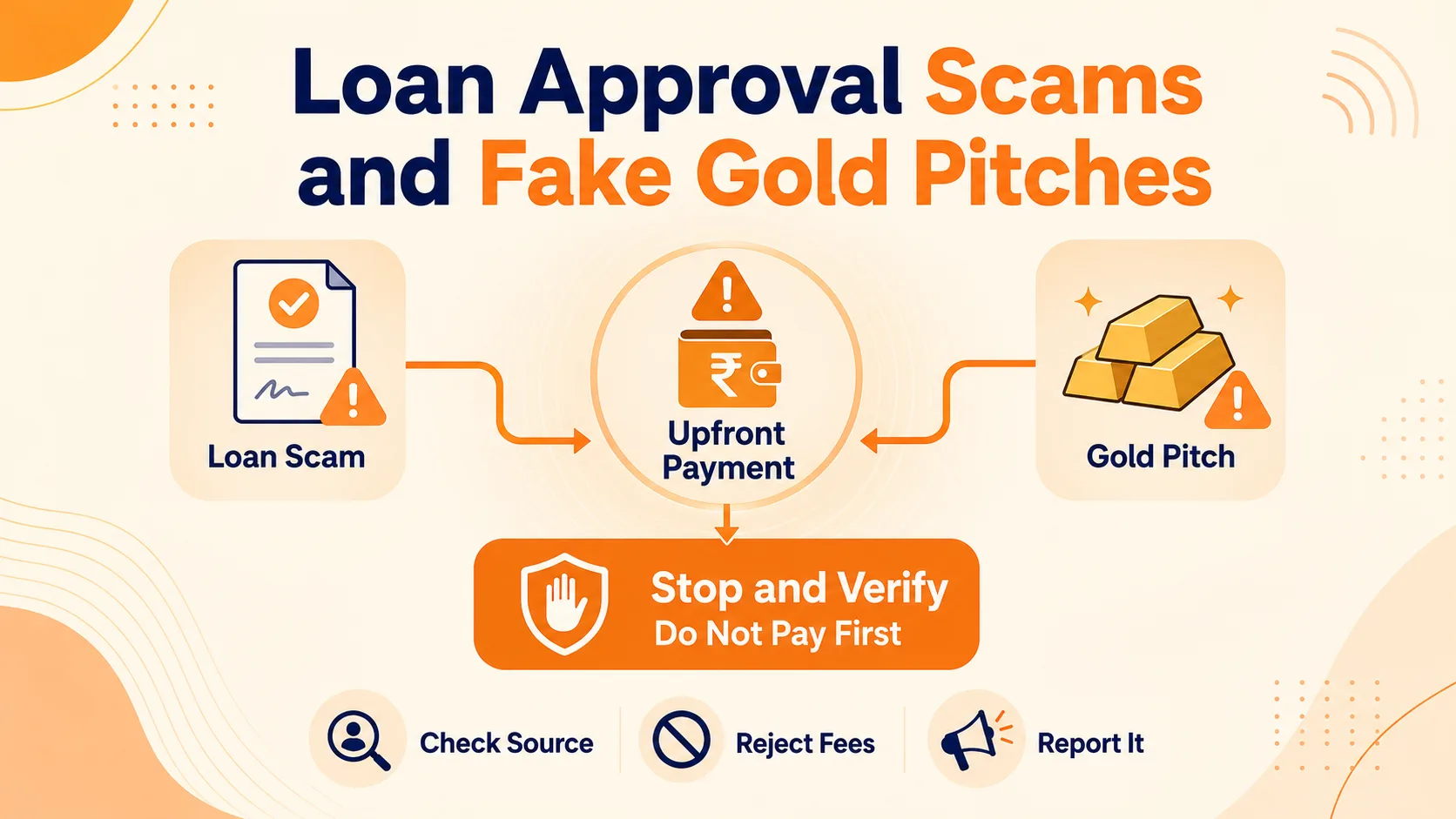
Health-insurance robocalls top the general complaint volume against 228 numbers, the same generic pitch reported nationwide regardless of area code. Two patterns show up more specifically here: fake loan-approval calls claiming the recipient qualifies for tens of thousands of dollars in credit with a suspiciously precise monthly payment quoted upfront, and precious-metals investment pitches — often run by callers actually based in Florida, using a Mississippi number to seem more locally credible.
Utility-discount scams round out the list: a caller claims a discounted rate is about to be removed unless the recipient calls back immediately, pressuring a fast decision before there's time to verify anything with the actual utility provider.
None of these patterns are unique to the Gulf Coast — the same scripts run against area codes nationwide, adjusted only by whichever local number happens to be spoofed that week. Treating an unexpected loan offer, investment pitch, or urgent utility deadline with the same skepticism regardless of the area code on the caller ID closes most of the gap these scams rely on.
The Mississippi Public Service Commission's telecommunications division oversees area code administration across the state, including the 1997 and 1999 splits that created today's map — the authoritative source for how the numbering itself works, separate from the scam volume riding on top of it.
Conclusion
The 228 area code split off from Mississippi's single statewide code in 1997 to give the Gulf Coast its own identity, and nearly three decades later it still ties together a casino economy built on dockside gaming and a shipyard that builds most of the Navy's surface fleet. Few three-digit prefixes anywhere carry that specific a combination of tourism glamour and defense-industry substance underneath it. Getting a 228 number for your business takes minutes with letsdial, keeps your existing number if you're porting one in, and comes with the call handling — recording, an AI receptionist, CRM sync — that a Gulf Coast-facing business actually needs.
Frequently Asked Questions
Written by Aryan Khan · July 27, 2026
Reply to the author