Introduction
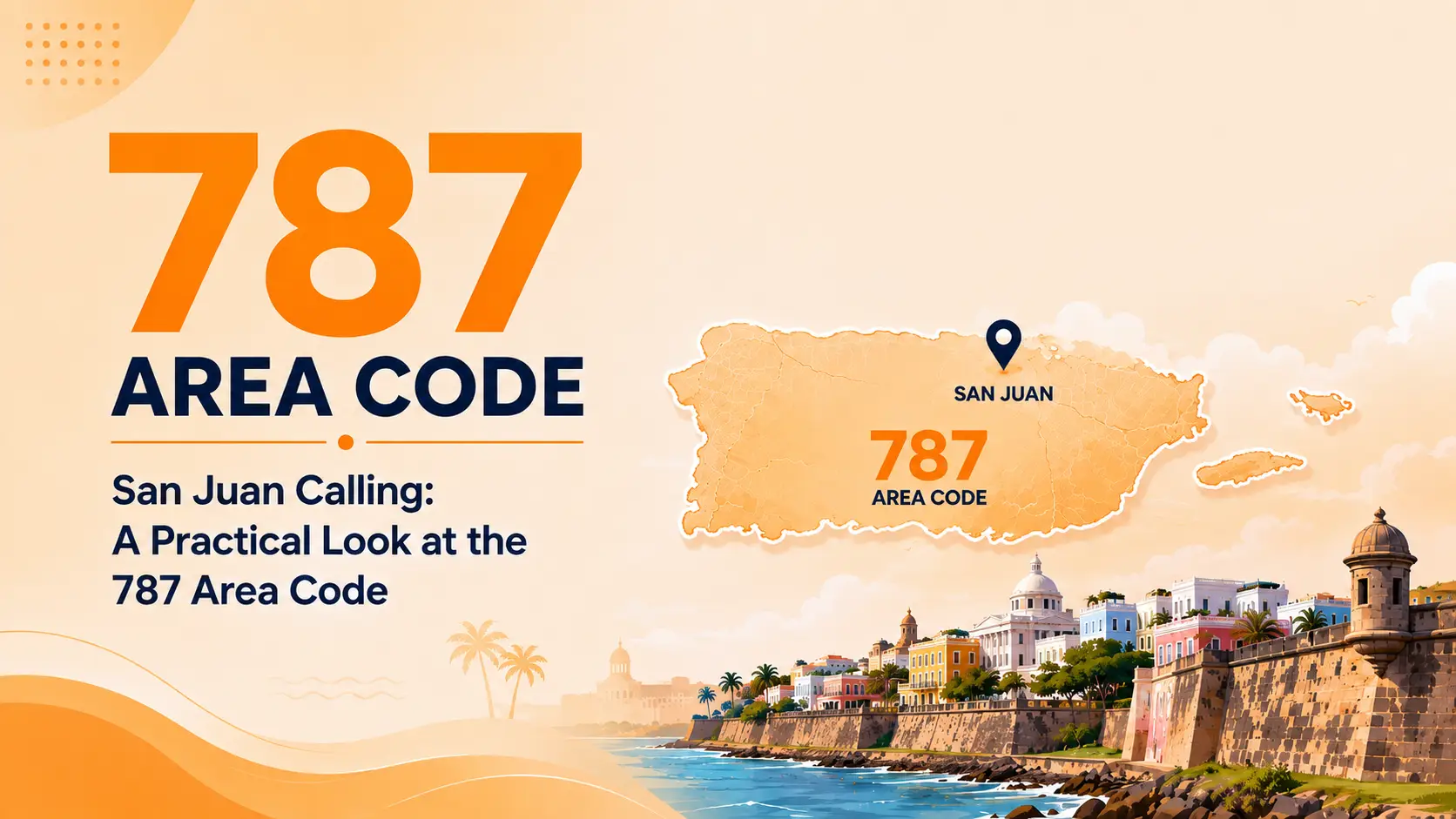
A call or text from a 787 area code number is coming from Puerto Rico — the entire island, from San Juan's metro area to smaller municipalities along the coast and in the mountainous interior. If you're fielding a missed call, relocating to the island, or building a business presence across Puerto Rico, this guide covers what's actually worth knowing.
Puerto Rico occupies a distinct spot in the North American Numbering Plan: it's a U.S. territory rather than a state, its own dedicated numbering region rather than a slice of a larger one, and the only code on this site that covers an entire island rather than part of a mainland state or province.
The sections below cover where 787 reaches, how it split away from the numbering plan it once shared with the rest of the Caribbean, its distinctive time zone, scam patterns specific to the region, and the practical steps for activating a 787 number for a business.
An Island-Wide Code: What 787 Actually Reaches
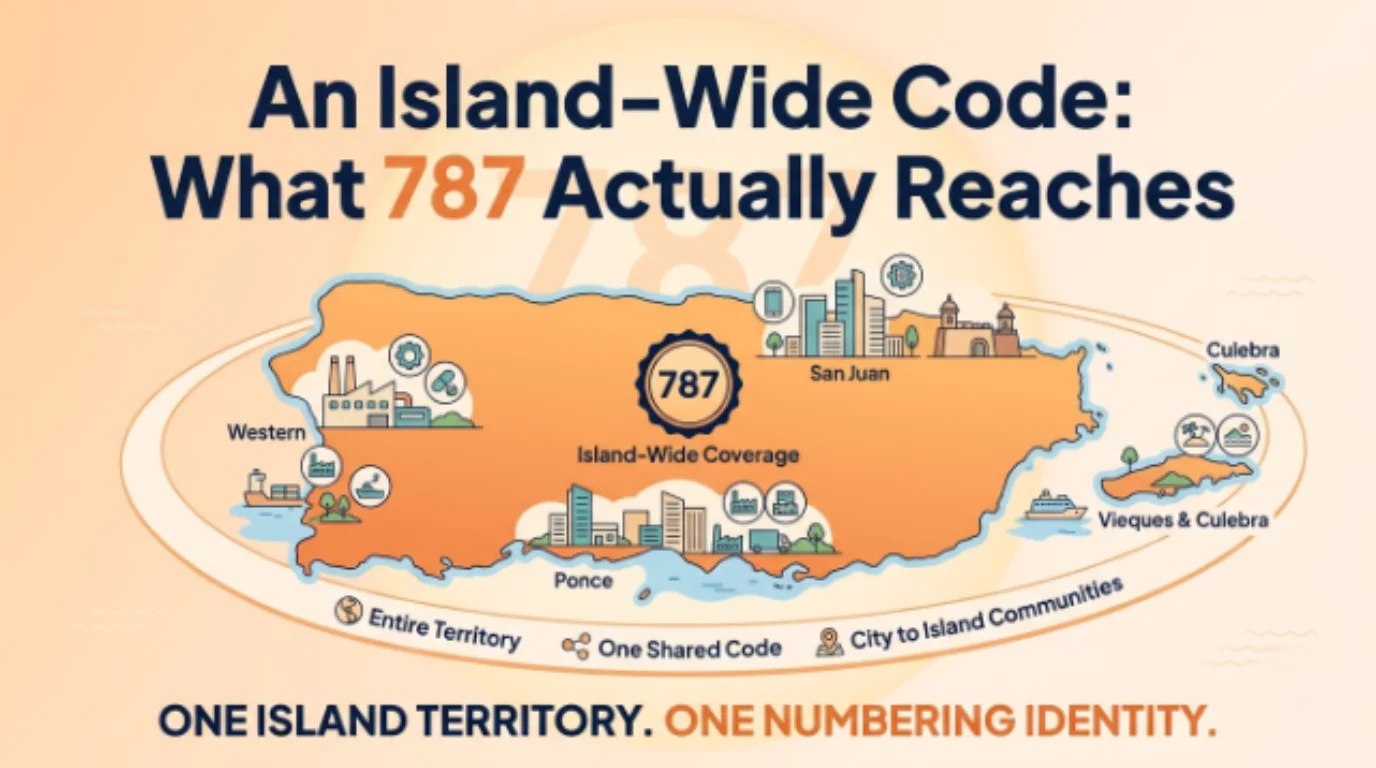
The 787 area code covers the entire island of Puerto Rico, along with its smaller associated islands like Vieques and Culebra. Unlike almost every other code discussed on this site, it doesn't share a border with another U.S. area code at all — it's separated from the mainland numbering plan by the Atlantic Ocean. A full breakdown of Puerto Rico's numbering is in this Puerto Rico area codes guide.
Because it covers a whole territory rather than a piece of a larger state, 787 functions more like a national code than a regional one. Every municipality on the island, from the dense San Juan metro to small mountain towns in the interior, shares this single numbering identity.
Puerto Rico's economy blends a substantial pharmaceutical and manufacturing sector, a growing tech and startup scene centered in San Juan, and a tourism industry that draws heavily on the island's beaches, historic Old San Juan, and its status as a U.S. territory that doesn't require a passport for American travelers.
Puerto Rico isn't the only Caribbean U.S. territory with its own dedicated numbering: the 340 area code serves the U.S. Virgin Islands under a similar single-territory setup.
San Juan to Ponce: Puerto Rico's Major 787 Municipalities
The 787 footprint includes:
- San Juan — the capital and largest city, encompassing Old San Juan, Condado, Santurce, and Hato Rey's financial district
- Bayamón, Carolina, and Guaynabo — dense suburban municipalities forming the wider San Juan metro area
- Ponce — the island's second-largest city, known as the "Pearl of the South" and a historic center on the southern coast
- Caguas — a major municipality in the central mountainous region
- Mayagüez, Arecibo, and dozens of smaller municipalities rounding out the island's coastal and interior communities
Because 787 covers the entire island rather than one region within it, a business holding this prefix signals a Puerto Rico presence broadly, without narrowing down to any single municipality the way a mainland area code often does.
No Clock Changes Here: Puerto Rico's Time Zone
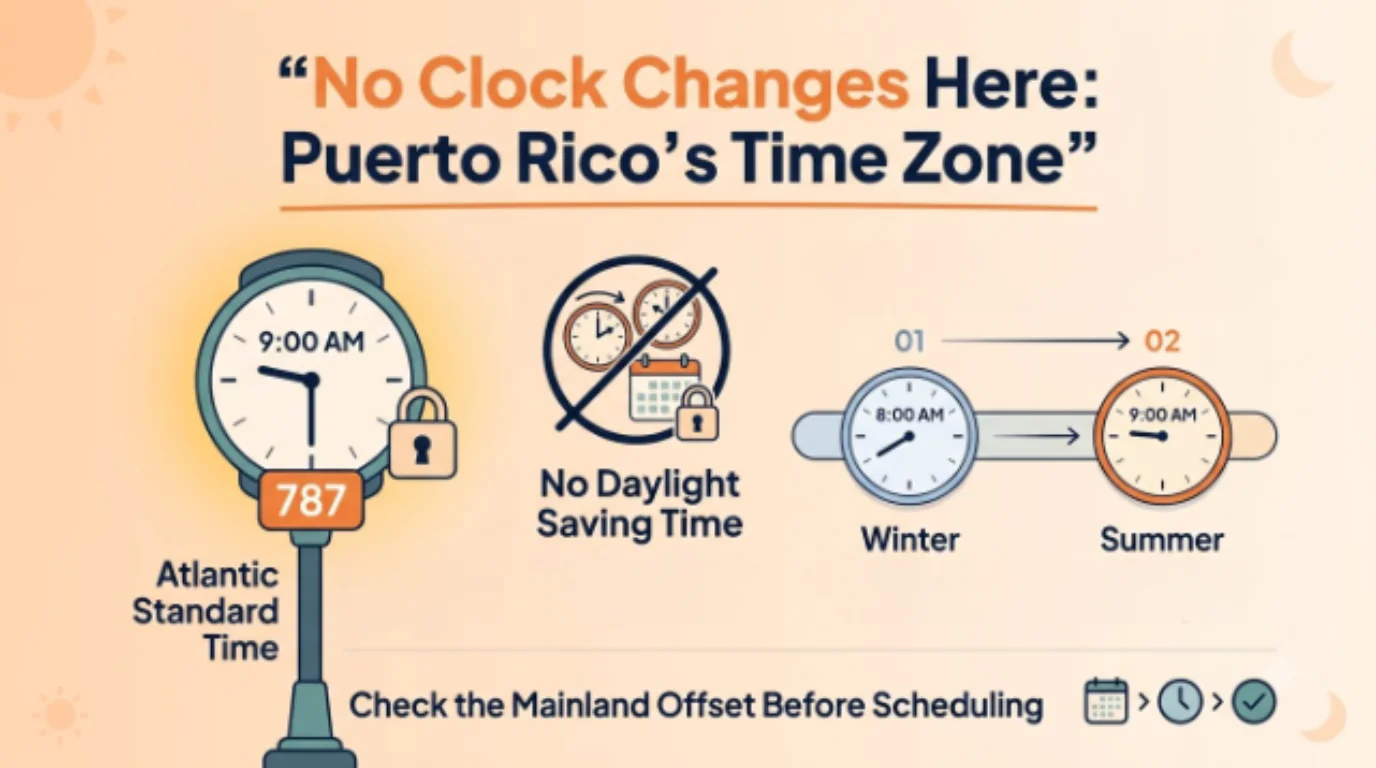
Puerto Rico, and the entire 787 area code, operates on Atlantic Standard Time (AST), a zone not used anywhere on the U.S. mainland. AST sits one hour ahead of U.S. Eastern Time during the winter months.
The more important detail for scheduling: Puerto Rico does not observe daylight saving time, the same policy followed by the 808 area code covering Hawaii. That means for roughly eight months of the year, AST and Eastern Daylight Time line up exactly, but for the rest of the year, when the mainland springs forward and Puerto Rico doesn't, the island runs an hour ahead of the U.S. East Coast.
Businesses calling into 787 from the mainland should double-check the current offset depending on the time of year rather than assuming a fixed one-hour difference, since that gap shifts twice annually with the mainland's own daylight saving transitions.
From 809 to Its Own Island Code: 787's Origin Story
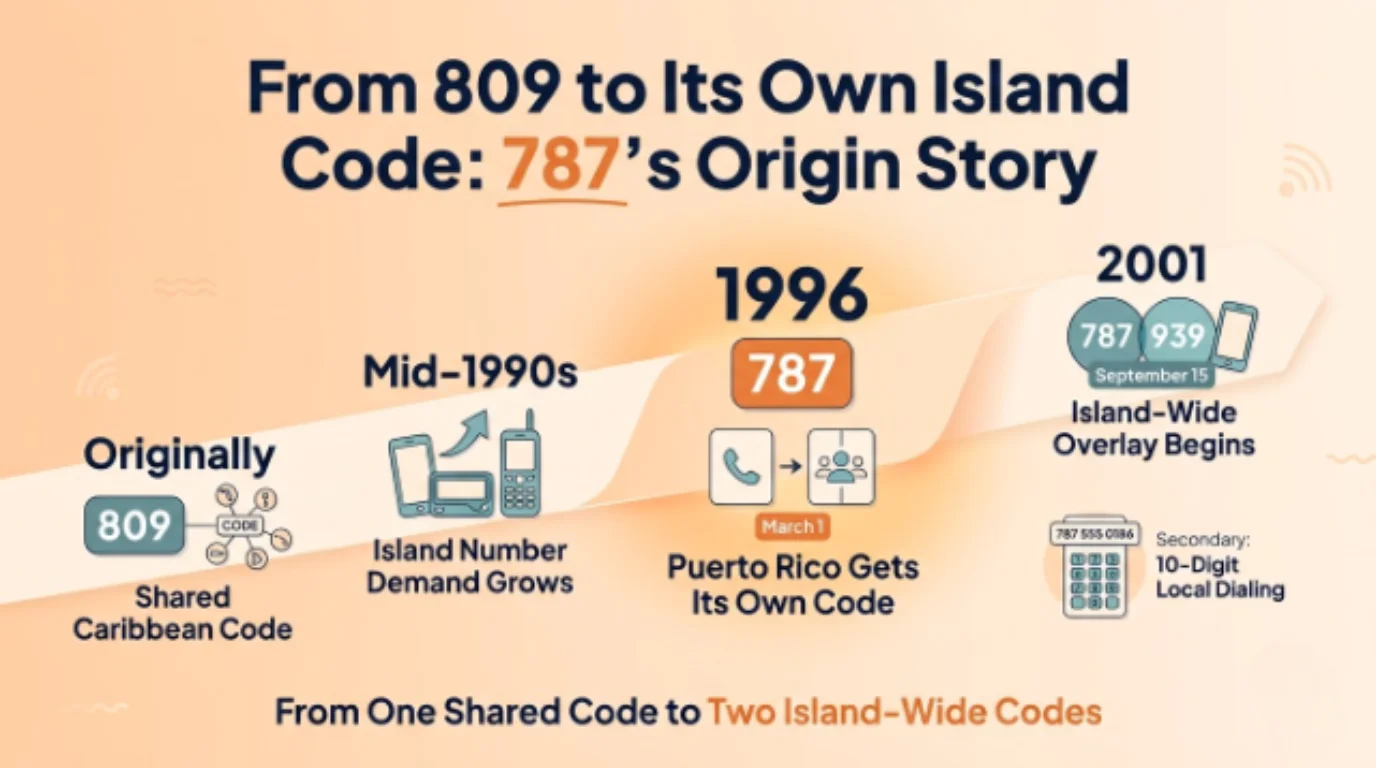
Understanding 787 means tracing how Puerto Rico moved from sharing a numbering plan with the wider Caribbean to having its own dedicated code:
Originally — Shared With the Eastern Caribbean. Puerto Rico was originally part of the 809 numbering plan area, a code shared broadly across several Caribbean nations and territories under the North American Numbering Plan.
Mid-1990s — Growing Demand for Puerto Rico's Own Numbers. As Puerto Rico's population and business activity grew, and pagers and early cell phones proliferated, demand for numbers on the island began outpacing what the shared 809 pool could sustainably support.
1996 — Puerto Rico Gets Its Own Code. On March 1, 1996, 787 was activated as Puerto Rico's own dedicated area code, splitting the island off from the broader Caribbean 809 numbering pool entirely.
2001 — The 939 Overlay. Just five years later, continued growth pushed 787 itself toward exhaustion. Rather than split the island geographically, regulators activated 939 as an overlay on September 15, 2001, sharing the exact same island-wide footprint as 787 and requiring 10-digit dialing for every local call from that point on. The full history follows the same overlay pattern described in the FCC's overview of area code overlays.
Scam Calls Reported Across the 787 Region
Because 787 is Puerto Rico's primary, widely recognized area code, scammers frequently spoof it to make calls appear to originate on the island, targeting both residents and mainland relatives. A call from a 787 number isn't inherently suspicious — most are legitimate calls from island businesses, family, or government offices — but a few patterns deserve caution.
Puerto Rico's periodic hurricane recovery periods have historically drawn a spike in FEMA and disaster-relief impersonation scams, with callers posing as federal aid officials requesting personal or banking information from storm-affected residents.
The broader warning signs common to any spoofed area code still apply here as well:
- Urgent demands for immediate payment, especially via gift cards, wire transfers, or cryptocurrency
- Threats of arrest, utility shutoff, or benefit suspension meant to pressure a fast decision
- One-ring "wangiri" calls designed to bait a costly international callback
- Requests for Social Security numbers, banking details, or one-time verification codes from an unsolicited caller
If a 787 call feels off, hang up and contact the organization directly using a number pulled from their official website, not a callback number the caller supplies.
The Case for Holding a 787 Number as a Business
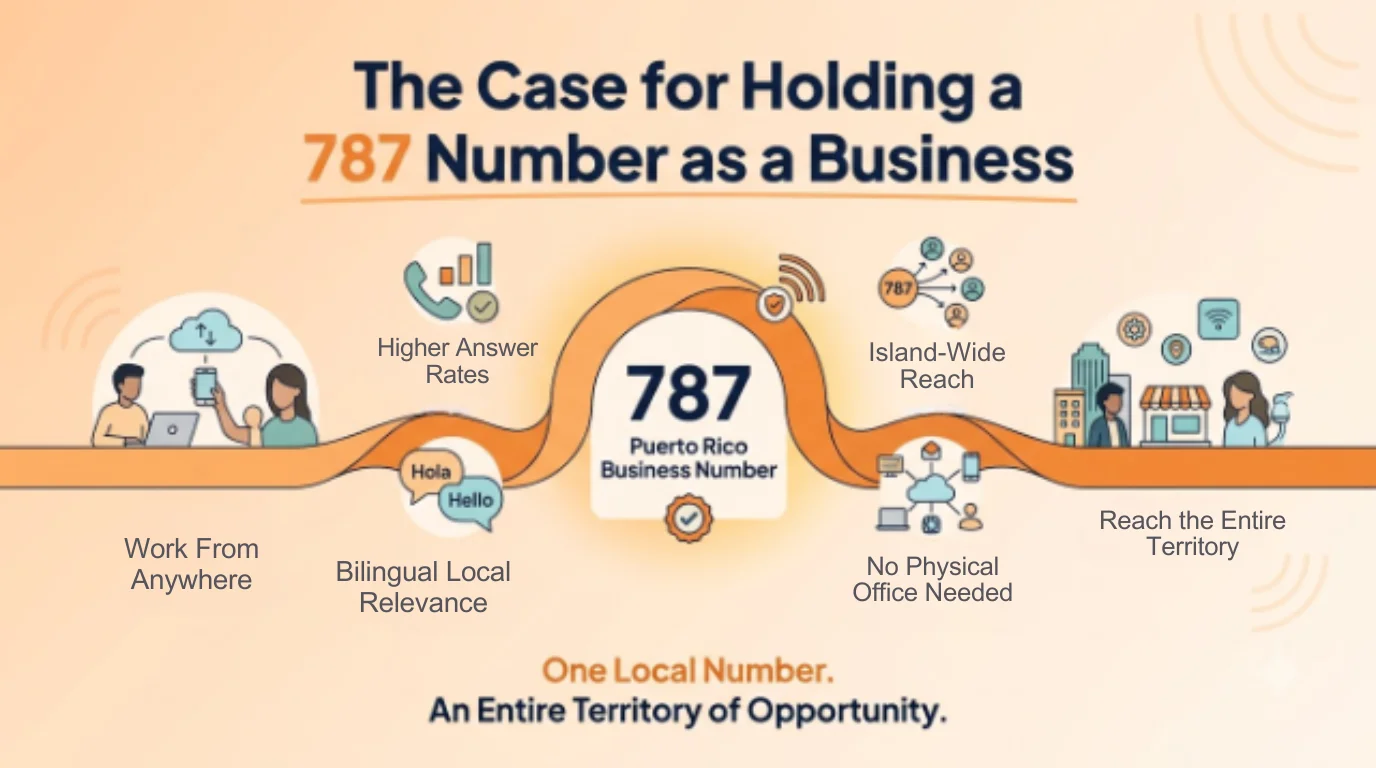
Even without a physical office anywhere on the island, a 787 number carries real advantages for businesses serving Puerto Rico:
Higher answer rates. Island residents consistently pick up calls from a recognizable local area code more readily than an unfamiliar mainland or toll-free number, which matters for sales outreach and appointment confirmations.
Cultural and linguistic relevance. A 787 number paired with Spanish-language support signals genuine local relevance to a market where bilingual service, not just a local prefix, often determines whether a business earns trust.
Reach across an entire territory from one number. Because 787 covers the whole island rather than one region, a single number can plausibly serve customers from San Juan to Ponce to Mayagüez without needing separate lines for each area.
No physical office required. A cloud-based phone system lets you activate a 787 number without leasing space anywhere in Puerto Rico, with calls routing to your team wherever they're actually working.
Activating a 787 Number With LetsDial
Claiming a local 787 number doesn't require a Puerto Rico address or a contract with a legacy island carrier. With a cloud phone platform like LetsDial, the process takes only a few minutes.
Legacy providers historically required an in-territory billing address and a technician-scheduled installation before a number tied to a specific area code went live. Cloud platforms remove that friction, since the number functions as a software-routable line rather than a physical connection.
- Sign up for a LetsDial account and choose a calling plan sized to your team.
- Search available 787 numbers in the number picker, filtering by municipality — San Juan, Bayamón, Ponce, and more — or by vanity options.
- Select your number and assign it to a user, department, or auto-attendant/IVR flow.
- Configure call routing — business hours, forwarding, voicemail-to-email, and SMS — directly from the dashboard, no hardware required.
- Activate — your 787 number goes live immediately across desktop, mobile, and desk phone apps.
Because the number lives in the cloud, you can pair a 787 line with numbers from mainland U.S. markets to manage several regions from a single platform. LetsDial's business phone number plans and pricing make it easy to get started, or browse the full list of U.S. area codes if you need coverage beyond Puerto Rico.
Quick Facts About 787
- Region: Entire island of Puerto Rico (San Juan, Bayamón, Ponce, Caguas)
- Territory: Puerto Rico (U.S. territory)
- Time Zone: Atlantic Standard Time (AST) — no daylight saving observed
- Created: March 1, 1996 (split from shared Caribbean 809)
- Overlay Code: 939 (added September 15, 2001)
- Dialing Requirement: 10-digit dialing required
- Largest City: San Juan (capital)
Conclusion
The 787 area code has identified Puerto Rico since 1996, when the island split away from the broader Caribbean 809 numbering pool to get a dedicated code of its own. Just five years later, 939 arrived as an overlay to keep pace with continued growth, and the two prefixes have shared the entire island interchangeably ever since.
What sets 787 apart from every other code on this site is scope: it's not a slice of a state but an entire U.S. territory, running on a time zone and daylight-saving schedule found nowhere else in this series. For businesses serving Puerto Rico, a 787 number remains one of the most direct ways to signal genuine island presence, and a platform like LetsDial can have one active in minutes.
Frequently Asked Questions
Written by Aryan Khan · August 5, 2026
Reply to the author