Introduction
The 680 area code is an overlay of the long-established 315 area code, covering Central New York — Syracuse, Utica, Rome, and 18 counties stretching from the shores of Lake Ontario west of Wayne County east to Massena near the Canadian border, and south to the edge of Cortland County. Regulators added 680 on March 11, 2017 to bring fresh numbering capacity to a region where the 315 pool was running low, after mandatory 10-digit dialing took effect across the footprint the month before.
Whether you've received an unfamiliar 680 call, run a business in Syracuse, Utica, or Rome, or are an out-of-area company looking to build a credible Central New York presence, this guide covers exactly where the 680/315 overlay reaches, the region's major economic anchors, its numbering history, and how to get a 680 number without setting foot in the state.
- Overlays 315, covering 18 counties across Central New York, including Onondaga (Syracuse), Oneida (Utica and Rome), and Jefferson (Watertown)
- Went into service March 11, 2017, after mandatory 10-digit dialing began February 11, 2017
- Eastern Time year-round, with a combined 315/680 population of roughly 1.66 million
Where the 680 Area Code Reaches
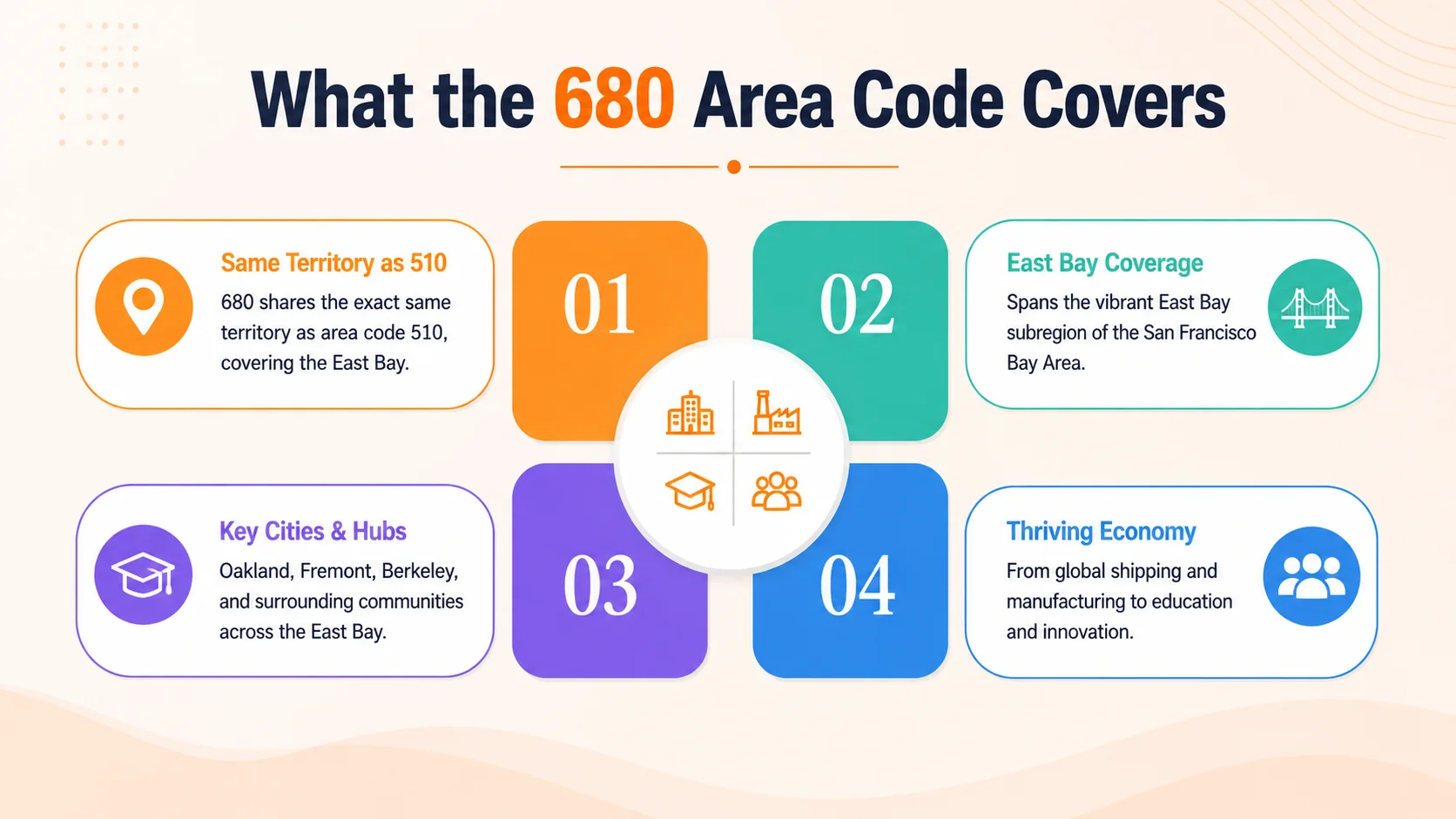
680 shares the exact same footprint as 315, spanning 18 counties across Central and Northern New York: Onondaga (Syracuse), Oneida (Utica and Rome), Jefferson (Watertown), Oswego, Cayuga (Auburn), Madison, Herkimer, St. Lawrence (Massena and Canton), Lewis, Fulton, Hamilton, Chenango, Otsego, Ontario, Seneca, Wayne, and Yates counties, plus the northern edge of Cortland County. The city of Cortland itself sits just across the line in area code 607, and the footprint does not extend to Rochester (585), Binghamton (607), or Albany (518) — all distinct, non-overlapping codes.
That 18-county span makes 315/680 one of the geographically largest area code regions in New York State by land area, even though its combined population is modest compared to the downstate 212/646/332 cluster — a reflection of how much of Central and Northern New York is rural farmland and forest between the handful of small-to-midsize cities that anchor the region.
Because 680 is an overlay rather than a geographic split, a 680 number does not indicate a different location than a 315 number — both codes serve the identical Central New York territory, and 10-digit dialing is mandatory for every call within it, including two 315 numbers in the same building. More detail sits on our letsdial page.
Syracuse: Education, Healthcare, and Manufacturing
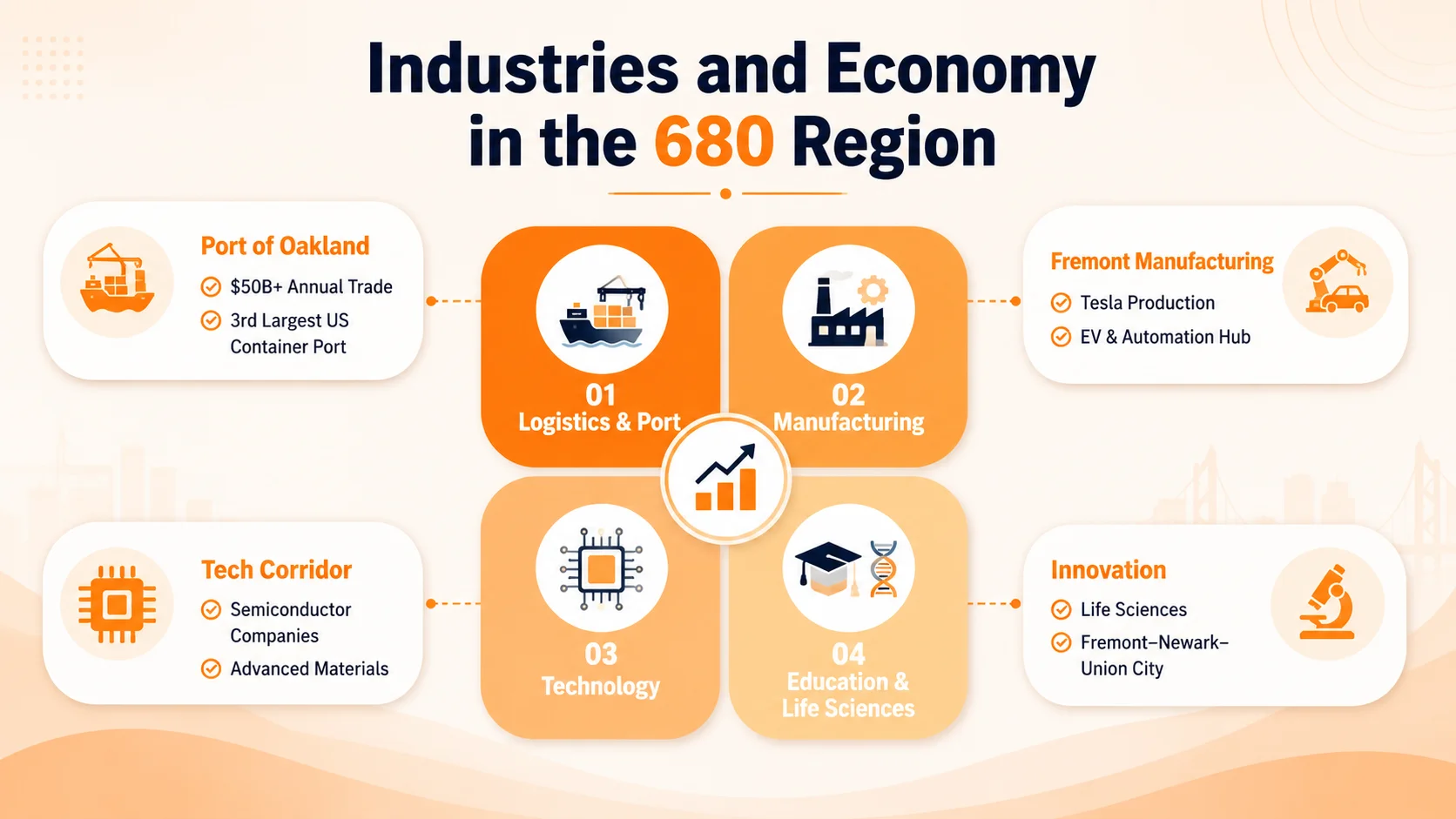
Syracuse anchors the 680/315 region economically. SUNY Upstate Medical University is the area's largest employer, with more than 13,000 staff and an estimated $3.2 billion annual economic impact across hospitals, research, and academic medicine. Syracuse University, with roughly 22,000 students, is another major employer and draws faculty, researchers, and support staff from across the country into the local market. Between SUNY Upstate, Syracuse University, and Le Moyne College, higher education and academic medicine together account for a meaningfully larger share of Onondaga County employment than in most comparably sized metros, giving the local economy a stability that manufacturing towns without a major research university often lack during downturns.
The region's manufacturing legacy runs through Carrier Corporation, founded in Syracuse by Willis Carrier, inventor of modern air conditioning. While the parent company (now Carrier Global) relocated its headquarters to Florida, the DeWitt campus near Syracuse still employs over 1,000 engineers and support staff in design and testing roles, keeping a piece of that heritage rooted locally.
The bigger recent shift in the Syracuse economy is Micron Technology's planned semiconductor megafab in nearby Clay, just north of the city — a pledge of up to 00 billion over the next two decades that the state has called the largest private investment in New York history.
The project has secured billions in state and federal CHIPS Act support and is projected to create roughly 9,000 direct Micron jobs plus tens of thousands more in the surrounding supply chain once the first fab comes online around 2030, a timeline that has already reshaped local housing, workforce training, and infrastructure planning across the 680/315 footprint years before a single chip ships. More detail sits on our AI receptionist page.
Utica and Rome: Healthcare, Insurance, and Aerospace
Utica's economy centers on healthcare and insurance. Mohawk Valley Health System is the region's dominant hospital network, and its new Wynn Hospital — a $648 million facility with more than 3,300 full-time staff — opened in October 2023 as the area's largest healthcare investment in decades. Utica National Insurance Group, headquartered locally, is another significant regional employer. That insurance presence traces back more than a century in the Mohawk Valley, giving Utica a base of steady white-collar office employment that has helped cushion the broader loss of the manufacturing jobs — textiles, firearms, and electronics — that once anchored the local economy through the mid-20th century.
Rome, roughly 15 miles northeast of Utica, is built around the former Griffiss Air Force Base, closed in 1995 and redeveloped as Griffiss International Airport and the Griffiss Business & Technology Park. The site hosts the Air Force Research Laboratory's Information Directorate ('Rome Lab') and an FAA-designated Unmanned Aircraft Systems test site — one of only seven in the country — anchoring a growing cluster of drone and defense-technology employers.
The 1995 base closure was, at the time, a significant economic blow to the Mohawk Valley, but the redevelopment authority's decision to court federal research tenants rather than let the site sit vacant has paid off over the following three decades — the drone-testing designation in particular has drawn a steady stream of unmanned-systems startups and defense contractors that wouldn't otherwise have a reason to locate in upstate New York.
680 History: From the Original 315 to a 2017 Overlay
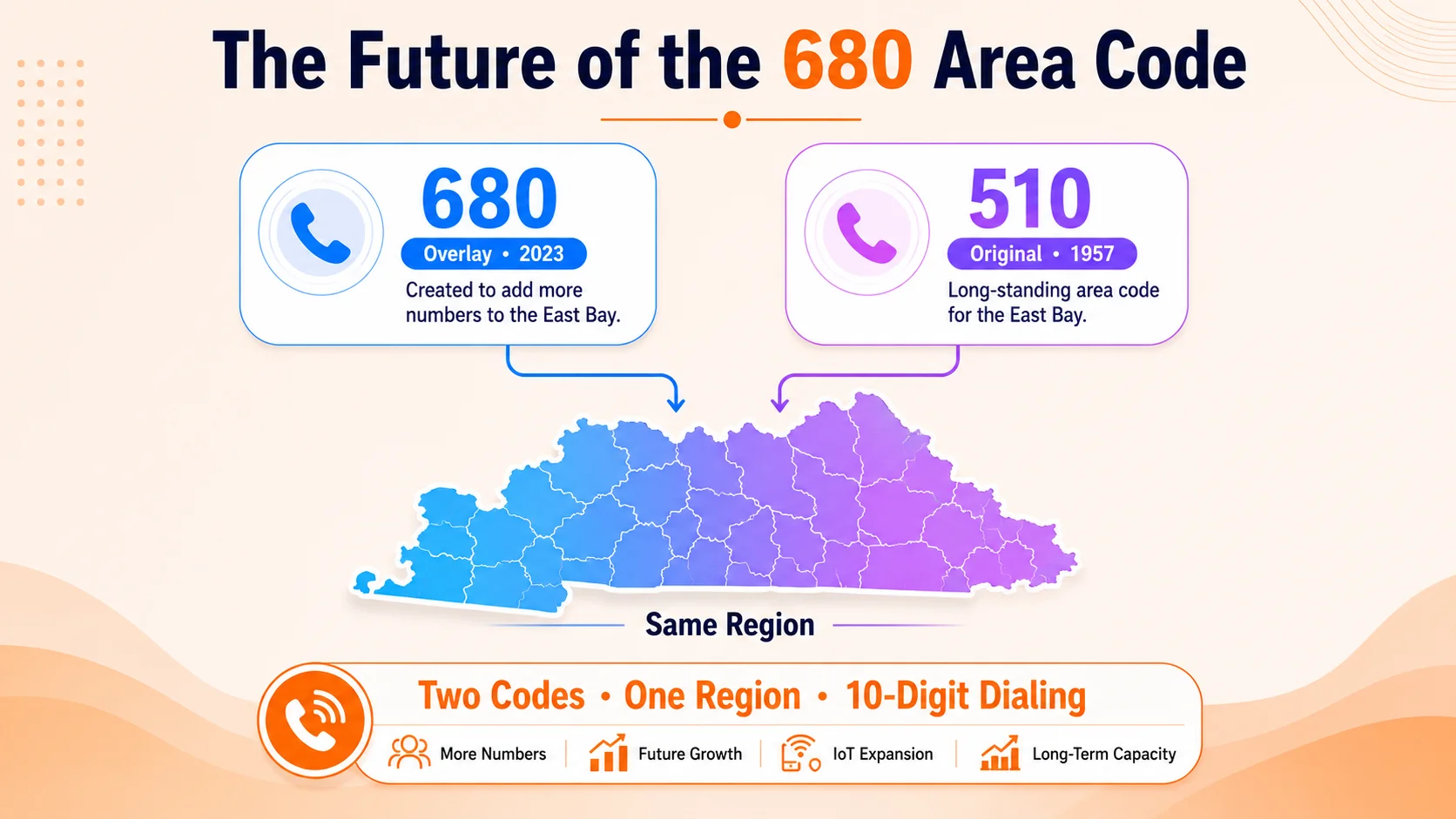
315 was one of the original 86 area codes assigned across the US and Canada in 1947, and originally covered a much larger stretch of central New York, including Binghamton. In 1954, the southern portion split off to form area code 607, leaving 315 with roughly the footprint it holds today. Decades of steady growth, and the accelerating demand for wireless and business lines, gradually drew down the remaining 315 number pool.
To add capacity without forcing a disruptive geographic split, regulators approved 680 as a full overlay on the entire 315 footprint. Permissive 10-digit dialing began in March 2016, mandatory 10-digit dialing took effect February 11, 2017, and the 680 overlay went into service March 11, 2017. The entire 315/680 region observes Eastern Time — UTC-5 in winter (EST) and UTC-4 during Daylight Saving (EDT) — the same clock as New York City, three hours ahead of the West Coast.
Getting a 680 Number and Staying Safe from Spam
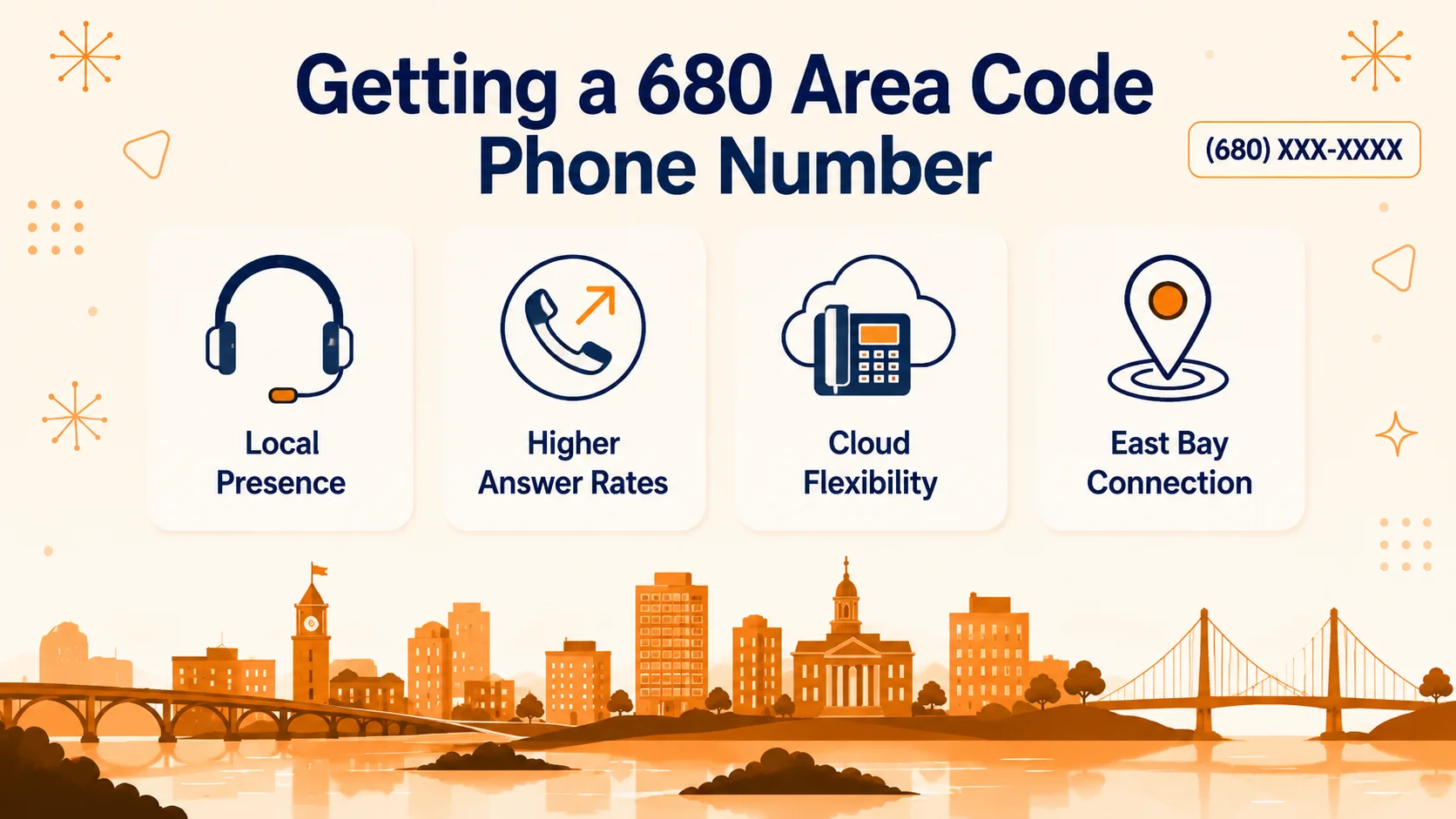
A 680 number can be obtained through a traditional carrier or a cloud VoIP provider. Major carriers like Verizon, AT&T, and T-Mobile issue 680 numbers on their New York plans. Traditional carrier lines still work fine for a single desk phone in a fixed office, but they typically lock a business into per-line hardware and charge extra for basic call-routing features that a cloud provider bundles in by default.
For businesses outside the region wanting a local Syracuse, Utica, or Rome presence, letsdial lets you select and activate a 680 number in minutes — no Central New York office required, and a local number measurably increases answer rates when calling prospects in the area — especially useful for vendors trying to reach procurement offices at SUNY Upstate, Mohawk Valley Health System, or the Griffiss Business & Technology Park, all of which field a steady volume of cold calls from out-of-area sales numbers that get screened straight to voicemail.
Number portability also lets you move an existing 315 or 680 number to letsdial, with free porting in both directions so your number stays an asset rather than a lock-in risk. Like every US area code, 680 numbers are a target for caller ID spoofing — common tactics in the region include calls impersonating Mohawk Valley Health System or Upstate Medical billing departments and 'neighbor spoofing' that matches the first six digits of the recipient's own number. Register at donotcall.gov, report fraudulent calls to the FTC at reportfraud.ftc.gov, and use call-blocking apps like Nomorobo or Hiya.
> [TIP] Note: Build your Central New York phone presence — activate a local 680 Syracuse or Utica number from anywhere with letsdial. AI receptionist, call recording, and CRM sync included. Live in under three minutes. For official guidance on area code changes and ten-digit dialing, see the FCC's ten-digit dialing guide.
Conclusion
The 680 area code brings fresh numbering capacity to the same Central New York footprint as 315 — Syracuse, Utica, Rome, and the surrounding 18 counties, home to roughly 1.66 million people across a mix of academic medicine, insurance, manufacturing, and defense-technology employers. Because it's an overlay rather than a new territory, a 680 number carries the exact same local identity as a 315 number to anyone calling in the region.
letsdial provisions 680 and 315 numbers in minutes, with AI receptionist coverage, call recording, and CRM sync included from the first call — no hardware and no Central New York office required.
Frequently Asked Questions
Written by Aryan Khan · June 27, 2026
Reply to the author