Introduction
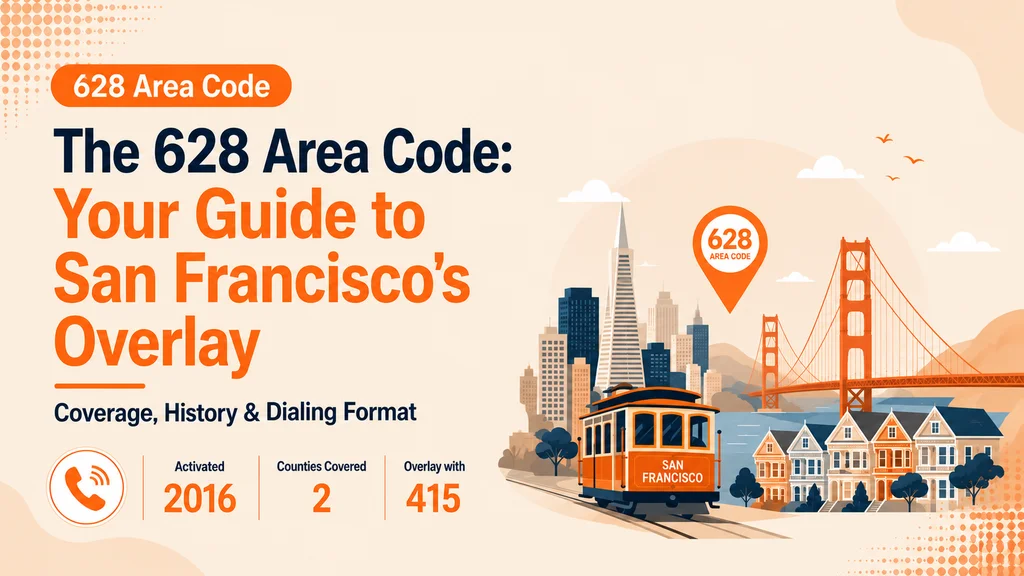
Dial a number that opens with 628 and you are still reaching someone in San Francisco or Marin County — just on the region's newer prefix. The 628 area code is an overlay, not a separate region, and it shares the exact same San Francisco footprint as its older sibling.
Whether you just picked up a 628 number for a new business line, or an unfamiliar prefix showed up on your phone, knowing what this code represents helps you answer with confidence. This guide breaks down where the 628 area code reaches, how it became San Francisco's overlay code, the cities it shares with its sibling prefix, what ten-digit dialing means across the region, and why a local number carrying these three digits still matters for business today.
Where Is the 628 Area Code Located?
The 628 area code covers the exact same San Francisco and Marin County tier of California as the region's original prefix, running from the city itself out across the Golden Gate to San Rafael and the North Bay towns. Its territory sits entirely inside San Francisco and Marin counties.
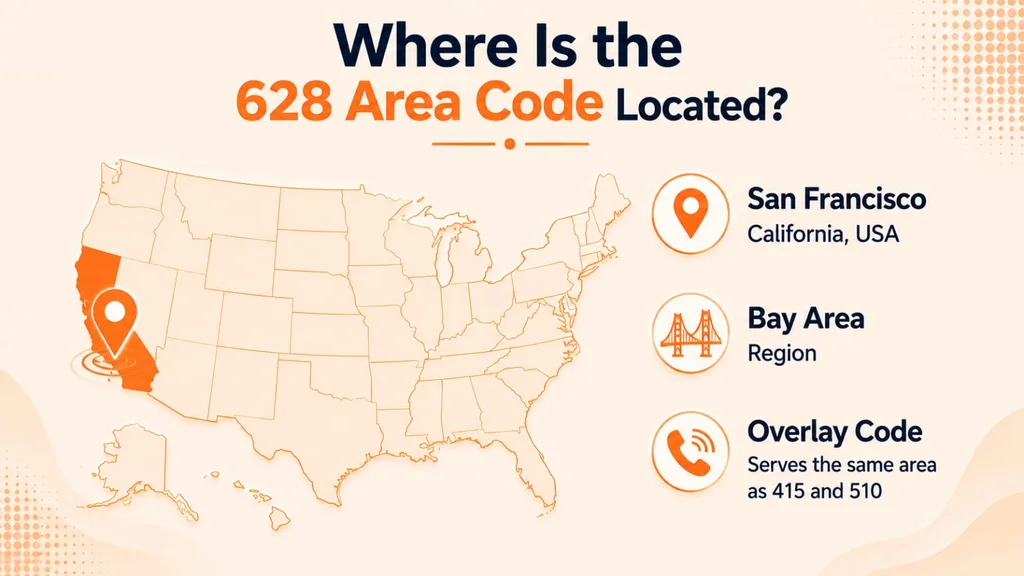
Every line assigned to this overlay sits in the Pacific Time Zone. So when a call shows the 628 area code on caller ID, it is coming from San Francisco or Marin County, not from the South Bay or the East Bay.
An Overlay, Not a New Boundary
An overlay is not a new place on the map — it is a second layer of numbers stacked on top of a region that already ran out of fresh combinations under its original code.
A Short History of the 628 Area Code
San Francisco carried the 415 area code from 1947, one of California's original prefixes. Growth later peeled away the South Bay as 408 in 1959, the East Bay as 510 in 1991, and the Peninsula as 650 in 1997, leaving 415 to cover just San Francisco and Marin County.
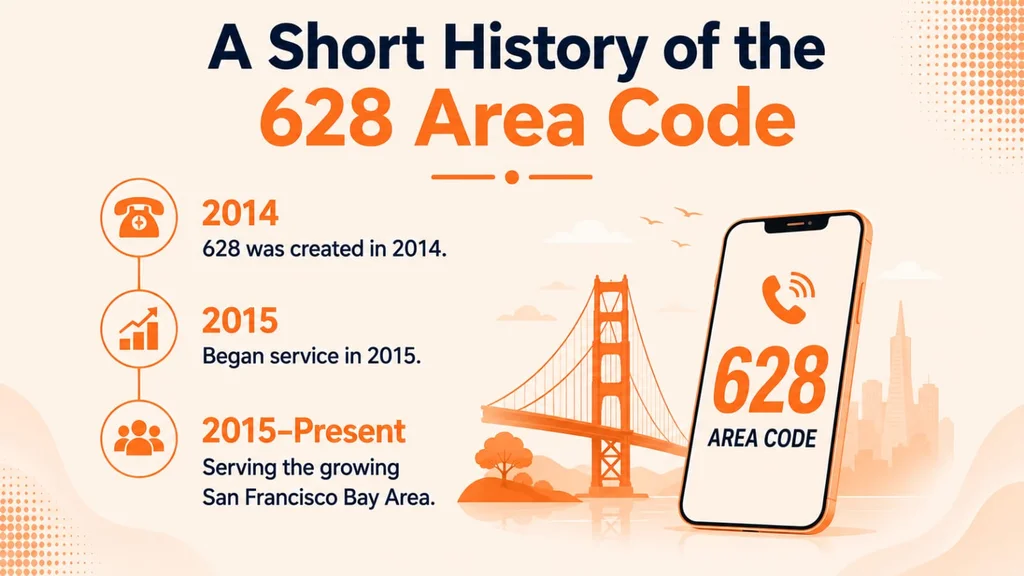
By 2015, the city's own tech boom had outpaced the supply of new numbers under even that smaller footprint. Regulators introduced the 628 area code as an overlay that year, layering fresh numbers on top of the existing 415 territory rather than splitting the region again.
The Third California Overlay on This List
That made 628 the third California overlay on this list, following the same fix already used for Orange County's 714 and later for Silicon Valley's 408.
The 628 Area Code by the Numbers
- Original code (415) assigned: 1947
- 408 split off (South Bay): 1959
- 510 split off (East Bay): 1991
- 650 split off (Peninsula): 1997
- 628 overlay introduced: 2015
- Combined region population: ~1.1 million
A few figures put the overlay in perspective. The combined 415 and 628 area code footprint now serves a population of roughly 1.1 million people across San Francisco and Marin counties.
San Francisco alone anchors close to 815,000 residents inside the city limits, and new business lines issued across the metro increasingly carry the 628 area code as the original prefix's number pool tightens.
Cities and Communities in the 628 Region
San Francisco is the obvious anchor, and every community that once dialed only 415 now shares its numbering pool with 628. For a look at a similar overlay built around another Bay Area tech hub, see letsdial's 669 area code guide, which covers San Jose and Silicon Valley.
- San Francisco: Financial District, tech and tourism
- San Rafael: Marin County seat
- Sausalito: Waterfront arts community
- Mill Valley: Upscale Mount Tamalpais foothill town
- Tiburon: Bay-view residential community
- Novato: Northern Marin County suburb
- Larkspur: Ferry-connected residential town
- Corte Madera: Retail and residential hub
From the financial towers of downtown San Francisco to the marina towns across the Golden Gate, the 628 area code now touches every community in a region of roughly 1.1 million residents.
What the 628 Overlay Means for Local Dialing
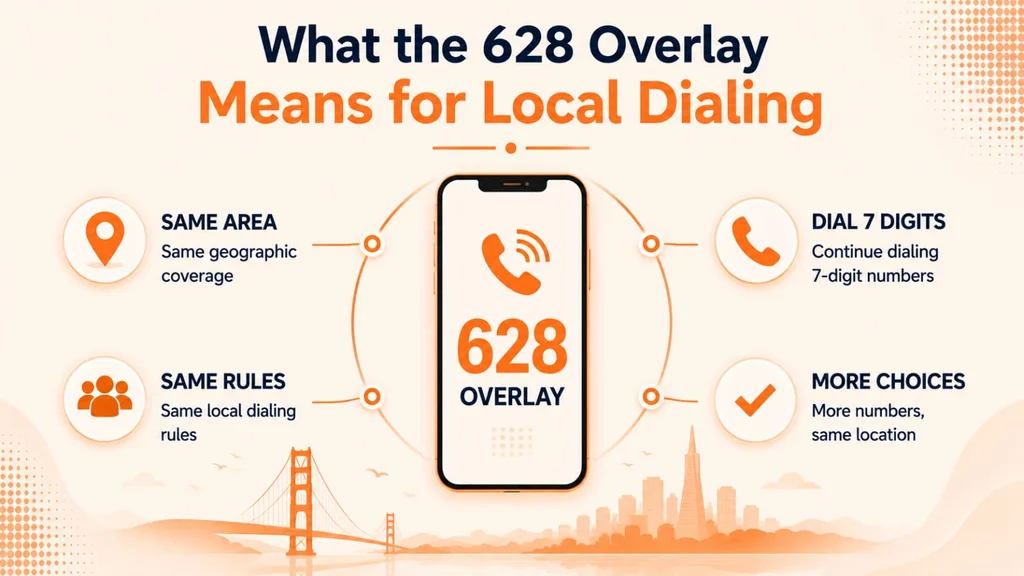
Because two codes now share one territory, every local call in San Francisco and Marin County requires all ten digits. Dialing seven numbers no longer connects, even inside the same downtown office. For a look at how a comparable overlay works in Orange County, see letsdial's 657 area code guide, which covers Anaheim's layered numbering system.
Existing 415 numbers were never reassigned. The overlay only affects new lines, so a business carrying the same prefix since before 2015 sees no change beyond the extra digits it now dials.
The Habit Took Time to Stick
That ten-digit habit took time to stick, but it is now second nature to anyone who has lived in the city for more than a few years.
Calling a 628 Number From Outside the United States
Reaching a San Francisco line from abroad follows the standard pattern: exit code, country code 1, area code, then the local number.
- Country code: +1
- Area code: 628
- Local number: XXX-XXXX
- Full dial-out: +1-628-XXX-XXXX
- Local dialing rule: 10-digit required across 415 / 628
For a caller in London that's 00, then 1, then 628. Drop any leading zero — North American numbers never take one.
Why a Local 628 Number Still Matters for Business
Here is the thing — a local number reads as trust before anyone even answers. Customers across San Francisco and Marin County are just as likely to pick up a call showing the newer 628 prefix as one showing the original 415 code.
For a small business, that recognition converts into real revenue. A startup founder downtown or a boutique in Sausalito with an area code 628 number reads as part of the community, not a distant call center. Civic identity runs the same way — the City and County of San Francisco and its neighboring towns operate inside the same numbering region.
That local signal is exactly why the 628 area code carries real weight even as more calls move to mobile phones and video apps.
Setting Up a Local 628 Number for Your Business
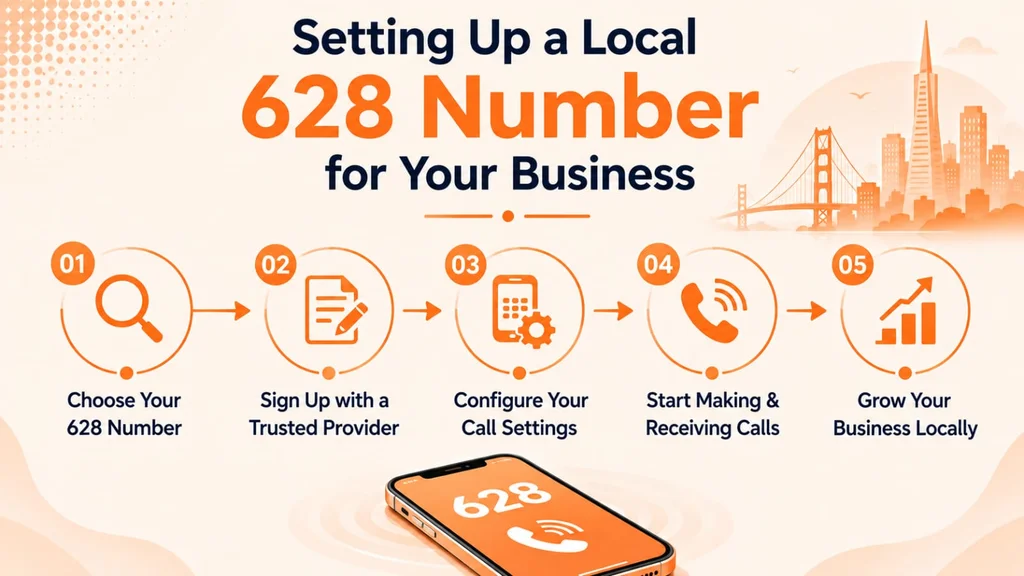
You no longer need a lease near the Financial District to hold a local presence there. Cloud telephony providers assign virtual numbers by region, so a company anywhere can pick up an area code 628 line and route it to any device it likes.
letsdial issues local numbers in 100+ countries and carries calls into 200+ on Tier-1 routes, so an area code 628 number can forward to a mobile in Oakland.
Getting started skips the contract maze. letsdial gets you live in under 3 minutes, with 24/7 live human support and the same AI receptionist on every paid plan, so you can claim an area code 628 presence and scale it as your call volume grows.
What That Looks Like for a Startup-Driven City
Route inbound calls to whichever agent is free, record them for training, and read the caller's history before you say hello — all on a number that still shows a San Francisco prefix. A remote support rep can sound local to San Rafael in minutes.
That flexibility is the real story here. The prefix keeps its regional meaning, but the phone behind it can live anywhere and follow your team as it moves. You keep the trust of a local footprint without a desk tied to a single city.
The Bottom Line
Three small digits carry the identity of a growing city, even as a second layer. This prefix has shared San Francisco's footprint since 2015, joining the overlay codes that let a booming metro add numbers without redrawing any boundary. From the financial towers of downtown to the marina towns across the Golden Gate, a 628 area code line still says local, still earns the answered call, and still travels with your business. Claim one, pick up with confidence, and you carry a piece of the city in every ring.
Frequently Asked Questions
Written by Aryan Khan · July 10, 2026
Reply to the author