Introduction
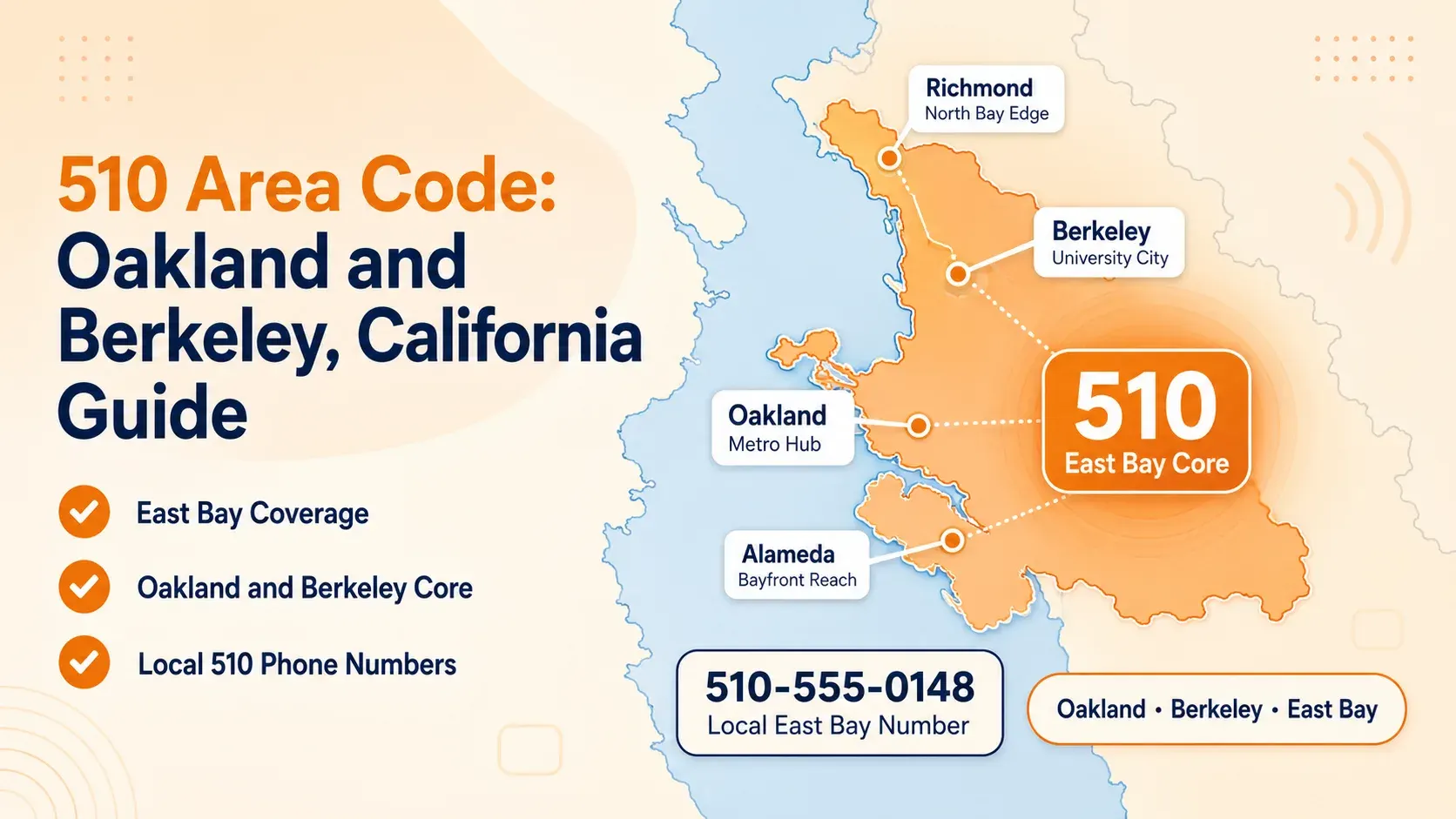
The 510 area code is the East Bay's original prefix — not Texas, Florida, or New York — covering Oakland and Berkeley, California, across the bay from San Francisco.
This guide maps where the 510 area code reaches, the activism, food, and cultural history that built it, its Pacific Time calling window, its 1991 origin as a split from San Francisco's 415 area code, and how to put an East Bay number in front of customers in minutes.
Where the 510 Area Code Reaches
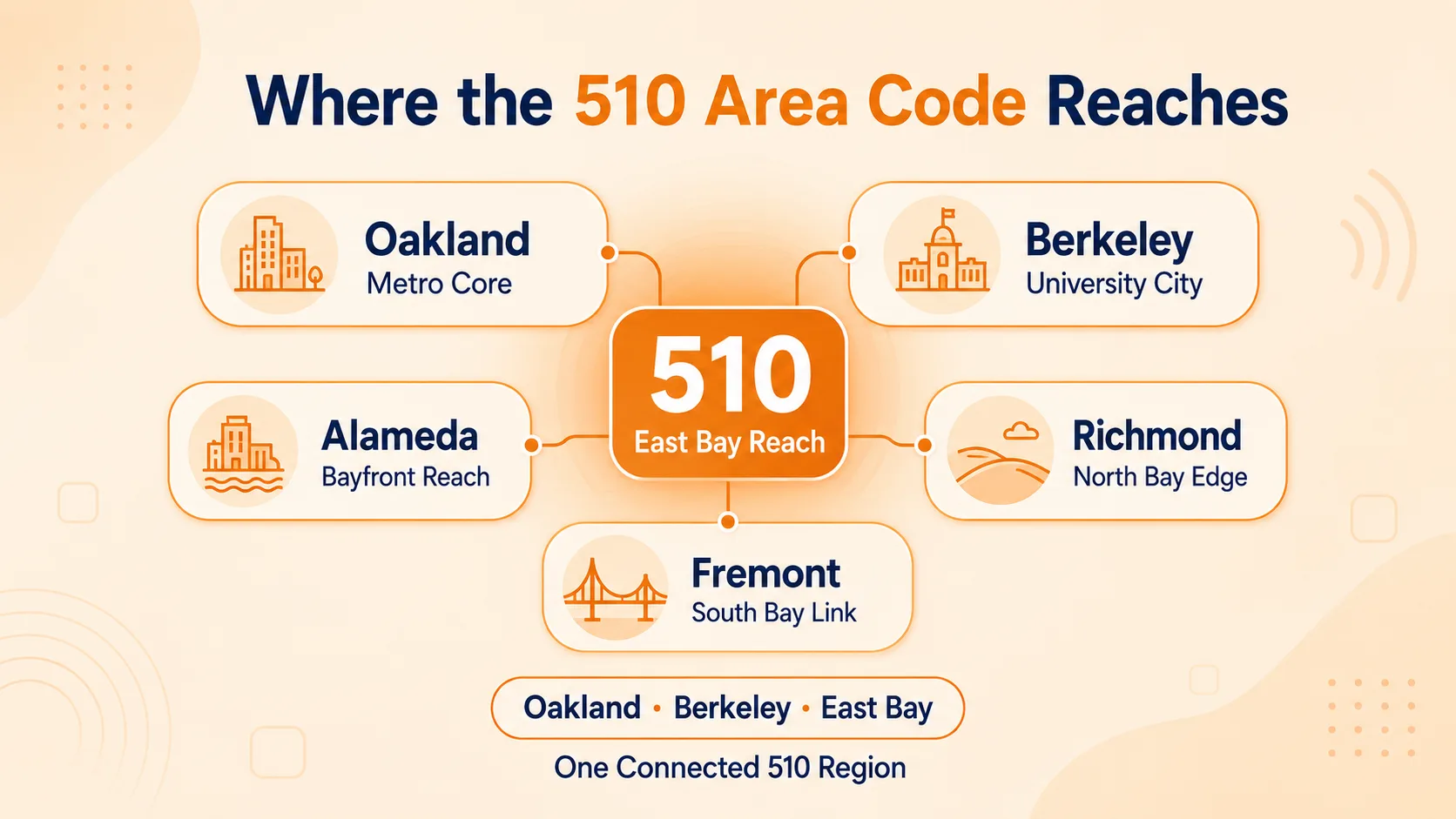
510 covers California's East Bay — Alameda and Contra Costa counties — sharing its territory with the 341 overlay rather than covering separate ground.
- Oakland — Alameda County's seat and the East Bay's largest city
- Berkeley — home to the University of California, Berkeley
- Fremont — the Alameda County city home to Tesla's assembly plant
- Richmond — the Contra Costa County city anchoring the northern East Bay
- Alameda — the island city across the estuary from downtown Oakland
Because 510 was the East Bay's only number for nearly three decades, it remains the most recognized and requested East Bay prefix — a 510 area code line signals long-standing local roots in a way its newer overlay sibling can't quite match.
Berkeley's Free Speech Movement and California Cuisine
Beyond UC Berkeley's research reputation, the 510 footprint carries a distinct activist and culinary history.
The Free Speech Movement and Telegraph Avenue
The Free Speech Movement began at UC Berkeley in 1964, when students protested restrictions on political activity on campus, launching a wave of campus activism that spread across the country. Telegraph Avenue, the commercial strip running south from campus, has carried that counterculture identity for six decades through its bookstores, record shops, and street vendors.
Chez Panisse and the Birth of California Cuisine
Chez Panisse, the Berkeley restaurant Alice Waters opened in 1971, is widely credited with launching the farm-to-table movement and California cuisine, building its menu entirely around fresh, local, seasonal ingredients at a time when that approach was unheard of in American fine dining.
Oakland's Historic Theaters and the East Bay Regional Parks
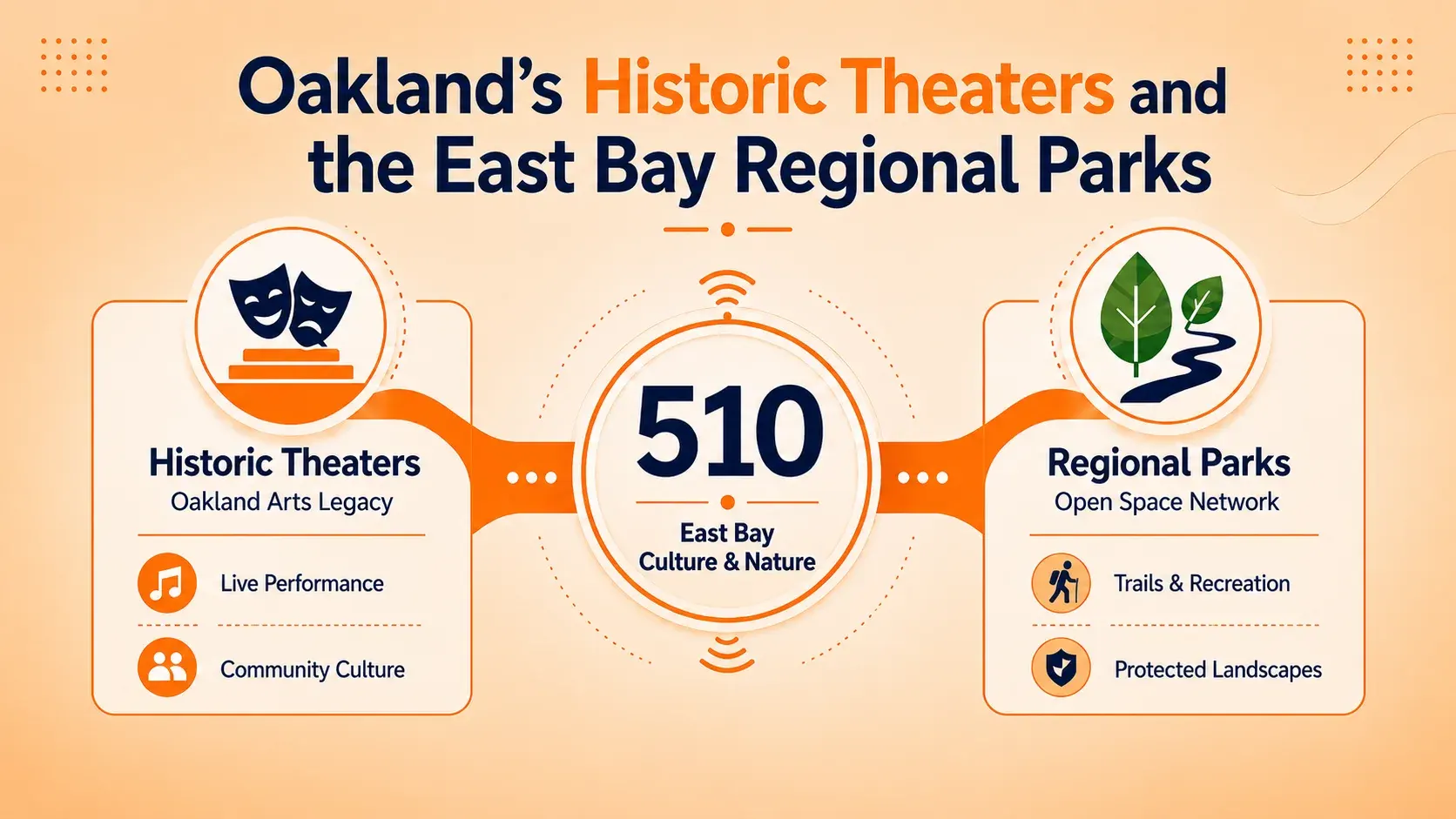
Oakland's downtown and the surrounding hills carry the East Bay's architectural and outdoor-recreation identity.
The Fox and Paramount Theatres
The Fox Theater and the Paramount Theatre, both restored Art Deco movie palaces from the 1920s and 1930s, anchor downtown Oakland's entertainment district today as live-music and performing-arts venues, drawing crowds that helped drive the neighborhood's revival.
The Oakland Museum of California, covering the state's art, history, and natural sciences under one roof, adds a major cultural institution to downtown Oakland alongside the restored theater district.
East Bay Regional Park District
The East Bay Regional Park District manages more than 125,000 acres of parkland across Alameda and Contra Costa counties, one of the largest regional park systems in the country, giving 510-area residents and visiting businesspeople easy access to hiking and open space without leaving the metro area.
For a business working the wider Bay Area market, the 510 area code shares its territory with the 341 area code overlay.
A full California area codes breakdown maps how the state's prefixes fit together.
Time Zone and Calling Hours for the 510 Area Code
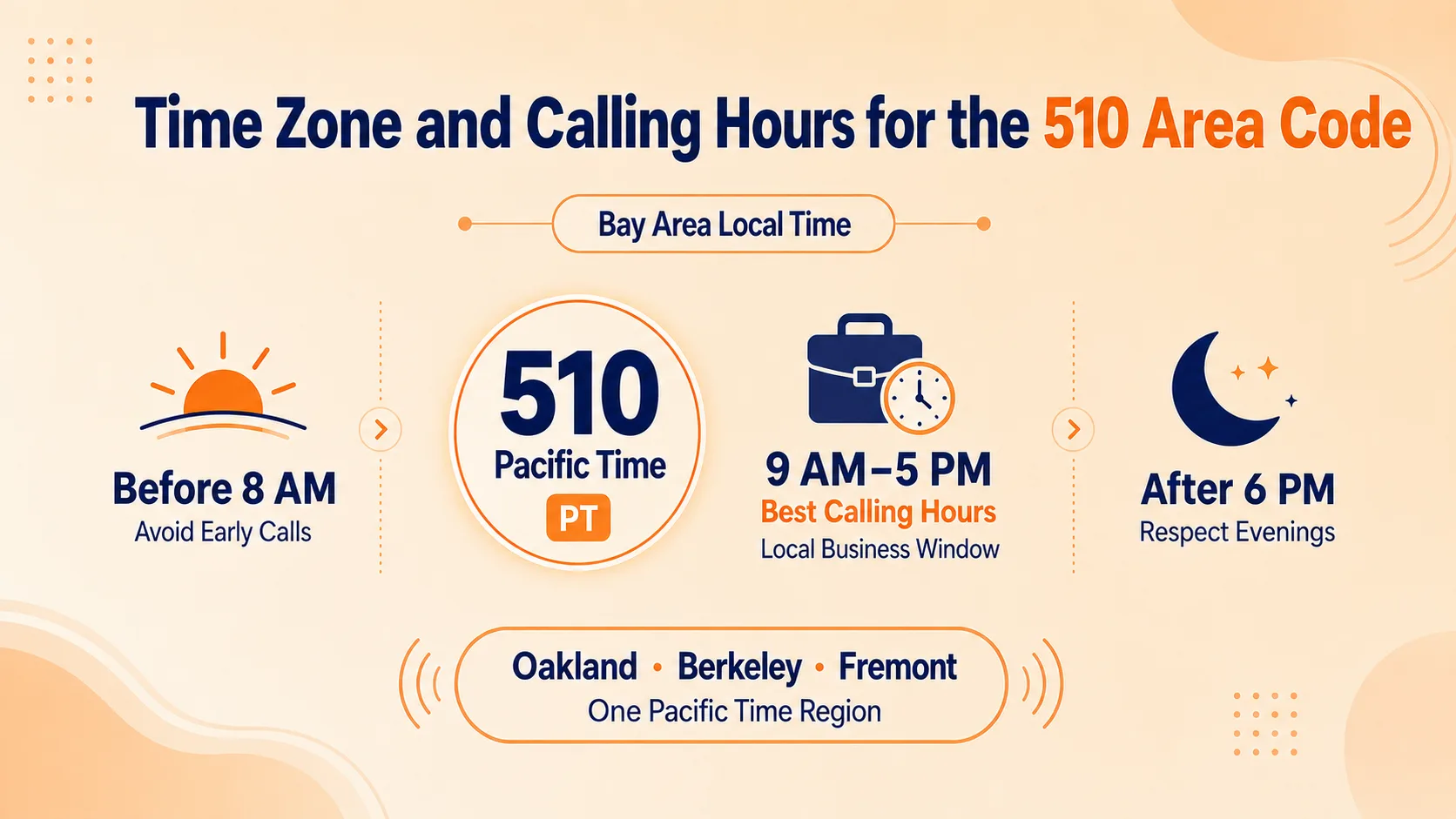
The entire 510 area code observes Pacific Time — UTC-8 (PST) in winter and UTC-7 (PDT) during Daylight Saving. The East Bay shares the clock with San Francisco and the rest of California.
East Coast teams calling area code 510 are three hours ahead, so early-afternoon Eastern outreach lands mid-morning in the East Bay — plan around the three-hour gap to catch the full business day.
510 History
The 510 area code was created on September 2, 1991, as a split from San Francisco's 415 area code, which had covered the entire Bay Area since 1947.
The split gave the East Bay — Oakland, Berkeley, Fremont, and the surrounding Alameda and Contra Costa county communities — its own dedicated numbering territory for the first time, separate from San Francisco and the Peninsula.
That 1991 split was part of a broader wave of Bay Area area-code divisions in the early 1990s, as explosive population and business growth across Northern California outpaced what the original 415 territory could support on its own.
Continued growth from wireless numbers pushed 510 toward exhaustion nearly three decades later, and the 341 area code was approved as an overlay in 1999 but wasn't activated until July 22, 2019 — one of the longest gaps between an area code's assignment and its actual activation in North American numbering history.
For more on how overlays like 341 work nationwide, see the FCC's overview of area code overlays, which explains why overlaid regions require ten-digit local dialing.
How to Get a 510 Area Code Number
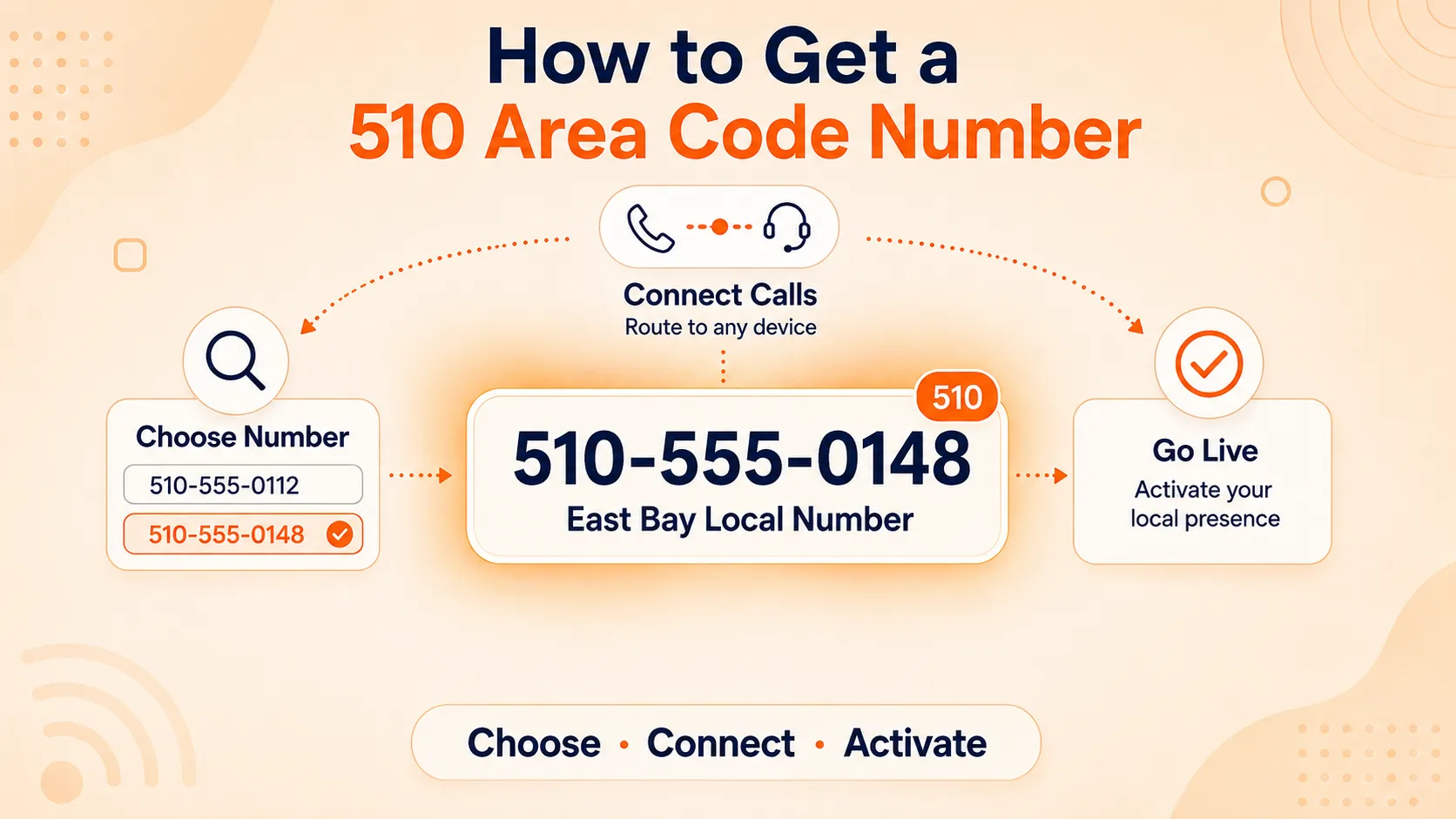
- Cloud phone platform — search available 510 numbers in real time and activate a line the same day, with no hardware and no technician visit.
- Port your existing number — already run a 510 line on another carrier? Move it over without downtime and keep the number active through the transition.
- Wireless SIM or landline carrier — valid for a single physical handset, but slower to provision and harder to scale seat by seat.
With letsdial, a UCaaS (Unified Communications as a Service) platform built for exactly this, a 510 number provisions in under three minutes on a free trial, no credit card required, so an East Bay presence can be answering calls the same afternoon, whether that's a Berkeley storefront or a remote team representing the region from anywhere in the country.
Call Trust in the East Bay Market
The East Bay market runs on university-and-research vendor channels, food-and-hospitality supplier relationships, and nonprofit-and-activist-organization networks — settings where an unknown out-of-state number gets screened before it's answered. A recognizable local prefix earns the first hearing, and 510 in particular carries extra weight as the region's original, longest-standing code.
STIR/SHAKEN for University, Food, and Nonprofit Contacts
Apply STIR/SHAKEN attestation so every outbound 510 call arrives verified with your registered business name on screen. As a UCaaS provider, letsdial registers text campaigns for 10DLC compliance from day one and warms new numbers before scaling volume, so a verified line reads as East Bay-local rather than out-of-area.
A trusted 510 line is the difference between a UC Berkeley vendor or an Oakland restaurant supplier picking up the call and routing it straight to voicemail, and that first-hearing advantage compounds over dozens of calls a month for any business selling into the East Bay market — a market that includes nonprofits, food producers, and civic institutions that all screen unfamiliar numbers closely before returning a call.
Conclusion
The 510 area code is the East Bay's original prefix — not Texas, Florida, or New York — covering Berkeley's Free Speech Movement history and Chez Panisse's culinary legacy, and Oakland's historic theaters and regional parks. Nearly three decades after its 1991 assignment, it remains the most recognized East Bay number.
Standing up a line takes minutes on a cloud UCaaS platform, with STIR/SHAKEN attestation so calls arrive verified rather than flagged. Put a 510 number in front of university partners, food-industry contacts, and nonprofit vendors, and let a familiar prefix open the door first, with letsdial handling the setup end to end.
Frequently Asked Questions
Written by Aryan Khan · August 3, 2026
Reply to the author